15 Asia-Pacific nations including China sign world's biggest trade agreement without India

News Network
November 15, 2020

Singapore, Nov 15: Fifteen Asia-Pacific nations, including China, on Sunday signed the world's biggest trade agreement, the Regional Comprehensive Economic Partnership (RCEP), sans India with hopes that it will help recover from the shocks of the COVID-19 pandemic.

The RCEP was signed after eight years of negotiations at the conclusion of annual summit of Southeast Asian leaders and their regional partners, held virtually this year due to the COVID-19 pandemic.

The agreement, which covers almost a third of the world economy, will progressively lower tariffs across many areas in the coming years, reported Channel News Asia.

After the signing, all countries would have to ratify the RCEP within two years before it becomes effective.

India, one of the leading consumer-driven market in the region, pulled out of talks last year, concerned that the elimination of tariffs would open its markets to a flood of imports that could harm local producers.

But other nations have said in the past that the door remains open for India's participation in the RCEP, influenced by China.

The RCEP was first proposed in 2012 and loops in 10 ASEAN economies- Indonesia, Malaysia, the Philippines, Singapore, Thailand, Brunei, Vietnam, Laos, Myanmar and Cambodia- along with China, Japan, South Korea, New Zealand and Australia.

Host country Vietnam's Prime Minister Nguyen Xuan Phuc said the COVID-19 pandemic has harmed global and regional trade and investment flows, including the countries participating in the RCEP talks.

The global and regional economies are facing huge obstacles and challenges caused by not only COVID-19 but also decreased global trade, he was quoted as saying by the Vietnam News Agency (VNA).

“The conclusion of the negotiations of the RCEP, the largest free trade agreement in the world, will send a strong message of ASEAN's leading role in supporting the multilateral trade system, helping to create a new trading structure in the region,” VNA quoted Phuc as saying.

Singapore Prime Minister Lee Hsien Loong said he joins fellow RCEP countries "in hoping that India too, will be able to come on board at some point so that the participation in the RCEP will fully reflect the emerging patterns of integration and regional cooperation in Asia."

They make up nearly a third of the world's population and account for 29 per cent of global gross domestic product, he said.

Lee, who led Singapore's delegation, hailed the signing of the RCEP as a "major milestone" and congratulated the 15 participating countries.

"We have reached a major milestone of signing this agreement today. It has taken us eight years, 46 negotiating meetings and 19 ministerial meetings to get here. I am very grateful for the tireless efforts of ministers and negotiators from all participating countries who have worked so hard during the process.

"The RCEP is a major step forward for the world, at a time when multilateralism is losing ground and global growth is slowing," said the Singapore premier.

Now, "the hard work of implementing the agreement and encouraging our businesses to take full advantage of it begins," he added.

"We have all made difficult trade-offs to advance the negotiations. And we will have to work hard to persuade our citizens that the RCEP will benefit them," the Channel quoted Lee as saying.

"But I have no doubt that the RCEP is a plus for all of us, and will help stem the tide against globalisation and economic integration.

"Singapore looks forward to working with participating countries on the timely implementation of this momentous agreement," Lee assured.

Malaysia's trade minister Mohamed Azmin Ali, ahead of the summit, had said, "after eight years of negotiating with blood, sweat and tears, we have finally come to the moment where we will seal the RCEP Agreement this Sunday."

The four-day ASEAN summit included meetings between Southeast Asian leaders and their counterparts from China, Japan and South Korea in the ASEAN Plus Three Summit, as well as the East Asia Summit and RCEP Summit.

The 15 RCEP countries agreed on the terms of the deal last year, setting up the path for it to be signed during the summit.

The ASEAN is considered as one of the most influential groupings in the region, and India and several other countries including the US, China, Japan and Australia are its dialogue partners.

The virtual ASEAN summit, which kicked-off on Thursday, is taking place amid China's aggressive behaviour in the disputed South China Sea. A number of ASEAN countries have territorial disputes with China in the South China Sea.

Beijing claims almost all of the 1.3 million square-mile South China Sea as its sovereign territory. China has been building military bases on artificial islands in the region which, in parts, is claimed by Brunei, Malaysia, the Philippines, Taiwan and Vietnam.

Beijing has impeded commercial activity like fishing and mineral exploration by neighbouring nations in recent years, saying the ownership of the resource-rich maritime territory belongs to China for hundreds of years. 

Comments

Add new comment

  • Coastaldigest.com reserves the right to delete or block any comments.
  • Coastaldigset.com is not responsible for its readers’ comments.
  • Comments that are abusive, incendiary or irrelevant are strictly prohibited.
  • Please use a genuine email ID and provide your name to avoid reject.
News Network
January 20,2026

Mangaluru: In a major step towards strengthening rural innovation, the Office of the Principal Scientific Adviser (PSA) to the Government of India is supporting the establishment of RuTAGe Smart Village Centres (RSVCs) across the country through collaborations with academic institutions, civil society organisations and philanthropic partners.

As part of this national initiative, Nitte (Deemed to be University) will set up the first RSVCs in the region at Nitte GP in Udupi district and at the Nitte Health Centre, Sevanjali Trust, Farangipete, in Dakshina Kannada district. The centres will be inaugurated on January 21. In South India, the programme is being implemented by the Section Infin-8 Foundation (SI-8).

Speaking to reporters on Monday, SI-8 founder-director Vishwas US said experts from Nitte University and SI-8 would work closely with farmers, students, youth and local entrepreneurs to adapt and deploy technologies tailored to local needs.

Project head Prof Iddya Karunasagar, representing Nitte DU, said the RSVCs at Nitte and Farangipete would serve as demonstration hubs for a wide range of agriculture, energy, skill-development and assistive technologies. These include solar dryers for fruits, vegetables and crops; soil-testing solutions; power weeders and women-friendly farm tools; wind-powered devices for rural artisans; grain storage systems; grass-cutting and tree-climbing equipment; and liquid fertiliser production using cowshed waste.

SI-8 CEO Aravind C Kumar said the centres would also provide access to digital and knowledge-based platforms such as ISRO applications, government scheme portals, market linkage tools and gamified learning resources, along with assistive technologies for persons with visual impairments.

Highlighting the broader impact of the initiative, Principal Scientific Adviser Prof Ajay Kumar Sood said it demonstrated how applied research could bridge the rural–urban divide and help create self-reliant, technology-enabled villages.

The initiative has been made possible through philanthropic support from Dr NC Murthy of ACM Business Solutions, LLC, USA. Dr Sapna Poti, Director (Strategic Alliances) at the Office of the Principal Scientific Adviser, said the long-term objective is to build self-sufficient, technology-driven communities capable of generating sustainable livelihoods on their own.

Comments

Add new comment

  • Coastaldigest.com reserves the right to delete or block any comments.
  • Coastaldigset.com is not responsible for its readers’ comments.
  • Comments that are abusive, incendiary or irrelevant are strictly prohibited.
  • Please use a genuine email ID and provide your name to avoid reject.
News Network
January 19,2026

trump.jpg

Donald Trump has linked his repeated threats to seize Greenland to his failure to win the Nobel Peace Prize, in a letter to Norwegian Prime Minister Jonas Gahr Støre.

The authenticity of the letter, in which Trump says he no longer feels obligated to “think purely of peace,” was confirmed by Støre to the Norwegian newspaper VG.

“Considering your country decided not to give me the Nobel Peace Prize for having stopped eight wars plus, I no longer feel an obligation to think purely of peace,” Trump wrote, adding he can now “think about what is good and proper for the United States.”

Støre said Trump’s letter was in response to a short message he had sent earlier, on behalf of himself and Finland’s President Alexander Stubb.

Trump has escalated rhetoric toward Greenland, a self-governing Danish territory, insisting the US will take control “one way or the other.” Over the weekend, he tweeted: “Now it is time, and it will be done!!!”

On Saturday, Trump threatened a 10% tariff on imports from Denmark, Norway, Sweden, France, Germany, the UK, the Netherlands, and Finland from 1 February until the US is allowed to purchase the island. EU diplomats met for emergency talks on possible retaliatory tariffs and sanctions.

In his letter, Trump argued Denmark “cannot protect” Greenland from Russia or China, questioning Danish ownership: “There are no written documents; it’s only that a boat landed there hundreds of years ago.” He added that NATO should support the US, claiming the world is “not secure unless we have complete and total control of Greenland.”

Trump’s stance has unsettled the EU and NATO, as he refused to rule out military action to take control of the mineral-rich island.

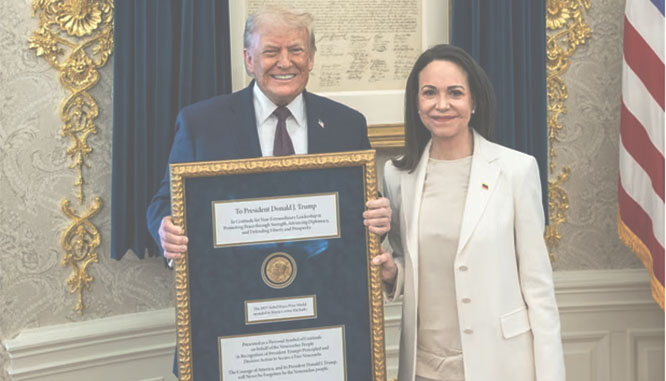
The Nobel Peace Prize is awarded by the independent Norwegian Nobel Committee, not the government. Trump had campaigned for last year’s prize, which went to Venezuelan opposition leader María Corina Machado, who dedicated her award to him.

Støre reiterated that the Nobel Prize decision rests solely with the committee.

Comments

Add new comment

  • Coastaldigest.com reserves the right to delete or block any comments.
  • Coastaldigset.com is not responsible for its readers’ comments.
  • Comments that are abusive, incendiary or irrelevant are strictly prohibited.
  • Please use a genuine email ID and provide your name to avoid reject.
News Network
January 20,2026

iran.jpg

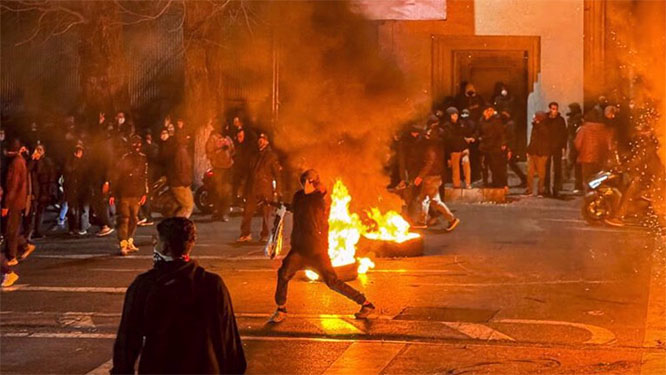
Iranian security and intelligence forces have captured more than 470 individuals in three provinces, identified as key figures behind the recent wave of violent unrest and terrorist activities linked to foreign-backed networks.

The Intelligence Ministry's provincial office in Khorasan Razavi announced on Monday the arrest of 192 armed terrorists, identified as the main agents behind recent riots in the region. 

According to an official statement, the detainees were involved in the killing of several security personnel and civilians, setting fire to mosques, public service facilities, and buses, as well as attacks on military and law enforcement centers.

The seized items from the group include several bulletproof vests, Kalashnikov rifles, hunting weapons, Winchester rifles, and various cold weapons such as daggers, swords, brass knuckles, tactical knives, crossbows, and chains.

Evidence indicates that some of the individuals were tied to hostile movements and terrorist organizations, with links overseas. Others were identified as members of violent criminal gangs, actively taking part in the unrest alongside their associates.

Simultaneously, in the western province of Lorestan, the IRGC announced the arrest of 134 individuals as the main leaders and influential field agents of a US-Israeli terrorist network.

The IRGC statement stated that these individuals formed terrorist cells during the recent unrest, committing "Daesh-like" acts.

They wounded security forces with firearms and cold weapons, and burned and destroyed public and private properties, including mosques, shops, banks, and private and public vehicles.

In the northwestern province of Zanjan, the police reported detaining 150 people identified as principal leaders and agents behind recent riots.

Authorities noted that these individuals were responsible for destroying public and private property and intentionally setting fire to vehicles in the province's squares.

Their crimes include shedding the blood of innocent people, destroying public and private property, attempting to enter military sites, disrupting public order, and spreading terror among citizens.

A variety of cold weapons were reportedly seized from the detainees.

What began late last month as peaceful protests over economic hardship across Iran turned violent after public statements by US and Israeli regime figures encouraged vandalism and disorder.

During the unrest, foreign-backed mercenaries rampaged through cities, killing security forces and civilians and damaging public property.

Comments

Add new comment

  • Coastaldigest.com reserves the right to delete or block any comments.
  • Coastaldigset.com is not responsible for its readers’ comments.
  • Comments that are abusive, incendiary or irrelevant are strictly prohibited.
  • Please use a genuine email ID and provide your name to avoid reject.