59 conflicts, 78 nations involved: World is now least peaceful since World War-2

News Network
June 19, 2025

conflict.jpg

The world is now witnessing the highest number of active state-based conflicts since the end of the Second World War, with 59 ongoing wars and 78 countries involved, according to the 2024 edition of the Global Peace Index released by the Institute for Economics & Peace.

The report paints a grim picture of international stability, warning that global peacefulness continues to erode amid a backdrop of deepening geopolitical rivalries, rising militarisation, and a growing number of cross-border disputes.

“Many of the leading indicators that typically precede large-scale conflict are now at their worst levels since 1945,” the study stated.

Sharp Rise in Conflicts

There are currently 59 active state-based armed conflicts, three more than last year, making this the most violent period since WWII. The conflicts are not only increasing in number but also in complexity, with 78 nations now engaged in violence beyond their borders, a trend that the index attributes to growing global fragmentation and the assertiveness of middle powers.

Major flashpoints highlighted in the report include:

Russia-Ukraine

Israel-Palestine and Israel-Iran

China-US tensions over Taiwan

India-Pakistan

Armenia-Azerbaijan

North Korea-US

Iran-US

Yemen-Saudi Arabia

EU-Russia and UK-Russia

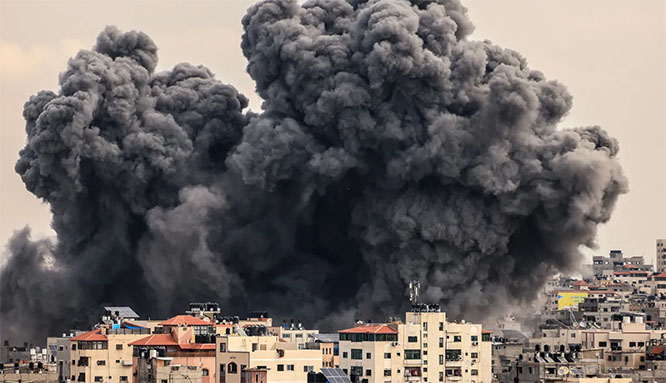
The report particularly noted the recent escalation between Israel and Iran, where Israel launched airstrikes on June 13 targeting Iranian military and nuclear infrastructure, killing senior Iranian officers—an incident that marked a dangerous expansion of the Middle East conflict.

Internationalisation of War

Conflicts are no longer localised. The report stresses that 78 countries are directly involved in conflicts beyond their borders, marking a significant shift toward internationalised warfare. The causes range from proxy wars and foreign interventions to the increasing involvement of middle-tier powers asserting dominance in their regions.

Decline in Conflict Resolution

The world is also seeing a steep decline in effective conflict resolution. The success rate of wars ending in a decisive military victory has plummeted from 49% in the 1970s to just 9% in the 2010s, while peace agreements as a method of resolution have dropped from 23% to just 4%.

Meanwhile, the long-term trend of falling militarisation has reversed. In the last two years alone, 106 countries have become more militarised, reflecting a broader shift toward rearmament and power projection.

Global Rankings

The Global Peace Index ranks 163 countries and territories, covering 99.7% of the world’s population.

Most Peaceful Countries (Top 5):

Iceland (since 2008)

Ireland

Austria

New Zealand

Switzerland

Least Peaceful Countries (Bottom 5):

Russia (for the first time)

Ukraine

Sudan

Democratic Republic of Congo

Yemen

Regional Overview

Western and Central Europe remains the most peaceful region globally.

Middle East and North Africa (MENA) retains its position as the least peaceful.

South Asia is now the second least peaceful region, with growing political repression in Bangladesh and enduring tensions between India and Pakistan contributing to its decline.

Interestingly, South America was the only region to record an overall improvement in peacefulness last year, with 7 of 11 countries showing gains.

Final Outlook

Overall, 87 countries saw a decline in peacefulness, while only 74 improved, leading to a net global deterioration of 0.36%. The report concludes that without major diplomatic interventions, the world is on a trajectory of escalating conflict and instability unseen since the mid-20th century.

Comments

Add new comment

  • Coastaldigest.com reserves the right to delete or block any comments.
  • Coastaldigset.com is not responsible for its readers’ comments.
  • Comments that are abusive, incendiary or irrelevant are strictly prohibited.
  • Please use a genuine email ID and provide your name to avoid reject.
News Network
January 20,2026

DGP.jpg

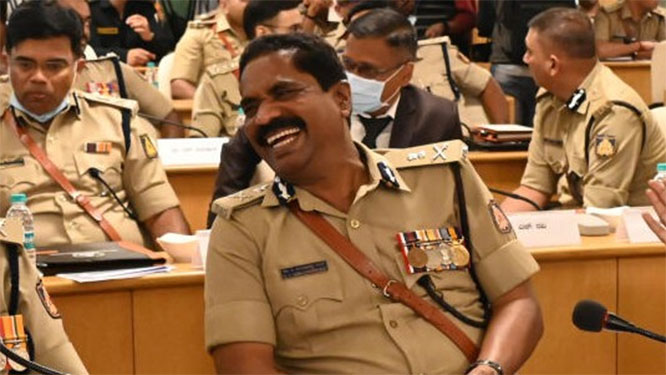
Karnataka DGP (Civil Rights Enforcement) K Ramachandra Rao was suspended with immediate effect, as per a state government order issued on Monday, 19 January. The order cited conduct unbecoming of a government servant and causing embarrassment to the state administration.

The Karnataka government suspended Rao after a purported video showed him in a compromising position with a woman inside his official chamber. The video went viral on social media. Rao rejected the videos outright, terming them "fabricated and false".

Who is K Ramachandra Rao?

Rao is a DGP-rank officer who was heading the Directorate of Civil Rights Enforcement until his suspension. He was promoted to DGP in September 2023 and assumed office in October 2023, the Sunday Guardian reported.

He also served as the Chairman and Managing Director of the Karnataka State Police Housing and Infrastructure Development Corporation Limited.

His stint as the Inspector General of Police (IGP) for the Southern Range was also marred by controversy. In 2014, during a cash seizure near Mysuru’s Yelwal, officials claimed the seized amount was ₹20 lakh, while the accused (Kerala-based merchants) claimed it was around ₹2.27 crore.

Rao, who was present during the seizure, denied all allegations. However, he was transferred soon after.

Allegations of collusion with a businessman surfaced, and a senior police officer was quoted by The Sunday Guardian as saying, “In Rao’s case, the CID has clearly mentioned that there was a great degree of lapse on the part of Rao and a deputy superintendent of police after it was brought to their notice that a few policemen, including a gunman attached to the IGP, were involved in the robbery.”

Rao had denied all wrongdoing in that incident. Despite past controversies, he rose to the state’s top police position, the Sunday Guardian reported.

Ranya Rao’s stepfather

Rao is the stepfather of Kannada actress Harshavardhini Ranya alias Ranya Rao, accused of orchestrating the illegal import of gold worth over ₹12.56 crore from Dubai to India along with two others — businessman Tarun Raju, and jewellery dealer Sahil Jain.

‘Obscene video’ controversy

A viral video showed Rao behaving inappropriately with a woman inside his office while in uniform.

The Karnataka government said in its Monday order that “vide videos and news reports widely broadcast on public news channels and media platforms, it is observed that Dr K Ramachandra Rao has acted in an obscene manner which is unbecoming of a Government Servant and also causing embarrassment to the Government.”

The order said the matter was examined by the state government, which found that the officer's conduct amounted to a violation of Rule 3 of the All India Services (Conduct) Rules, 1968.

The government said it is prima facie satisfied that "it is necessary to place Rao under suspension with immediate effect, pending inquiry".

During the suspension period, Rao will be entitled to subsistence allowance as per Rule 4 of the All India Services (Discipline and Appeal) Rules, 1969.

The order also places restrictions on his movement, stating that during the period of suspension, the officer must not leave headquarters under any circumstances without the written permission of the state government.

Comments

Add new comment

  • Coastaldigest.com reserves the right to delete or block any comments.
  • Coastaldigset.com is not responsible for its readers’ comments.
  • Comments that are abusive, incendiary or irrelevant are strictly prohibited.
  • Please use a genuine email ID and provide your name to avoid reject.
News Network
January 23,2026

modIKERALA.jpg

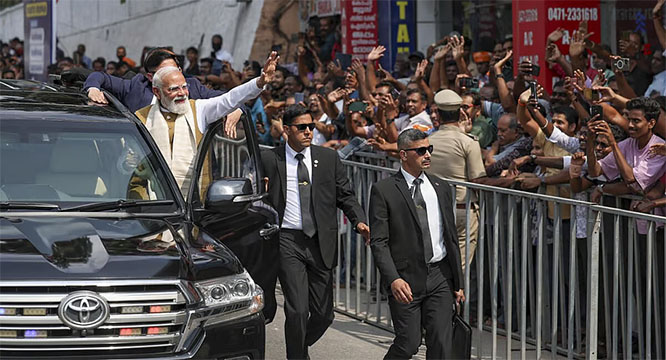
Prime Minister Narendra Modi, during his visit to Thiruvananthapuram on Friday, January 23, indicated that the Bharatiya Janata Party (BJP) is aiming to expand its political footprint in Kerala ahead of the Assembly elections scheduled in the coming months.

Speaking at a BJP-organised public meeting, Modi drew parallels between the party’s early electoral gains in Gujarat and its recent victory in the Thiruvananthapuram Municipal Corporation. The civic body win, which ended decades of Left control, was cited by the Prime Minister as a possible starting point for the party’s broader ambitions in the state.

Recalling BJP’s political trajectory in Gujarat, Modi said the party was largely insignificant before 1987 and received little media attention. He pointed out that the BJP’s first major breakthrough came with its victory in the Ahmedabad Municipal Corporation that year.

“Just as our journey in Gujarat began with one city, Kerala’s journey has also started with a single city,” Modi said, suggesting that the party’s municipal-level success could translate into wider electoral acceptance.

The Prime Minister alleged that successive governments led by the Left Democratic Front (LDF) and the United Democratic Front (UDF) had failed to adequately develop Thiruvananthapuram. He accused both fronts of corruption and neglect, claiming that basic infrastructure and facilities were denied to the capital city for decades.

According to Modi, the BJP’s control of the civic body represents a shift driven by public dissatisfaction with the existing political alternatives. He asserted that the BJP administration in Thiruvananthapuram had begun working towards development, though no specific details or timelines were outlined.

Addressing the gathering at Putharikandam Maidan, Modi said the BJP intended to project Thiruvananthapuram as a “model city,” reiterating his party’s commitment to governance-led change.

The Prime Minister’s visit to Kerala also included the inauguration of several development projects and the flagging off of new train services, as the BJP intensifies its political outreach in the poll-bound state.

Comments

Add new comment

  • Coastaldigest.com reserves the right to delete or block any comments.
  • Coastaldigset.com is not responsible for its readers’ comments.
  • Comments that are abusive, incendiary or irrelevant are strictly prohibited.
  • Please use a genuine email ID and provide your name to avoid reject.