After Covid-19 wrecked 2020, will 2021 be different?

News Network
December 2, 2020

2020 was a year turned upside-down by the novel coronavirus. But with the prospect of several vaccines coming online and less stringent restrictions, experts say it's possible 2021 will return to a semblance of normality.

With a second Covid-19 wave currently battering Europe, the United States battling its third, and Hong Kong facing a fourth, disease specialists say they can't rule out more resurgences in cases and deaths as 2021 gets underway.

France's scientific council, which guides government policy on the pandemic, envisages "several successive waves" of Covid-19 over the winter and well into next year.

Flavio Toxvaerd, lecturer at the University of Cambridge's Faculty of Economics, told AFP the question of how many waves the world still faces depends on a variety of factors.

These include "seasonal changes in contact patterns as well as how well the disease is managed through a combination of social distancing and vaccines," said Toxvaerd, who specialises in the economics of infectious diseases and economic epidemiology.

Lessons learned from past interventions could allow countries to fine-tune their counter-virus measures, implementing modified restrictions while avoiding total lockdowns.

Governments will seek to administer "the minimal effective dose" of measures, such as bans on large gatherings or high-risk activities, according to Anne-Claude Cremieux, an infectious diseases expert at Paris' Saint-Louis hospital.

She referred to a strategy of "surgical strikes" against the virus.

That would require full knowledge and control over the transmission chain, with an effective "test, trace, isolate" system and particular care taken over protecting vulnerable and elderly individuals.

"We need to hold on until relief arrives, and the relief is a vaccine," said Cremieux. She, however, cautioned that "it's clear we're not going to vaccinate the entire world in six months".

Even if several vaccines are made available, they alone will not be enough to return to normal.

Arnaud Fontanet, an epidemiologist at the Pasteur Institute told RMC/BFMTV television that normality could be restored "only by Autumn 2021" -- and even then only if 80-90 per cent of the population are vaccinated. Universal coverage would be "an extremely ambitious goal given the hesitancy that exists today towards vaccines," he said.

Fontanet echoed concerns expressed by fellow experts that a massive effort is needed to overcome anti-vaccine sentiment worldwide.

With some countries debating making Covid-19 vaccinations mandatory, Toxvaerd sounded a note of caution. "In the current climate, making vaccines mandatory may backfire and cause even more resistance to the vaccine," he said.

"Instead, positive incentives to vaccinate should be considered."

He pointed to certain business and social practices -- such as some airlines refusing to admit non-vaccinated passengers -- that would be more likely to bring success than enforced vaccination programmes.

And the logistics of mass vaccination remain dizzying. Even as results from trials need verifying in peer-reviewed papers, little still is known about how long the immunity they render will last.

Fontanet said that even the most effective vaccines could not be treated as a magic wand guaranteeing protection. "There will be people who have been vaccinated who still get sick," he said. But he stressed that didn't mean that "the vaccine doesn't work".

With at least two candidate vaccines undergoing review by health authorities ahead of use authorisation, the safety data from trials is also being pored over.

"This can provide important additional and more precise information on longer-term safety and efficacy of a vaccine against Covid-19," the European Medicines Agency said recently.

Different vaccines will need to be distributed differently, too, with some candidates that have proven to prevent severe illness likely prioritised for at-risk individuals.

Moncef Slaoui, head scientist with the US's Operation Warp Speed vaccination programme, told CNN last month that around 70 percent of the population would need inoculating in order to achieve "true herd immunity".

This level is unlikely to be reached before May 2021, he added.

This year has seen an unprecedented change in personal behaviour prompted by Covid-19, from hand washing and social distancing to the now almost ubiquitous mask wearing.

Experts say these behaviours are unlikely to be limited to 2020 alone, as protective measures will still be needed until everyone is out of the woods.

Leading US scientist Anthony Fauci told AFP in a recent interview he foresaw "a considerable degree of normality" by the third quarter of next year.

Successful vaccination programmes could see for example the Olympic Games, delayed from last summer, take place in Tokyo in late July.

Meanwhile China, where Covid-19 emerged late last year, has largely resumed business as usual, while developing its own vaccine and reacting swiftly to any hint of new cases.


Comments

Add new comment

  • Coastaldigest.com reserves the right to delete or block any comments.
  • Coastaldigset.com is not responsible for its readers’ comments.
  • Comments that are abusive, incendiary or irrelevant are strictly prohibited.
  • Please use a genuine email ID and provide your name to avoid reject.
News Network
January 20,2026

KCFabudhabi.jpg

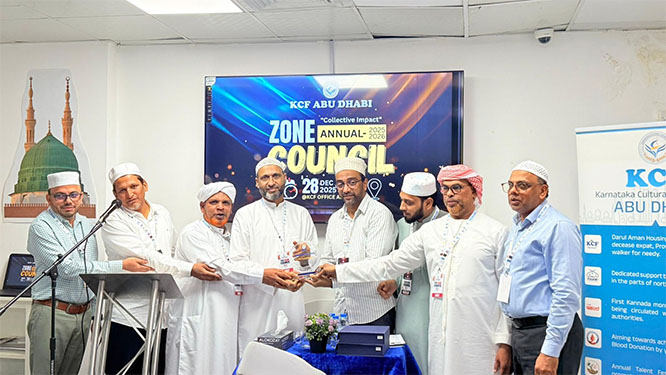
KCF, a global socio-cultural organisation of Karnataka expatriates, is actively involved in education, humanitarian initiatives and community well-being across several countries. The awardees were selected following a structured evaluation of nominations by the Annual Council Program Committee, based on the depth, consistency and long-term impact of their social service.

One of the award recipients, Abdul Razak Haji, a prominent UAE-based entrepreneur from the Qamcon Group of Companies, was honoured for his significant contributions to society. Through both his professional journey and personal initiatives, he has supported numerous employees and families, while also extending assistance in education, housing for the underprivileged and various charitable causes, largely carried out quietly over the years. His award was presented earlier during the Annual Council Program held at the KCF Abu Dhabi office.

The second award was conferred on Latheef Kakkinje, a young social worker based in Abu Dhabi, in recognition of his active involvement in community engagement programmes, sports initiatives, talent festivals and family-oriented social activities. His consistent volunteering efforts and commitment to humanitarian causes were highly appreciated by the selection committee.

The award presentation ceremony for Latheef Kakkinje was held at the Zayed Cricket Stadium (Astro Turf Ground) in the presence of Kedumbady Ibrahim Saqafi, President of KCF UAE; Ibrahim, General Secretary; Kabeer Bayambady, President of KCF Abu Dhabi; Ummer Ishwaramangila, General Secretary; along with other members of the KCF Abu Dhabi cabinet.

Congratulating both awardees, KCF leaders reiterated the organisation’s commitment to recognising individuals who selflessly work for social upliftment and community service.

KCFabudhabi1.jpg

Comments

Add new comment

  • Coastaldigest.com reserves the right to delete or block any comments.
  • Coastaldigset.com is not responsible for its readers’ comments.
  • Comments that are abusive, incendiary or irrelevant are strictly prohibited.
  • Please use a genuine email ID and provide your name to avoid reject.
News Network
January 20,2026

iran.jpg

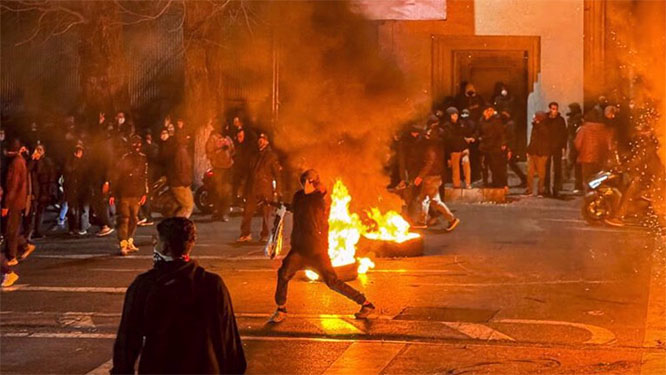
Iranian security and intelligence forces have captured more than 470 individuals in three provinces, identified as key figures behind the recent wave of violent unrest and terrorist activities linked to foreign-backed networks.

The Intelligence Ministry's provincial office in Khorasan Razavi announced on Monday the arrest of 192 armed terrorists, identified as the main agents behind recent riots in the region. 

According to an official statement, the detainees were involved in the killing of several security personnel and civilians, setting fire to mosques, public service facilities, and buses, as well as attacks on military and law enforcement centers.

The seized items from the group include several bulletproof vests, Kalashnikov rifles, hunting weapons, Winchester rifles, and various cold weapons such as daggers, swords, brass knuckles, tactical knives, crossbows, and chains.

Evidence indicates that some of the individuals were tied to hostile movements and terrorist organizations, with links overseas. Others were identified as members of violent criminal gangs, actively taking part in the unrest alongside their associates.

Simultaneously, in the western province of Lorestan, the IRGC announced the arrest of 134 individuals as the main leaders and influential field agents of a US-Israeli terrorist network.

The IRGC statement stated that these individuals formed terrorist cells during the recent unrest, committing "Daesh-like" acts.

They wounded security forces with firearms and cold weapons, and burned and destroyed public and private properties, including mosques, shops, banks, and private and public vehicles.

In the northwestern province of Zanjan, the police reported detaining 150 people identified as principal leaders and agents behind recent riots.

Authorities noted that these individuals were responsible for destroying public and private property and intentionally setting fire to vehicles in the province's squares.

Their crimes include shedding the blood of innocent people, destroying public and private property, attempting to enter military sites, disrupting public order, and spreading terror among citizens.

A variety of cold weapons were reportedly seized from the detainees.

What began late last month as peaceful protests over economic hardship across Iran turned violent after public statements by US and Israeli regime figures encouraged vandalism and disorder.

During the unrest, foreign-backed mercenaries rampaged through cities, killing security forces and civilians and damaging public property.

Comments

Add new comment

  • Coastaldigest.com reserves the right to delete or block any comments.
  • Coastaldigset.com is not responsible for its readers’ comments.
  • Comments that are abusive, incendiary or irrelevant are strictly prohibited.
  • Please use a genuine email ID and provide your name to avoid reject.
News Network
February 1,2026

Bengaluru: The Karnataka High Court has refused to quash an investigation against a WhatsApp group administrator accused of allowing the circulation of obscene and offensive images depicting Hindutva politicians and idols in 2021.

Justice M Nagaprasanna observed that, prima facie, the ingredients of the offence under Section 295A of the Indian Penal Code were made out. “The offence under Section 295A of the IPC is met to every word of its ingredient, albeit prima facie,” the judge said.

The petitioner, Sirajuddin, a resident of Belthangady taluk in Dakshina Kannada district, had challenged the FIR registered against him at the CEN (Cyber, Economics and Narcotics) police station, Mangaluru, for offences under Section 295A of the IPC and Section 67 of the Information Technology Act. Section 295A relates to punishment for deliberate and malicious acts intended to outrage the religious feelings of any class of citizens.

According to the complaint filed by K Jayaraj Salian, also a resident of Belthangady taluk, he received a WhatsApp group link from an unknown source and was added to the group after accessing it. The group reportedly had six administrators and around 250 participants, where obscene and offensive images depicting Hindu deities and certain political figures were allegedly circulated repeatedly.

Sirajuddin was arrested in connection with the case and later released on bail on February 16, 2021. He argued before the court that he was being selectively targeted, while other administrators—including the creator of the group—were neither arrested nor investigated. He also contended that the Magistrate could not have taken cognisance of the offence under Section 295A without prior sanction under Section 196(1) of the CrPC.

Rejecting the argument, Justice Nagaprasanna held that prior sanction is required only at the stage of taking cognisance, and not at the stage of registration of the crime or during investigation.

The judge noted that the State had produced the entire investigation material before the court. “A perusal of the material reveals depictions of Hindu deities in an extraordinarily obscene, demeaning and profane manner. The content is such that its reproduction in a judicial order would itself be inappropriate,” the court said, adding that the material, on its face, had the tendency to outrage religious feelings and disturb communal harmony.

Observing that the case was still at the investigation stage, the court said it could not interdict the probe at this juncture. However, it expressed concern that the investigating officer appeared to have not proceeded uniformly against all administrators. The court clarified that if the investigation revealed the active involvement of any member in permitting the circulation of such content, they must also be proceeded against.

“At this investigative stage, any further observation by this Court would be unnecessary,” the order concluded.

Comments

Add new comment

  • Coastaldigest.com reserves the right to delete or block any comments.
  • Coastaldigset.com is not responsible for its readers’ comments.
  • Comments that are abusive, incendiary or irrelevant are strictly prohibited.
  • Please use a genuine email ID and provide your name to avoid reject.