Delta variant to become dominant strain of covid in coming months: WHO

News Network
July 1, 2021

The World Health Organization has said the Delta variant of Covid-19 is now present in nearly 100 countries as per conservative estimates, and warned that in the coming months the highly transmissible strain will become the dominant variant of the coronavirus globally.

In its Covid-19 Weekly Epidemiological Update, the WHO said as of June 29, 2021, "96 countries have reported cases of the Delta variant, though this is likely an underestimate as sequencing capacities needed to identify variants are limited. A number of these countries are attributing surges in infections and hospitalisations to this variant."

Given the increase in transmissibility, the WHO warned that the Delta variant is "expected to rapidly outcompete other variants and become the dominant variant over the coming months."

The world body noted that the tools that exist today to combat the coronavirus — individual, community level-public health and social measures, infection prevention and control measures that have been used since the beginning of the pandemic — remain effective against current variants of concern (VOCs), including the Delta variant.

"Although the increased transmissibility of VOCs (Variants of Concern) means that measures may need to be maintained for longer periods of time, particularly in a context of low vaccination coverage, these measures must be targeted, time-bound, reinforced and supported by member states," it added.

Last week, WHO Director-General Tedros Adhanom Ghebreyesus said the Delta variant is the “most transmissible” of the variants identified so far and is spreading rapidly among unvaccinated populations.

"I know that globally there is currently a lot of concern about the Delta variant, and WHO is concerned about it too. Delta is the most transmissible of the variants identified so far... spreading rapidly among unvaccinated populations," Ghebreyesus had said.

He had noted that as some countries eased public health and social restrictions, there was a corresponding increase in transmission around the world.

As per latest figures, cases of the Alpha variant have been reported in 172 countries, territories or areas, Beta in 120 countries (one new country), Gamma in 72 countries (one new country) and Delta in 96 countries (11 new countries).

For the first time in several weeks, the highest numbers of new Covid-19 cases were not reported from India.

The update noted that at 521,298, the highest numbers of new cases were reported from Brazil during the June 21-27 week, followed by India (351,218 new cases, a 12 per cent increase over the previous week), Colombia (204,132 new cases, 5 per cent increase), Russia (134,465 new cases, 24 per cent increase) and Argentina (131,824 new cases, 11 per cent decrease).

The South-East Asia Region reported over 573,000 new cases and over 13,000 new deaths, a 5 per cent and a 33 per cent decrease respectively compared to the previous week.

"There is a slight overall decrease in the number of cases reported this week, mostly due to the decrease in the number of cases reported in India," the update said, adding that a number of countries, including Myanmar (112 per cent increase), Indonesia (60 per cent increase) and Bangladesh (48 per cent increase), reported large increases in the number of newly reported cases for this week.

In the region, the highest numbers of new cases were reported from India (351,218 new cases; 25.5 new cases per 100,000; a 21 per cent decrease), Indonesia (125,395 new cases; 45.8 new cases per 100,000; a 60 per cent increase), and Bangladesh (36,738 new cases; 22.3 new cases per 100,000; a 48 per cent increase).

The highest numbers of new deaths were reported from India (9038 new deaths; 0.7 new deaths per 100,000; a 45 per cent decrease over the previous week), Indonesia (2476 new deaths; 0.9 new deaths per 100,000; a 39 per cent increase), and Bangladesh (624 new deaths; 0.4 new deaths per 100,000; a 45 per cent increase).

"Well into the second year of the Covid-19 pandemic, the global situation remains highly fragile. While at the global level, trends in cases and deaths have been declining in recent weeks, there is significant variation by region, by country and within countries,” the update said.

It said in all WHO regions, there are countries reporting sharp increases in cases and hospitalisations.

There are a number of factors contributing to this, including the emergence and circulation of more transmissible variants of SARS-CoV-2, increased social mixing and mobility, uneven and inequitable vaccination; and considerable pressure to lift public health and social measures, the WHO said.

Comments

Add new comment

  • Coastaldigest.com reserves the right to delete or block any comments.
  • Coastaldigset.com is not responsible for its readers’ comments.
  • Comments that are abusive, incendiary or irrelevant are strictly prohibited.
  • Please use a genuine email ID and provide your name to avoid reject.
News Network
January 23,2026

modIKERALA.jpg

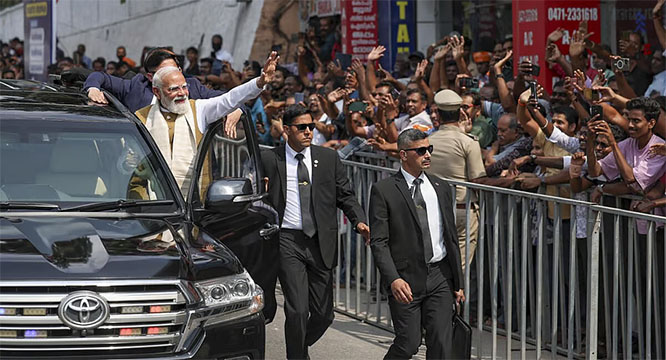
Prime Minister Narendra Modi, during his visit to Thiruvananthapuram on Friday, January 23, indicated that the Bharatiya Janata Party (BJP) is aiming to expand its political footprint in Kerala ahead of the Assembly elections scheduled in the coming months.

Speaking at a BJP-organised public meeting, Modi drew parallels between the party’s early electoral gains in Gujarat and its recent victory in the Thiruvananthapuram Municipal Corporation. The civic body win, which ended decades of Left control, was cited by the Prime Minister as a possible starting point for the party’s broader ambitions in the state.

Recalling BJP’s political trajectory in Gujarat, Modi said the party was largely insignificant before 1987 and received little media attention. He pointed out that the BJP’s first major breakthrough came with its victory in the Ahmedabad Municipal Corporation that year.

“Just as our journey in Gujarat began with one city, Kerala’s journey has also started with a single city,” Modi said, suggesting that the party’s municipal-level success could translate into wider electoral acceptance.

The Prime Minister alleged that successive governments led by the Left Democratic Front (LDF) and the United Democratic Front (UDF) had failed to adequately develop Thiruvananthapuram. He accused both fronts of corruption and neglect, claiming that basic infrastructure and facilities were denied to the capital city for decades.

According to Modi, the BJP’s control of the civic body represents a shift driven by public dissatisfaction with the existing political alternatives. He asserted that the BJP administration in Thiruvananthapuram had begun working towards development, though no specific details or timelines were outlined.

Addressing the gathering at Putharikandam Maidan, Modi said the BJP intended to project Thiruvananthapuram as a “model city,” reiterating his party’s commitment to governance-led change.

The Prime Minister’s visit to Kerala also included the inauguration of several development projects and the flagging off of new train services, as the BJP intensifies its political outreach in the poll-bound state.

Comments

Add new comment

  • Coastaldigest.com reserves the right to delete or block any comments.
  • Coastaldigset.com is not responsible for its readers’ comments.
  • Comments that are abusive, incendiary or irrelevant are strictly prohibited.
  • Please use a genuine email ID and provide your name to avoid reject.
News Network
January 20,2026

Mangaluru: In a major step towards strengthening rural innovation, the Office of the Principal Scientific Adviser (PSA) to the Government of India is supporting the establishment of RuTAGe Smart Village Centres (RSVCs) across the country through collaborations with academic institutions, civil society organisations and philanthropic partners.

As part of this national initiative, Nitte (Deemed to be University) will set up the first RSVCs in the region at Nitte GP in Udupi district and at the Nitte Health Centre, Sevanjali Trust, Farangipete, in Dakshina Kannada district. The centres will be inaugurated on January 21. In South India, the programme is being implemented by the Section Infin-8 Foundation (SI-8).

Speaking to reporters on Monday, SI-8 founder-director Vishwas US said experts from Nitte University and SI-8 would work closely with farmers, students, youth and local entrepreneurs to adapt and deploy technologies tailored to local needs.

Project head Prof Iddya Karunasagar, representing Nitte DU, said the RSVCs at Nitte and Farangipete would serve as demonstration hubs for a wide range of agriculture, energy, skill-development and assistive technologies. These include solar dryers for fruits, vegetables and crops; soil-testing solutions; power weeders and women-friendly farm tools; wind-powered devices for rural artisans; grain storage systems; grass-cutting and tree-climbing equipment; and liquid fertiliser production using cowshed waste.

SI-8 CEO Aravind C Kumar said the centres would also provide access to digital and knowledge-based platforms such as ISRO applications, government scheme portals, market linkage tools and gamified learning resources, along with assistive technologies for persons with visual impairments.

Highlighting the broader impact of the initiative, Principal Scientific Adviser Prof Ajay Kumar Sood said it demonstrated how applied research could bridge the rural–urban divide and help create self-reliant, technology-enabled villages.

The initiative has been made possible through philanthropic support from Dr NC Murthy of ACM Business Solutions, LLC, USA. Dr Sapna Poti, Director (Strategic Alliances) at the Office of the Principal Scientific Adviser, said the long-term objective is to build self-sufficient, technology-driven communities capable of generating sustainable livelihoods on their own.

Comments

Add new comment

  • Coastaldigest.com reserves the right to delete or block any comments.
  • Coastaldigset.com is not responsible for its readers’ comments.
  • Comments that are abusive, incendiary or irrelevant are strictly prohibited.
  • Please use a genuine email ID and provide your name to avoid reject.
News Network
January 20,2026

iran.jpg

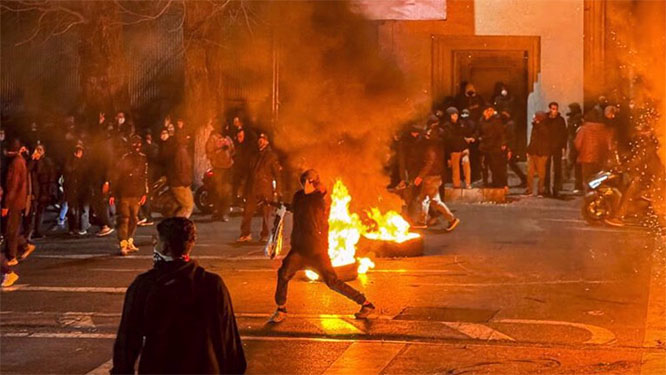
Iranian security and intelligence forces have captured more than 470 individuals in three provinces, identified as key figures behind the recent wave of violent unrest and terrorist activities linked to foreign-backed networks.

The Intelligence Ministry's provincial office in Khorasan Razavi announced on Monday the arrest of 192 armed terrorists, identified as the main agents behind recent riots in the region. 

According to an official statement, the detainees were involved in the killing of several security personnel and civilians, setting fire to mosques, public service facilities, and buses, as well as attacks on military and law enforcement centers.

The seized items from the group include several bulletproof vests, Kalashnikov rifles, hunting weapons, Winchester rifles, and various cold weapons such as daggers, swords, brass knuckles, tactical knives, crossbows, and chains.

Evidence indicates that some of the individuals were tied to hostile movements and terrorist organizations, with links overseas. Others were identified as members of violent criminal gangs, actively taking part in the unrest alongside their associates.

Simultaneously, in the western province of Lorestan, the IRGC announced the arrest of 134 individuals as the main leaders and influential field agents of a US-Israeli terrorist network.

The IRGC statement stated that these individuals formed terrorist cells during the recent unrest, committing "Daesh-like" acts.

They wounded security forces with firearms and cold weapons, and burned and destroyed public and private properties, including mosques, shops, banks, and private and public vehicles.

In the northwestern province of Zanjan, the police reported detaining 150 people identified as principal leaders and agents behind recent riots.

Authorities noted that these individuals were responsible for destroying public and private property and intentionally setting fire to vehicles in the province's squares.

Their crimes include shedding the blood of innocent people, destroying public and private property, attempting to enter military sites, disrupting public order, and spreading terror among citizens.

A variety of cold weapons were reportedly seized from the detainees.

What began late last month as peaceful protests over economic hardship across Iran turned violent after public statements by US and Israeli regime figures encouraged vandalism and disorder.

During the unrest, foreign-backed mercenaries rampaged through cities, killing security forces and civilians and damaging public property.

Comments

Add new comment

  • Coastaldigest.com reserves the right to delete or block any comments.
  • Coastaldigset.com is not responsible for its readers’ comments.
  • Comments that are abusive, incendiary or irrelevant are strictly prohibited.
  • Please use a genuine email ID and provide your name to avoid reject.