Here's why the global Covid-19 death toll may be closer to 1.8 million

News Network
September 29, 2020

global.JPG

The world officially recorded 1 million deaths from Covid-19 in one of the most sobering milestones of the pandemic, but the real tally might be almost double that.

Actual fatalities from the worst outbreak in a century may be closer to 1.8 million -- a toll that could grow to as high as 3 million by the end of the year, according to Alan Lopez, a laureate professor and director of the University of Melbourne’s global burden of disease group. The coronavirus’s rapid spread and ability to transmit in people who show no signs of the disease have enabled it to outrun measures to accurately quantify cases through widespread diagnostic testing.

“One million deaths has meaning by itself, but the question is whether it’s true,” Lopez said in an interview before the tally was reached. “It’s fair to say that the 1 million deaths, as shocking as it sounds, is probably an underestimate -- a significant underestimate.”

Even in countries with sophisticated health systems, mortality is difficult to accurately gauge. Tens of thousands of probable Covid-19 deaths in the us weren’t captured by official statistics between March and May, a study in July found, frustrating efforts to track and mitigate the pandemic’s progression.

The dearth of accurate data undermines the ability of governments to implement timely strategies and policies to protect public health and promote economic recovery. If the mortality from Covid-19 reaches 3 million as Lopez predicted, it would rank the disease among the world’s worst killers. An undercount in deaths could also give some people a false sense of security, and may allow governments to downplay the virus and overlook the pandemic’s burden.

No System

India has confirmed more than 6 million Covid-19 cases, but accounts for only about 95,000 of the 1 million reported deaths worldwide, according to data collected by Johns Hopkins University. The country, which has the highest number of infections after the us, lacks a reliable national vital statistics registration system to track deaths in real time. Meanwhile, in Indiana in the US researchers found that although nursing home residents weren’t routinely tested for the virus, they represented 55% of the state’s Covid-19 deaths.

“Yes, cases are reported daily everywhere, but as soon as you get to the next tier down, like how many were admitted to hospitals, there have just been huge gaps in the data,” said Christopher J. Murray, director of the Institute for Health Metrics and Evaluation at the University of Washington in Seattle. Medical data, including duration of illness and symptoms, help to ascribe a probable cause of death, he said.

Patients with heart disease, diabetes, cancer and other chronic conditions are at greater risk of dying from Covid-19. Some governments, including Russia, are attributing the cause of deaths in some of these patients to the pre-existing condition, raising questions about the veracity of official mortality data.

WHO Guidelines

In July, Russia recorded 5,922 fatalities due to Covid-19. At least 4,157 other deaths were linked to the coronavirus, but not included in the tally because of how the nation defines such deaths. Overall, it recorded 29,925 more deaths in July than in the same month of 2019.

The WHO laid out guidance for classifying coronavirus deaths in June, advising countries to count fatalities if patients had symptoms of the disease regardless of whether they were a confirmed case, and unless there was a clear alternative cause. A Covid-19 fatality should be counted as such even if pre-existing conditions exacerbated the disease, said the organization. The US Centers for Disease Control and Prevention released similar guidelines.

Still, it may take health workers certifying deaths time to adopt the methodology, the University of Melbourne’s Lopez said. His research has received funding by Bloomberg Philanthropies, set up by Michael Bloomberg, founder and majority owner of Bloomberg News’ parent Bloomberg LP.

“Doctors often are learning as they go along, so they’re not certifying all the deaths that are due to Covid as Covid deaths,” Lopez said.

Japan Drop

Although the pandemic has altered mortality patterns worldwide, not all of the changes are a direct result of the pandemic, he said. Physical distancing measures may have reduced road fatalities and deaths caused by influenza. In Japan, which has been scrutinized for its lack of widespread testing and relatively lax containment efforts, deaths fell by 3.5% in May from a year earlier even as Covid-19 cases peaked.

“The pandemic actually works in contradictory ways to affect mortality,” Lopez said.

Likewise, the economic cost of the pandemic -- which may top $35.3 trillion through 2025 -- will be driven more by changes in people’s spending patterns than number of deaths and government-mandated “lockdown” measures, according to Warwick McKibbin, a professor of economics at the Australian National University and a non-resident senior fellow at the Brookings Institution in Washington.

“We estimate this outbreak is going to cost tens of trillions to the world economy,” McKibbin said in an interview. “The change in economic outcomes is caused by individuals changing their behavior, not because the government mandated a shutdown.”

Worldwide, the growth in the number of daily deaths has eased since spiking in March and April, helped by improved medical care and ways to treat the disease. But as resurgences flare in Europe and North America ahead of winter and the flu season, Covid-19 fatalities may rise sharply again. It took nine days for cases in the UK to double to 3,050 in mid September, compared with the previous doubling time of five weeks, the BMJ journal said last week.

Covid-19 patients between ages 75 to 84 are 220 times more likely to die from the disease than 18-to-29-year-olds, according to the CDC. Seniors over 85 years have a 630 times higher risk of dying. The older age of fatal Covid-19 cases has made some people think “they’re old people, they’re going to die anyway,” said Michael Osterholm, an epidemiologist and director of the Center for Infectious Disease Research and Policy at the University of Minnesota.

“I have a really hard time with that,” Osterholm said in an interview. “That’s an unfortunate and very sad way to come to understand this pandemic. Many of those people who died are very important loved ones to so many of us that it’s hard to just dismiss it as it’s just a number.”

Comments

Add new comment

  • Coastaldigest.com reserves the right to delete or block any comments.
  • Coastaldigset.com is not responsible for its readers’ comments.
  • Comments that are abusive, incendiary or irrelevant are strictly prohibited.
  • Please use a genuine email ID and provide your name to avoid reject.
News Network
December 3,2025

indigo.jpg

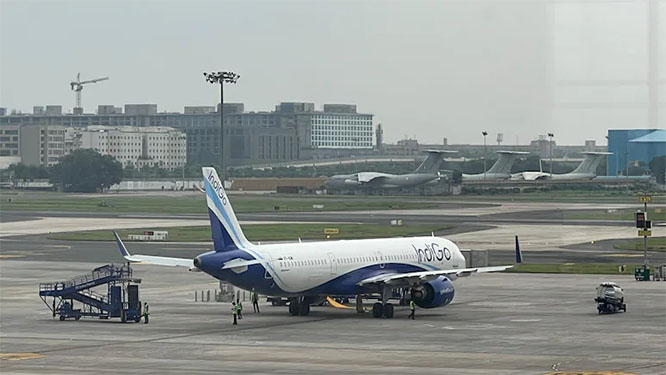
IndiGo, India’s largest airline, is battling one of its worst operational disruptions in recent years, with hundreds of delays and cancellations throwing domestic travel into chaos.

Government data on Tuesday showed its on-time performance plunging to 35%, an unusual dip for a carrier long associated with punctuality.

By Wednesday afternoon, airports in Delhi, Mumbai, Bengaluru and Hyderabad had collectively reported close to 200 cancellations, stranding travellers across the country.

Crew Shortage After New Duty Norms

A major trigger behind the meltdown is a severe crew shortage, especially among pilots, following the rollout of revised Flight Duty Time Limitation (FDTL) norms last month.

The rules mandate longer rest hours and more humane rosters — a shift IndiGo has struggled to incorporate across its vast network.

Sources said several flights were grounded due to lack of cabin crew, while some delays stretched upwards of eight hours.

With IndiGo controlling over 60% of India’s domestic aviation market, the ripple effect has impacted airports nationwide.

IndiGo Issues Apology, Lists “Compounding Factors”

In a statement, IndiGo acknowledged the large-scale disruption:

“We sincerely apologise to customers. A series of unforeseen operational challenges — technology glitches, winter schedule changes, adverse weather, system congestion and updated FDTL norms — created a compounding impact that could not have been anticipated.”

To stabilise operations, the airline has begun calibrated schedule adjustments for the next 48 hours, aiming to restore punctuality. Affected passengers are being offered refunds or alternate travel arrangements, IndiGo said.

What the FDTL Rules Require

The FDTL norms, designed to reduce pilot fatigue, cap duty and flying hours as follows:
•    Maximum 8 hours of flying per day
•    35 hours per week
•    125 hours per month
•    1,000 hours per year

Crew must also receive rest equalling twice the flight duration, with a minimum 10-hour rest period in any 24-hour window.

The DGCA introduced these limits to enhance flight safety.

Hyderabad: 33 Flights Cancelled, Long Queues Reported

Hyderabad’s Rajiv Gandhi International Airport saw heavy early-morning crowds as 33 IndiGo flights (arrivals and departures) were cancelled.

The airport clarified on X that operations were normal, advising passengers to contact IndiGo directly for latest flight status.

Cancellations included flights to and from Visakhapatnam, Goa, Ahmedabad, Delhi, Bengaluru, Chennai, Madurai, Hubli, Bhopal and Bhubaneswar.

Bengaluru: 42 Flights Disrupted

Bengaluru’s Kempegowda International Airport recorded 42 cancellations — 22 arrivals and 20 departures — affecting routes to Delhi, Mumbai, Chennai, Hyderabad, Goa, Kolkata and Lucknow.

Passengers Vent on Social Media

Irate travellers took to X to share their experiences. One passenger stranded in Hyderabad wrote: “I have been here since 3 a.m. and missed an important meeting.”

Another said: “My flight was pushed from 1:55 PM to 2:55 PM and now 4:35 PM. I was informed only three minutes before entering the airport.”

Delhi Airport Hit by Tech Glitch

At Delhi Airport, the disruption deepened due to a slowdown in the Amadeus system — used for reservations, check-ins and departure control.

The technical issue led to longer queues and sluggish processing, adding to delays already worsened by staff shortages.

Comments

Add new comment

  • Coastaldigest.com reserves the right to delete or block any comments.
  • Coastaldigset.com is not responsible for its readers’ comments.
  • Comments that are abusive, incendiary or irrelevant are strictly prohibited.
  • Please use a genuine email ID and provide your name to avoid reject.
Agencies
November 22,2025

indiapak.jpg

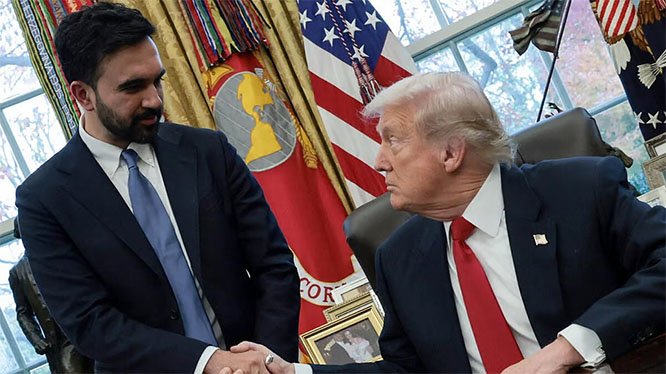
New York/Washington: US President Donald Trump has again claimed to have solved the conflict between India and Pakistan, repeating his assertion during a meeting with New York City Mayor-elect Zohran Mamdani in the Oval Office.

Mamdani flew to Washington DC for his first meeting with Trump in the White House on Friday. Trump said he “enjoyed” the meeting, which he described as “great.”

During remarks in the Oval Office, with Mamdani standing next to him, Trump repeated his claim that he solved the May conflict between India and Pakistan.

"I did eight peace deals of countries, including India and Pakistan,” he said.

On Wednesday, Trump had said he threatened to put 350 per cent tariffs on India and Pakistan if they did not end their conflict, repeating his claim that he solved the fighting between the nuclear-armed neighbours and that Prime Minister Narendra Modi had called him to say “we're not going to go to war.”

Since May 10, when Trump announced on social media that India and Pakistan had agreed to a “full and immediate” ceasefire after a “long night” of talks mediated by Washington, he has repeated his claim over 60 times that he “helped settle” the tensions between India and Pakistan.

India has consistently denied any third-party intervention. India launched Operation Sindoor on May 7, targeting terror infrastructure in Pakistan and Pakistan-occupied Kashmir in retaliation for the April 22 Pahalgam attack that killed 26 civilians. India and Pakistan reached an understanding on May 10 to end the conflict after four days of intense cross-border drone and missile strikes.

Mamdani emerged victorious in the closely-watched battle for New York City Mayor, becoming the first South Asian and Muslim to be elected to sit at the helm of the largest city in the US.

He had been the front-runner in the NYC Mayoral election for months and defeated Republican nominee Curtis Sliwa and political heavyweight former New York State Governor Andrew Cuomo, who ran as an independent candidate and was officially endorsed by Trump just hours before the elections.

Indian-descent Mamdani is the son of renowned filmmaker Mira Nair and Columbia University professor Mahmood Mamdani. He was born and raised in Kampala, Uganda and moved to New York City with his family when he was 7. Mamdani became a naturalised US citizen only recently, in 2018.

Comments

Add new comment

  • Coastaldigest.com reserves the right to delete or block any comments.
  • Coastaldigset.com is not responsible for its readers’ comments.
  • Comments that are abusive, incendiary or irrelevant are strictly prohibited.
  • Please use a genuine email ID and provide your name to avoid reject.
News Network
December 4,2025

indigoflight.jpg

Domestic carrier IndiGo has cancelled over 180 flights from three major airports — Mumbai, Delhi and Bengaluru — on Thursday, December 4, as the airline struggles to secure the required crew to operate its flights in the wake of new flight-duty and rest-period norms for pilots.

While the number of cancellations at Mumbai airport stands at 86 (41 arrivals and 45 departures) for the day, at Bengaluru, 73 flights have been cancelled, including 41 arrivals, according to a PTI report that quoted sources.

"IndiGo cancelled over 180 flights on Thursday at three airports-Mumbai, Delhi and Bengaluru," the source told the news agency.

Besides, it had cancelled as many as 33 flights at Delhi airport for Thursday, the source said, adding, "The number of cancellations is expected to be higher by the end of the day."

The Gurugram-based airline's On-Time Performance (OTP) nosedived to 19.7 per cent at six key airports — Delhi, Mumbai, Chennai, Kolkata, Bengaluru and Hyderabad — on December 3, as it struggled to get the required crew to operate its services, down from almost half of December 2, when it was 35 per cent.

"IndiGo has been facing acute crew shortage since the implementation of the second phase of the FDTL (Flight Duty Time Limitations) norms, leading to cancellations and huge delays in its operations across the airports," a source had told PTI on Wednesday.

Chaos continued at several major airports for the third day on Thursday because of the cancellations.

A spokesperson for the Kempegowda International Airport (KIA) in Bengaluru said that 73 IndiGo flights had been cancelled on Thursday.

At least 150 flights were cancelled and dozens of others delayed on Wednesday, airport sources said, leaving thousands of travellers stranded, according to news agency Reuters.

The Directorate General of Civil Aviation (DGCA) has said it is investigating IndiGo flight disruptions and has asked the airline to submit the reasons for the current situation, as well as its plans to reduce flight cancellations and delays.

It may be mentioned here that the pilots' body, Federation of Indian Pilots (FIP), has alleged that IndiGo, despite getting a two-year preparatory window before the full implementation of new flight duty and rest period norms for cockpit crew, "inexplicably" adopted a "hiring freeze".

The FIP said it has urged the safety regulator, the DGCA, not to approve airlines' seasonal flight schedules unless they have adequate staff to operate their services "safely and reliably" in accordance with the New Flight Duty Time Limitations (FDTL) norms.

In a letter to the DGCA late on Wednesday, the FIP urged the DGCA to consider re-evaluating and reallocating slots to other airlines, which have the capacity to operate them without disruption during the peak holiday and fog season if IndiGo continues to "fail in delivering on its commitments to passengers due to its own avoidable staffing shortages."

Comments

Add new comment

  • Coastaldigest.com reserves the right to delete or block any comments.
  • Coastaldigset.com is not responsible for its readers’ comments.
  • Comments that are abusive, incendiary or irrelevant are strictly prohibited.
  • Please use a genuine email ID and provide your name to avoid reject.