At least 110 farmers killed in ‘gruesome’ Nigeria massacre

News Network
November 30, 2020

A “gruesome” massacre against farmers in northeastern Nigeria killed at least 110 people, the United Nations has said, raising tolls initially indicating 43 and then at least 70 dead.

The killings took place in the early afternoon of Saturday in the village of Koshobe and other rural communities in the Jere local government area near Maiduguri, the capital of the conflict-hit Borno state.

“Armed men on motorcycles led a brutal attack on civilian men and women who were harvesting their fields,” Edward Kallon, the UN’s humanitarian coordinator in Nigeria, said in a statement on Sunday.

“At least 110 civilians were ruthlessly killed and many others were wounded in this attack,” he added, noting that several women are believed to have been kidnapped.

“The incident is the most violent direct attack against innocent civilians this year. I call for the perpetrators of this heinous and senseless act to be brought to justice,” Kallon said.

There has been no claim of responsibility for the attack, but the armed group Boko Haram and its splinter faction, the Islamic State in West Africa Province (ISWAP), have carried out a series of deadly assaults in the area in recent years.

Both groups are active in the region, where fighters have killed more than 30,000 people in the past decade during an armed campaign that has displaced some two million and has spread to neighbouring countries including Niger, Chad and Cameroon.

Nigerian President Muhammadu Buhari, who took office in 2015 promising to fix the security crisis, denounced the latest massacre.

“I condemn the killing of our hard-working farmers by terrorists in Borno state. The entire country is hurt by these senseless killings,” the president said via his spokesman.

But security analyst Sulaiman Aledeh said many in the country are growing frustrated with the authorities’ inability to contain the conflict.

“If you’ve seen [what happened to] Niger, President Mahamadou Issoufou had to sack his security chiefs when 89 soldiers were killed. So Nigerians are asking why are you keeping these people,” he told Al Jazeera from Lagos.

“The problem here has to do with the government of the day seems to be rewarding loyalty over professionalism. They [Nigerians] think by now the government should’ve tried a few good other men to get them out of this mess.”

‘So much suffering’

Earlier on Sunday, Borno Governor Babaganan Umara Zulum told journalists that at least 70 farmers were killed. He was speaking in Zabarmari village after attending the burial of 43 people whose bodies were recovered on Saturday.

Zulum urged the federal government to recruit more soldiers, Civilian Joint Task Force members and civil defence fighters to protect farmers in the region.

He described people facing desperate choices.

“In one side, they stay at home they may be killed by hunger and starvation; on the other, they go out to their farmlands and risk getting killed by the insurgents,” he said.

Bulama Bukarti, an analyst at the Tony Blair Institute for Global Change, said the failure to control Boko Haram has devastated lives and the economy.

“The security forces are obviously losing this war,” he told Al Jazeera, describing 2019 as “the deadliest year” for Nigerian security forces since Boko Haram’s armed campaign started in 2009.

“About 800 security forces were killed, mostly in the first half of last year, and the Nigerian military responded by changing its strategy introducing what they called the ‘super camp strategy’ by which they withdrew soldiers from remote communities and rural areas and consolidated them in what they call ‘super camps’ in order to reduce military fatalities,” Bukarti said.

“The strategy succeeded in reducing military fatalities but the side-effect of that is that the Nigerian military has effectively surrendered control of rural Nigeria to Boko Haram fighters.

“You have Boko Haram ruling northeastern Nigeria and criminal gangs ruling the rural communities of northwestern Nigeria; this has a devastating effect on Nigeria’s economy and the future of the country entirely.”

Speaking to Al Jazeera from Maiduguri, Vincent Lelei, the UN’s deputy humanitarian coordinator for Nigeria, said people in the region “live in extreme fear” amid the prolonged crisis “which has led to so much suffering, so much displacement and destruction of livelihoods”.

“Borno state is a state with very good soil, there is a lot of water on the ground, and a lot of crops grow very quickly,” he said. “Given the opportunity, the livelihoods of the people could recover so quickly – but this insecurity, this problem of violence against unarmed civilians is reducing those opportunities.”


Comments

Add new comment

  • Coastaldigest.com reserves the right to delete or block any comments.
  • Coastaldigset.com is not responsible for its readers’ comments.
  • Comments that are abusive, incendiary or irrelevant are strictly prohibited.
  • Please use a genuine email ID and provide your name to avoid reject.
News Network
January 31,2026

Roy.jpg

Bengaluru: The shooting incident involving CJ Roy, founder of the Confident Group, has once again put the spotlight on a businessman whose life has swung between flamboyant global success and persistent controversy at home.

Though Roy’s business interests extended across continents, his roots lay firmly in Karnataka. An alumnus of Christ School in Bengaluru, he later moved to Tumakuru to pursue an engineering degree. Those familiar with his early years describe him as intensely ambitious, beginning his career as a salesman at a small electronics firm dealing in computers.

Roy’s entry into large-scale real estate came through the Crystal Group, where he worked closely with Latha Namboothiri and rose from manager to director. However, the launch of the Confident Group in 2005 was clouded by industry speculation. Insiders speak of a fallout involving alleged “benami” properties and claims of deception that ultimately led to his independent venture—an episode Roy spent years trying to distance himself from, according to associates.

A tale of two cities

Roy’s professional trajectory diverged sharply across geographies.

In Dubai, he built a reputation as a bold and efficient developer, completing massive luxury residential projects in record time—some reportedly within 11 months. His rapid project delivery and lavish lifestyle in the Emirates earned him admiration and visibility in the real estate sector.

In Bengaluru, however, his image remained far more fractured. Sources say Roy stayed away from the city for several years amid disputes over unpaid dues to vendors and suppliers. Several projects were allegedly stalled, with accusations of unfulfilled commitments to cement and steel suppliers continuing to follow him.

Roy’s return to Bengaluru’s business and social circles began around 2018, marked by a conscious attempt at rebranding. His appointment as Honorary Consul of the Slovak Republic added diplomatic legitimacy, which he complemented with visible CSR initiatives, including ambulance donations and high-profile charity events.

Heavy police presence in Langford Town

Following the incident, police personnel from the Central division were deployed outside the Confident Group building in Langford Town, which also houses the Slovak Honorary Consulate in Bengaluru.

The otherwise busy premises near Hosur Road wore a deserted look on Friday, reflecting the shock and uncertainty that followed the tragedy.

Comments

Add new comment

  • Coastaldigest.com reserves the right to delete or block any comments.
  • Coastaldigset.com is not responsible for its readers’ comments.
  • Comments that are abusive, incendiary or irrelevant are strictly prohibited.
  • Please use a genuine email ID and provide your name to avoid reject.
News Network
January 20,2026

KCFabudhabi.jpg

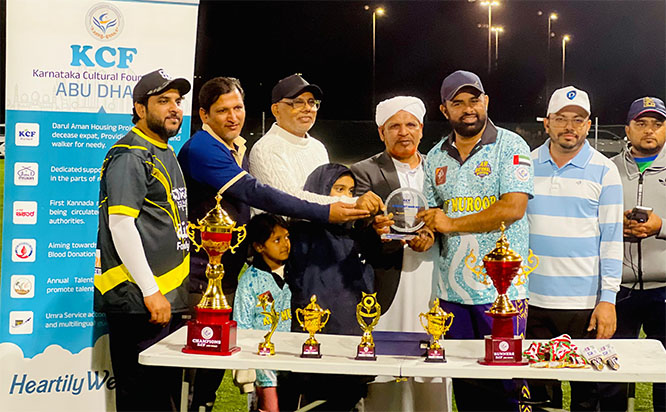
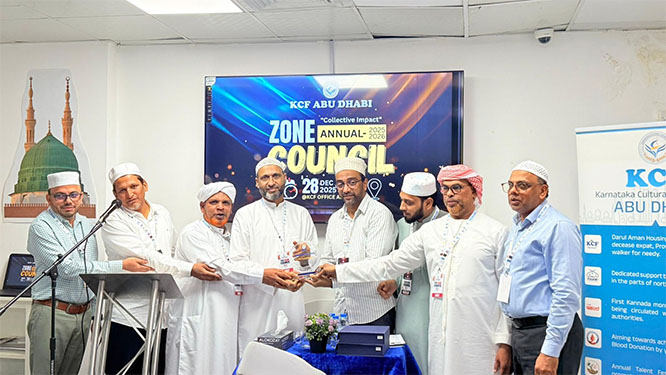
KCF, a global socio-cultural organisation of Karnataka expatriates, is actively involved in education, humanitarian initiatives and community well-being across several countries. The awardees were selected following a structured evaluation of nominations by the Annual Council Program Committee, based on the depth, consistency and long-term impact of their social service.

One of the award recipients, Abdul Razak Haji, a prominent UAE-based entrepreneur from the Qamcon Group of Companies, was honoured for his significant contributions to society. Through both his professional journey and personal initiatives, he has supported numerous employees and families, while also extending assistance in education, housing for the underprivileged and various charitable causes, largely carried out quietly over the years. His award was presented earlier during the Annual Council Program held at the KCF Abu Dhabi office.

The second award was conferred on Latheef Kakkinje, a young social worker based in Abu Dhabi, in recognition of his active involvement in community engagement programmes, sports initiatives, talent festivals and family-oriented social activities. His consistent volunteering efforts and commitment to humanitarian causes were highly appreciated by the selection committee.

The award presentation ceremony for Latheef Kakkinje was held at the Zayed Cricket Stadium (Astro Turf Ground) in the presence of Kedumbady Ibrahim Saqafi, President of KCF UAE; Ibrahim, General Secretary; Kabeer Bayambady, President of KCF Abu Dhabi; Ummer Ishwaramangila, General Secretary; along with other members of the KCF Abu Dhabi cabinet.

Congratulating both awardees, KCF leaders reiterated the organisation’s commitment to recognising individuals who selflessly work for social upliftment and community service.

KCFabudhabi1.jpg

Comments

Add new comment

  • Coastaldigest.com reserves the right to delete or block any comments.
  • Coastaldigset.com is not responsible for its readers’ comments.
  • Comments that are abusive, incendiary or irrelevant are strictly prohibited.
  • Please use a genuine email ID and provide your name to avoid reject.
News Network
January 20,2026

Mangaluru: In a major step towards strengthening rural innovation, the Office of the Principal Scientific Adviser (PSA) to the Government of India is supporting the establishment of RuTAGe Smart Village Centres (RSVCs) across the country through collaborations with academic institutions, civil society organisations and philanthropic partners.

As part of this national initiative, Nitte (Deemed to be University) will set up the first RSVCs in the region at Nitte GP in Udupi district and at the Nitte Health Centre, Sevanjali Trust, Farangipete, in Dakshina Kannada district. The centres will be inaugurated on January 21. In South India, the programme is being implemented by the Section Infin-8 Foundation (SI-8).

Speaking to reporters on Monday, SI-8 founder-director Vishwas US said experts from Nitte University and SI-8 would work closely with farmers, students, youth and local entrepreneurs to adapt and deploy technologies tailored to local needs.

Project head Prof Iddya Karunasagar, representing Nitte DU, said the RSVCs at Nitte and Farangipete would serve as demonstration hubs for a wide range of agriculture, energy, skill-development and assistive technologies. These include solar dryers for fruits, vegetables and crops; soil-testing solutions; power weeders and women-friendly farm tools; wind-powered devices for rural artisans; grain storage systems; grass-cutting and tree-climbing equipment; and liquid fertiliser production using cowshed waste.

SI-8 CEO Aravind C Kumar said the centres would also provide access to digital and knowledge-based platforms such as ISRO applications, government scheme portals, market linkage tools and gamified learning resources, along with assistive technologies for persons with visual impairments.

Highlighting the broader impact of the initiative, Principal Scientific Adviser Prof Ajay Kumar Sood said it demonstrated how applied research could bridge the rural–urban divide and help create self-reliant, technology-enabled villages.

The initiative has been made possible through philanthropic support from Dr NC Murthy of ACM Business Solutions, LLC, USA. Dr Sapna Poti, Director (Strategic Alliances) at the Office of the Principal Scientific Adviser, said the long-term objective is to build self-sufficient, technology-driven communities capable of generating sustainable livelihoods on their own.

Comments

Add new comment

  • Coastaldigest.com reserves the right to delete or block any comments.
  • Coastaldigset.com is not responsible for its readers’ comments.
  • Comments that are abusive, incendiary or irrelevant are strictly prohibited.
  • Please use a genuine email ID and provide your name to avoid reject.