New Zealand mosque shooter had visited India before carrying out attack: Report

Agencies
December 8, 2020

Wellington, Dec 8: Brenton Tarrant, the Australian-born attacker who killed 51 Muslim worshippers at two mosques in Christchurch, travelled extensively around the world, including India where he spent nearly three months, before moving to New Zealand to carry out the country's worst massacre in 2019, according to a detailed report into the shootings released on Tuesday.

Five Indians were among those killed in the terror attack on March 15 last year that also left dozens of others wounded and had shaken New Zealand, regarded as one of the most peaceful countries in the world.

The 792-page Royal Commission of Inquiry report notes that after leaving school, the 30-year-old attacker worked as a personal trainer at a local gym until 2012 when he suffered an injury.

"He never again worked in paid employment. Instead, he lived off the money that he had received from his father and income from investments made with it With the money from his father, the individual travelled extensively. First, in 2013, he explored New Zealand and Australia and then between 2014 and 2017 he travelled extensively around the world," it said.

Between April 15, 2014, and August 17, 2017, the individual travelled extensively and always alone, except for his travel to North Korea as part of a tour group.

"The longest visit the individual made to any one country was to India where he stayed between November 21, 2015, and February 18, 2016. The countries that he visited for periods of about a month or more included China, Japan, Russia, South Korea among others," said the report that took about 18 months to compile.

The inquiry report did not provide details of what Tarrant was doing in India during his nearly three-month stay in India.

However, The New Zealand Herald reported that there was no evidence that he met with extremist groups while oversees, investigated potential targets, or carried out any training, in a report.

The inquiry did not believe that the travel fuelled his racist views to any great extent, rather concluding: "Put simply, he travelled widely because he could and had nothing better to do." it said.

But he did visit right-wing internet forums, subscribe to right-wing YouTube channels, and "read a great deal about immigration, far right political theories and historical struggles between Christianity and Islam", it added.

About the attacker's upbringing in Australia, the Royal Commission of Inquiry report notes that it was marked by a number of stressors, including his parents' separation and his mother's subsequent relationship with an abusive partner.

He expressed "racist ideas" from an early age and was also an avid internet user, it said.

"In February 2017, he booked flights to New Zealand to arrive in Auckland on August 17, 2017, and then on to Dunedin on August 20, 2017. We see these activities as the first manifestations of his terrorist intent," said the report that details the extensive world travels of Tarrant.

"We are satisfied that by January 2017 the individual had a terrorist attack in mind. We are also satisfied that when the individual came to live in New Zealand on 17 August 2017, it was with a fully-developed terrorist ideology based on his adoption of the Great Replacement theory and his associated beliefs that immigration, particularly by Muslim migrants, into Western countries is an existential threat to Western society and that the appropriate response (at least for him) was violence," it said.

In a 74-page manifesto the attacker had posted online, he described himself as a white supremacist who was out to avenge attacks in Europe perpetrated by Muslims.

Tarrant was sentenced in August to life in prison without the possibility of parole after pleading guilty to 92 counts of terrorism, murder and attempted murder.

The report contains interviews with hundreds of people including security agencies, Muslim community leaders, international experts and officials in England, Norway and Australia, along with Prime Minister Jacinda Ardern, who was praised globally for her compassionate response to the attack.

The prime minister swiftly banned the sale of the high-capacity semi-automatic weapons used in the attack at two mosques in the South Island city and launched a global movement against online extremism.

Comments

Add new comment

  • Coastaldigest.com reserves the right to delete or block any comments.
  • Coastaldigset.com is not responsible for its readers’ comments.
  • Comments that are abusive, incendiary or irrelevant are strictly prohibited.
  • Please use a genuine email ID and provide your name to avoid reject.
News Network
January 23,2026

oscar.jpg

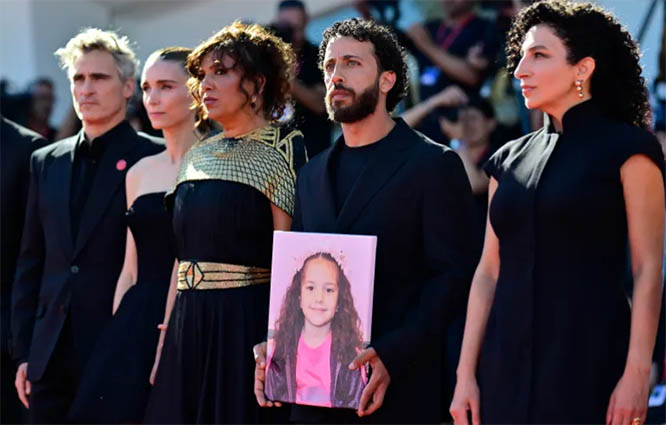
The Voice of Hind Rajab, inspired by the tragic final moments of a young Palestinian girl killed by Israeli fire in Gaza, has been nominated for an Academy Award in the Best International Feature Film category.

Directed by Tunisian filmmaker Kaouther Ben Hania, the film recounts the true story of five-year-old Hind Rajab, who lost her life in January 2024 while fleeing Israeli bombardment with her family.

The film features the real audio of Hind’s desperate call to the Palestinian Red Crescent Society, where she pleaded for help moments before the vehicle she was in was struck by 355 bullets.

The haunting narrative begins with a brief call made from the besieged Tel al-Hawa neighborhood of Gaza, where gunfire and armored vehicles drowned out every sound.

After witnessing the brutal killing of her family, she made a trembling call, her voice reduced to a whisper as she spoke of the massacre and her unbearable loneliness as the sole survivor.

Premiering at the Venice International Film Festival in September 2025, The Voice of Hind Rajab garnered widespread acclaim, receiving a record-setting 23-minute standing ovation and the Silver Lion Grand Jury Prize, the festival’s second-highest honor.

In her acceptance speech, Ben Hania dedicated the film to humanitarian workers and first responders in Gaza, emphasizing that Hind's voice symbolizes countless civilians affected by war.

She aims to give voice to victims often reduced to mere statistics, highlighting the broader suffering of civilians in war zones.

The film’s Oscar nomination underscores its powerful storytelling and ethical approach to depicting real-life tragedy, making it a crucial piece of contemporary cinema.

It serves not only as a narration of individual tragedy but also as an artistic and documentary response to the silence and censorship that often overshadow West Asian struggles and wars.

Using an innovative method she calls docufiction, Ben Hania bridges unvarnished reality and narrative structure, creating a work that is both artistically valuable and socially impactful.

Born in 1977 in Sidi Bouzid—later the epicenter of the Arab revolution—her background profoundly influenced her worldview and artistic approach.

She is a graduate of the Higher School of Audiovisual Arts of Tunis, Pantheon-Sorbonne University, and La Fémis in Paris, where her studies equipped her with the technical and theoretical tools needed to address complex subjects. 

Comments

Add new comment

  • Coastaldigest.com reserves the right to delete or block any comments.
  • Coastaldigset.com is not responsible for its readers’ comments.
  • Comments that are abusive, incendiary or irrelevant are strictly prohibited.
  • Please use a genuine email ID and provide your name to avoid reject.
News Network
February 1,2026

Bengaluru: The Karnataka High Court has refused to quash an investigation against a WhatsApp group administrator accused of allowing the circulation of obscene and offensive images depicting Hindutva politicians and idols in 2021.

Justice M Nagaprasanna observed that, prima facie, the ingredients of the offence under Section 295A of the Indian Penal Code were made out. “The offence under Section 295A of the IPC is met to every word of its ingredient, albeit prima facie,” the judge said.

The petitioner, Sirajuddin, a resident of Belthangady taluk in Dakshina Kannada district, had challenged the FIR registered against him at the CEN (Cyber, Economics and Narcotics) police station, Mangaluru, for offences under Section 295A of the IPC and Section 67 of the Information Technology Act. Section 295A relates to punishment for deliberate and malicious acts intended to outrage the religious feelings of any class of citizens.

According to the complaint filed by K Jayaraj Salian, also a resident of Belthangady taluk, he received a WhatsApp group link from an unknown source and was added to the group after accessing it. The group reportedly had six administrators and around 250 participants, where obscene and offensive images depicting Hindu deities and certain political figures were allegedly circulated repeatedly.

Sirajuddin was arrested in connection with the case and later released on bail on February 16, 2021. He argued before the court that he was being selectively targeted, while other administrators—including the creator of the group—were neither arrested nor investigated. He also contended that the Magistrate could not have taken cognisance of the offence under Section 295A without prior sanction under Section 196(1) of the CrPC.

Rejecting the argument, Justice Nagaprasanna held that prior sanction is required only at the stage of taking cognisance, and not at the stage of registration of the crime or during investigation.

The judge noted that the State had produced the entire investigation material before the court. “A perusal of the material reveals depictions of Hindu deities in an extraordinarily obscene, demeaning and profane manner. The content is such that its reproduction in a judicial order would itself be inappropriate,” the court said, adding that the material, on its face, had the tendency to outrage religious feelings and disturb communal harmony.

Observing that the case was still at the investigation stage, the court said it could not interdict the probe at this juncture. However, it expressed concern that the investigating officer appeared to have not proceeded uniformly against all administrators. The court clarified that if the investigation revealed the active involvement of any member in permitting the circulation of such content, they must also be proceeded against.

“At this investigative stage, any further observation by this Court would be unnecessary,” the order concluded.

Comments

Add new comment

  • Coastaldigest.com reserves the right to delete or block any comments.
  • Coastaldigset.com is not responsible for its readers’ comments.
  • Comments that are abusive, incendiary or irrelevant are strictly prohibited.
  • Please use a genuine email ID and provide your name to avoid reject.
News Network
January 20,2026

iran.jpg

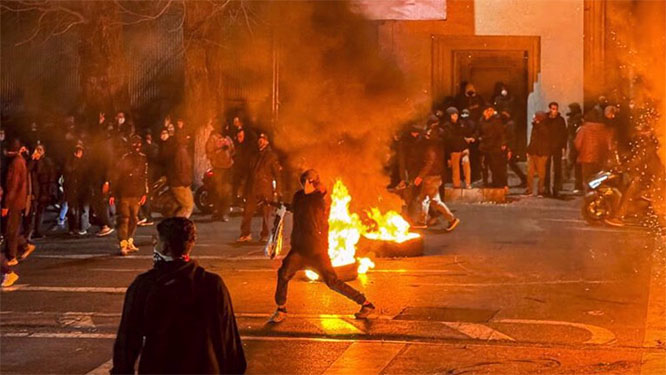
Iranian security and intelligence forces have captured more than 470 individuals in three provinces, identified as key figures behind the recent wave of violent unrest and terrorist activities linked to foreign-backed networks.

The Intelligence Ministry's provincial office in Khorasan Razavi announced on Monday the arrest of 192 armed terrorists, identified as the main agents behind recent riots in the region. 

According to an official statement, the detainees were involved in the killing of several security personnel and civilians, setting fire to mosques, public service facilities, and buses, as well as attacks on military and law enforcement centers.

The seized items from the group include several bulletproof vests, Kalashnikov rifles, hunting weapons, Winchester rifles, and various cold weapons such as daggers, swords, brass knuckles, tactical knives, crossbows, and chains.

Evidence indicates that some of the individuals were tied to hostile movements and terrorist organizations, with links overseas. Others were identified as members of violent criminal gangs, actively taking part in the unrest alongside their associates.

Simultaneously, in the western province of Lorestan, the IRGC announced the arrest of 134 individuals as the main leaders and influential field agents of a US-Israeli terrorist network.

The IRGC statement stated that these individuals formed terrorist cells during the recent unrest, committing "Daesh-like" acts.

They wounded security forces with firearms and cold weapons, and burned and destroyed public and private properties, including mosques, shops, banks, and private and public vehicles.

In the northwestern province of Zanjan, the police reported detaining 150 people identified as principal leaders and agents behind recent riots.

Authorities noted that these individuals were responsible for destroying public and private property and intentionally setting fire to vehicles in the province's squares.

Their crimes include shedding the blood of innocent people, destroying public and private property, attempting to enter military sites, disrupting public order, and spreading terror among citizens.

A variety of cold weapons were reportedly seized from the detainees.

What began late last month as peaceful protests over economic hardship across Iran turned violent after public statements by US and Israeli regime figures encouraged vandalism and disorder.

During the unrest, foreign-backed mercenaries rampaged through cities, killing security forces and civilians and damaging public property.

Comments

Add new comment

  • Coastaldigest.com reserves the right to delete or block any comments.
  • Coastaldigset.com is not responsible for its readers’ comments.
  • Comments that are abusive, incendiary or irrelevant are strictly prohibited.
  • Please use a genuine email ID and provide your name to avoid reject.