




No Omicron deaths yet, says WHO as variant spreads worldwide

Agencies
December 4, 2021

illustration.jpg

Geneva, Dec 4: The Omicron variant has been detected in 38 countries but no deaths have yet been reported, the WHO said on Friday, as authorities worldwide rushed to stem the spread of the heavily mutated Covid-19 strain.

The United States and Australia became the latest countries to confirm their first locally transmitted cases of the variant, as the number of Omicron infections from a Christmas party in Norway rose to 13.

The World Health Organization has warned it could take weeks to determine how infectious the variant is, whether it causes more severe illness and how effective current treatments and vaccines are against it.

"We're going to get the answers that everybody out there needs," WHO emergencies director Michael Ryan said.

The WHO said on Friday it had still not seen any reports of deaths related to Omicron, but the new variant's spread has cast recovery into doubt and led to warnings that it could cause more than half of Europe's Covid cases in the next few months.

A preliminary study by researchers in South Africa, where the new variant was first reported on November 24, suggests the strain is three times more likely to cause reinfections compared to the Delta or Beta strains.

Doctors said there had been a spike in the number of children under five admitted to hospital since Omicron emerged, but stressed it was too early to know if young children were particularly susceptible.

"The incidence in those under-fives is now second-highest, and second only to the incidence in those over 60," said Wassila Jassat from the National Institute for Communicable Diseases.

In the United States, two cases involved residents with no recent international travel history -- showing that Omicron is already circulating inside the country.

"This is a case of community spread," the Hawaii Health Department confirmed.

US President Joe Biden on Thursday unveiled his plans to battle Covid-19 during the winter, with new testing requirements for travellers and a surge in vaccination efforts.

All incoming travellers will need to test negative within a day of their flights, and rapid tests that currently cost $25 will be covered by insurance and distributed free to the uninsured.

Australia on Friday reported three students had tested positive for the variant.

The cases, detected in the country's largest city of Sydney, come despite a sweeping ban on non-citizens entering the country and restrictions on flights from southern Africa, with multiple countries rushing to limit travel from the region in the last week.

"It's quite a kick in the nuts," said Sabine Stam, who runs a South African tour company and whose customers are demanding refunds for the peak December season. "Everyone is too scared to set a new travel date," she told AFP.

In Norway, officials said at least 13 people who contracted Covid-19 after an office Christmas party in the capital Oslo last week were confirmed as having the Omicron variant.

All of those who have tested positive have so far only had mild symptoms, such as headaches, sore throats and coughs, city health official Tine Ravlo told AFP.

But the Norwegian government ushered in a slew of restrictions in greater Oslo after fears of the cluster first surfaced.

On Friday, Malaysia also reported a first Omicron infection in a foreign student arriving from South Africa on November 19. Sri Lanka also announced its first case, a citizen returning from South Africa.

The variant's detection and spread represent a major challenge to efforts to end the pandemic.

Rising infections of the Delta variant had already forced European governments to reintroduce mandatory mask-wearing, social distancing measures, curfews or lockdowns, leaving businesses fearing another grim Christmas.

Belgian authorities said on Friday that primary schools would close a week early for the Christmas holidays.

Germany had already announced its regional leaders had agreed new measures including a ban on fireworks at new year parties to discourage large gatherings.

In the UK, various government ministers have been expressing diverging opinions, not only on the idea of hosting Christmas parties, but also on the kind of conduct deemed acceptable.

"For what it's worth, I don't think there should be much snogging under the mistletoe," said one minister, Therese Coffey. 

Spreading twice as quickly as Delta

Underscoring increasing concerns about omicron, scientists in South Africa said Friday that the newest coronavirus variant appeared to spread more than twice as quickly as delta, which had been considered the most contagious version of the virus.

Omicron’s rapid spread results from a combination of contagiousness and an ability to dodge the body’s immune defenses, the researchers said. But the contribution of each factor is not yet certain.

“We’re not sure what that mixture is,” said Carl Pearson, a mathematical modeler at the London School of Hygiene and Tropical Medicine who led the analysis. “It’s possible that it might even be less transmissible than delta.”

Pearson posted the results on Twitter. The research has not yet been peer-reviewed nor published in a scientific journal.

On Thursday, researchers reported that the new variant may partly dodge immunity gained from a previous infection. It’s still unclear whether, or to what degree, omicron may evade protection conferred by the vaccines.

But some experts said they would expect the outcome to be similar.

“It’s scary that there are so many reinfections happening, which means that vaccine-induced immunity may also be impacted in similar way,” said Akiko Iwasaki, an immunologist at Yale University.

The omicron variant has appeared in nearly two dozen countries. The United States has identified at least 10 cases in six states. President Joe Biden reiterated Friday morning that his administration’s newest pandemic measures, which were announced this week, should be sufficient to blunt the spread of omicron.

The variant was first identified in South Africa on Nov. 23 and has quickly come to account for about three-quarters of new cases in that country. South Africa reported 11,535 new coronavirus cases Thursday, a 35 per cent jump from the day before, and the proportion of positive test results increased to 22.4 per cent from 16.5 per cent.

“It is actually really striking how quickly it seems to have taken over,” said Juliet Pulliam, director of an epidemiological modeling center at Stellenbosch University in South Africa, who led the earlier research on immunity.

Pulliam and her colleagues estimated that the risk of reinfection with the omicron variant is roughly 2.4 times as much as the risk seen with the original version of the coronavirus.

Comments

Add new comment

  • Coastaldigest.com reserves the right to delete or block any comments.
  • Coastaldigset.com is not responsible for its readers’ comments.
  • Comments that are abusive, incendiary or irrelevant are strictly prohibited.
  • Please use a genuine email ID and provide your name to avoid reject.
News Network
January 20,2026

Mangaluru: In a major step towards strengthening rural innovation, the Office of the Principal Scientific Adviser (PSA) to the Government of India is supporting the establishment of RuTAGe Smart Village Centres (RSVCs) across the country through collaborations with academic institutions, civil society organisations and philanthropic partners.

As part of this national initiative, Nitte (Deemed to be University) will set up the first RSVCs in the region at Nitte GP in Udupi district and at the Nitte Health Centre, Sevanjali Trust, Farangipete, in Dakshina Kannada district. The centres will be inaugurated on January 21. In South India, the programme is being implemented by the Section Infin-8 Foundation (SI-8).

Speaking to reporters on Monday, SI-8 founder-director Vishwas US said experts from Nitte University and SI-8 would work closely with farmers, students, youth and local entrepreneurs to adapt and deploy technologies tailored to local needs.

Project head Prof Iddya Karunasagar, representing Nitte DU, said the RSVCs at Nitte and Farangipete would serve as demonstration hubs for a wide range of agriculture, energy, skill-development and assistive technologies. These include solar dryers for fruits, vegetables and crops; soil-testing solutions; power weeders and women-friendly farm tools; wind-powered devices for rural artisans; grain storage systems; grass-cutting and tree-climbing equipment; and liquid fertiliser production using cowshed waste.

SI-8 CEO Aravind C Kumar said the centres would also provide access to digital and knowledge-based platforms such as ISRO applications, government scheme portals, market linkage tools and gamified learning resources, along with assistive technologies for persons with visual impairments.

Highlighting the broader impact of the initiative, Principal Scientific Adviser Prof Ajay Kumar Sood said it demonstrated how applied research could bridge the rural–urban divide and help create self-reliant, technology-enabled villages.

The initiative has been made possible through philanthropic support from Dr NC Murthy of ACM Business Solutions, LLC, USA. Dr Sapna Poti, Director (Strategic Alliances) at the Office of the Principal Scientific Adviser, said the long-term objective is to build self-sufficient, technology-driven communities capable of generating sustainable livelihoods on their own.

Comments

Add new comment

  • Coastaldigest.com reserves the right to delete or block any comments.
  • Coastaldigset.com is not responsible for its readers’ comments.
  • Comments that are abusive, incendiary or irrelevant are strictly prohibited.
  • Please use a genuine email ID and provide your name to avoid reject.
News Network
January 28,2026

ajit.jpg

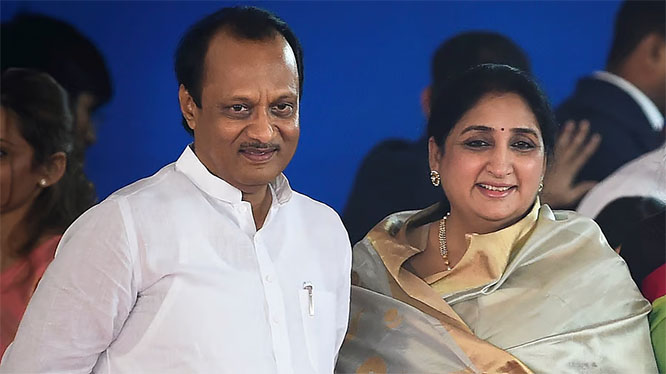
Mumbai: The sudden death of Maharashtra Deputy Chief Minister Ajit Pawar in a plane crash in his hometown of Baramati has plunged the state into political uncertainty, raising a pressing question for both the Nationalist Congress Party (NCP) and its rival faction, the Nationalist Congress Party (Sharadchandra Pawar): what next?

For the two factions that emerged after the dramatic split of June–July 2023, the moment marks their gravest challenge yet. Many believe the answer now rests with party founder Sharad Pawar.

Sharad Pawar, who founded the NCP in 1999 after parting ways with the Congress over Sonia Gandhi’s foreign origin, has already indicated his intention to step away from electoral politics once his Rajya Sabha term ends in April 2026.

Speaking at a public event in Baramati ahead of his 85th birthday on December 12, 2025, Pawar said he would not contest any further elections. “I have contested 14 elections. The younger generation needs to be given an opportunity,” he said, adding that he would decide later whether to seek another Rajya Sabha term.

Often described as the Bhishma Pitamah of Indian politics, Pawar also spoke of his gradual withdrawal from active leadership. “For the first 30 years, I handled everything. For the next 25–30 years, Ajit Dada handled responsibilities. Now, arrangements must be made for new leadership,” he said.

Ajit Pawar’s death has dramatically altered that transition, especially as he was working towards reunifying the two NCP factions.

“After the developments of June–July 2023 and the 2024 Lok Sabha and Vidhan Sabha elections, there were deep changes within the family and the party. In the last six months, serious efforts were made to reunite. Even workers from both sides wanted unity. This is a massive blow,” a Pawar family insider told DH over phone from Baramati.

Electoral outcomes over the past year reflected the split. In the 2024 Lok Sabha elections, NCP (SP) recorded the best strike rate in Maharashtra, winning eight of the 10 seats it contested. The NCP, by contrast, won just one seat out of four.

However, the trend reversed in the subsequent Vidhan Sabha elections, where the NCP emerged stronger, securing 41 of the 288 seats, while NCP (SP) managed only 10.

Within NCP (SP), Sharad Pawar’s daughter Supriya Sule serves as Working President, followed by leaders such as Rohit Pawar, state president Shashikant Shinde and former state chief Jayant Patil.

In the NCP, Praful Patel is the Working President and Raigad MP Sunil Tatkare heads the state unit. Ajit Pawar’s wife, Sunetra Pawar, is a Rajya Sabha MP, while their sons Parth and Jay are not actively involved in day-to-day politics. Parth Pawar briefly entered electoral politics in 2019 but lost the Lok Sabha election from Maval. Jay Pawar’s political debut was under consideration.

With Ajit Pawar gone, speculation has intensified that a member of the family may be asked to assume a larger role. For now, Sunetra Pawar is expected to play a key coordinating role in party affairs, alongside Patel and Tatkare.

The NCP continues to have several heavyweight leaders, including Chhagan Bhujbal, Hasan Mushrif, Dattatreya Bharne, Manikrao Kokate and Dhananjay Munde.

Ajit Pawar had already begun steps towards reconciliation between the two factions. While they contested the Pune and Pimpri-Chinchwad municipal elections separately, they later decided to fight the zilla parishad elections together under the ‘clock’ symbol—seen as the first formal step towards reunification.

Nagpur meet and party roadmap

Both NCP factions claim adherence to the ideology of ‘Shiv–Shahu–Phule–Ambedkar’. At the Rashtravadi Chintan Shivir held in Nagpur on September 19, 2025, the NCP reaffirmed its commitment to sarva dharma sambhav and discussed strengthening ties with the BJP “for the welfare and development of Maharashtra”.

In recent days, reports had suggested Ajit Pawar might return to the Maha Vikas Aghadi following the party’s poor performance in Pune municipal elections, but these claims were denied.

Big question for Maha Yuti

Ajit Pawar’s death also presents an immediate challenge for the Devendra Fadnavis-led Maha Yuti government. Pawar held crucial portfolios, including Finance, Planning and Excise. With the Budget Session approaching, appointing a new Finance Minister has become urgent.

Beyond numbers and portfolios, Maha Yuti has lost a swift decision-maker known for his administrative grip and political finesse—leaving a vacuum that will not be easy to fill.

Comments

Add new comment

  • Coastaldigest.com reserves the right to delete or block any comments.
  • Coastaldigset.com is not responsible for its readers’ comments.
  • Comments that are abusive, incendiary or irrelevant are strictly prohibited.
  • Please use a genuine email ID and provide your name to avoid reject.
News Network
January 23,2026

Karnataka Governor Thaawarchand Gehlot read only three lines from the 122-paragraph address prepared by the Congress-led state government while addressing the joint session of the Legislature on Thursday, effectively bypassing large sections critical of the BJP-led Union government.

The omitted portions of the customary Governor’s address outlined what the state government described as a “suppressive situation in economic and policy matters” under India’s federal framework. The speech also sharply criticised the Centre’s move to replace the Mahatma Gandhi National Rural Employment Guarantee Act (MGNREGA) with the Viksit Bharat–Guarantee for Rozgar and Ajeevika Mission (Gramin) Act, commonly referred to as the VB-GRAM (G) Act.

Governor Gehlot had earlier conveyed his objection to several paragraphs that were explicitly critical of the Union government. On Thursday, he confined himself to the opening lines — “I extend a warm welcome to all of you to the joint session of the State legislature. I am extremely pleased to address this august House” — before jumping directly to the concluding sentence of the final paragraph.

He ended the address by reading the last line of paragraph 122: “Overall, my government is firmly committed to doubling the pace of the State’s economic, social and physical development. Jai Hind — Jai Karnataka.”

According to the prepared speech, the Karnataka government demanded the scrapping of the VB-GRAM (G) Act, describing it as “contractor-centric” and detrimental to rural livelihoods, and called for the full restoration of MGNREGA. The state government argued that the new law undermines decentralisation, weakens labour protections, and centralises decision-making in violation of constitutional norms.

Key points from the unread sections of the speech:

•    Karnataka facing a “suppressive” economic and policy environment within the federal system

•    Repeal of MGNREGA described as a blow to rural livelihoods

•    VB-GRAM (G) Act accused of protecting corporate and contractor interests

•    New law alleged to weaken decentralised governance

•    Decision-making said to be imposed by the Centre without consulting states

•    Rights of Adivasis, women, backward classes and agrarian communities curtailed

•    Labourers allegedly placed under contractor control

•    States facing mounting fiscal stress due to central policies

•    VB-GRAM (G) Act accused of enabling large-scale corruption

Comments

Add new comment

  • Coastaldigest.com reserves the right to delete or block any comments.
  • Coastaldigset.com is not responsible for its readers’ comments.
  • Comments that are abusive, incendiary or irrelevant are strictly prohibited.
  • Please use a genuine email ID and provide your name to avoid reject.