Outbreak in 70 plus countries: WHO declares monkeypox a global emergency

News Network
July 23, 2022

monkeypox.jpg

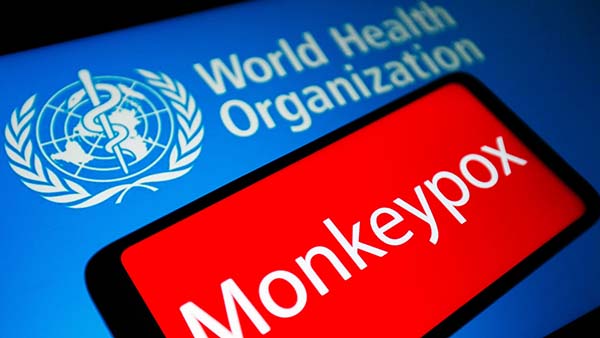
Geneva, July 23: The World Health Organisation said the expanding monkeypox outbreak in more than 70 countries is an “extraordinary” situation that now qualifies as a global emergency, a declaration Saturday that could spur further investment in treating the once-rare disease and worsen the scramble for scarce vaccines.

WHO Director-General Tedros Adhanom Ghebreyesus made the decision to issue the declaration despite a lack of consensus among members of WHO's emergency committee. It was the first time the chief of the UN health agency has taken such an action.

 “In short, we have an outbreak that has spread around the world rapidly through new modes of transmission about which we understand too little and which meets the criteria in the international health regulations,” Tedros said.

“I know this has not been an easy or straightforward process and that there are divergent views among the members" of the committee, he added.

Although monkeypox has been established in parts of central and west Africa for decades, it was not known to spark large outbreaks beyond the continent or to spread widely among people until May, when authorities detected dozens of epidemics in Europe, North America and elsewhere.

Declaring a global emergency means the monkeypox outbreak is an “extraordinary event” that could spill over into more countries and requires a coordinated global response.

WHO previously declared emergencies for public health crises such as the Covid-19 pandemic, the 2014 West African Ebola outbreak, the Zika virus in Latin America in 2016 and the ongoing effort to eradicate polio.

The emergency declaration mostly serves as a plea to draw more global resources and attention to an outbreak. Past announcements had mixed impact, given that the UN health agency is largely powerless in getting countries to act.

Last month, WHO's expert committee said the worldwide monkeypox outbreak did not yet amount to an international emergency, but the panel convened this week to reevaluate the situation.

According to the US Centers for Disease Control and Prevention, more than 16,000 cases of monkeypox have been reported in 74 countries since about May.

To date, monkeypox deaths have only been reported in Africa, where a more dangerous version of the virus is spreading, mainly in Nigeria and Congo.

In Africa, monkeypox mainly spreads to people from infected wild animals like rodents, in limited outbreaks that typically have not crossed borders.

In Europe, North America and elsewhere, however, monkeypox is spreading among people with no links to animals or recent travel to Africa.

WHO's top monkeypox expert, Dr. Rosamund Lewis, said this week that 99 per cent of all the monkeypox cases beyond Africa were in men and that of those, 98 per cent involved men who have sex with men. Experts suspect the monkeypox outbreaks in Europe and North America were spread via sex at two raves in Belgium and Spain.

Michael Head, a senior research fellow in global health at Southampton University, said it was surprising WHO hadn't already declared monkeypox a global emergency, explaining that the conditions were arguably met weeks ago.

Some experts have questioned whether such a declaration would help, arguing the disease isn't severe enough to warrant the attention and that rich countries battling monkeypox already have the funds to do so; most people recover without needing medical attention, although the lesions may be painful.

“I think it would be better to be proactive and overreact to the problem instead of waiting to react when it's too late," Head said.

He added that WHO's emergency declaration could help donors like the World Bank make funds available to stop the outbreaks both in the West and in Africa, where animals are the likely natural reservoir of monkeypox.

In the US, some experts have speculated whether monkeypox might be on the verge of becoming an entrenched sexually transmitted disease in the country, like gonorrhea, herpes and HIV.

“The bottom line is we've seen a shift in the epidemiology of monkeypox where there's now widespread, unexpected transmission,” said Dr. Albert Ko, a professor of public health and epidemiology at Yale University.

“There are some genetic mutations in the virus that suggest why that may be happening, but we do need a globally-coordinated response to get it under control,” he said.

Ko called for testing to be immediately scaled up rapidly, saying that similar to the early days of Covid-19, that there were significant gaps in surveillance.

“The cases we are seeing are just the tip of the iceberg,” he said. “The window has probably closed for us to quickly stop the outbreaks in Europe and the US, but it's not too late to stop monkeypox from causing huge damage to poorer countries without the resources to handle it.”

In the US, some experts have speculated that monkeypox might become entrenched there as the newest sexually transmitted disease, with officials estimating that 1.5 million men are at high risk of being infected.

Dr. Placide Mbala, a virologist who directs the global health department at Congo's Institute of National Biomedical Research, said he hoped any global efforts to stop monkeypox would be equitable.

Although countries including Britain, Canada, Germany and the US have ordered millions of vaccine doses, none have gone to Africa.

“The solution needs to be global,” Mbala said, adding that any vaccines sent to Africa would be used to target those at highest risk, like hunters in rural areas.

“Vaccination in the West might help stop the outbreak there, but there will still be cases in Africa,” he said.

“Unless the problem is solved here, the risk to the rest of the world will remain.” 

Comments

Add new comment

  • Coastaldigest.com reserves the right to delete or block any comments.
  • Coastaldigset.com is not responsible for its readers’ comments.
  • Comments that are abusive, incendiary or irrelevant are strictly prohibited.
  • Please use a genuine email ID and provide your name to avoid reject.
News Network
November 21,2025

israel.jpg

Local authorities say the Israeli military has expanded the so-called “yellow line” truce demarcation in Gaza City and repositioned its forces deeper into the territory in violation of a ceasefire agreement that came into force on October 10, besieging dozens of Palestinian families.

Gaza’s Government Media Office announced in a statement on Thursday that Israeli forces widened the boundary by shifting the markers, and advanced roughly 300 meters (984 feet) into the neighborhoods of Ash-Shaaf, An-Nazzaz and Baghdad Street.

The move pushed further into civilian areas, trapping families who were unable to flee as tanks rolled forward, it added.

“The fate of many of these families remains unknown amidst the shelling that targeted the area,” the office said, adding that the expansion of the yellow line shows a “blatant disregard” for the ceasefire deal.

On Friday, sources said the Israeli military carried out continued air and artillery strikes inside the so-called “yellow line” east of Khan Younis in the southern Gaza Strip.

According to the reports, Israeli warplanes and tanks targeted areas within the zone. One Palestinian was reported killed and several others wounded in the strikes, the sources said.

The fresh aggression came only a day after 25 Palestinians were killed in Israeli airstrikes on Gaza City and Khan Younis on Wednesday.

The media office reported that Israel has consistently violated the truce deal since its implementation last month, with near-daily attacks by air, artillery and direct shootings.

The office said over 400 violations have been documented. These breaches have resulted in the deaths of more than 300 Palestinians and left hundreds injured.

The Government Media Office in Gaza urged the guarantors of the ceasefire — the US, Egypt, Qatar and Turkey — to take swift action to halt the ongoing violations and facilitate the delivery of food, shelter materials, medical aid, and infrastructure equipment.

The so-called “yellow line,” set out in the agreement between Israel and Hamas resistance movement, refers to a non-physical partition where the Israeli military repositioned itself when the truce deal took effect.

It has allowed Israel, which routinely fires at Palestinians who approach the line, to retain control over more than half of the Gaza Strip.

International bodies, including the UN Independent International Commission of Inquiry, the International Association of Genocide Scholars, Amnesty International, Human Rights Watch, B’Tselem, and other rights groups, have concluded that the Israeli war on Gaza amounts to genocide.

In the attacks in Gaza since October 2023, Israel has killed at least 69,546 people and injured 170,833 others, leveling large swaths of the territory and displacing almost all of the population. 

Comments

Add new comment

  • Coastaldigest.com reserves the right to delete or block any comments.
  • Coastaldigset.com is not responsible for its readers’ comments.
  • Comments that are abusive, incendiary or irrelevant are strictly prohibited.
  • Please use a genuine email ID and provide your name to avoid reject.
News Network
November 22,2025

The Karnataka government has announced a 50% rebate on pending traffic and transport fines. The discount is available from November 21 to December 12.

The rebate applies to all traffic e-challans and violation cases booked by the RTO between 1991–92 and 2019–20. Officials clarified that the offer is not applicable to pending tax dues and is restricted only to traffic-violation fines.

Across Karnataka, more than 4 lakh RTO cases remain pending, including those involving transport vehicles. While thousands of vehicle owners have already cleared their dues, the department expects to generate substantial revenue through this limited-period rebate.

How to Pay and Avail the Discount

There are three ways to check and pay your pending fines:

1. Through Mobile Apps
Available on both Play Store and App Store:
•    Karnataka State Police (KSP) app
•    KarnatakaOne app
•    ASTraM app

Steps:
•    Enter your vehicle number in any of the above apps
•    Verify the photo/details of your vehicle
•    Pay the fine with the 50% discount applied

2. Visit a Traffic Police Station

You can pay your pending fine at any nearby traffic police station.

3. Visit the Traffic Management Centre (TMC)

•    Location: First Floor, Infantry Road, near Indian Express, Bengaluru

Transport Commissioner Yogeesh A M said, “We don't issue e-challans, so there's no online payment system.”

The department estimates ₹52 crore in pending RTO fines up to March 2020. “With the 50% rebate, we expect to collect around ₹25 crore if all dues are cleared,” he added.

Comments

Add new comment

  • Coastaldigest.com reserves the right to delete or block any comments.
  • Coastaldigset.com is not responsible for its readers’ comments.
  • Comments that are abusive, incendiary or irrelevant are strictly prohibited.
  • Please use a genuine email ID and provide your name to avoid reject.
News Network
November 26,2025

students.jpg

Bengaluru, Nov 26: Karnataka is taking its first concrete steps towards lifting a three-decade-old ban on student elections in colleges and universities. Deputy Chief Minister D.K. Shivakumar announced Wednesday that the state government will form a small committee to study the reintroduction of campus polls, a practice halted in 1989 following incidents of violence.

Speaking at a 'Constitution Day' event organised by the Karnataka Congress, Mr. Shivakumar underscored the move's aim: nurturing new political leadership from the grassroots.

"Recently, (Leader of the Opposition in Lok Sabha) Rahul Gandhi wrote a letter to me and Chief Minister (Siddaramaiah) asking us to think about restarting student elections," Shivakumar stated. "I'm announcing today that we'll form a small committee and seek a report on this."

Student elections were banned in Karnataka in 1989, largely due to concerns over violence and the infiltration of political party affiliates into campus life. The ban effectively extinguished vibrant student bodies and the pipeline of young leaders they often produced.

Mr. Shivakumar, who also serves as the Karnataka Congress president, said that former student leaders will be consulted to "study the pros and cons" of the re-introduction.

Acknowledging the history of the ban, he added, "There were many criminal activities taking place back then. We’ll see how we can conduct (student) elections by regulating such criminal activities."

The Deputy CM reminisced about his own journey, which began on campus. He recalled his political activism at Sri Jagadguru Renukacharya College leading to his first Assembly ticket in 1985 at the age of 23. "That's how student leadership was at the time. Such leadership has gone today. College elections have stopped," he lamented, adding that for many, college elections were "like a big movement" where leaders were forged.

The move, driven by the Congress high command's push to cultivate young talent, will face scrutiny from academics and university authorities who have, in the past, expressed concern that the return of polls could disrupt the peaceful academic environment and turn campuses into political battlegrounds.

Comments

Add new comment

  • Coastaldigest.com reserves the right to delete or block any comments.
  • Coastaldigset.com is not responsible for its readers’ comments.
  • Comments that are abusive, incendiary or irrelevant are strictly prohibited.
  • Please use a genuine email ID and provide your name to avoid reject.