Pollution kills 9 million people a year globally

News Network
May 18, 2022

global.jpg

A new study blames pollution of all types for 9 million deaths a year globally, with the death toll attributed to dirty air from cars, trucks, and industry rising 55 per cent since 2000.

That increase is offset by fewer pollution deaths from primitive indoor stoves and water contaminated with human and animal waste, so overall pollution deaths in 2019 are about the same as in 2015.

The United States is the only fully industrialised country in the top 10 nations for total pollution deaths, ranking 7th with 142,883 deaths blamed on pollution in 2019, sandwiched between Bangladesh and Ethiopia, according to a new study in the journal The Lancet Planetary Health.

Tuesday's pre-pandemic study is based on calculations derived from the Global Burden of Disease database and the Institute for Health Metrics and Evaluation in Seattle.

India and China lead the world in pollution deaths with nearly 2.4 million and almost 2.2 million deaths a year, but the two nations also have the world's largest populations.

When deaths are put on a per population rate, the United States ranks 31st from the bottom at 43.6 pollution deaths per 100,000. Chad and the Central African Republic ranked the highest with rates of about 300 pollution deaths per 100,000, more than half of them due to tainted water, while Brunei, Qatar, and Iceland have the lowest pollution death rates ranging from 15 to 23. The global average is 117 pollution deaths per 100,000 people.

Pollution kills about the same number of people a year around the world as cigarette smoking and second-hand smoke combined, the study said.

“9 million deaths is a lot of deaths,” said Philip Landrigan, director of the Global Public Health Program and Global Pollution Observatory at Boston College.

“The bad news is that it's not decreasing,” Landrigan said. “We're making gains in the easy stuff and we're seeing the more difficult stuff, which is the ambient (outdoor industrial) air pollution and the chemical pollution, still going up.”

It doesn't have to be this way, researchers said.

“They are preventable deaths. Each and every one of them is a death that is unnecessary,” said Dr Lynn Goldman, dean of the George Washington University School of Public Health, who wasn't part of the study. She said the calculations made sense and if anything was so conservative about what it attributed to pollution, that the real death toll is likely higher.

The certificates for these deaths don't say pollution. They list heart disease, stroke, lung cancer, other lung issues and diabetes that are “tightly correlated” with pollution by numerous epidemiological studies, Landrigan said.

To then put these together with actual deaths, researchers look at the number of deaths by cause, exposure to pollution weighted for various factors, and then complicated exposure response calculations derived by large epidemiological studies based on thousands of people over decades of study, he said. It's the same way scientists can say cigarettes cause cancer and heart disease deaths.

“That canon of information constitutes causality,” Landrigan said. “That's how we do it.”

Five outside experts in public health and air pollution, including Goldman, told The Associated Press the study follows mainstream scientific thought
.
Dr Renee Salas, an emergency room doctor and Harvard professor who wasn't part of the study, said “the American Heart Association determined over a decade ago that exposure to (tiny pollution particles) like that generated from the burning of fossil fuels is causal for heart disease and death.”

“While people focus on decreasing their blood pressure and cholesterol, few recognise that the removal of air pollution is an important prescription to improve their heart health,” Salas said.

Three-quarters of the overall pollution deaths came from air pollution and the overwhelming part of that is “a combination of pollution from stationary sources like coal-fired power plants and steel mills on one hand and mobile sources like cars, trucks, and buses. And it's just a big global problem,” said Landrigan, a public health physician. “And it's getting worse around the world as countries develop and cities grow.”

In New Delhi, India, air pollution peaks in the winter months and last year the city saw just two days when the air wasn't considered polluted. It was the first time in four years that the city experienced a clean air day during the winter months.

That air pollution remains the leading cause of death in South Asia reconfirms what is already known, but the increase in these deaths means that toxic emissions from vehicles and energy generation is increasing, said Anumita Roychowdhury, a director at the advocacy group Centre for Science and Environment in New Delhi.

“This data is a reminder of what is going wrong but also that it is an opportunity to fix it,” Roychowdhury said.

Pollution deaths are soaring in the poorest areas, experts said.

“This problem is worst in areas of the world where population is most dense (e.g. Asia) and where financial and government resources to address the pollution problem are limited and stretched thin to address a host of challenges including health care availability and diet as well as pollution,” said Dan Greenbaum, president of the Health Effects Institute, who wasn't part of the study.


Comments

Add new comment

  • Coastaldigest.com reserves the right to delete or block any comments.
  • Coastaldigset.com is not responsible for its readers’ comments.
  • Comments that are abusive, incendiary or irrelevant are strictly prohibited.
  • Please use a genuine email ID and provide your name to avoid reject.
News Network
January 20,2026

KCFabudhabi.jpg

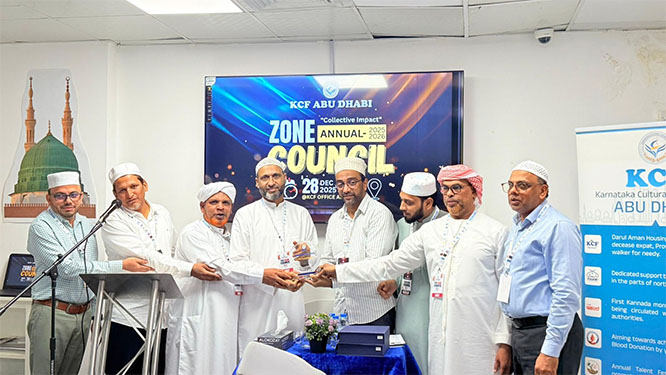
KCF, a global socio-cultural organisation of Karnataka expatriates, is actively involved in education, humanitarian initiatives and community well-being across several countries. The awardees were selected following a structured evaluation of nominations by the Annual Council Program Committee, based on the depth, consistency and long-term impact of their social service.

One of the award recipients, Abdul Razak Haji, a prominent UAE-based entrepreneur from the Qamcon Group of Companies, was honoured for his significant contributions to society. Through both his professional journey and personal initiatives, he has supported numerous employees and families, while also extending assistance in education, housing for the underprivileged and various charitable causes, largely carried out quietly over the years. His award was presented earlier during the Annual Council Program held at the KCF Abu Dhabi office.

The second award was conferred on Latheef Kakkinje, a young social worker based in Abu Dhabi, in recognition of his active involvement in community engagement programmes, sports initiatives, talent festivals and family-oriented social activities. His consistent volunteering efforts and commitment to humanitarian causes were highly appreciated by the selection committee.

The award presentation ceremony for Latheef Kakkinje was held at the Zayed Cricket Stadium (Astro Turf Ground) in the presence of Kedumbady Ibrahim Saqafi, President of KCF UAE; Ibrahim, General Secretary; Kabeer Bayambady, President of KCF Abu Dhabi; Ummer Ishwaramangila, General Secretary; along with other members of the KCF Abu Dhabi cabinet.

Congratulating both awardees, KCF leaders reiterated the organisation’s commitment to recognising individuals who selflessly work for social upliftment and community service.

KCFabudhabi1.jpg

Comments

Add new comment

  • Coastaldigest.com reserves the right to delete or block any comments.
  • Coastaldigset.com is not responsible for its readers’ comments.
  • Comments that are abusive, incendiary or irrelevant are strictly prohibited.
  • Please use a genuine email ID and provide your name to avoid reject.
News Network
January 19,2026

trump.jpg

Donald Trump has linked his repeated threats to seize Greenland to his failure to win the Nobel Peace Prize, in a letter to Norwegian Prime Minister Jonas Gahr Støre.

The authenticity of the letter, in which Trump says he no longer feels obligated to “think purely of peace,” was confirmed by Støre to the Norwegian newspaper VG.

“Considering your country decided not to give me the Nobel Peace Prize for having stopped eight wars plus, I no longer feel an obligation to think purely of peace,” Trump wrote, adding he can now “think about what is good and proper for the United States.”

Støre said Trump’s letter was in response to a short message he had sent earlier, on behalf of himself and Finland’s President Alexander Stubb.

Trump has escalated rhetoric toward Greenland, a self-governing Danish territory, insisting the US will take control “one way or the other.” Over the weekend, he tweeted: “Now it is time, and it will be done!!!”

On Saturday, Trump threatened a 10% tariff on imports from Denmark, Norway, Sweden, France, Germany, the UK, the Netherlands, and Finland from 1 February until the US is allowed to purchase the island. EU diplomats met for emergency talks on possible retaliatory tariffs and sanctions.

In his letter, Trump argued Denmark “cannot protect” Greenland from Russia or China, questioning Danish ownership: “There are no written documents; it’s only that a boat landed there hundreds of years ago.” He added that NATO should support the US, claiming the world is “not secure unless we have complete and total control of Greenland.”

Trump’s stance has unsettled the EU and NATO, as he refused to rule out military action to take control of the mineral-rich island.

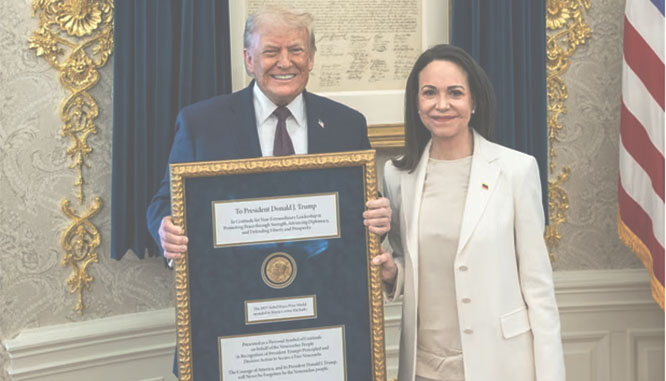
The Nobel Peace Prize is awarded by the independent Norwegian Nobel Committee, not the government. Trump had campaigned for last year’s prize, which went to Venezuelan opposition leader María Corina Machado, who dedicated her award to him.

Støre reiterated that the Nobel Prize decision rests solely with the committee.

Comments

Add new comment

  • Coastaldigest.com reserves the right to delete or block any comments.
  • Coastaldigset.com is not responsible for its readers’ comments.
  • Comments that are abusive, incendiary or irrelevant are strictly prohibited.
  • Please use a genuine email ID and provide your name to avoid reject.
News Network
January 20,2026

Mangaluru: In a major step towards strengthening rural innovation, the Office of the Principal Scientific Adviser (PSA) to the Government of India is supporting the establishment of RuTAGe Smart Village Centres (RSVCs) across the country through collaborations with academic institutions, civil society organisations and philanthropic partners.

As part of this national initiative, Nitte (Deemed to be University) will set up the first RSVCs in the region at Nitte GP in Udupi district and at the Nitte Health Centre, Sevanjali Trust, Farangipete, in Dakshina Kannada district. The centres will be inaugurated on January 21. In South India, the programme is being implemented by the Section Infin-8 Foundation (SI-8).

Speaking to reporters on Monday, SI-8 founder-director Vishwas US said experts from Nitte University and SI-8 would work closely with farmers, students, youth and local entrepreneurs to adapt and deploy technologies tailored to local needs.

Project head Prof Iddya Karunasagar, representing Nitte DU, said the RSVCs at Nitte and Farangipete would serve as demonstration hubs for a wide range of agriculture, energy, skill-development and assistive technologies. These include solar dryers for fruits, vegetables and crops; soil-testing solutions; power weeders and women-friendly farm tools; wind-powered devices for rural artisans; grain storage systems; grass-cutting and tree-climbing equipment; and liquid fertiliser production using cowshed waste.

SI-8 CEO Aravind C Kumar said the centres would also provide access to digital and knowledge-based platforms such as ISRO applications, government scheme portals, market linkage tools and gamified learning resources, along with assistive technologies for persons with visual impairments.

Highlighting the broader impact of the initiative, Principal Scientific Adviser Prof Ajay Kumar Sood said it demonstrated how applied research could bridge the rural–urban divide and help create self-reliant, technology-enabled villages.

The initiative has been made possible through philanthropic support from Dr NC Murthy of ACM Business Solutions, LLC, USA. Dr Sapna Poti, Director (Strategic Alliances) at the Office of the Principal Scientific Adviser, said the long-term objective is to build self-sufficient, technology-driven communities capable of generating sustainable livelihoods on their own.

Comments

Add new comment

  • Coastaldigest.com reserves the right to delete or block any comments.
  • Coastaldigset.com is not responsible for its readers’ comments.
  • Comments that are abusive, incendiary or irrelevant are strictly prohibited.
  • Please use a genuine email ID and provide your name to avoid reject.