Scientists see signs of lasting immunity to Covid-19, even after mild symptoms

News Network
August 17, 2020

immune.jpg

To the immune system, not all germs are equally memorable. But our body’s cells seem to be seriously studying up on the coronavirus.

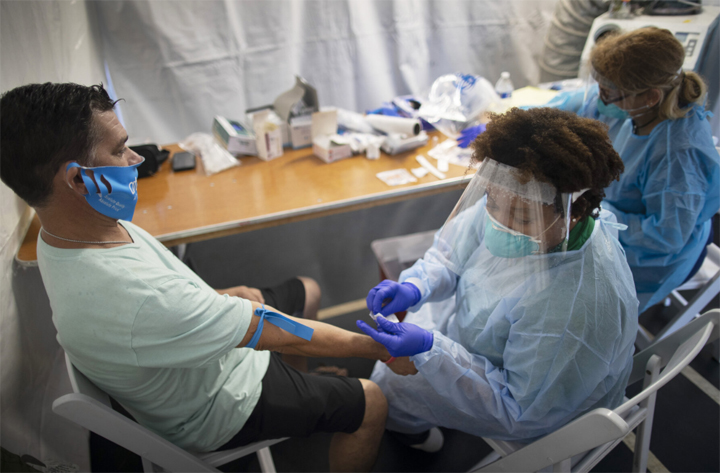
Scientists who have been monitoring immune responses to the virus are now starting to see encouraging signs of strong, lasting immunity, even in people who developed only mild symptoms of Covid-19, a flurry of new studies suggests. Disease-fighting antibodies, as well as immune cells, called B cells and T cells that are capable of recognizing the virus, appear to persist months after infections have resolved — an encouraging echo of the body’s enduring response to other viruses.

“Things are really working as they’re supposed to,” said Deepta Bhattacharya, an immunologist at the University of Arizona and an author on one of the new studies, which has not yet been peer-reviewed.

Although researchers cannot forecast how long these immune responses will last, many experts consider the data a welcome indication that the body’s most studious cells are doing their job — and will have a good chance of fending off the coronavirus, faster and more fervently than before, if exposed to it again.

“This is exactly what you would hope for,” said Marion Pepper, an immunologist at the University of Washington and an author on another of the new studies, which is currently under review at the journal Nature. “All the pieces are there to have a totally protective immune response.”

Protection against reinfection cannot be fully confirmed until there is proof that most people who encounter the virus a second time are actually able to keep it at bay, Pepper said. But the findings could help quell recent concerns over the virus’s ability to dupe the immune system into amnesia, leaving people vulnerable to repeat bouts of disease.

Researchers have yet to find unambiguous evidence that coronavirus reinfections are occurring, especially within the few months that the virus has been rippling through the human population. The prospect of immune memory “helps to explain that,” Pepper said.

In discussions about immune responses to the coronavirus, much of the conversation has focused on antibodies — Y-shaped proteins that can latch onto the surfaces of pathogens and block them from infecting cells. But antibodies represent just one wing of a complex and coordinated squadron of immune soldiers, each with its own unique modes of attack. Viruses that have already invaded cells, for instance, are cloaked from antibodies but are still vulnerable to killer T cells, which force infected cells to self-destruct. Another set of T cells, nicknamed “helpers,” can coax B cells to mature into antibody-making machines.

 (Yet another sector of the immune system assails pathogens within minutes of their arrival, while sending out signals called cytokines to mobilize forces from elsewhere in the body. Some evidence suggests that severe cases of Covid-19 may stem from this early process going awry.)

Antibodies also come with an expiration date: Because they are inanimate proteins and not living cells, they can’t replenish themselves, and so disappear from the blood just weeks or months after they are produced. Hoards of antibodies appear shortly after a virus has breached the body’s barriers, then wane as the threat dissipates. Most of the B cells that produce these early antibodies die off as well.

But even when not under siege, the body retains a battalion of longer-lived B cells that can churn out virus-fighting antibodies en masse, should they prove useful again. Some patrol the bloodstream, waiting to be triggered anew; others retreat into the bone marrow, generating small amounts of antibodies that are detectable years, sometimes decades, after an infection is over. Several studies, including those led by Bhattacharya and Pepper, have found antibodies capable of incapacitating the coronavirus lingering at low levels in the blood months after people have recovered from Covid-19.

“The antibodies decline, but they settle in what looks like a stable nadir,” which is observable about three months after symptoms start, Bhattacharya said. “The response looks perfectly durable.”

Seeing antibodies this long after infection is a strong indication that B cells are still chugging away in the bone marrow, Pepper said. She and her team were also able to pluck B cells that recognize the coronavirus from the blood of people who have recovered from mild cases of Covid-19 and grow them in the lab.

Multiple studies, including one published Friday in the journal Cell, have also managed to isolate coronavirus-attacking T cells from the blood of recovered individuals — long after symptoms have disappeared. When provoked with bits of the coronavirus in the lab, these T cells pumped out virus-fighting signalsand cloned themselves into fresh armies ready to confront a familiar foe. Some reports have noted that analyses of T cells could give researchers a glimpse into the immune response to the coronavirus, even in patients whose antibody levels have declined to a point where they are difficult to detect.

 “This is very promising,” said Smita Iyer, an immunologist at the University of California, Davis, who is studying immune responses to the coronavirus in rhesus macaques but was not involved in the new studies. “This calls for some optimism about herd immunity, and potentially a vaccine.”

Notably, several of the new studies are finding these powerful responses in people who did not develop severe cases of Covid-19, Iyer added. Some researchers have worried that infections that take a smaller toll on the body are less memorable to the immune system’s studious cells, which may prefer to invest their resources in more serious assaults. In some cases, the body could even jettison the viruses so quickly that it fails to catalogue them. “This paper suggests this is not true,” Iyer said. “You can still get durable immunity without suffering the consequences of infection.”

What has been observed in people who fought off mild cases of Covid-19 might not hold true for hospitalized patients, whose bodies struggle to marshal a balanced immune response to the virus, or those who were infected but had no symptoms at all. Research groups around the world are continuing to study the entire range of responses. But “the vast majority of the cases are these mild infections,” said Jason Netland, an immunologist at the University of Washington and an author on the paper under review at Nature. “If those people are going to be protected, that’s still good.”

This new spate of studies could also further assuage fears about how and when the pandemic will end. On Friday, updated guidance released by the Centers for Disease Control and Prevention was misinterpreted by several news reports that suggested immunity against the coronavirus might last only a few months. Experts quickly responded, noting the dangers of propagating such statements and pointing to the wealth of evidence that people who previously had the virus are probably at least partly protected from reinfection for at least three months, if not much longer.

Considered with other recent reports, the new data reinforce the idea that, “Yes, you do develop immunity to this virus and good immunity to this virus,” said Dr Eun-Hyung Lee, an immunologist at Emory University who was not involved in the studies. “That’s the message we want to get out there.”

Some illnesses, like the flu, can plague populations repeatedly. But that is at least partly attributable to the high mutation rates of influenza viruses, which can quickly make the pathogens unrecognizable to the immune system. Coronaviruses, in contrast, tend to change their appearance less readily from year to year.

Still, much remains unknown. Although these studies hint at the potential for protectiveness, they do not demonstrate protection in action, said Cheong-Hee Chang, an immunologist at the University of Michigan who was not involved in the new studies. “It’s hard to predict what’s going to happen,” Chang said. “Humans are so heterogeneous. There are so many factors coming into play.”

Comments

Add new comment

  • Coastaldigest.com reserves the right to delete or block any comments.
  • Coastaldigset.com is not responsible for its readers’ comments.
  • Comments that are abusive, incendiary or irrelevant are strictly prohibited.
  • Please use a genuine email ID and provide your name to avoid reject.
News Network
December 4,2025

indigocrisis.jpg

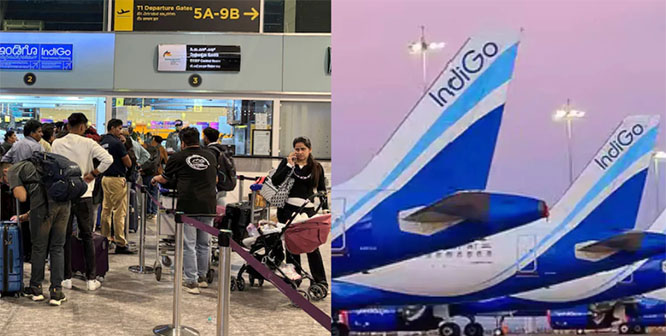
Angry outbursts, long queues, and desperate appeals filled airports across India today as IndiGo grappled with a severe operational breakdown. Hundreds of flights have been cancelled or delayed, leaving thousands of passengers stranded through the night and forcing many to spend long hours at helpdesks.

Social media was flooded with videos of fliers pleading for assistance, accusing the airline of misleading updates, and demanding accommodation after being stuck for 10 to 12 hours at airports such as Hyderabad and Bengaluru.

What Triggered the Meltdown?

IndiGo has attributed the widespread disruption to “a multitude of unforeseen operational challenges.” These include:

•    Minor technology glitches
•    Winter-season schedule adjustments
•    Bad weather
•    Congestion in the aviation network
•    New crew rostering rules (Flight Duty Time Limitations or FDTL)

Among these, the most disruptive has been the implementation of the updated FDTL norms introduced by the Directorate General of Civil Aviation (DGCA) in January 2024.

These rules were designed to reduce pilot fatigue and improve passenger safety. Key changes include:

•    Longer weekly rest periods for flight crew
•    A revised definition of “night,” extending it by an extra hour
•    Tighter caps on flight duty timing and night landings
•    Cutting night shifts for pilots and crew from six per roster cycle to just two

Once these norms became fully enforceable, airlines were required to overhaul rosters well in advance. For IndiGo, this triggered a sudden shortage of crew available for duty, leading to cascading delays and cancellations.

Why IndiGo Was Hit the Hardest

IndiGo is India’s largest airline by a wide margin, operating over 2,200 flights daily. That’s roughly double the number operated by Air India.

When an airline of this size experiences even a 10–20% disruption, it translates to 200–400 flights being delayed or grounded — producing massive spillover effects across the country.

IndiGo also relies heavily on high-frequency overnight operations, a model typical of low-cost carriers that aim to maximise aircraft utilisation and reduce downtime. The stricter FDTL norms clash with these overnight-heavy schedules, forcing the airline to pull back services.

Aviation bodies have also criticised IndiGo’s preparedness. The Airline Pilots' Association of India (ALPA) said airlines were given a two-year window to plan for the new rules but “started preparing rather late.” IndiGo, it said, failed to rebuild crew rosters 15 days in advance as required.

The Federation of Indian Pilots (FIP) went further, calling the crisis the result of IndiGo’s “prolonged and unorthodox lean manpower strategy,” and alleging that the airline adopted a hiring freeze even as it knew the new rules would require more careful staffing.

How Many Flights Are Affected?

In the past 48 hours, over 300 flights have been cancelled. At least 100 more are expected to be cancelled today.

City-wise impact:

•    Hyderabad: 33 expected cancellations; several fliers stranded overnight
•    Bengaluru: over 70 expected cancellations
•    Delhi, Mumbai, Chennai, Kolkata: widespread delays and missed connections

Passengers shared distressing accounts online.

One customer at Hyderabad airport said they waited from 6 PM to 9 AM with “no action taken” regarding their delayed Pune flight. Another said IndiGo repeatedly told them the crew was “arriving soon,” only for the delay to stretch over 12 hours.

IndiGo has apologised for the disruption and promised that operations will stabilise within 48 hours, adding that “calibrated adjustments” are being made to contain the chaos.

What Should Passengers Do Now?

For those flying in the next few days, especially with IndiGo, here are key precautions:

1. Keep Checking Flight Status
Monitor your flight closely before leaving for the airport, as delays may be announced last-minute.

2. Arrive Early
Expect long queues at counters and security due to crowding and rescheduling.

3. Carry Essentials
Pack snacks, water, basic medicines, chargers, and items for children or senior citizens. Extended waiting times should be anticipated.

4. Use Flexible Booking Options
If you booked tickets with a free-date-change or cancellation option, consider using them.
If you haven’t booked yet, prefer refundable or flexible fares, or even consider alternate airlines.

5. Follow IndiGo’s Updates
Keep an eye on IndiGo’s official social media channels and contact customer support for rebooking and refund queries.

What Needs to Change?

Pilot groups have raised concerns not just about staffing but also the planning practices behind it.
The Federation of Indian Pilots accused IndiGo of:

•    Imposing an unexplained hiring freeze despite knowing the FDTL changes were coming
•    Entering non-poaching agreements that limited talent movement
•    Keeping pilot pay frozen
•    Underestimating the need to restructure operations in advance

They have urged DGCA to approve seasonal schedules only after airlines prove they have adequate pilot strength under the new norms.

ALPA also warned that some airlines might be using the delays as an “immature pressure tactic” to push DGCA for relaxations in the new rules — which, if granted, could compromise the very safety standards the norms were meant to protect.

Both pilot bodies stressed that no exemption should dilute safety, and any deviations should be based solely on scientific risk assessment.

Is a Solution in Sight?

While IndiGo says normalcy will return within two days, aviation experts believe that fully stabilising operations could take longer, depending on how quickly the airline can:
•    Re-align rosters
•    Mobilise rested crew
•    Boost staffing
•    Adjust its winter schedule to match regulatory requirements
Passengers are advised to remain prepared for continued delays over the next few days as the airline works through its backlog. 

Comments

Add new comment

  • Coastaldigest.com reserves the right to delete or block any comments.
  • Coastaldigset.com is not responsible for its readers’ comments.
  • Comments that are abusive, incendiary or irrelevant are strictly prohibited.
  • Please use a genuine email ID and provide your name to avoid reject.
News Network
November 27,2025

DKSvokkaliga.jpg

Bengaluru: The Vokkaligara Sangha on Thursday issued a stern warning to the Congress, saying the party could face serious electoral repercussions if Deputy Chief Minister D.K. Shivakumar is not appointed as Chief Minister.

The warning follows the public backing of Shivakumar’s chief ministerial ambition by top Vokkaliga pontiff Nirmalanandanatha Swami, who urged the Congress high command to honor his claim.

“The community supported Congress in the 2023 Assembly elections only because Shivakumar had a real chance to become CM. If he is cheated, we’ll teach the party a big lesson,” said newly elected Sangha president L. Srinivas. He added that Vokkaligas would organize protests under the guidance of community leaders.

General Secretary C.G. Gangadhar pointed out that Congress won more seats in the Vokkaliga-dominated Old Mysuru region due to Shivakumar’s influence, adding, “If Congress wants to retain power, Shivakumar should be made the CM.”

Outgoing president Kenchappa Gowda emphasized Shivakumar’s contribution to Congress’ victory. “Our community voted for Congress thinking he would become CM. Siddaramaiah has also served the party well, but Shivakumar should now be given a chance,” he said.

Former general-secretary Konappa Reddy appealed to Sonia and Rahul Gandhi to recognize Shivakumar’s loyalty and service, saying, “Congress is known to keep its promises. We hope it won’t break the promise made to him.”

Comments

Add new comment

  • Coastaldigest.com reserves the right to delete or block any comments.
  • Coastaldigset.com is not responsible for its readers’ comments.
  • Comments that are abusive, incendiary or irrelevant are strictly prohibited.
  • Please use a genuine email ID and provide your name to avoid reject.
News Network
November 30,2025

girlnomore.jpg

Mangaluru, Nov 30: A 22-year-old college student succumbed to her injuries at a private hospital in Mangaluru today, days after she was hit by a goods tempo while crossing a road in Padubidri.

The deceased has been identified as Preksha, a resident of Nadsalu Billitota in Padubidri. The fatal incident occurred as Preksha, who was returning home after completing her examination, attempted to cross the service road towards Mangaluru. She was struck by a goods tempo approaching from the Udupi side, causing her to fall and sustain a severe head injury.

Prompt action from local residents ensured she received immediate first aid before being rushed to a hospital in Mangaluru for specialised treatment. Despite medical efforts, she passed away while undergoing care.

Preksha was a student at Karavali College, Vamanjoor on the outskirts of Mangaluru city. The tragedy is compounded by the fact that she belonged to a financially vulnerable family, having previously lost her father. She is survived by her mother and brother.

A case related to the accident has been registered at the Padubidri police station, and an investigation is underway to determine the exact circumstances that led to the collision. The incident highlights the growing concerns over road safety, particularly on busy service roads, and serves as a tragic reminder of the human cost of traffic accidents.

Comments

Add new comment

  • Coastaldigest.com reserves the right to delete or block any comments.
  • Coastaldigset.com is not responsible for its readers’ comments.
  • Comments that are abusive, incendiary or irrelevant are strictly prohibited.
  • Please use a genuine email ID and provide your name to avoid reject.