Scientists see signs of lasting immunity to Covid-19, even after mild symptoms

News Network
August 17, 2020

To the immune system, not all germs are equally memorable. But our body’s cells seem to be seriously studying up on the coronavirus.

Scientists who have been monitoring immune responses to the virus are now starting to see encouraging signs of strong, lasting immunity, even in people who developed only mild symptoms of Covid-19, a flurry of new studies suggests. Disease-fighting antibodies, as well as immune cells, called B cells and T cells that are capable of recognizing the virus, appear to persist months after infections have resolved — an encouraging echo of the body’s enduring response to other viruses.

“Things are really working as they’re supposed to,” said Deepta Bhattacharya, an immunologist at the University of Arizona and an author on one of the new studies, which has not yet been peer-reviewed.

Although researchers cannot forecast how long these immune responses will last, many experts consider the data a welcome indication that the body’s most studious cells are doing their job — and will have a good chance of fending off the coronavirus, faster and more fervently than before, if exposed to it again.

“This is exactly what you would hope for,” said Marion Pepper, an immunologist at the University of Washington and an author on another of the new studies, which is currently under review at the journal Nature. “All the pieces are there to have a totally protective immune response.”

Protection against reinfection cannot be fully confirmed until there is proof that most people who encounter the virus a second time are actually able to keep it at bay, Pepper said. But the findings could help quell recent concerns over the virus’s ability to dupe the immune system into amnesia, leaving people vulnerable to repeat bouts of disease.

Researchers have yet to find unambiguous evidence that coronavirus reinfections are occurring, especially within the few months that the virus has been rippling through the human population. The prospect of immune memory “helps to explain that,” Pepper said.

In discussions about immune responses to the coronavirus, much of the conversation has focused on antibodies — Y-shaped proteins that can latch onto the surfaces of pathogens and block them from infecting cells. But antibodies represent just one wing of a complex and coordinated squadron of immune soldiers, each with its own unique modes of attack. Viruses that have already invaded cells, for instance, are cloaked from antibodies but are still vulnerable to killer T cells, which force infected cells to self-destruct. Another set of T cells, nicknamed “helpers,” can coax B cells to mature into antibody-making machines.

 (Yet another sector of the immune system assails pathogens within minutes of their arrival, while sending out signals called cytokines to mobilize forces from elsewhere in the body. Some evidence suggests that severe cases of Covid-19 may stem from this early process going awry.)

Antibodies also come with an expiration date: Because they are inanimate proteins and not living cells, they can’t replenish themselves, and so disappear from the blood just weeks or months after they are produced. Hoards of antibodies appear shortly after a virus has breached the body’s barriers, then wane as the threat dissipates. Most of the B cells that produce these early antibodies die off as well.

But even when not under siege, the body retains a battalion of longer-lived B cells that can churn out virus-fighting antibodies en masse, should they prove useful again. Some patrol the bloodstream, waiting to be triggered anew; others retreat into the bone marrow, generating small amounts of antibodies that are detectable years, sometimes decades, after an infection is over. Several studies, including those led by Bhattacharya and Pepper, have found antibodies capable of incapacitating the coronavirus lingering at low levels in the blood months after people have recovered from Covid-19.

“The antibodies decline, but they settle in what looks like a stable nadir,” which is observable about three months after symptoms start, Bhattacharya said. “The response looks perfectly durable.”

Seeing antibodies this long after infection is a strong indication that B cells are still chugging away in the bone marrow, Pepper said. She and her team were also able to pluck B cells that recognize the coronavirus from the blood of people who have recovered from mild cases of Covid-19 and grow them in the lab.

Multiple studies, including one published Friday in the journal Cell, have also managed to isolate coronavirus-attacking T cells from the blood of recovered individuals — long after symptoms have disappeared. When provoked with bits of the coronavirus in the lab, these T cells pumped out virus-fighting signalsand cloned themselves into fresh armies ready to confront a familiar foe. Some reports have noted that analyses of T cells could give researchers a glimpse into the immune response to the coronavirus, even in patients whose antibody levels have declined to a point where they are difficult to detect.

 “This is very promising,” said Smita Iyer, an immunologist at the University of California, Davis, who is studying immune responses to the coronavirus in rhesus macaques but was not involved in the new studies. “This calls for some optimism about herd immunity, and potentially a vaccine.”

Notably, several of the new studies are finding these powerful responses in people who did not develop severe cases of Covid-19, Iyer added. Some researchers have worried that infections that take a smaller toll on the body are less memorable to the immune system’s studious cells, which may prefer to invest their resources in more serious assaults. In some cases, the body could even jettison the viruses so quickly that it fails to catalogue them. “This paper suggests this is not true,” Iyer said. “You can still get durable immunity without suffering the consequences of infection.”

What has been observed in people who fought off mild cases of Covid-19 might not hold true for hospitalized patients, whose bodies struggle to marshal a balanced immune response to the virus, or those who were infected but had no symptoms at all. Research groups around the world are continuing to study the entire range of responses. But “the vast majority of the cases are these mild infections,” said Jason Netland, an immunologist at the University of Washington and an author on the paper under review at Nature. “If those people are going to be protected, that’s still good.”

This new spate of studies could also further assuage fears about how and when the pandemic will end. On Friday, updated guidance released by the Centers for Disease Control and Prevention was misinterpreted by several news reports that suggested immunity against the coronavirus might last only a few months. Experts quickly responded, noting the dangers of propagating such statements and pointing to the wealth of evidence that people who previously had the virus are probably at least partly protected from reinfection for at least three months, if not much longer.

Considered with other recent reports, the new data reinforce the idea that, “Yes, you do develop immunity to this virus and good immunity to this virus,” said Dr Eun-Hyung Lee, an immunologist at Emory University who was not involved in the studies. “That’s the message we want to get out there.”

Some illnesses, like the flu, can plague populations repeatedly. But that is at least partly attributable to the high mutation rates of influenza viruses, which can quickly make the pathogens unrecognizable to the immune system. Coronaviruses, in contrast, tend to change their appearance less readily from year to year.

Still, much remains unknown. Although these studies hint at the potential for protectiveness, they do not demonstrate protection in action, said Cheong-Hee Chang, an immunologist at the University of Michigan who was not involved in the new studies. “It’s hard to predict what’s going to happen,” Chang said. “Humans are so heterogeneous. There are so many factors coming into play.”

Comments

Add new comment

  • Coastaldigest.com reserves the right to delete or block any comments.
  • Coastaldigset.com is not responsible for its readers’ comments.
  • Comments that are abusive, incendiary or irrelevant are strictly prohibited.
  • Please use a genuine email ID and provide your name to avoid reject.
News Network
January 20,2026

iran.jpg

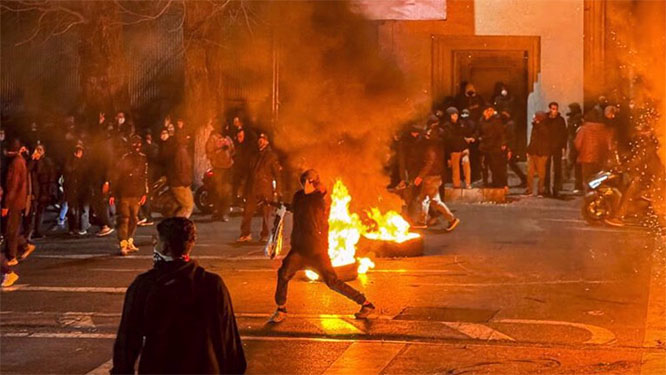
Iranian security and intelligence forces have captured more than 470 individuals in three provinces, identified as key figures behind the recent wave of violent unrest and terrorist activities linked to foreign-backed networks.

The Intelligence Ministry's provincial office in Khorasan Razavi announced on Monday the arrest of 192 armed terrorists, identified as the main agents behind recent riots in the region. 

According to an official statement, the detainees were involved in the killing of several security personnel and civilians, setting fire to mosques, public service facilities, and buses, as well as attacks on military and law enforcement centers.

The seized items from the group include several bulletproof vests, Kalashnikov rifles, hunting weapons, Winchester rifles, and various cold weapons such as daggers, swords, brass knuckles, tactical knives, crossbows, and chains.

Evidence indicates that some of the individuals were tied to hostile movements and terrorist organizations, with links overseas. Others were identified as members of violent criminal gangs, actively taking part in the unrest alongside their associates.

Simultaneously, in the western province of Lorestan, the IRGC announced the arrest of 134 individuals as the main leaders and influential field agents of a US-Israeli terrorist network.

The IRGC statement stated that these individuals formed terrorist cells during the recent unrest, committing "Daesh-like" acts.

They wounded security forces with firearms and cold weapons, and burned and destroyed public and private properties, including mosques, shops, banks, and private and public vehicles.

In the northwestern province of Zanjan, the police reported detaining 150 people identified as principal leaders and agents behind recent riots.

Authorities noted that these individuals were responsible for destroying public and private property and intentionally setting fire to vehicles in the province's squares.

Their crimes include shedding the blood of innocent people, destroying public and private property, attempting to enter military sites, disrupting public order, and spreading terror among citizens.

A variety of cold weapons were reportedly seized from the detainees.

What began late last month as peaceful protests over economic hardship across Iran turned violent after public statements by US and Israeli regime figures encouraged vandalism and disorder.

During the unrest, foreign-backed mercenaries rampaged through cities, killing security forces and civilians and damaging public property.

Comments

Add new comment

  • Coastaldigest.com reserves the right to delete or block any comments.
  • Coastaldigset.com is not responsible for its readers’ comments.
  • Comments that are abusive, incendiary or irrelevant are strictly prohibited.
  • Please use a genuine email ID and provide your name to avoid reject.
News Network
January 20,2026

iran.jpg

Iranian security and intelligence forces have captured more than 470 individuals in three provinces, identified as key figures behind the recent wave of violent unrest and terrorist activities linked to foreign-backed networks.

The Intelligence Ministry's provincial office in Khorasan Razavi announced on Monday the arrest of 192 armed terrorists, identified as the main agents behind recent riots in the region. 

According to an official statement, the detainees were involved in the killing of several security personnel and civilians, setting fire to mosques, public service facilities, and buses, as well as attacks on military and law enforcement centers.

The seized items from the group include several bulletproof vests, Kalashnikov rifles, hunting weapons, Winchester rifles, and various cold weapons such as daggers, swords, brass knuckles, tactical knives, crossbows, and chains.

Evidence indicates that some of the individuals were tied to hostile movements and terrorist organizations, with links overseas. Others were identified as members of violent criminal gangs, actively taking part in the unrest alongside their associates.

Simultaneously, in the western province of Lorestan, the IRGC announced the arrest of 134 individuals as the main leaders and influential field agents of a US-Israeli terrorist network.

The IRGC statement stated that these individuals formed terrorist cells during the recent unrest, committing "Daesh-like" acts.

They wounded security forces with firearms and cold weapons, and burned and destroyed public and private properties, including mosques, shops, banks, and private and public vehicles.

In the northwestern province of Zanjan, the police reported detaining 150 people identified as principal leaders and agents behind recent riots.

Authorities noted that these individuals were responsible for destroying public and private property and intentionally setting fire to vehicles in the province's squares.

Their crimes include shedding the blood of innocent people, destroying public and private property, attempting to enter military sites, disrupting public order, and spreading terror among citizens.

A variety of cold weapons were reportedly seized from the detainees.

What began late last month as peaceful protests over economic hardship across Iran turned violent after public statements by US and Israeli regime figures encouraged vandalism and disorder.

During the unrest, foreign-backed mercenaries rampaged through cities, killing security forces and civilians and damaging public property.

Comments

Add new comment

  • Coastaldigest.com reserves the right to delete or block any comments.
  • Coastaldigset.com is not responsible for its readers’ comments.
  • Comments that are abusive, incendiary or irrelevant are strictly prohibited.
  • Please use a genuine email ID and provide your name to avoid reject.
News Network
January 31,2026

files.jpg

A fresh cache of files related to the investigation into the late convicted sex offender Jeffrey Epstein contains documents that reference President Donald Trump and other high-profile figures including Microsoft co-founder Bill Gates, Commerce Secretary Howard Lutnick and British billionaire Richard Branson.

Here are key details about mentions of the celebrities, none of whom have been accused of wrongdoing:

Donald Trump

The files included an FBI-compiled list of sexual assault allegations related to President Donald Trump -- many of them involving anonymous callers and unverified tips.

The allegations -- some secondhand -- were sent to the FBI's National Threat Operations Center which receives information by phone and electronically.

The document suggests that investigators followed up on a number of the tips. Some were deemed to lack credibility.

Trump has long denied any wrongdoing related to Epstein.

In a statement accompanying Friday's file dump, the Justice Department said: "Some of the documents contain untrue and sensationalist claims against President Trump that were submitted to the FBI right before the 2020 election. To be clear, the claims are unfounded and false."

Bill Gates

In a draft email among the documents, Epstein alleged Gates had engaged in extramarital affairs.

In the mail, Epstein wrote that his relationship with Gates had ranged from "helping Bill to get drugs, in order to deal with consequences of sex with russian girls, to facilitating his illicit trysts, with married women."

Richard Branson

Files show friendly relations between the two billionaires.

In an email sent to Epstein on Sept 11, 2013, Branson wrote "It was really nice seeing you yesterday. The boys in Watersports can't stop speaking about it! Any time you're in the area would love to see you. As long as you bring your harem!"

Elon Musk

The files contain numerous mail exchanges between Epstein and billionaire entrepreneur Elon Musk.

In November 2012, Epstein sent Musk an email asking "how many people will you be for the heli to island."

"Probably just Talulah and me. What day/night will be the wildest party on your island?" Musk replied.

Andrew Mountbatten-Windsor

The disgraced former prince invited Epstein to visit him at Buckingham Palace in September 2010 while the financier was making a trip to London.

An email exchange shows Epstein contacting Andrew to ask: "What time would you like me... we will also need... private time."

Andrew replied: "we could have dinner at Buckingham Palace and lots of privacy."

Howard Lutnick

Emails show that Epstein and businessman Lutnick -- currently Trump's commerce secretary -- made plans in December 2012 to lunch on Epstein's Caribbean island.

"We are heading towards you from St. Thomas" Lutnick's wife wrote to Epstein's secretary, asking where they should anchor.

Steve Tisch

Several mails suggested Epstein connected Steve Tisch, 76, producer of the movies "Forrest Gump" and "Risky Business" and the co-owner of the New York Giants football team, with multiple women.

In one exchange with Tisch, Epstein describes a woman as "russian, and rarely tells the full truth, but fun."

Zohran Mamdani's Mother, Filmmaker Mira Nair 

New York City Mayor Zohran Mamdani's mother, Mira Nair, attended an afterparty at convicted sex trafficker Ghislaine Maxwell's house for her 2009 film "Amelia", reveals a new set of Epstein files.

An email dated October 21, 2009, sent by publicist Peggy Siegal to Jeffrey Epstein, also surfaced in documents. The email, sent in the early hours, right after Siegal left the gathering, gives an insight into the afterparty. 

The party was also attended by former President Bill Clinton and Amazon CEO Jeff Bezos.

"Just left Ghislaine's townhouse...after party for film. Bill Clinton and Jeff Bezos were there...Jean Pigoni, director Mira Nair....etc," the email read.

The email described the reaction of guests to Nair's film as "tepid."

"Film received tepid reaction although women like it much more...Hillary Swank and Gen: at stupid party in Bloomingdales cheap sportwear department....very weird. Studio went for free party from store and windows for a month....Going to be in Wall Street 2 tomorrow ....more to come. xoxo Peg," the email read.

Comments

Add new comment

  • Coastaldigest.com reserves the right to delete or block any comments.
  • Coastaldigset.com is not responsible for its readers’ comments.
  • Comments that are abusive, incendiary or irrelevant are strictly prohibited.
  • Please use a genuine email ID and provide your name to avoid reject.