Shanghai hit by covid protests as public anger over unending curbs spread across China

News Network
November 27, 2022

covid.jpg

Shanghai/Beijing, Nov 27: Protests against China's heavy COVID-19 curbs spread to more cities, including the financial hub Shanghai on Sunday, nearly three years into the pandemic, with a fresh wave of anger sparked by a deadly fire in the country's far west.

The fire on Thursday that killed 10 people in a high-rise building in Urumqi, capital of the Xinjiang region, has sparked widespread public anger. Many internet users surmised that residents could not escape in time because the building was partially locked down, which city officials denied.

The fire has fuelled a wave of civil disobedience unprecedented in mainland China since Xi Jinping assumed power a decade ago.

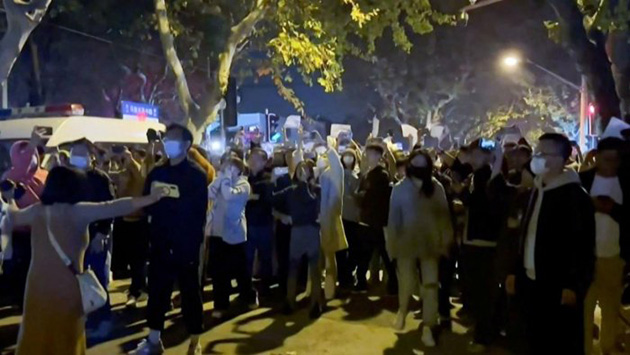
In Shanghai, China's most populous city, residents gathered on Saturday night at Wulumuqi Road - which is named after Urumqi - for a candlelight vigil that turned into a protest in the early hours of Sunday.

As a large group of police looked on, the crowd held up blank sheets of paper - a protest symbol against censorship. Later on, they shouted, “lift lockdown for Urumqi, lift lockdown for Xinjiang, lift lockdown for all of China!”, according to a video circulated on social media.

At another point a large group began shouting, “Down with the Chinese Communist Party, down with Xi Jinping", according to witnesses and videos, in a rare public protest against the country's leadership.

The police tried at times to break up the crowd.

Beijing is adhering to a zero-COVID policy even while much of the world tries to coexist with the coronavirus. While low by global standards, China's cases have hit record highs for days, with nearly 40,000 new infections reported on Sunday for the previous day.

China defends Xi's signature zero-COVID policy as life-saving and necessary to prevent overwhelming the healthcare system. Officials have vowed to continue with it despite the growing public pushback and its mounting toll on the world's second-biggest economy.

Widespread public protest is extremely rare in China, where room for dissent has been all-but eliminated under Xi, forcing citizens mostly to vent on social media, where they play cat-and-mouse with censors.

Frustration is boiling just over a month after Xi secured a third term at the helm of China's Communist Party.

"This will put serious pressure on the party to respond. There is a good chance that one response will be repression, and they will arrest and prosecute some protesters," said Dan Mattingly, assistant professor of political science at Yale University.

Still, he said, the unrest is far from approaching that seen in 1989, when protests across the country culminated in the bloody crackdown in Tiananmen Square.

"Popular sentiment matters," he said. "But as long as there is no split in the elite and as long the PLA (People's Liberation Army) and security services remain on his side he does not face any meaningful risk to his hold on power."

The next few weeks could be China's worst since the early weeks of the pandemic for the economy and the healthcare system, Mark Williams of Capital Economics said in note last week, as containing the outbreak will require additional lockdowns.

In the northwestern city of Lanzhou, residents on Saturday upturned COVID staff tents and smashed testing booths, posts widely shared on social media showed. Protesters said they were put under lockdown even though no one had tested positive.

Candlelight vigils for the Urumqi victims took place in universities in cities including Nanjing and Beijing.

Internet users showed solidarity by posting blank white squares on their WeChat timelines or on Weibo. By Sunday morning, the hashtag "white paper exercise" was blocked on Weibo.

Videos from Shanghai showed crowds facing police and chanting “Serve the people”, “We want freedom", and “We don’t want health codes”, a reference to the mobile phone apps that must be scanned for entry into public places across China.

The Shanghai government did not immediately respond to a request for comment on Sunday.

The city's 25 million people were put under lockdown for two months earlier this year, an ordeal that provoked anger and protests.

Chinese authorities have since then sought to be more targeted in their COVID curbs, an effort that has been challenged by the surge in infections as the country faces its first winter with the highly transmissible Omicron variant.

On Friday night, crowds took to the streets of Urumqi, chanting "End the lockdown!" and pumping their fists in the air after the fire, according to videos on social media.

Many of Urumqi's 4 million residents have been under some of the country's longest lockdowns, barred from leaving their homes for as long as 100 days.

In Beijing, 2,700 km (1,700 miles) away, some residents under lockdown staged small protests or confronted local officials on Saturday over movement restrictions, with some successfully pressuring them into lifting the curbs ahead of a schedule.

A video shared with Reuters showed Beijing residents marching in an unidentifiable part of the capital on Saturday, shouting "End the lockdown!"

The Beijing government did not immediately respond to a request for comment. 

Comments

Add new comment

  • Coastaldigest.com reserves the right to delete or block any comments.
  • Coastaldigset.com is not responsible for its readers’ comments.
  • Comments that are abusive, incendiary or irrelevant are strictly prohibited.
  • Please use a genuine email ID and provide your name to avoid reject.
News Network
January 19,2026

trump.jpg

Donald Trump has linked his repeated threats to seize Greenland to his failure to win the Nobel Peace Prize, in a letter to Norwegian Prime Minister Jonas Gahr Støre.

The authenticity of the letter, in which Trump says he no longer feels obligated to “think purely of peace,” was confirmed by Støre to the Norwegian newspaper VG.

“Considering your country decided not to give me the Nobel Peace Prize for having stopped eight wars plus, I no longer feel an obligation to think purely of peace,” Trump wrote, adding he can now “think about what is good and proper for the United States.”

Støre said Trump’s letter was in response to a short message he had sent earlier, on behalf of himself and Finland’s President Alexander Stubb.

Trump has escalated rhetoric toward Greenland, a self-governing Danish territory, insisting the US will take control “one way or the other.” Over the weekend, he tweeted: “Now it is time, and it will be done!!!”

On Saturday, Trump threatened a 10% tariff on imports from Denmark, Norway, Sweden, France, Germany, the UK, the Netherlands, and Finland from 1 February until the US is allowed to purchase the island. EU diplomats met for emergency talks on possible retaliatory tariffs and sanctions.

In his letter, Trump argued Denmark “cannot protect” Greenland from Russia or China, questioning Danish ownership: “There are no written documents; it’s only that a boat landed there hundreds of years ago.” He added that NATO should support the US, claiming the world is “not secure unless we have complete and total control of Greenland.”

Trump’s stance has unsettled the EU and NATO, as he refused to rule out military action to take control of the mineral-rich island.

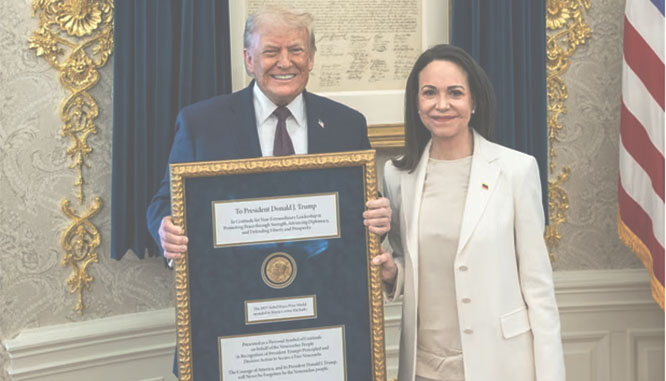
The Nobel Peace Prize is awarded by the independent Norwegian Nobel Committee, not the government. Trump had campaigned for last year’s prize, which went to Venezuelan opposition leader María Corina Machado, who dedicated her award to him.

Støre reiterated that the Nobel Prize decision rests solely with the committee.

Comments

Add new comment

  • Coastaldigest.com reserves the right to delete or block any comments.
  • Coastaldigset.com is not responsible for its readers’ comments.
  • Comments that are abusive, incendiary or irrelevant are strictly prohibited.
  • Please use a genuine email ID and provide your name to avoid reject.
News Network
January 23,2026

Karnataka Governor Thaawarchand Gehlot read only three lines from the 122-paragraph address prepared by the Congress-led state government while addressing the joint session of the Legislature on Thursday, effectively bypassing large sections critical of the BJP-led Union government.

The omitted portions of the customary Governor’s address outlined what the state government described as a “suppressive situation in economic and policy matters” under India’s federal framework. The speech also sharply criticised the Centre’s move to replace the Mahatma Gandhi National Rural Employment Guarantee Act (MGNREGA) with the Viksit Bharat–Guarantee for Rozgar and Ajeevika Mission (Gramin) Act, commonly referred to as the VB-GRAM (G) Act.

Governor Gehlot had earlier conveyed his objection to several paragraphs that were explicitly critical of the Union government. On Thursday, he confined himself to the opening lines — “I extend a warm welcome to all of you to the joint session of the State legislature. I am extremely pleased to address this august House” — before jumping directly to the concluding sentence of the final paragraph.

He ended the address by reading the last line of paragraph 122: “Overall, my government is firmly committed to doubling the pace of the State’s economic, social and physical development. Jai Hind — Jai Karnataka.”

According to the prepared speech, the Karnataka government demanded the scrapping of the VB-GRAM (G) Act, describing it as “contractor-centric” and detrimental to rural livelihoods, and called for the full restoration of MGNREGA. The state government argued that the new law undermines decentralisation, weakens labour protections, and centralises decision-making in violation of constitutional norms.

Key points from the unread sections of the speech:

•    Karnataka facing a “suppressive” economic and policy environment within the federal system

•    Repeal of MGNREGA described as a blow to rural livelihoods

•    VB-GRAM (G) Act accused of protecting corporate and contractor interests

•    New law alleged to weaken decentralised governance

•    Decision-making said to be imposed by the Centre without consulting states

•    Rights of Adivasis, women, backward classes and agrarian communities curtailed

•    Labourers allegedly placed under contractor control

•    States facing mounting fiscal stress due to central policies

•    VB-GRAM (G) Act accused of enabling large-scale corruption

Comments

Add new comment

  • Coastaldigest.com reserves the right to delete or block any comments.
  • Coastaldigset.com is not responsible for its readers’ comments.
  • Comments that are abusive, incendiary or irrelevant are strictly prohibited.
  • Please use a genuine email ID and provide your name to avoid reject.
News Network
January 23,2026

modIKERALA.jpg

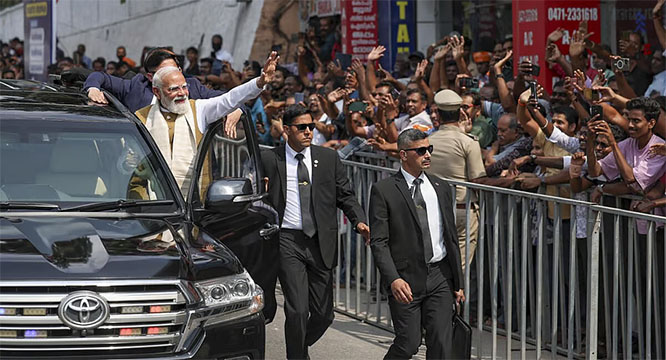
Prime Minister Narendra Modi, during his visit to Thiruvananthapuram on Friday, January 23, indicated that the Bharatiya Janata Party (BJP) is aiming to expand its political footprint in Kerala ahead of the Assembly elections scheduled in the coming months.

Speaking at a BJP-organised public meeting, Modi drew parallels between the party’s early electoral gains in Gujarat and its recent victory in the Thiruvananthapuram Municipal Corporation. The civic body win, which ended decades of Left control, was cited by the Prime Minister as a possible starting point for the party’s broader ambitions in the state.

Recalling BJP’s political trajectory in Gujarat, Modi said the party was largely insignificant before 1987 and received little media attention. He pointed out that the BJP’s first major breakthrough came with its victory in the Ahmedabad Municipal Corporation that year.

“Just as our journey in Gujarat began with one city, Kerala’s journey has also started with a single city,” Modi said, suggesting that the party’s municipal-level success could translate into wider electoral acceptance.

The Prime Minister alleged that successive governments led by the Left Democratic Front (LDF) and the United Democratic Front (UDF) had failed to adequately develop Thiruvananthapuram. He accused both fronts of corruption and neglect, claiming that basic infrastructure and facilities were denied to the capital city for decades.

According to Modi, the BJP’s control of the civic body represents a shift driven by public dissatisfaction with the existing political alternatives. He asserted that the BJP administration in Thiruvananthapuram had begun working towards development, though no specific details or timelines were outlined.

Addressing the gathering at Putharikandam Maidan, Modi said the BJP intended to project Thiruvananthapuram as a “model city,” reiterating his party’s commitment to governance-led change.

The Prime Minister’s visit to Kerala also included the inauguration of several development projects and the flagging off of new train services, as the BJP intensifies its political outreach in the poll-bound state.

Comments

Add new comment

  • Coastaldigest.com reserves the right to delete or block any comments.
  • Coastaldigset.com is not responsible for its readers’ comments.
  • Comments that are abusive, incendiary or irrelevant are strictly prohibited.
  • Please use a genuine email ID and provide your name to avoid reject.