Tone of Ukraine crisis shifts as mighty Russia signals openness to talk more

News Network
February 15, 2022

Moscow, Feb 15: The tone of the crisis over Ukraine shifted Monday as Russia’s top diplomat endorsed more talks to resolve its stand-off with the West, and Ukrainian officials hinted at offering concessions to avert war, even as Russian warships massed off Ukraine’s Black Sea coast and Russian ground troops appeared poised to strike.

In stage-managed, televised meetings, the Kremlin sent its strongest signals yet that it would seek further negotiations with the West rather than launch immediate military action, with state television showing a feed of Foreign Minister Sergey Lavrov telling President Vladimir Putin there was still a diplomatic path ahead. Minutes later, it showed Defence Minister Sergei Shoigu telling Putin that what he characterised as “large-scale drills” around Ukraine were coming to an end.

“I believe that our possibilities are far from exhausted,” Lavrov said, referring to Russia’s negotiations with the West. “I would propose continuing and intensifying them.”

Putin responded ambiguously: “Good.”

It was a sign that the Kremlin was still holding out the possibility that it could use its troop buildup to achieve key objectives without military action. The prospect for such a scenario was bolstered in Kyiv, the Ukrainian capital, where President Volodymyr Zelenskyy left open the possibility of dropping his country’s ambition to join the NATO alliance — a move that would help fulfil one of Putin’s key demands.

At a news conference, Zelenskyy emphasized that NATO membership was “for our security,” with the goal of joining the alliance written into the country’s constitution. But he acknowledged the difficult place the country found itself in, nearly completely encircled by Russian forces and with partners like the United States insisting they will not send troops into Ukraine to repel a Russian invasion.

“How much should Ukraine go on that path?” Zelenskyy said of NATO membership. “Who will support us?” The prospect of Ukraine joining NATO, he posited, could be “like a dream.”

Zelenskyy spoke alongside Chancellor Olaf Scholz of Germany, the latest Western leader trying shuttle diplomacy to avert war. The flurry of diplomacy came as fears of war have caused oil prices to spike, pushing well past $90 a barrel.

“If Russia violates the territorial integrity of Ukraine again, we know what to do,” Scholz said. “In the event of military escalation, we are ready for very far-reaching and effective sanctions in coordination with our allies.”

Scholz will fly to Moscow on Tuesday for crisis talks with Putin, following up on last week’s Kremlin visit by President Emmanuel Macron of France. Foreign Minister Zbigniew Rau of Poland — a country that is one of Russia’s most vocal critics in Europe — was also scheduled to visit Moscow on Tuesday to meet with his Russian counterpart, Lavrov. And Foreign Minister Luigi Di Maio of Italy prepared to depart for his own Eastern European tour, which will bring him to Kyiv on Tuesday and Moscow on Wednesday.

Because of the continuing crisis, the United States is temporarily closing its embassy in Kyiv and moving its operations to Lviv, a city much farther from Russian territory, the State Department said.

In his televised meeting with Putin, Lavrov highlighted the West’s diplomatic frenzy as a sign that the Kremlin’s strategy of pairing negotiations with military pressure was working. Putin laid out that strategy in an address to Russian diplomats in November: It was good that “tensions” were high with the West, the president told them, and it was “important for them to remain in this state for as long as possible.”

And he directed his diplomats to demand “security guarantees” from the West, such as a legally binding pledge that Ukraine will never join the NATO alliance.
“Our initiative,” Lavrov told Putin, “shook up our Western colleagues and became the reason they have no longer been able to ignore many of our previous appeals.”

Lavrov also said that Russia had prepared a 10-page response in its written back-and-forth with NATO and the United States over the Kremlin’s security demands.

Ambiguity about what comes next has been central to Putin’s strategy in the crisis set off by his troop buildup. Western officials warn that an invasion remains a real possibility in the coming days.

In Monday’s televised meetings, Putin did not state his own position, even after his defence minister told him that Russian military exercises were winding down. He did not specify which exercises were ending, but Russia has used the pretext of exercises to move troops and warships from across the country to within striking distance of Ukraine.

“Some of the drills are already ending and some will end soon,” Shoigu said.

“We’ll speak in more detail now,” Putin told him, before the Kremlin’s video feed ended.

The ambiguity over Russia’s intentions is forcing Ukraine and its Western partners to make hard decisions about what concessions to make to prevent an invasion — and causing discord over how seriously to take the threat.

The secretary of Ukraine’s security council, Oleksiy Danilov, reiterated the government’s position Monday that an invasion is less likely than how the United States has portrayed it. Such comments are intended to prevent panic among Ukrainians but also might be aimed at easing negotiations with Russia, analysts have said.

“We recognize the risks that exist on the territory of our country,” Danilov said. “But the situation is under complete control. Moreover, we, as of today, do not see that a full-scale invasion by the Russian Federation could happen on the 16th or 17th of this month.”

United States officials last week suggested Russian military action could begin within days. “We don’t see it,” Danilov said.

On Monday, the State Department recommended that US citizens leave Belarus and Transnistria, a Russian-backed breakaway region in Moldova. Both Belarus and Transnistria neighbour Ukraine.
The outlines of a possible diplomatic resolution, though still highly ambiguous and with uncertain prospects, arose in media interviews by a senior diplomat and at Zelenskyy’s joint news conference with Scholz.

In a televised address to the nation Monday evening, Zelenskyy struck a tone that was less dismissive of the threat of Russian military action than his previous comments. Zelenskyy said he had declared Wednesday — the date US officials had suggested as a possible date for the start of a Russian incursion — as a day of “national unity.”

Zelenskyy said that previous predictions by Western governments of a possible start of war had proved wrong and said there was no reason to worry Wednesday.

Comments

Add new comment

  • Coastaldigest.com reserves the right to delete or block any comments.
  • Coastaldigset.com is not responsible for its readers’ comments.
  • Comments that are abusive, incendiary or irrelevant are strictly prohibited.
  • Please use a genuine email ID and provide your name to avoid reject.
coastaldigest.com news network
January 19,2026

rizwanzameer.jpg

Bengaluru: As the dust settles on the recent legislative session, the corridors of Vidhana Soudha are buzzing with more than just policy talk. A high-stakes game of political musical chairs has begun, exposing a deepening rift within the Congress party’s Muslim leadership as a major Cabinet reshuffle looms.

With the party hierarchy signaling a "50% refresh" to gear up for the 2028 Assembly elections, the race to fill three projected Muslim ministerial berths has transformed from a strategic discussion into an all-out turf war.

The "Star Son" Spark

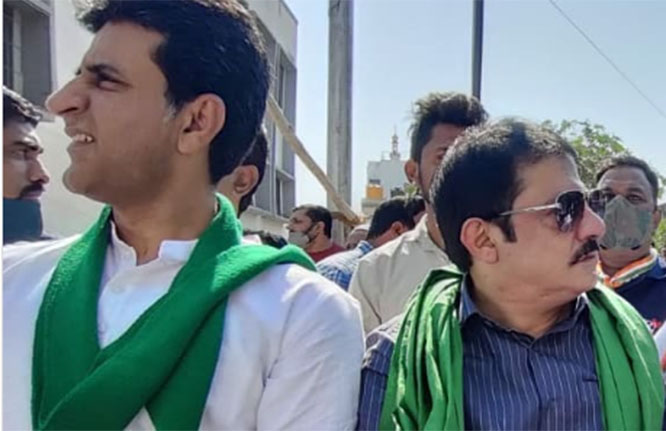
The internal friction turned public this week following provocative remarks by Zaid Khan, actor and son of Wakf Minister Zameer Ahmed Khan. Zaid’s claim—that his father "helped" secure a ticket for Shivajinagar MLA Rizwan Arshad in 2023—has acted as a lightning rod for resentment.

Rizwan’s camp was quick to fire back, dismissing the comment as a desperate attempt by Zameer to manufacture seniority. "Rizwan’s political pedigree was forged in the NSUI and Youth Congress long before Zameer even stepped into the party," a supporter noted, highlighting Rizwan’s tenure as an AICC secretary and his two-term presidency of the State Youth Congress.

A Tale of Two Loyalists

While both Zameer Ahmed Khan and Rizwan Arshad are staunch allies of Chief Minister Siddaramaiah and represent Bengaluru strongholds, their political DNA could not be more different:

•    Zameer Ahmed Khan: A four-time MLA who crossed over from JD(S) in 2018. Known for his "overzealous" and often polarizing outreach during communal flashpoints—from the DJ Halli riots to the recent Wakf land notice controversy—his style has frequently left the Congress high command in a state of "discomfort."

•    Rizwan Arshad: A homegrown organizational man. Seen as a "quiet performer," Arshad represents the sophisticated, moderate face of the party, preferred by those who find Zameer’s brand of politics too volatile.

The Outsiders Looking In

The bickering isn't limited to a duo. The "Beary" community, represented by leaders like N A Haris and Saleem Ahmed, is demanding its pound of flesh. Saleem Ahmed, the Chief Whip in the Legislative Council, has dropped the veil of diplomacy, openly declaring his ministerial aspirations.

"I was the only working president not included in the Cabinet last time," Saleem noted pointedly, signaling that the "loyalty quota" is no longer enough to keep the peace.

As Chief Minister Siddaramaiah prepares to finalize the list, he faces a delicate balancing act: rewarding the aggressive grassroots mobilization of Zameer’s camp without alienating the organizational stalwarts and minority sub-sects who feel increasingly sidelined by the "Chamarajpet-Shivajinagar" binary.

Comments

Add new comment

  • Coastaldigest.com reserves the right to delete or block any comments.
  • Coastaldigset.com is not responsible for its readers’ comments.
  • Comments that are abusive, incendiary or irrelevant are strictly prohibited.
  • Please use a genuine email ID and provide your name to avoid reject.
News Network
January 20,2026

iran.jpg

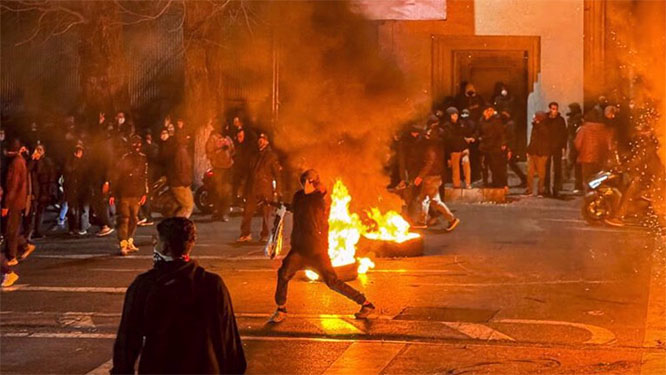
Iranian security and intelligence forces have captured more than 470 individuals in three provinces, identified as key figures behind the recent wave of violent unrest and terrorist activities linked to foreign-backed networks.

The Intelligence Ministry's provincial office in Khorasan Razavi announced on Monday the arrest of 192 armed terrorists, identified as the main agents behind recent riots in the region. 

According to an official statement, the detainees were involved in the killing of several security personnel and civilians, setting fire to mosques, public service facilities, and buses, as well as attacks on military and law enforcement centers.

The seized items from the group include several bulletproof vests, Kalashnikov rifles, hunting weapons, Winchester rifles, and various cold weapons such as daggers, swords, brass knuckles, tactical knives, crossbows, and chains.

Evidence indicates that some of the individuals were tied to hostile movements and terrorist organizations, with links overseas. Others were identified as members of violent criminal gangs, actively taking part in the unrest alongside their associates.

Simultaneously, in the western province of Lorestan, the IRGC announced the arrest of 134 individuals as the main leaders and influential field agents of a US-Israeli terrorist network.

The IRGC statement stated that these individuals formed terrorist cells during the recent unrest, committing "Daesh-like" acts.

They wounded security forces with firearms and cold weapons, and burned and destroyed public and private properties, including mosques, shops, banks, and private and public vehicles.

In the northwestern province of Zanjan, the police reported detaining 150 people identified as principal leaders and agents behind recent riots.

Authorities noted that these individuals were responsible for destroying public and private property and intentionally setting fire to vehicles in the province's squares.

Their crimes include shedding the blood of innocent people, destroying public and private property, attempting to enter military sites, disrupting public order, and spreading terror among citizens.

A variety of cold weapons were reportedly seized from the detainees.

What began late last month as peaceful protests over economic hardship across Iran turned violent after public statements by US and Israeli regime figures encouraged vandalism and disorder.

During the unrest, foreign-backed mercenaries rampaged through cities, killing security forces and civilians and damaging public property.

Comments

Add new comment

  • Coastaldigest.com reserves the right to delete or block any comments.
  • Coastaldigset.com is not responsible for its readers’ comments.
  • Comments that are abusive, incendiary or irrelevant are strictly prohibited.
  • Please use a genuine email ID and provide your name to avoid reject.
News Network
January 31,2026

Roy.jpg

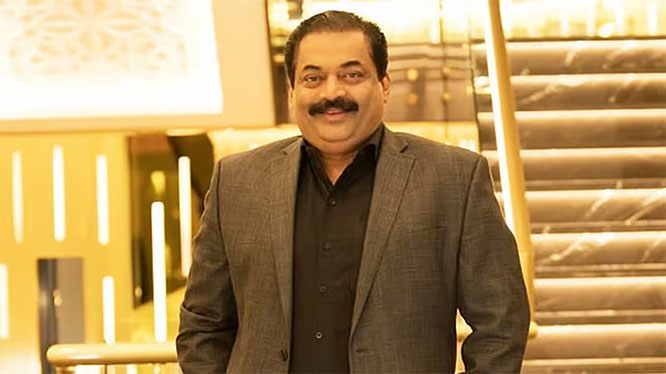
Bengaluru: The shooting incident involving CJ Roy, founder of the Confident Group, has once again put the spotlight on a businessman whose life has swung between flamboyant global success and persistent controversy at home.

Though Roy’s business interests extended across continents, his roots lay firmly in Karnataka. An alumnus of Christ School in Bengaluru, he later moved to Tumakuru to pursue an engineering degree. Those familiar with his early years describe him as intensely ambitious, beginning his career as a salesman at a small electronics firm dealing in computers.

Roy’s entry into large-scale real estate came through the Crystal Group, where he worked closely with Latha Namboothiri and rose from manager to director. However, the launch of the Confident Group in 2005 was clouded by industry speculation. Insiders speak of a fallout involving alleged “benami” properties and claims of deception that ultimately led to his independent venture—an episode Roy spent years trying to distance himself from, according to associates.

A tale of two cities

Roy’s professional trajectory diverged sharply across geographies.

In Dubai, he built a reputation as a bold and efficient developer, completing massive luxury residential projects in record time—some reportedly within 11 months. His rapid project delivery and lavish lifestyle in the Emirates earned him admiration and visibility in the real estate sector.

In Bengaluru, however, his image remained far more fractured. Sources say Roy stayed away from the city for several years amid disputes over unpaid dues to vendors and suppliers. Several projects were allegedly stalled, with accusations of unfulfilled commitments to cement and steel suppliers continuing to follow him.

Roy’s return to Bengaluru’s business and social circles began around 2018, marked by a conscious attempt at rebranding. His appointment as Honorary Consul of the Slovak Republic added diplomatic legitimacy, which he complemented with visible CSR initiatives, including ambulance donations and high-profile charity events.

Heavy police presence in Langford Town

Following the incident, police personnel from the Central division were deployed outside the Confident Group building in Langford Town, which also houses the Slovak Honorary Consulate in Bengaluru.

The otherwise busy premises near Hosur Road wore a deserted look on Friday, reflecting the shock and uncertainty that followed the tragedy.

Comments

Add new comment

  • Coastaldigest.com reserves the right to delete or block any comments.
  • Coastaldigset.com is not responsible for its readers’ comments.
  • Comments that are abusive, incendiary or irrelevant are strictly prohibited.
  • Please use a genuine email ID and provide your name to avoid reject.