US President signs Tibetan Policy and Support Act, stalls China from installing its own Dalai Lama

News Network
December 28, 2020

Washington, Dec 28: US President Donald Trump has signed the Tibetan Policy and Support Act (TPSA) of 2020 into law, thus, stalling China from installing their own Dalai Lama.

On Sunday (local time), Trump signed into law, "H.R. 133, an Act making consolidated appropriations for the fiscal year ending September 30, 2021, providing coronavirus emergency response and relief, and for other purposes."

With the TPSA becoming a law, Lobsang Sangay, President of the Central Tibetan Administration, took to Twitter and said, "History made again! President Trump signs the Omnibus bill, which means the Tibetan Policy and Support Act of 2020 is now LAW!"

The US Congress had on December 21 passed the TPSA of 2020, which has been included in a government spending bill, could become another source of friction in the already strained ties between US and China, Kyodo News reported.

In February this year, the House of Representatives had unanimously passed the Bill to strengthen policy in support of Tibet, a move that was reciprocated as "encouraging and empowering" by the representatives of the Himalayan Buddhist region that has been under the control of China for several decades.

The spiritual leader has exiled himself in India ever since the rebellion against the Chinese rule in 1959. The Dalai Lama is known for his messages of unity and compassion.

The Dalai Lama institution has existed for more than 600 years, during which there have been changes. On the religious level, the US does not have and neither do Chinese who are not Tibetan Buddhists, the right to interfere with the decisions regarding the succession of the Dalai Lama, which absolutely rests with the Dalai Lama, Tibetan Buddhist leaders and the people of Tibet.

The 14th Dalai Lama has dealt with all Chinese Communist Party (CCP) leaders, from Mao Zedong to Xi Jinping, and is in a unique position to not only have a deep understanding of the complexities of Chinese leadership but also to stay ahead of them in the geopolitical game between Beijing and Dharamshala.

The present Lama has further stepped up his game over the past few years.

As China prepares in its own thorough manner to identify the 15th Dalai Lama -- the reincarnation of the current, 14th Dalai Lama -- the simple monk has let loose a series of statements meant to confuse, and Beijing seems to be reeling from the impact.

China has been planning to use the archaic Golden Urn process (draw of lots) to identify the next Dalai Lama as if choosing the head of the religion with the largest following in China is a matter of a lottery.

But the Dalai Lama has been pointing towards a denunciation of this process for a long time. The Buddhist spiritual leader has repeatedly pointed out that the Golden Urn process would not apply to his reincarnation, and that the traditional method of leaving a letter containing signs would be followed.

However, putting the Chinese leadership back into confusion, the Dalai Lama has, in interactions with media and common devotees, said the institution might end with him (which atheist China opposes), or there might be a female Dalai Lama, and even that the system of reincarnation is a feudal one.

Beijing, as per information coming from the Buddhist Association of China (BAC), the officially sanctioned body dealing with the religion, has asked it to dive into the archives of Tibetan Buddhism, in all parts of China, to gather documents relating to the reincarnation process.

The Dalai Lama, for now, is in good health. During the Long Life offering ceremony at Gaden Jangtse Monastery in India at the end of last year, the leader had declared that he will be living until the age of 113 -- by which time another couple of generations of the Chinese Communist leadership will have come and gone.

Apart from scientific grounds, maybe the Lama's declaration of his living for another 22 years is a subtle way to express his confidence that he will outlive the Chinese communist regime.

Comments

Add new comment

  • Coastaldigest.com reserves the right to delete or block any comments.
  • Coastaldigset.com is not responsible for its readers’ comments.
  • Comments that are abusive, incendiary or irrelevant are strictly prohibited.
  • Please use a genuine email ID and provide your name to avoid reject.
coastaldigest.com news network
January 19,2026

rizwanzameer.jpg

Bengaluru: As the dust settles on the recent legislative session, the corridors of Vidhana Soudha are buzzing with more than just policy talk. A high-stakes game of political musical chairs has begun, exposing a deepening rift within the Congress party’s Muslim leadership as a major Cabinet reshuffle looms.

With the party hierarchy signaling a "50% refresh" to gear up for the 2028 Assembly elections, the race to fill three projected Muslim ministerial berths has transformed from a strategic discussion into an all-out turf war.

The "Star Son" Spark

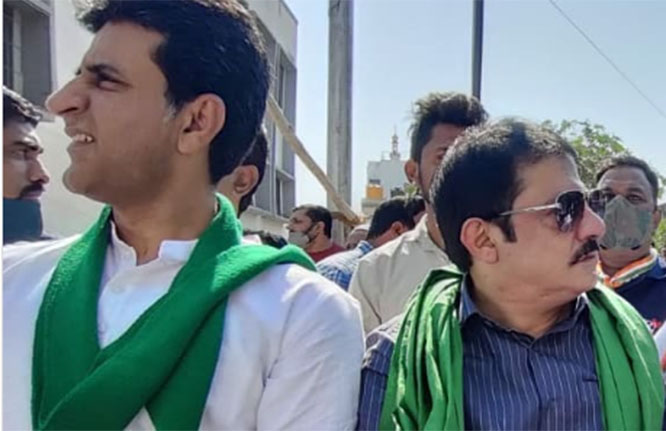
The internal friction turned public this week following provocative remarks by Zaid Khan, actor and son of Wakf Minister Zameer Ahmed Khan. Zaid’s claim—that his father "helped" secure a ticket for Shivajinagar MLA Rizwan Arshad in 2023—has acted as a lightning rod for resentment.

Rizwan’s camp was quick to fire back, dismissing the comment as a desperate attempt by Zameer to manufacture seniority. "Rizwan’s political pedigree was forged in the NSUI and Youth Congress long before Zameer even stepped into the party," a supporter noted, highlighting Rizwan’s tenure as an AICC secretary and his two-term presidency of the State Youth Congress.

A Tale of Two Loyalists

While both Zameer Ahmed Khan and Rizwan Arshad are staunch allies of Chief Minister Siddaramaiah and represent Bengaluru strongholds, their political DNA could not be more different:

•    Zameer Ahmed Khan: A four-time MLA who crossed over from JD(S) in 2018. Known for his "overzealous" and often polarizing outreach during communal flashpoints—from the DJ Halli riots to the recent Wakf land notice controversy—his style has frequently left the Congress high command in a state of "discomfort."

•    Rizwan Arshad: A homegrown organizational man. Seen as a "quiet performer," Arshad represents the sophisticated, moderate face of the party, preferred by those who find Zameer’s brand of politics too volatile.

The Outsiders Looking In

The bickering isn't limited to a duo. The "Beary" community, represented by leaders like N A Haris and Saleem Ahmed, is demanding its pound of flesh. Saleem Ahmed, the Chief Whip in the Legislative Council, has dropped the veil of diplomacy, openly declaring his ministerial aspirations.

"I was the only working president not included in the Cabinet last time," Saleem noted pointedly, signaling that the "loyalty quota" is no longer enough to keep the peace.

As Chief Minister Siddaramaiah prepares to finalize the list, he faces a delicate balancing act: rewarding the aggressive grassroots mobilization of Zameer’s camp without alienating the organizational stalwarts and minority sub-sects who feel increasingly sidelined by the "Chamarajpet-Shivajinagar" binary.

Comments

Add new comment

  • Coastaldigest.com reserves the right to delete or block any comments.
  • Coastaldigset.com is not responsible for its readers’ comments.
  • Comments that are abusive, incendiary or irrelevant are strictly prohibited.
  • Please use a genuine email ID and provide your name to avoid reject.
News Network
January 19,2026

trump.jpg

Donald Trump has linked his repeated threats to seize Greenland to his failure to win the Nobel Peace Prize, in a letter to Norwegian Prime Minister Jonas Gahr Støre.

The authenticity of the letter, in which Trump says he no longer feels obligated to “think purely of peace,” was confirmed by Støre to the Norwegian newspaper VG.

“Considering your country decided not to give me the Nobel Peace Prize for having stopped eight wars plus, I no longer feel an obligation to think purely of peace,” Trump wrote, adding he can now “think about what is good and proper for the United States.”

Støre said Trump’s letter was in response to a short message he had sent earlier, on behalf of himself and Finland’s President Alexander Stubb.

Trump has escalated rhetoric toward Greenland, a self-governing Danish territory, insisting the US will take control “one way or the other.” Over the weekend, he tweeted: “Now it is time, and it will be done!!!”

On Saturday, Trump threatened a 10% tariff on imports from Denmark, Norway, Sweden, France, Germany, the UK, the Netherlands, and Finland from 1 February until the US is allowed to purchase the island. EU diplomats met for emergency talks on possible retaliatory tariffs and sanctions.

In his letter, Trump argued Denmark “cannot protect” Greenland from Russia or China, questioning Danish ownership: “There are no written documents; it’s only that a boat landed there hundreds of years ago.” He added that NATO should support the US, claiming the world is “not secure unless we have complete and total control of Greenland.”

Trump’s stance has unsettled the EU and NATO, as he refused to rule out military action to take control of the mineral-rich island.

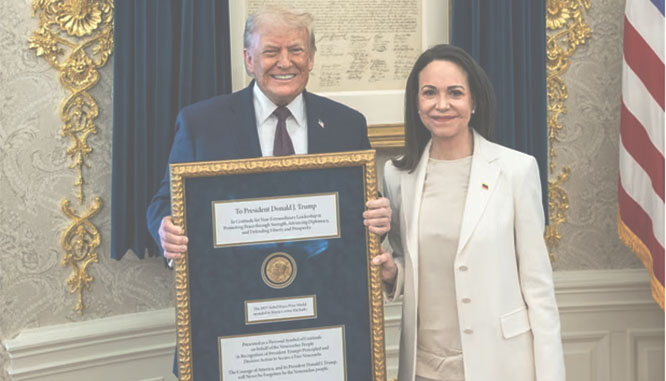
The Nobel Peace Prize is awarded by the independent Norwegian Nobel Committee, not the government. Trump had campaigned for last year’s prize, which went to Venezuelan opposition leader María Corina Machado, who dedicated her award to him.

Støre reiterated that the Nobel Prize decision rests solely with the committee.

Comments

Add new comment

  • Coastaldigest.com reserves the right to delete or block any comments.
  • Coastaldigset.com is not responsible for its readers’ comments.
  • Comments that are abusive, incendiary or irrelevant are strictly prohibited.
  • Please use a genuine email ID and provide your name to avoid reject.
News Network
January 20,2026

iran.jpg

Iranian security and intelligence forces have captured more than 470 individuals in three provinces, identified as key figures behind the recent wave of violent unrest and terrorist activities linked to foreign-backed networks.

The Intelligence Ministry's provincial office in Khorasan Razavi announced on Monday the arrest of 192 armed terrorists, identified as the main agents behind recent riots in the region. 

According to an official statement, the detainees were involved in the killing of several security personnel and civilians, setting fire to mosques, public service facilities, and buses, as well as attacks on military and law enforcement centers.

The seized items from the group include several bulletproof vests, Kalashnikov rifles, hunting weapons, Winchester rifles, and various cold weapons such as daggers, swords, brass knuckles, tactical knives, crossbows, and chains.

Evidence indicates that some of the individuals were tied to hostile movements and terrorist organizations, with links overseas. Others were identified as members of violent criminal gangs, actively taking part in the unrest alongside their associates.

Simultaneously, in the western province of Lorestan, the IRGC announced the arrest of 134 individuals as the main leaders and influential field agents of a US-Israeli terrorist network.

The IRGC statement stated that these individuals formed terrorist cells during the recent unrest, committing "Daesh-like" acts.

They wounded security forces with firearms and cold weapons, and burned and destroyed public and private properties, including mosques, shops, banks, and private and public vehicles.

In the northwestern province of Zanjan, the police reported detaining 150 people identified as principal leaders and agents behind recent riots.

Authorities noted that these individuals were responsible for destroying public and private property and intentionally setting fire to vehicles in the province's squares.

Their crimes include shedding the blood of innocent people, destroying public and private property, attempting to enter military sites, disrupting public order, and spreading terror among citizens.

A variety of cold weapons were reportedly seized from the detainees.

What began late last month as peaceful protests over economic hardship across Iran turned violent after public statements by US and Israeli regime figures encouraged vandalism and disorder.

During the unrest, foreign-backed mercenaries rampaged through cities, killing security forces and civilians and damaging public property.

Comments

Add new comment

  • Coastaldigest.com reserves the right to delete or block any comments.
  • Coastaldigset.com is not responsible for its readers’ comments.
  • Comments that are abusive, incendiary or irrelevant are strictly prohibited.
  • Please use a genuine email ID and provide your name to avoid reject.