'US watching political situation in Islamabad': The conversation that rattled Imran Khan govt

News Network
April 17, 2022

Islamabad, Apr 17: The conversation that rattled the then Prime Minister Imran Khan-led government in Pakistan took place on March 7 at a farewell lunch for the country’s ambassador to the US Asad Majeed Khan at his residence in Washington, which is also known as Pakistan House, a media report said on Sunday.

Citing diplomatic and official sources, Dawn newspaper reported that a note-taker also attended the lunch meeting and the cable that Ambassador Khan later sent to Islamabad was based on the notes taken by the note-taker, who was from the Pakistani Embassy.

Since the lunch meeting – attended by Assistant Secretary of State for South and Central Asian Affairs Donald Lu and Deputy Assistant Secretary Lesslie C Viguerie - was held less than two weeks after the Russian military operation against Ukraine, the invasion dominated the conversation, the paper said.

The sources said the US side expressed its ‘disappointment’ with Pakistan’s decision to send its prime minister, Imran Khan, to Moscow the day Russia invaded Ukraine, the paper said.

“They pointed out how the invasion had angered the entire American nation and explained why they thought Khan should have postponed his visit,” one of the sources said.

Another source said Lu hinted that “Washington believes the final decision to go ahead with the visit despite the invasion was that of Imran Khan” although some Pakistani officials had suggested postponing it, the paper reported.

Ambassador Khan, according to these sources, argued that it was a collective decision and that Pakistan had been trying for a Moscow visit for years. And when the invitation came, they could not turn it down or postpone it.

The Americans, however, argued that Islamabad should have also “considered Washington’s sensitiveness” on this issue before going ahead with the visit, the paper said.

The sources said the conversation then drifted to the current political environment in Pakistan, and Lu pointed out that Washington was keenly watching the situation and the outcome of a no-trust move against the then prime minister would impact US-Pakistan relations as well, the paper said.

One source claimed Lu’s arguments were “alarming and far from routine”, but he did not threaten a regime change.

The source also claimed that no one attending the meeting felt that the Americans were hatching a conspiracy to topple the Pakistan Tehreek-e-Insaf government led by Khan.

“No, there’s no conspiracy. Nobody got that impression,” the source added. “But they did say the outcome will impact bilateral ties, which can be interpreted either way.”

The sources said the Americans never concealed “their disappointment” with Pakistan over Khan’s Moscow visit. They claimed that Army Chief Gen Qamar Javed Bajwa had planned to visit Washington in April, but postponed it after learning how the Americans felt about Ukraine.

“I never thought it was a US conspiracy, but it triggered certain reactions that impacted the domestic political situation in Pakistan,” another source said. “What Lu said reflected what the Biden administration feels and thinks. It was very unusual. Not one bit routine.”

The source claimed that the defence attache's presence in the lunch meeting, and his earlier engagement with US officials on the Ukraine issue, explained why Gen Bajwa’s comments on Ukraine “marked a significant departure” from Khan’s policies on this issue, the paper said.

Khan had argued that Pakistan made a mistake by joining the West during the Cold War, it should remain neutral in the Russia-Ukraine conflict and refused to condemn Moscow’s invasion.

Addressing a seminar in Islamabad on April 2, Gen Bajwa, however, slammed Russia’s military attack on Ukraine, calling for an immediate cessation of what he described as a “huge tragedy” inflicted on a smaller country.

Last week, the Army also dismissed Khan’s allegations of a US conspiracy, although it acknowledged that Washington had used language in the lunch meeting that amounted to interference in Pakistani affairs.

Military spokesman Major General Babar Iftikhar said that the National Security Council’s meeting on this issue expressed “grave concern” at the communication from Washington, but did not use the word ‘conspiracy’.

On April 8, in his last address to the nation as prime minister, Khan reiterated his allegations that a senior US diplomat threatened a regime change in Pakistan.

In another statement, Khan also named the official - Donald Lu - who allegedly made that threat during a meeting with Ambassador Khan.

Khan, 69, became the first prime minister in Pakistan who was removed through a no-trust vote on April 9 - a move he alleged was the outcome of a 'foreign conspiracy' orchestrated by the US.

On April 10, while commenting on Khan’s claim, a US State Department spokesperson said: “Let me just say very bluntly there is absolutely no truth to these allegations,” according to the Dawn report.

Khan has been trying to build a narrative that he was a victim of international conspiracy and his party has demanded a probe by the Supreme Court.

Prime Minister Shehbaz Sharif has announced that a committee of the parliament would be briefed by the army and other officials about the letter, and also committed to resign if proved that the US conspired to remove Khan. 

Comments

Add new comment

  • Coastaldigest.com reserves the right to delete or block any comments.
  • Coastaldigset.com is not responsible for its readers’ comments.
  • Comments that are abusive, incendiary or irrelevant are strictly prohibited.
  • Please use a genuine email ID and provide your name to avoid reject.
News Network
December 3,2025

indigo.jpg

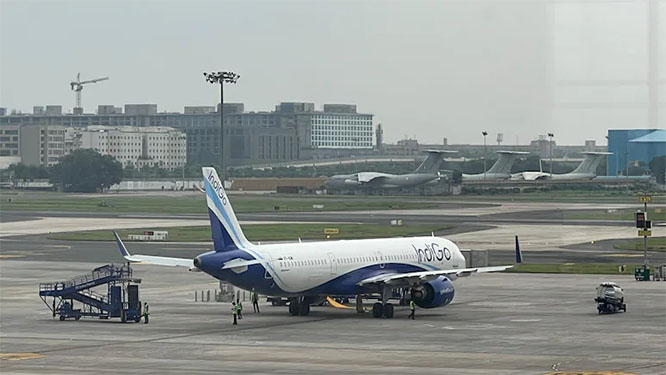
IndiGo, India’s largest airline, is battling one of its worst operational disruptions in recent years, with hundreds of delays and cancellations throwing domestic travel into chaos.

Government data on Tuesday showed its on-time performance plunging to 35%, an unusual dip for a carrier long associated with punctuality.

By Wednesday afternoon, airports in Delhi, Mumbai, Bengaluru and Hyderabad had collectively reported close to 200 cancellations, stranding travellers across the country.

Crew Shortage After New Duty Norms

A major trigger behind the meltdown is a severe crew shortage, especially among pilots, following the rollout of revised Flight Duty Time Limitation (FDTL) norms last month.

The rules mandate longer rest hours and more humane rosters — a shift IndiGo has struggled to incorporate across its vast network.

Sources said several flights were grounded due to lack of cabin crew, while some delays stretched upwards of eight hours.

With IndiGo controlling over 60% of India’s domestic aviation market, the ripple effect has impacted airports nationwide.

IndiGo Issues Apology, Lists “Compounding Factors”

In a statement, IndiGo acknowledged the large-scale disruption:

“We sincerely apologise to customers. A series of unforeseen operational challenges — technology glitches, winter schedule changes, adverse weather, system congestion and updated FDTL norms — created a compounding impact that could not have been anticipated.”

To stabilise operations, the airline has begun calibrated schedule adjustments for the next 48 hours, aiming to restore punctuality. Affected passengers are being offered refunds or alternate travel arrangements, IndiGo said.

What the FDTL Rules Require

The FDTL norms, designed to reduce pilot fatigue, cap duty and flying hours as follows:
•    Maximum 8 hours of flying per day
•    35 hours per week
•    125 hours per month
•    1,000 hours per year

Crew must also receive rest equalling twice the flight duration, with a minimum 10-hour rest period in any 24-hour window.

The DGCA introduced these limits to enhance flight safety.

Hyderabad: 33 Flights Cancelled, Long Queues Reported

Hyderabad’s Rajiv Gandhi International Airport saw heavy early-morning crowds as 33 IndiGo flights (arrivals and departures) were cancelled.

The airport clarified on X that operations were normal, advising passengers to contact IndiGo directly for latest flight status.

Cancellations included flights to and from Visakhapatnam, Goa, Ahmedabad, Delhi, Bengaluru, Chennai, Madurai, Hubli, Bhopal and Bhubaneswar.

Bengaluru: 42 Flights Disrupted

Bengaluru’s Kempegowda International Airport recorded 42 cancellations — 22 arrivals and 20 departures — affecting routes to Delhi, Mumbai, Chennai, Hyderabad, Goa, Kolkata and Lucknow.

Passengers Vent on Social Media

Irate travellers took to X to share their experiences. One passenger stranded in Hyderabad wrote: “I have been here since 3 a.m. and missed an important meeting.”

Another said: “My flight was pushed from 1:55 PM to 2:55 PM and now 4:35 PM. I was informed only three minutes before entering the airport.”

Delhi Airport Hit by Tech Glitch

At Delhi Airport, the disruption deepened due to a slowdown in the Amadeus system — used for reservations, check-ins and departure control.

The technical issue led to longer queues and sluggish processing, adding to delays already worsened by staff shortages.

Comments

Add new comment

  • Coastaldigest.com reserves the right to delete or block any comments.
  • Coastaldigset.com is not responsible for its readers’ comments.
  • Comments that are abusive, incendiary or irrelevant are strictly prohibited.
  • Please use a genuine email ID and provide your name to avoid reject.
Agencies
November 22,2025

indiapak.jpg

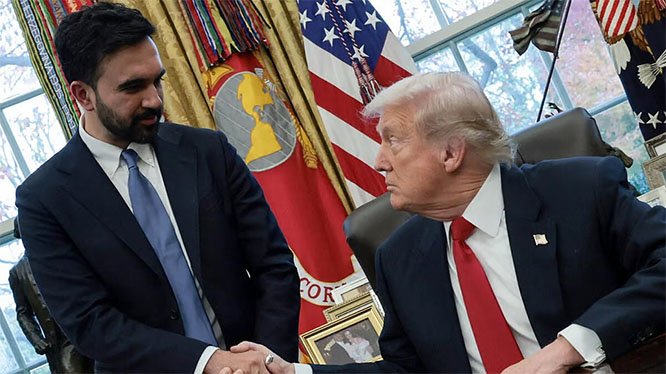
New York/Washington: US President Donald Trump has again claimed to have solved the conflict between India and Pakistan, repeating his assertion during a meeting with New York City Mayor-elect Zohran Mamdani in the Oval Office.

Mamdani flew to Washington DC for his first meeting with Trump in the White House on Friday. Trump said he “enjoyed” the meeting, which he described as “great.”

During remarks in the Oval Office, with Mamdani standing next to him, Trump repeated his claim that he solved the May conflict between India and Pakistan.

"I did eight peace deals of countries, including India and Pakistan,” he said.

On Wednesday, Trump had said he threatened to put 350 per cent tariffs on India and Pakistan if they did not end their conflict, repeating his claim that he solved the fighting between the nuclear-armed neighbours and that Prime Minister Narendra Modi had called him to say “we're not going to go to war.”

Since May 10, when Trump announced on social media that India and Pakistan had agreed to a “full and immediate” ceasefire after a “long night” of talks mediated by Washington, he has repeated his claim over 60 times that he “helped settle” the tensions between India and Pakistan.

India has consistently denied any third-party intervention. India launched Operation Sindoor on May 7, targeting terror infrastructure in Pakistan and Pakistan-occupied Kashmir in retaliation for the April 22 Pahalgam attack that killed 26 civilians. India and Pakistan reached an understanding on May 10 to end the conflict after four days of intense cross-border drone and missile strikes.

Mamdani emerged victorious in the closely-watched battle for New York City Mayor, becoming the first South Asian and Muslim to be elected to sit at the helm of the largest city in the US.

He had been the front-runner in the NYC Mayoral election for months and defeated Republican nominee Curtis Sliwa and political heavyweight former New York State Governor Andrew Cuomo, who ran as an independent candidate and was officially endorsed by Trump just hours before the elections.

Indian-descent Mamdani is the son of renowned filmmaker Mira Nair and Columbia University professor Mahmood Mamdani. He was born and raised in Kampala, Uganda and moved to New York City with his family when he was 7. Mamdani became a naturalised US citizen only recently, in 2018.

Comments

Add new comment

  • Coastaldigest.com reserves the right to delete or block any comments.
  • Coastaldigset.com is not responsible for its readers’ comments.
  • Comments that are abusive, incendiary or irrelevant are strictly prohibited.
  • Please use a genuine email ID and provide your name to avoid reject.
News Network
November 24,2025

israelsyra.jpg

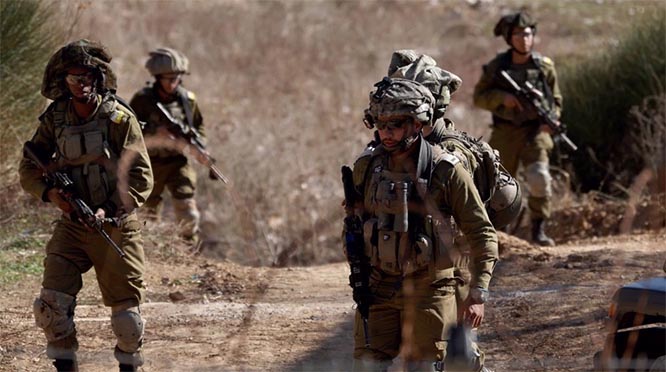
Israeli forces have pushed over the Syrian frontier, erecting a checkpoint and stopping vehicles in the southwestern city of Quneitra, in yet another breach of the Arab country’s sovereignty.

The violation took place on Sunday, when the troops made their way across the border, setting up the outpost near the Ain al-Bayda junction in northern Quneitra, Syrian outlets reported.

According to the al-Ikhbariya paper, an Israeli detachment positioned itself at the junction, halting cars and conducting searches.

The Syrian Arab News Agency (SANA) reported that three Israeli military vehicles then moved further into the northern countryside, deploying between the town of Jubata al-Khashab and the villages of Ofaniya and Ain al-Bayda. The agency added that a separate Israeli unit mounted a new incursion in the central region, approaching the villages of Umm Batina and al-Ajraf.

Residents said such activities have surged in recent months, pointing to Israeli advances onto farmland, leveling of extensive forested areas, arrests, and spread of mobile checkpoints.

The Israeli regime began markedly increasing its military aggression against Syria last year.

The escalation coincided with increasingly ferocious onslaughts throughout the country by the so-called Hay'at Tahrir al-Sham (HTS) Takfiri terrorist group, which the government of President Bashar al-Assad had confined to northwestern Syria. The HTS, however, managed to overthrow the government as the Israeli attacks would pummel the country’s civilian and defensive infrastructure.

Various reports have shown that, during the escalation, the regime conducted more than 1,000 airstrikes on the Syrian territory and over 400 ground raids into the south.

Following the collapse of the Assad government, Tel Aviv also widened its grip over the occupied Golan Heights by taking control of a demilitarized buffer zone, in defiance of a 1974 Disengagement Agreement. Earlier this month, senior Israeli officials, including Prime Minister Benjamin Netanyahu, visited the buffer zone, prompting expressions of alarm on the part of the United Nations.

The United States, the regime’s biggest ally, has, meanwhile, been fraternizing the HTS head Abu Mohammed al-Jolani amid the widely reported prospect of rapprochement with Tel Aviv.

Comments

Add new comment

  • Coastaldigest.com reserves the right to delete or block any comments.
  • Coastaldigset.com is not responsible for its readers’ comments.
  • Comments that are abusive, incendiary or irrelevant are strictly prohibited.
  • Please use a genuine email ID and provide your name to avoid reject.