Vietnamese billionaire Truong My Lan sentenced to DEATH for $44bn fraud

News Network
April 11, 2024

vietnamfraud.jpg

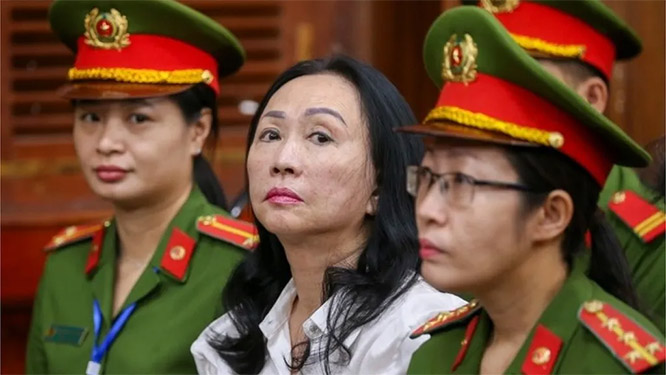
Real estate tycoon Truong My Lan was sentenced Thursday to death by a court in Ho Chi Minh city in southern Vietnam in the country's largest financial fraud case ever, state media Thanh Nien said.

It's a rare verdict - she is one of very few women in Vietnam to be sentenced to death for a white collar crime, i.e. looting one of the country's largest banks over a period of 11 years.

The decision is a reflection of the dizzying scale of the fraud. Truong My Lan was convicted of taking out $44bn (£35bn) in loans from the Saigon Commercial Bank. The verdict requires her to return $27bn, a sum prosecutors said may never be recovered. Some believe the death penalty is the court's way of trying to encourage her to return some of the missing billions.

The habitually secretive communist authorities were uncharacteristically forthright about this case, going into minute detail for the media. They said 2,700 people were summoned to testify, while 10 state prosecutors and around 200 lawyers were involved.

The evidence was in 104 boxes weighing a total of six tonnes. Eighty-five defendants were tried with Truong My Lan, who denied the charges.

"There has never been a show trial like this, I think, in the communist era," says David Brown, a retired US state department official with long experience in Vietnam. "There has certainly been nothing on this scale."

The trial was the most dramatic chapter so far in the "Blazing Furnaces" anti-corruption campaign led by the Communist Party Secretary-General, Nguyen Phu Trong.

A conservative ideologue steeped in Marxist theory, Nguyen Phu Trong believes that popular anger over untamed corruption poses an existential threat to the Communist Party's monopoly on power. He began the campaign in earnest in 2016 after out-manoeuvring the then pro-business prime minister to retain the top job in the party.

 The campaign has seen two presidents and two deputy prime ministers forced to resign, and hundreds of officials disciplined or jailed. Now one of the country's richest women has joined their ranks.

Truong My Lan comes from a Sino-Vietnamese family in Ho Chi Minh City, formerly Saigon. It has long been the commercial engine of the Vietnamese economy, dating well back to its days as the anti-communist capital of South Vietnam, with a large, ethnic Chinese community.

She started as a market stall vendor, selling cosmetics with her mother, but began buying land and property after the Communist Party ushered in a period of economic reform, known as Doi Moi, in 1986. By the 1990s, she owned a large portfolio of hotels and restaurants.

Although Vietnam is best known outside the country for its fast-growing manufacturing sector, as an alternative supply chain to China, most wealthy Vietnamese made their money developing and speculating in property.

All land is officially state-owned. Getting access to it often relies on personal relationships with state officials. Corruption escalated as the economy grew, and became endemic.

By 2011, Truong My Lan was a well-known business figure in Ho Chi Minh City, and she was allowed to arrange the merger of three smaller, cash-strapped banks into a larger entity: Saigon Commercial Bank.

Vietnamese law prohibits any individual from holding more than 5% of the shares in any bank. But prosecutors say that through hundreds of shell companies and people acting as her proxies, Truong My Lan actually owned more than 90% of Saigon Commercial.

They accused her of using that power to appoint her own people as managers, and then ordering them to approve hundreds of loans to the network of shell companies she controlled.

The amounts taken out are staggering. Her loans made up 93% of all the bank's lending.

According to prosecutors, over a period of three years from February 2019, she ordered her driver to withdraw 108 trillion Vietnamese dong, more than $4bn (£2.3bn) in cash from the bank, and store it in her basement.

That much cash, even if all of it was in Vietnam's largest denomination banknotes, would weigh two tonnes.

She was also accused of bribing generously to ensure her loans were never scrutinised. One of those who was tried used to be a chief inspector at the central bank, who was accused of accepting a $5m bribe.

The mass of officially sanctioned publicity about the case channelled public anger over corruption against Truong My Lan, whose fatigued, unmade-up appearance in court was in stark contrast to the glamorous publicity photos people had seen of her in the past.

But questions are also being asked about why she was able to keep on with the alleged fraud for so long.

"I am puzzled," says Le Hong Hiep who runs the Vietnam Studies Programme at the ISEAS - Yusof Ishak Institute in Singapore.

"Because it wasn't a secret. It was well known in the market that Truong My Lan and her Van Thinh Phat group were using SCB as their own piggy bank to fund the mass acquisition of real estate in the most prime locations.

"It was obvious that she had to get the money from somewhere. But then it is such a common practice. SCB is not the only bank that is used like this. So perhaps the government lost sight because there are so many similar cases in the market."

David Brown believes she was protected by powerful figures who have dominated business and politics in Ho Chi Minh City for decades. And he sees a bigger factor in play in the way this trial is being run: a bid to reassert the authority of the Communist Party over the free-wheeling business culture of the south.

"What Nguyen Phu Trong and his allies in the party are trying to do is to regain control of Saigon, or at least stop it from slipping away.

"Up until 2016 the party in Hanoi pretty much let this Sino-Vietnamese mafia run the place. They would make all the right noises that local communist leaders are supposed to make, but at the same time they were milking the city for a substantial cut of the money that was being made down there."

At 79 years old, party chief Nguyen Phu Trong is in shaky health, and will almost certainly have to retire at the next Communist Party Congress in 2026, when new leaders will be chosen.

He has been one of the longest-serving and most consequential secretary-generals, restoring the authority of the party's conservative wing to a level not seen since the reforms of the 1980s. He clearly does not want to risk permitting enough openness to undermine the party's hold on political power.

But he is trapped in a contradiction. Under his leadership the party has set an ambitious goal of reaching rich country status by 2045, with a technology and knowledge-based economy. This is what is driving the ever-closer partnership with the United States.

Yet faster growth in Vietnam almost inevitably means more corruption. Fight corruption too much, and you risk extinguishing a lot of economic activity. Already there are complaints that bureaucracy has slowed down, as officials shy away from decisions which might implicate them in a corruption case.

"That's the paradox," says Le Hong Hiep. "Their growth model has been reliant on corrupt practices for so long. Corruption has been the grease that that kept the machinery working. If they stop the grease, things may not work any more."


Comments

Add new comment

  • Coastaldigest.com reserves the right to delete or block any comments.
  • Coastaldigset.com is not responsible for its readers’ comments.
  • Comments that are abusive, incendiary or irrelevant are strictly prohibited.
  • Please use a genuine email ID and provide your name to avoid reject.
News Network
January 20,2026

iran.jpg

Iranian security and intelligence forces have captured more than 470 individuals in three provinces, identified as key figures behind the recent wave of violent unrest and terrorist activities linked to foreign-backed networks.

The Intelligence Ministry's provincial office in Khorasan Razavi announced on Monday the arrest of 192 armed terrorists, identified as the main agents behind recent riots in the region. 

According to an official statement, the detainees were involved in the killing of several security personnel and civilians, setting fire to mosques, public service facilities, and buses, as well as attacks on military and law enforcement centers.

The seized items from the group include several bulletproof vests, Kalashnikov rifles, hunting weapons, Winchester rifles, and various cold weapons such as daggers, swords, brass knuckles, tactical knives, crossbows, and chains.

Evidence indicates that some of the individuals were tied to hostile movements and terrorist organizations, with links overseas. Others were identified as members of violent criminal gangs, actively taking part in the unrest alongside their associates.

Simultaneously, in the western province of Lorestan, the IRGC announced the arrest of 134 individuals as the main leaders and influential field agents of a US-Israeli terrorist network.

The IRGC statement stated that these individuals formed terrorist cells during the recent unrest, committing "Daesh-like" acts.

They wounded security forces with firearms and cold weapons, and burned and destroyed public and private properties, including mosques, shops, banks, and private and public vehicles.

In the northwestern province of Zanjan, the police reported detaining 150 people identified as principal leaders and agents behind recent riots.

Authorities noted that these individuals were responsible for destroying public and private property and intentionally setting fire to vehicles in the province's squares.

Their crimes include shedding the blood of innocent people, destroying public and private property, attempting to enter military sites, disrupting public order, and spreading terror among citizens.

A variety of cold weapons were reportedly seized from the detainees.

What began late last month as peaceful protests over economic hardship across Iran turned violent after public statements by US and Israeli regime figures encouraged vandalism and disorder.

During the unrest, foreign-backed mercenaries rampaged through cities, killing security forces and civilians and damaging public property.

Comments

Add new comment

  • Coastaldigest.com reserves the right to delete or block any comments.
  • Coastaldigset.com is not responsible for its readers’ comments.
  • Comments that are abusive, incendiary or irrelevant are strictly prohibited.
  • Please use a genuine email ID and provide your name to avoid reject.
News Network
January 23,2026

Mangaluru: The Karnataka Government Polytechnic (KPT), Mangaluru, has achieved autonomous status from the All India Council for Technical Education (AICTE), becoming the first government polytechnic in the country to receive such recognition in its 78-year history. The status was granted by AICTE, New Delhi, and subsequently approved by the Karnataka Board of Technical Education in October last year.

Officials said the autonomy was conferred a few months ago. Until recently, AICTE extended autonomous status only to engineering colleges, excluding diploma institutions. However, with a renewed national focus on skill development, several government polytechnics across India have now been granted autonomy.

KPT, the second-largest polytechnic in Karnataka, was established in 1946 with four branches and has since expanded to offer eight diploma programmes, including computer science and polymer technology. The institution is spread across a 19-acre campus.

Ravindra M Keni, the first dean of the institution, told The Times of India that AICTE had proposed autonomous status for polytechnic institutions that are over 25 years old. “Many colleges applied. In the first round, 100 institutions were shortlisted, which was further narrowed down to 15 in the second round. We have already completed one semester after becoming an autonomous institution,” he said. He added that nearly 500 students are admitted annually across eight three-year diploma courses.

Explaining the factors that helped KPT secure autonomy, Keni said the institution has consistently recorded 100 per cent admissions and placements for its graduates. He also noted its strong performance in sports, with the college emerging champions for 12 consecutive years, along with active student participation in NCC and NSS activities.

Autonomous status allows KPT to design industry-oriented curricula, conduct examinations, prepare question papers, and manage academic documentation independently. The institution can also directly collaborate with industries and receive priority funding from AICTE or the Ministry of Education. While academic autonomy has been granted, financial control will continue to rest with the state government.

“There will be separate committees for examinations, question paper setting, boards of studies, and boards of examiners. The institution will now have the freedom to conduct admissions without government notifications and issue its own marks cards,” Keni said, adding that new academic initiatives would be planned after a year of functioning under the autonomous framework.

Comments

Add new comment

  • Coastaldigest.com reserves the right to delete or block any comments.
  • Coastaldigset.com is not responsible for its readers’ comments.
  • Comments that are abusive, incendiary or irrelevant are strictly prohibited.
  • Please use a genuine email ID and provide your name to avoid reject.
News Network
January 31,2026

files.jpg

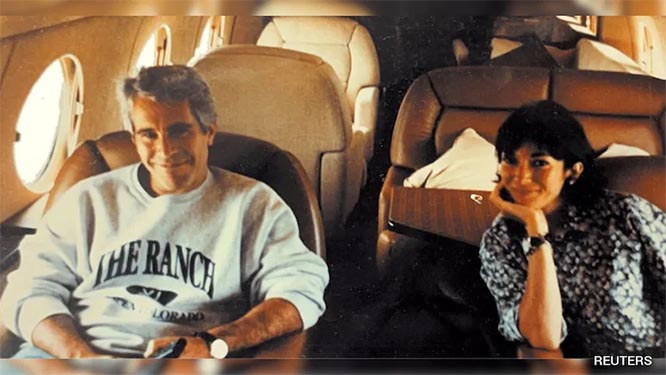
A fresh cache of files related to the investigation into the late convicted sex offender Jeffrey Epstein contains documents that reference President Donald Trump and other high-profile figures including Microsoft co-founder Bill Gates, Commerce Secretary Howard Lutnick and British billionaire Richard Branson.

Here are key details about mentions of the celebrities, none of whom have been accused of wrongdoing:

Donald Trump

The files included an FBI-compiled list of sexual assault allegations related to President Donald Trump -- many of them involving anonymous callers and unverified tips.

The allegations -- some secondhand -- were sent to the FBI's National Threat Operations Center which receives information by phone and electronically.

The document suggests that investigators followed up on a number of the tips. Some were deemed to lack credibility.

Trump has long denied any wrongdoing related to Epstein.

In a statement accompanying Friday's file dump, the Justice Department said: "Some of the documents contain untrue and sensationalist claims against President Trump that were submitted to the FBI right before the 2020 election. To be clear, the claims are unfounded and false."

Bill Gates

In a draft email among the documents, Epstein alleged Gates had engaged in extramarital affairs.

In the mail, Epstein wrote that his relationship with Gates had ranged from "helping Bill to get drugs, in order to deal with consequences of sex with russian girls, to facilitating his illicit trysts, with married women."

Richard Branson

Files show friendly relations between the two billionaires.

In an email sent to Epstein on Sept 11, 2013, Branson wrote "It was really nice seeing you yesterday. The boys in Watersports can't stop speaking about it! Any time you're in the area would love to see you. As long as you bring your harem!"

Elon Musk

The files contain numerous mail exchanges between Epstein and billionaire entrepreneur Elon Musk.

In November 2012, Epstein sent Musk an email asking "how many people will you be for the heli to island."

"Probably just Talulah and me. What day/night will be the wildest party on your island?" Musk replied.

Andrew Mountbatten-Windsor

The disgraced former prince invited Epstein to visit him at Buckingham Palace in September 2010 while the financier was making a trip to London.

An email exchange shows Epstein contacting Andrew to ask: "What time would you like me... we will also need... private time."

Andrew replied: "we could have dinner at Buckingham Palace and lots of privacy."

Howard Lutnick

Emails show that Epstein and businessman Lutnick -- currently Trump's commerce secretary -- made plans in December 2012 to lunch on Epstein's Caribbean island.

"We are heading towards you from St. Thomas" Lutnick's wife wrote to Epstein's secretary, asking where they should anchor.

Steve Tisch

Several mails suggested Epstein connected Steve Tisch, 76, producer of the movies "Forrest Gump" and "Risky Business" and the co-owner of the New York Giants football team, with multiple women.

In one exchange with Tisch, Epstein describes a woman as "russian, and rarely tells the full truth, but fun."

Zohran Mamdani's Mother, Filmmaker Mira Nair 

New York City Mayor Zohran Mamdani's mother, Mira Nair, attended an afterparty at convicted sex trafficker Ghislaine Maxwell's house for her 2009 film "Amelia", reveals a new set of Epstein files.

An email dated October 21, 2009, sent by publicist Peggy Siegal to Jeffrey Epstein, also surfaced in documents. The email, sent in the early hours, right after Siegal left the gathering, gives an insight into the afterparty. 

The party was also attended by former President Bill Clinton and Amazon CEO Jeff Bezos.

"Just left Ghislaine's townhouse...after party for film. Bill Clinton and Jeff Bezos were there...Jean Pigoni, director Mira Nair....etc," the email read.

The email described the reaction of guests to Nair's film as "tepid."

"Film received tepid reaction although women like it much more...Hillary Swank and Gen: at stupid party in Bloomingdales cheap sportwear department....very weird. Studio went for free party from store and windows for a month....Going to be in Wall Street 2 tomorrow ....more to come. xoxo Peg," the email read.

Comments

Add new comment

  • Coastaldigest.com reserves the right to delete or block any comments.
  • Coastaldigset.com is not responsible for its readers’ comments.
  • Comments that are abusive, incendiary or irrelevant are strictly prohibited.
  • Please use a genuine email ID and provide your name to avoid reject.