A year after first coronavirus death in Wuhan, Covid source still a puzzle

News Network
January 10, 2021

Wuhan, Jan 10: It is the world’s most pressing scientific puzzle, but experts warn there may never be conclusive answers over the source of the coronavirus, after an investigative effort marked from the start by disarray, Chinese secrecy and international rancour.

January 11 marks the anniversary of China confirming its first death from Covid-19, a 61-year-old man who was a regular at the now-notorious Wuhan wet market.

Nearly two million deaths later, the pandemic is out of control across much of the world, leaving tens of millions ill, a pulverised global economy and recriminations flying between nations.

Yet China, which has broadly controlled the pandemic on its soil, is still frustrating independent attempts to trace the virus’ origins and the central question of how it jumped from animals to humans.

There is little dispute that the virus which brought the world to its knees sparked its first known outbreak in late 2019 at a wet market in the central Chinese city of Wuhan where wildlife was sold as food, and the pathogen is believed to have originated in an undetermined bat species.

But the trail ends there, clouded by a mishmash of subsequent clues that suggest its origins may predate Wuhan as well as conspiracy theories — amplified by US President Donald Trump — that it leaked from a Wuhan lab.

Establishing the source is vital for extinguishing future outbreaks early, leading virologists say, providing clues that can guide policy decisions on whether to cull animal populations, quarantine affected persons, or limit wildlife hunting and other human-animal interactions.

“If we can identify why they (viruses) keep emerging, we can reduce those underlying drivers,” said Peter Daszak, president of EcoHealth Alliance, a global NGO focused on infectious disease prevention.

China won early kudos for reporting the virus and releasing its gene sequence in a timely manner, compared with its cover-up of the 2002-03 SARS outbreak.

But there has also been secrecy and shifting stories.

Wuhan authorities initially tried to cover up the outbreak and later spent precious weeks denying human-to-human transmission.

Early on, Chinese officials declared flatly that the outbreak began at the Huanan Seafood Market in Wuhan.

But Chinese data in January 2020 showed that several of the first cases had no known links to the now-shuttered market, suggesting a source elsewhere.

China’s story morphed again last March when top Chinese disease control official Gao Fu said the market was not the source, but a “victim”, a place where the pathogen was merely amplified.

But China has since failed to publicly connect any dots, releasing scant information on animal and environmental samples taken at the market that could aid investigators, experts say.

And it has kept foreign experts at arm’s length, with a planned mission by World Health Organization virus sleuths now in limbo after China denied them entry.

On Saturday, a top Chinese health official said the country was now “ready” for the 10-strong team and opened the door to a visit to Wuhan.

Yet “the specific time is being determined”, National Health Commission vice minister Zeng Yixin told reporters.

What the scientists will be allowed to see or may expect to find a year on is also in doubt. Experts say authorities may have destroyed or scrubbed away crucial evidence in a panicked initial response.

“Every outbreak goes the same way. It’s chaotic and dysfunctional,” said Daszak.

“They didn’t do a great job on the animal investigation early on,” he added.

“In some ways, they were quite open, in others they were less than open.”

The reasons for China’s secrecy are unclear, but the ruling Communist Party has a history of suppressing politically damaging information.

Whistleblowers and citizen reporters who shared details of the terrifying early weeks of the virus on the internet have since been muzzled or jailed.

Beijing may want to hide regulatory or investigative lapses to avoid domestic embarrassment or global “blowback”, said Daniel Lucey, a Georgetown University epidemiologist who closely tracks global outbreaks.

The Wuhan market might not even be the issue, Lucey adds.

He notes that the virus was already spreading rapidly in Wuhan by December 2019, indicating that it was in circulation much earlier.

That’s because it may take months or even years for a virus to develop the necessary mutations to become highly contagious among humans.

The market-origin theory is “just not plausible whatsoever”, Lucey said.

“It occurred naturally and it had to have been many months earlier, perhaps a year, perhaps more than a year.”

Augmenting the doubt, in December China said the number of coronavirus cases circulating in Wuhan may have been 10 times higher early in the epidemic than revealed by official figures at the time.

The trail has now gone cold, with the drip of subsequent clues only adding to the confusion, including findings that the virus may have existed in Europe and Brazil before Wuhan’s outbreak, unconfirmed suggestions which China has seized upon to deflect blame.

Daszak remains hopeful the source can be found, especially after US President Donald Trump’s re-election loss.

He blames Trump for killing cooperation with China by politicising the virus — typified by his “China virus” label — and his administration’s promotion of the conspiracy theory that China created it in a lab, which scientists reject.

“I’m confident we will eventually find out the bat species it came from and the likely pathway,” Daszak said.

Others are less certain.

Diana Bell, a wildlife disease expert at the University of East Anglia who has studied the SARS virus, Ebola and other pathogens, said focusing on a particular origin species is misguided.

She says the overarching threat has already been exposed: a global wildlife trade that fosters a “combustible mix” of trafficked species, a known breeding ground for disease outbreaks.

“(The species) actually doesn’t matter. We don’t need to know the source, we just need to stop that sodding mixing of animals in markets,” she said.

“We need to stop the wildlife trade for human consumption.”

Comments

Add new comment

  • Coastaldigest.com reserves the right to delete or block any comments.
  • Coastaldigset.com is not responsible for its readers’ comments.
  • Comments that are abusive, incendiary or irrelevant are strictly prohibited.
  • Please use a genuine email ID and provide your name to avoid reject.
News Network
December 4,2025

Udupi: A 40-year-old NRI from Udupi has reportedly lost more than Rs 12.25 lakh in an online investment scam operated through Telegram.

According to a complaint filed at the CEN police station, Leo Jerome Mendonsa, who has been working in Dubai for the past 15 years in computer accessories sales, maintains NRI accounts in Karkala and Nitte.

On November 12, 2025, Mendonsa was added to a Telegram group called Instaflow Earnings by unknown individuals. Users identified as Priya and Dipannita persuaded him to invest in “Revenue Tasks.” Initially, Mendonsa transferred Rs 1,100 multiple times and received the promised returns, encouraging him to continue.

On November 14, another user, Nishmitha Shetty, directed him to register on a website, digitvisionuoce.cc, and invest Rs 4 lakh in various shares. Over the next few days, he made multiple transfers totaling Rs 12,25,000, including Rs 50,000 via Google Pay, believing the scheme was legitimate.

After receiving the money, the alleged handlers stopped responding, and neither the invested amount nor the promised profits were returned.

The CEN police have registered a case under Sections 66(C) and 66(D) of the IT Act and Section 318(4) of the Bharatiya Nyaya Sanhita (BNS), and investigations are ongoing.

Comments

Add new comment

  • Coastaldigest.com reserves the right to delete or block any comments.
  • Coastaldigset.com is not responsible for its readers’ comments.
  • Comments that are abusive, incendiary or irrelevant are strictly prohibited.
  • Please use a genuine email ID and provide your name to avoid reject.
News Network
November 22,2025

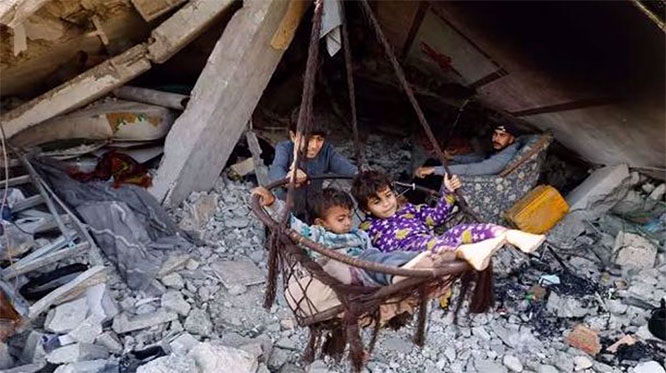
gaza.jpg

The Israeli regime’s forces have killed two Palestinian children in the Gaza Strip every day since the ceasefire began in early October, UNICEF has warned.

The UN children’s agency said on Friday that Israeli forces continue to attack Palestinians in Gaza even though the agreement was meant to stop the killing.

“Since 11 October, while the ceasefire has been in effect, at least 67 children have been killed in conflict-related incidents in the Gaza Strip. Dozens more have been injured. That is an average of almost two children killed every day since the ceasefire took effect,” UNICEF spokesperson Ricardo Pires said in Geneva, reminding that each number in the statistics represents a child whose life had ended violently.

“These are not statistics,” he said. “Each child had a story, a family, and a future that was stolen from them.”

Data from Palestinian factions, human rights groups, and government bodies recorded since the US-brokered ceasefire deal went into effect on October 10 show that Israeli forces have carried out numerous attacks, each constituting a separate ceasefire violation.

UNICEF teams say they repeatedly continue to witness heart-wrenching scenes of fearful Palestinian children sleeping outdoors with amputated limbs, while others live as orphans in flooded, makeshift shelters.

“I saw this myself in August. There is no safe place for them. The world cannot normalize their suffering,” Pires said, lamenting that the UN could “do a lot more if the aid that is really needed was entering faster.”

The UNICEF spokesperson warned that with the advent of winter, the risks for hundreds of thousands of displaced children will increase.

He warned, “The stakes are incredibly high” for children as winter acts as a threat multiplier, where children have no heating, no insulation, and few blankets. He said respiratory infections rise.

“Too many children have already paid the highest price,” Pires said. “Too many are still paying it, even under a ceasefire. The world promised them it would stop and that we would protect them.”

“Now we must act like it,” the UNICEF spokesperson added.

Since the Israeli regime launched its genocidal war against Palestinians in Gaza in October 2023, it has killed nearly 70,000 people in the territory, most of them women and children, and injured over 170,000 more, while reducing most of the structures in the enclave to rubble.

Comments

Add new comment

  • Coastaldigest.com reserves the right to delete or block any comments.
  • Coastaldigset.com is not responsible for its readers’ comments.
  • Comments that are abusive, incendiary or irrelevant are strictly prohibited.
  • Please use a genuine email ID and provide your name to avoid reject.
coastaldigest.com news network
December 2,2025

karkala.jpg

Udupi, Dec 2: A wave of regional pride is sweeping through Udupi district as Shagun S Verma Hegde, a talented Class 9 student from Christ King English Medium High School, Karkala, has been named the captain of the Indian National Team for the Under-15 Girls’ Volleyball Championship.

Shagun holds the unique distinction of being the sole player from Karnataka selected to represent the country in the prestigious international tournament. The championship, organized by the School Games Federation, is scheduled to take place in Shangluo, China, from December 3 to 13, where Shagun will lead the national squad.

A Remarkable Journey to the Top

Shagun’s selection is a testament to her dedication and exceptional skill on the court. Her journey included several rigorous rounds of selection:

•    She was the only player from Udupi district to qualify for the state-level selection camp.

•    Out of eight players from Karnataka who advanced to the national selection camp in Pune, Maharashtra, Shagun was the only one to secure a place in the final national squad.

•    The national camp saw participation from approximately 200 players, which was shortlisted to 23. Shagun not only made the final cut but was also ranked as the second-best player overall, solidifying her leadership role.

Shagun, who is the daughter of Sandesh Verma and Shruthiraj of Kallotte, Karkala, has trained under experienced coaches Santosh D’Souza, Jeevan D’Silva, Jairaj Poojary, and Ramesh. Her selection as the team captain has brought profound honour to her family, school, the Udupi district, and the entire state of Karnataka.

Comments

Add new comment

  • Coastaldigest.com reserves the right to delete or block any comments.
  • Coastaldigset.com is not responsible for its readers’ comments.
  • Comments that are abusive, incendiary or irrelevant are strictly prohibited.
  • Please use a genuine email ID and provide your name to avoid reject.