A year after first coronavirus death in Wuhan, Covid source still a puzzle

News Network
January 10, 2021

Wuhan, Jan 10: It is the world’s most pressing scientific puzzle, but experts warn there may never be conclusive answers over the source of the coronavirus, after an investigative effort marked from the start by disarray, Chinese secrecy and international rancour.

January 11 marks the anniversary of China confirming its first death from Covid-19, a 61-year-old man who was a regular at the now-notorious Wuhan wet market.

Nearly two million deaths later, the pandemic is out of control across much of the world, leaving tens of millions ill, a pulverised global economy and recriminations flying between nations.

Yet China, which has broadly controlled the pandemic on its soil, is still frustrating independent attempts to trace the virus’ origins and the central question of how it jumped from animals to humans.

There is little dispute that the virus which brought the world to its knees sparked its first known outbreak in late 2019 at a wet market in the central Chinese city of Wuhan where wildlife was sold as food, and the pathogen is believed to have originated in an undetermined bat species.

But the trail ends there, clouded by a mishmash of subsequent clues that suggest its origins may predate Wuhan as well as conspiracy theories — amplified by US President Donald Trump — that it leaked from a Wuhan lab.

Establishing the source is vital for extinguishing future outbreaks early, leading virologists say, providing clues that can guide policy decisions on whether to cull animal populations, quarantine affected persons, or limit wildlife hunting and other human-animal interactions.

“If we can identify why they (viruses) keep emerging, we can reduce those underlying drivers,” said Peter Daszak, president of EcoHealth Alliance, a global NGO focused on infectious disease prevention.

China won early kudos for reporting the virus and releasing its gene sequence in a timely manner, compared with its cover-up of the 2002-03 SARS outbreak.

But there has also been secrecy and shifting stories.

Wuhan authorities initially tried to cover up the outbreak and later spent precious weeks denying human-to-human transmission.

Early on, Chinese officials declared flatly that the outbreak began at the Huanan Seafood Market in Wuhan.

But Chinese data in January 2020 showed that several of the first cases had no known links to the now-shuttered market, suggesting a source elsewhere.

China’s story morphed again last March when top Chinese disease control official Gao Fu said the market was not the source, but a “victim”, a place where the pathogen was merely amplified.

But China has since failed to publicly connect any dots, releasing scant information on animal and environmental samples taken at the market that could aid investigators, experts say.

And it has kept foreign experts at arm’s length, with a planned mission by World Health Organization virus sleuths now in limbo after China denied them entry.

On Saturday, a top Chinese health official said the country was now “ready” for the 10-strong team and opened the door to a visit to Wuhan.

Yet “the specific time is being determined”, National Health Commission vice minister Zeng Yixin told reporters.

What the scientists will be allowed to see or may expect to find a year on is also in doubt. Experts say authorities may have destroyed or scrubbed away crucial evidence in a panicked initial response.

“Every outbreak goes the same way. It’s chaotic and dysfunctional,” said Daszak.

“They didn’t do a great job on the animal investigation early on,” he added.

“In some ways, they were quite open, in others they were less than open.”

The reasons for China’s secrecy are unclear, but the ruling Communist Party has a history of suppressing politically damaging information.

Whistleblowers and citizen reporters who shared details of the terrifying early weeks of the virus on the internet have since been muzzled or jailed.

Beijing may want to hide regulatory or investigative lapses to avoid domestic embarrassment or global “blowback”, said Daniel Lucey, a Georgetown University epidemiologist who closely tracks global outbreaks.

The Wuhan market might not even be the issue, Lucey adds.

He notes that the virus was already spreading rapidly in Wuhan by December 2019, indicating that it was in circulation much earlier.

That’s because it may take months or even years for a virus to develop the necessary mutations to become highly contagious among humans.

The market-origin theory is “just not plausible whatsoever”, Lucey said.

“It occurred naturally and it had to have been many months earlier, perhaps a year, perhaps more than a year.”

Augmenting the doubt, in December China said the number of coronavirus cases circulating in Wuhan may have been 10 times higher early in the epidemic than revealed by official figures at the time.

The trail has now gone cold, with the drip of subsequent clues only adding to the confusion, including findings that the virus may have existed in Europe and Brazil before Wuhan’s outbreak, unconfirmed suggestions which China has seized upon to deflect blame.

Daszak remains hopeful the source can be found, especially after US President Donald Trump’s re-election loss.

He blames Trump for killing cooperation with China by politicising the virus — typified by his “China virus” label — and his administration’s promotion of the conspiracy theory that China created it in a lab, which scientists reject.

“I’m confident we will eventually find out the bat species it came from and the likely pathway,” Daszak said.

Others are less certain.

Diana Bell, a wildlife disease expert at the University of East Anglia who has studied the SARS virus, Ebola and other pathogens, said focusing on a particular origin species is misguided.

She says the overarching threat has already been exposed: a global wildlife trade that fosters a “combustible mix” of trafficked species, a known breeding ground for disease outbreaks.

“(The species) actually doesn’t matter. We don’t need to know the source, we just need to stop that sodding mixing of animals in markets,” she said.

“We need to stop the wildlife trade for human consumption.”

Comments

Add new comment

  • Coastaldigest.com reserves the right to delete or block any comments.
  • Coastaldigset.com is not responsible for its readers’ comments.
  • Comments that are abusive, incendiary or irrelevant are strictly prohibited.
  • Please use a genuine email ID and provide your name to avoid reject.
News Network
January 23,2026

oscar.jpg

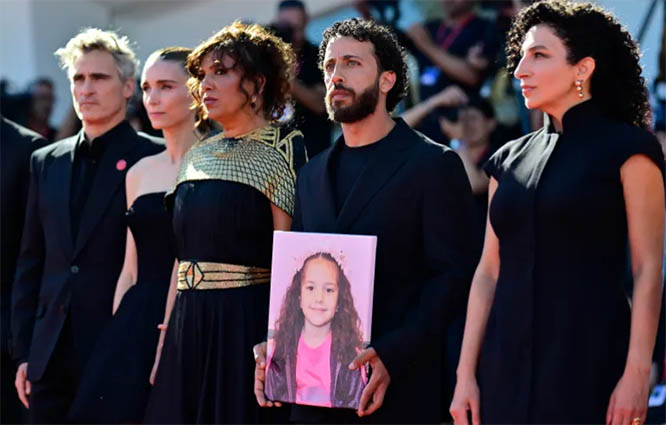
The Voice of Hind Rajab, inspired by the tragic final moments of a young Palestinian girl killed by Israeli fire in Gaza, has been nominated for an Academy Award in the Best International Feature Film category.

Directed by Tunisian filmmaker Kaouther Ben Hania, the film recounts the true story of five-year-old Hind Rajab, who lost her life in January 2024 while fleeing Israeli bombardment with her family.

The film features the real audio of Hind’s desperate call to the Palestinian Red Crescent Society, where she pleaded for help moments before the vehicle she was in was struck by 355 bullets.

The haunting narrative begins with a brief call made from the besieged Tel al-Hawa neighborhood of Gaza, where gunfire and armored vehicles drowned out every sound.

After witnessing the brutal killing of her family, she made a trembling call, her voice reduced to a whisper as she spoke of the massacre and her unbearable loneliness as the sole survivor.

Premiering at the Venice International Film Festival in September 2025, The Voice of Hind Rajab garnered widespread acclaim, receiving a record-setting 23-minute standing ovation and the Silver Lion Grand Jury Prize, the festival’s second-highest honor.

In her acceptance speech, Ben Hania dedicated the film to humanitarian workers and first responders in Gaza, emphasizing that Hind's voice symbolizes countless civilians affected by war.

She aims to give voice to victims often reduced to mere statistics, highlighting the broader suffering of civilians in war zones.

The film’s Oscar nomination underscores its powerful storytelling and ethical approach to depicting real-life tragedy, making it a crucial piece of contemporary cinema.

It serves not only as a narration of individual tragedy but also as an artistic and documentary response to the silence and censorship that often overshadow West Asian struggles and wars.

Using an innovative method she calls docufiction, Ben Hania bridges unvarnished reality and narrative structure, creating a work that is both artistically valuable and socially impactful.

Born in 1977 in Sidi Bouzid—later the epicenter of the Arab revolution—her background profoundly influenced her worldview and artistic approach.

She is a graduate of the Higher School of Audiovisual Arts of Tunis, Pantheon-Sorbonne University, and La Fémis in Paris, where her studies equipped her with the technical and theoretical tools needed to address complex subjects. 

Comments

Add new comment

  • Coastaldigest.com reserves the right to delete or block any comments.
  • Coastaldigset.com is not responsible for its readers’ comments.
  • Comments that are abusive, incendiary or irrelevant are strictly prohibited.
  • Please use a genuine email ID and provide your name to avoid reject.
News Network
January 31,2026

trumpkill.jpg

The US Department of Justice has released millions of new documents linked to the case of convicted child sex offender Jeffrey Epstein, before removing some pages that contained complaints mentioning President Donald Trump.

Deputy Attorney General Todd Blanche said on Friday that approximately 3.5 million files were published to comply with the Epstein Transparency Act, following criticism that the administration had missed a December 19 deadline set by Congress.

The documents include FBI communications and complaints submitted as tips, some of which list comments mentioning Trump and others who had social or professional ties to Epstein.

Trump has repeatedly denied any wrongdoing in relation to his past association with Epstein.

Pages removed from DOJ website

After their publication, pages containing complaints that mentioned Trump were removed from the DOJ website and now return a “page not found” message. Copies of the documents, however, have circulated widely on social media. CNN anchor Jake Tapper was among those who publicly noted that the pages had been taken down.

One complaint, filed by a friend of a victim, says Trump forced a girl aged 13–14 to perform “oral sex” approximately 35 years ago in New Jersey. The document states that an investigator was sent to Washington to conduct an interview.

Another complaint says Trump regularly paid an individual to perform sexual acts and adds that he was present when her newborn child was murdered by a relative. The paperwork notes that there was “no contact made” with the complainant.

A separate complaint, which provided no contact information, said “calendar girls” parties at Trump’s Mar-a-Lago involved children and sexual abuse. The document also names several public figures as present at such events.

In another account, a complainant said they witnessed a “sex trafficking ring” at Trump National Golf Club in Rancho Palos Verdes, California, in the mid-1990s. The person noted “threats” from Trump’s head of security if she spoke publicly about what she had seen.

Other figures mentioned in the files

The latest release also includes a draft email Epstein wrote to himself in 2013, referring to Microsoft co-founder Bill Gates. In the message, Epstein said Gates asked him to delete emails and referenced “personal matters.”

The DOJ has not provided a detailed explanation for why certain pages were removed after publication. The department said the document release was ongoing.

Comments

Add new comment

  • Coastaldigest.com reserves the right to delete or block any comments.
  • Coastaldigset.com is not responsible for its readers’ comments.
  • Comments that are abusive, incendiary or irrelevant are strictly prohibited.
  • Please use a genuine email ID and provide your name to avoid reject.
News Network
January 20,2026

iran.jpg

Iranian security and intelligence forces have captured more than 470 individuals in three provinces, identified as key figures behind the recent wave of violent unrest and terrorist activities linked to foreign-backed networks.

The Intelligence Ministry's provincial office in Khorasan Razavi announced on Monday the arrest of 192 armed terrorists, identified as the main agents behind recent riots in the region. 

According to an official statement, the detainees were involved in the killing of several security personnel and civilians, setting fire to mosques, public service facilities, and buses, as well as attacks on military and law enforcement centers.

The seized items from the group include several bulletproof vests, Kalashnikov rifles, hunting weapons, Winchester rifles, and various cold weapons such as daggers, swords, brass knuckles, tactical knives, crossbows, and chains.

Evidence indicates that some of the individuals were tied to hostile movements and terrorist organizations, with links overseas. Others were identified as members of violent criminal gangs, actively taking part in the unrest alongside their associates.

Simultaneously, in the western province of Lorestan, the IRGC announced the arrest of 134 individuals as the main leaders and influential field agents of a US-Israeli terrorist network.

The IRGC statement stated that these individuals formed terrorist cells during the recent unrest, committing "Daesh-like" acts.

They wounded security forces with firearms and cold weapons, and burned and destroyed public and private properties, including mosques, shops, banks, and private and public vehicles.

In the northwestern province of Zanjan, the police reported detaining 150 people identified as principal leaders and agents behind recent riots.

Authorities noted that these individuals were responsible for destroying public and private property and intentionally setting fire to vehicles in the province's squares.

Their crimes include shedding the blood of innocent people, destroying public and private property, attempting to enter military sites, disrupting public order, and spreading terror among citizens.

A variety of cold weapons were reportedly seized from the detainees.

What began late last month as peaceful protests over economic hardship across Iran turned violent after public statements by US and Israeli regime figures encouraged vandalism and disorder.

During the unrest, foreign-backed mercenaries rampaged through cities, killing security forces and civilians and damaging public property.

Comments

Add new comment

  • Coastaldigest.com reserves the right to delete or block any comments.
  • Coastaldigset.com is not responsible for its readers’ comments.
  • Comments that are abusive, incendiary or irrelevant are strictly prohibited.
  • Please use a genuine email ID and provide your name to avoid reject.