A pandemic atlas: How covis-19 took over the world in 2020

Agencies
December 16, 2020

Washington, Dec 16: Almost no place has been spared and no one.

The virus that first emerged a year ago in Wuhan, China, swept across the world in 2020, leaving havoc in its wake. More than any event in memory, the pandemic has been a global event. On every continent, households have felt its devastation joblessness and lockdowns, infirmity and death. And an abiding, relentless fear.

But each nation has its own story of how it coped.

The story of COVID-19 in Brazil is the story of a president who insists the pandemic is no big deal. Jair Bolsonaro condemned COVID-19 quarantine, saying shutdowns would wreck the economy and punish the poor. He scoffed at the little flu, then trumpeted the fatalistic claim nothing could stop 70 per cent of Brazilians from falling ill. And he refused to take responsibility when many did.

In many ways, normal life has resumed in China, the country where COVID-19 first appeared one year ago. China's ruling Communist Party has retracted some of the most sweeping anti-disease controls ever imposed. The challenge is jobs: The economy is growing again, but the recovery is uneven.

Germans enjoyed a largely relaxed summer with many restrictions lifted, the dividend of a rapid response to the initial coronavirus outbreak and a reliance on early and widespread testing that won wide praise.

It brought the number of daily COVID-19 cases down from a peak of more than 6,000 in late March to the few hundreds by the warmer months. But as people grew lax in following the rules the numbers began to climb to nearly quadruple the March daily record, and the country now finds itself in a new lockdown as it tries to bring the pandemic back under control.

A nation of 1.3 billion people, India is likely to emerge as the country with the world's highest coronavirus tally. It responded to the pandemic early on with an abrupt nationwide lockdown, but the number of cases spiked as restrictions eased and its creaky public health system struggled to keep up.

Questions have been raised about its unusually low death rate. India's virus worries are also multiplied by its struggling economy that recorded its worst performance in at least two decades. It will be the worst-affected among the world's major economies even after the pandemic wanes.

At the start, Iranian officials downplayed COVID-19 denying the mounting toll of infections, refusing to close mosques, making half-hearted gestures at locking down businesses. That was then. This is now: Even Supreme Leader Ayatollah Ali Khamenei has worn disposable gloves while planting a tree for state media, and prayed in an empty mosque to mark the holy Shiite commemoration of Ashoura.

When Israel went into its second nationwide coronavirus lockdown in September, most of the country quickly complied with the closure. But in some ultra-Orthodox areas, synagogues were packed, mourners thronged funerals and COVID-19 cases continued to soar.

In late February, Italy became the epicenter of COVID-19 in Europe and a cautionary tale of what happens when a health care system in even one of the wealthiest parts of the world collapses under the weight of pandemic sick and dead. When the second wave hit in September, even the lessons learned from the first weren't enough to spare Italy's disproportionately old population from devastation.

Japan has been spared the dangerous surges seen in the US and Europe, and hopes to host the Olympics next summer. Experts say the use of masks and border control have been key to keeping the Japanese caseload low.

They say youth is a protective factor against COVID-19. In Kenya, youth have suffered anyway. From children forced into hard labor and prostitution, to schools closed until 2021, from a child shot dead by police enforcing curfew, to babies born in desperate conditions, the effects of the pandemic in Kenya have fallen hard on the young.

For months Peru held the grim title of first worldwide in per capita COVID-19 deaths. It didn't have to be that way. Decades of under investment in public health, poor decisions at the onset of the pandemic, coupled with severe inequality and shortages of life-saving goods like medicinal oxygen combined to create one of the world's deadliest outbreaks.

South Africa had a secret weapon: Health professionals who are veterans of the country's longstanding battles against HIV/AIDS and drug-resistant TB. The country's leaders heeded their advice on how to deal with the coronavirus, and though there have been ups and downs, the worst-case scenarios have not yet come to pass.

In 2020, Spainiards have normalised things unimaginable only 12 months before. But 2020 will also go down as the year in which an unknown virus shook the foundations of the social contract and threw into question a system that failed to prevent so many deaths.

Americans have been inundated by wave after wave of grim numbers COVID-19 deaths in the hundred thousands, infections in the millions. While those figures testify to a tragedy of historic proportions, they don't fully capture the multitude of ways, large and small, that the virus has upended and rejiggered everyday life.

In Mexico, the government did little, aside from asking its people to act responsibly. The result: more than 100,000 deaths, a number that is presumed to be an understatement.

In New Zealand, the government closed its borders and shut down nearly everything, preventing all but a couple dozen deaths.

Comments

Add new comment

  • Coastaldigest.com reserves the right to delete or block any comments.
  • Coastaldigset.com is not responsible for its readers’ comments.
  • Comments that are abusive, incendiary or irrelevant are strictly prohibited.
  • Please use a genuine email ID and provide your name to avoid reject.
News Network
January 31,2026

files.jpg

A fresh cache of files related to the investigation into the late convicted sex offender Jeffrey Epstein contains documents that reference President Donald Trump and other high-profile figures including Microsoft co-founder Bill Gates, Commerce Secretary Howard Lutnick and British billionaire Richard Branson.

Here are key details about mentions of the celebrities, none of whom have been accused of wrongdoing:

Donald Trump

The files included an FBI-compiled list of sexual assault allegations related to President Donald Trump -- many of them involving anonymous callers and unverified tips.

The allegations -- some secondhand -- were sent to the FBI's National Threat Operations Center which receives information by phone and electronically.

The document suggests that investigators followed up on a number of the tips. Some were deemed to lack credibility.

Trump has long denied any wrongdoing related to Epstein.

In a statement accompanying Friday's file dump, the Justice Department said: "Some of the documents contain untrue and sensationalist claims against President Trump that were submitted to the FBI right before the 2020 election. To be clear, the claims are unfounded and false."

Bill Gates

In a draft email among the documents, Epstein alleged Gates had engaged in extramarital affairs.

In the mail, Epstein wrote that his relationship with Gates had ranged from "helping Bill to get drugs, in order to deal with consequences of sex with russian girls, to facilitating his illicit trysts, with married women."

Richard Branson

Files show friendly relations between the two billionaires.

In an email sent to Epstein on Sept 11, 2013, Branson wrote "It was really nice seeing you yesterday. The boys in Watersports can't stop speaking about it! Any time you're in the area would love to see you. As long as you bring your harem!"

Elon Musk

The files contain numerous mail exchanges between Epstein and billionaire entrepreneur Elon Musk.

In November 2012, Epstein sent Musk an email asking "how many people will you be for the heli to island."

"Probably just Talulah and me. What day/night will be the wildest party on your island?" Musk replied.

Andrew Mountbatten-Windsor

The disgraced former prince invited Epstein to visit him at Buckingham Palace in September 2010 while the financier was making a trip to London.

An email exchange shows Epstein contacting Andrew to ask: "What time would you like me... we will also need... private time."

Andrew replied: "we could have dinner at Buckingham Palace and lots of privacy."

Howard Lutnick

Emails show that Epstein and businessman Lutnick -- currently Trump's commerce secretary -- made plans in December 2012 to lunch on Epstein's Caribbean island.

"We are heading towards you from St. Thomas" Lutnick's wife wrote to Epstein's secretary, asking where they should anchor.

Steve Tisch

Several mails suggested Epstein connected Steve Tisch, 76, producer of the movies "Forrest Gump" and "Risky Business" and the co-owner of the New York Giants football team, with multiple women.

In one exchange with Tisch, Epstein describes a woman as "russian, and rarely tells the full truth, but fun."

Zohran Mamdani's Mother, Filmmaker Mira Nair 

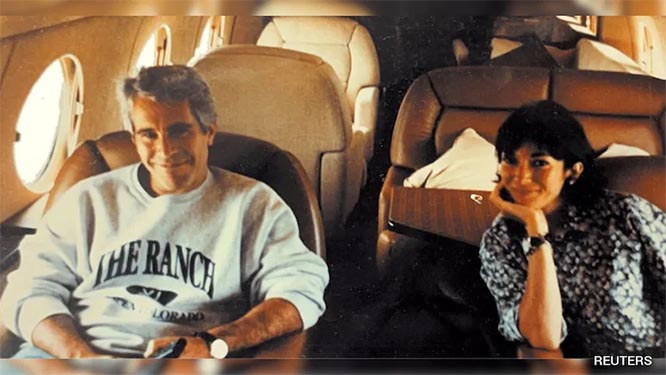
New York City Mayor Zohran Mamdani's mother, Mira Nair, attended an afterparty at convicted sex trafficker Ghislaine Maxwell's house for her 2009 film "Amelia", reveals a new set of Epstein files.

An email dated October 21, 2009, sent by publicist Peggy Siegal to Jeffrey Epstein, also surfaced in documents. The email, sent in the early hours, right after Siegal left the gathering, gives an insight into the afterparty. 

The party was also attended by former President Bill Clinton and Amazon CEO Jeff Bezos.

"Just left Ghislaine's townhouse...after party for film. Bill Clinton and Jeff Bezos were there...Jean Pigoni, director Mira Nair....etc," the email read.

The email described the reaction of guests to Nair's film as "tepid."

"Film received tepid reaction although women like it much more...Hillary Swank and Gen: at stupid party in Bloomingdales cheap sportwear department....very weird. Studio went for free party from store and windows for a month....Going to be in Wall Street 2 tomorrow ....more to come. xoxo Peg," the email read.

Comments

Add new comment

  • Coastaldigest.com reserves the right to delete or block any comments.
  • Coastaldigset.com is not responsible for its readers’ comments.
  • Comments that are abusive, incendiary or irrelevant are strictly prohibited.
  • Please use a genuine email ID and provide your name to avoid reject.
News Network
January 20,2026

iran.jpg

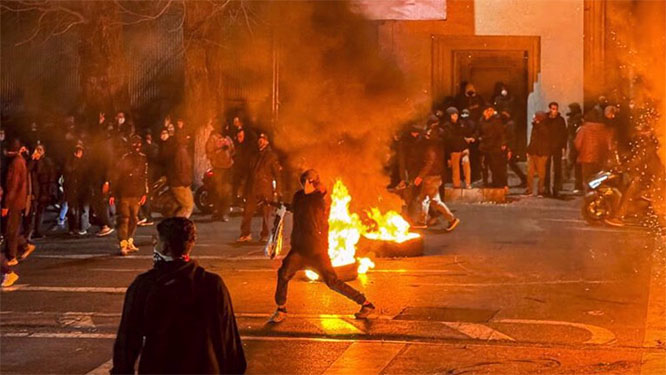
Iranian security and intelligence forces have captured more than 470 individuals in three provinces, identified as key figures behind the recent wave of violent unrest and terrorist activities linked to foreign-backed networks.

The Intelligence Ministry's provincial office in Khorasan Razavi announced on Monday the arrest of 192 armed terrorists, identified as the main agents behind recent riots in the region. 

According to an official statement, the detainees were involved in the killing of several security personnel and civilians, setting fire to mosques, public service facilities, and buses, as well as attacks on military and law enforcement centers.

The seized items from the group include several bulletproof vests, Kalashnikov rifles, hunting weapons, Winchester rifles, and various cold weapons such as daggers, swords, brass knuckles, tactical knives, crossbows, and chains.

Evidence indicates that some of the individuals were tied to hostile movements and terrorist organizations, with links overseas. Others were identified as members of violent criminal gangs, actively taking part in the unrest alongside their associates.

Simultaneously, in the western province of Lorestan, the IRGC announced the arrest of 134 individuals as the main leaders and influential field agents of a US-Israeli terrorist network.

The IRGC statement stated that these individuals formed terrorist cells during the recent unrest, committing "Daesh-like" acts.

They wounded security forces with firearms and cold weapons, and burned and destroyed public and private properties, including mosques, shops, banks, and private and public vehicles.

In the northwestern province of Zanjan, the police reported detaining 150 people identified as principal leaders and agents behind recent riots.

Authorities noted that these individuals were responsible for destroying public and private property and intentionally setting fire to vehicles in the province's squares.

Their crimes include shedding the blood of innocent people, destroying public and private property, attempting to enter military sites, disrupting public order, and spreading terror among citizens.

A variety of cold weapons were reportedly seized from the detainees.

What began late last month as peaceful protests over economic hardship across Iran turned violent after public statements by US and Israeli regime figures encouraged vandalism and disorder.

During the unrest, foreign-backed mercenaries rampaged through cities, killing security forces and civilians and damaging public property.

Comments

Add new comment

  • Coastaldigest.com reserves the right to delete or block any comments.
  • Coastaldigset.com is not responsible for its readers’ comments.
  • Comments that are abusive, incendiary or irrelevant are strictly prohibited.
  • Please use a genuine email ID and provide your name to avoid reject.
News Network
January 19,2026

trump.jpg

Donald Trump has linked his repeated threats to seize Greenland to his failure to win the Nobel Peace Prize, in a letter to Norwegian Prime Minister Jonas Gahr Støre.

The authenticity of the letter, in which Trump says he no longer feels obligated to “think purely of peace,” was confirmed by Støre to the Norwegian newspaper VG.

“Considering your country decided not to give me the Nobel Peace Prize for having stopped eight wars plus, I no longer feel an obligation to think purely of peace,” Trump wrote, adding he can now “think about what is good and proper for the United States.”

Støre said Trump’s letter was in response to a short message he had sent earlier, on behalf of himself and Finland’s President Alexander Stubb.

Trump has escalated rhetoric toward Greenland, a self-governing Danish territory, insisting the US will take control “one way or the other.” Over the weekend, he tweeted: “Now it is time, and it will be done!!!”

On Saturday, Trump threatened a 10% tariff on imports from Denmark, Norway, Sweden, France, Germany, the UK, the Netherlands, and Finland from 1 February until the US is allowed to purchase the island. EU diplomats met for emergency talks on possible retaliatory tariffs and sanctions.

In his letter, Trump argued Denmark “cannot protect” Greenland from Russia or China, questioning Danish ownership: “There are no written documents; it’s only that a boat landed there hundreds of years ago.” He added that NATO should support the US, claiming the world is “not secure unless we have complete and total control of Greenland.”

Trump’s stance has unsettled the EU and NATO, as he refused to rule out military action to take control of the mineral-rich island.

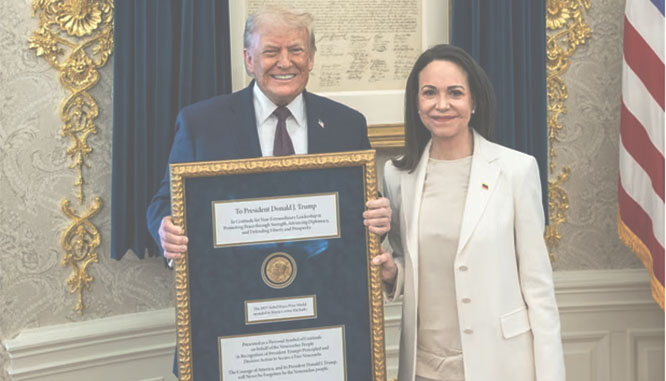
The Nobel Peace Prize is awarded by the independent Norwegian Nobel Committee, not the government. Trump had campaigned for last year’s prize, which went to Venezuelan opposition leader María Corina Machado, who dedicated her award to him.

Støre reiterated that the Nobel Prize decision rests solely with the committee.

Comments

Add new comment

  • Coastaldigest.com reserves the right to delete or block any comments.
  • Coastaldigset.com is not responsible for its readers’ comments.
  • Comments that are abusive, incendiary or irrelevant are strictly prohibited.
  • Please use a genuine email ID and provide your name to avoid reject.