



None should go through what we did: Trafficking victims

Agencies
July 29, 2018

New Delhi, Jul 29: A mother at just 17, Seema* went back to her village in Jharkhand with her two-month-old baby last week, five years after she had been sold to a family in Gurgaon where she was raped by a co-domestic worker.
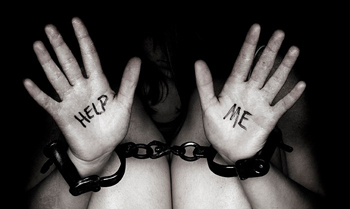
As another World Day Against Trafficking in Persons comes around on Monday, Seema’s life story is a stark reminder of the millions of people who are trafficked each year, sold into prostitution, forced labour or domestic work, either forcefully or on the pretext of a better life.

Activists say even a small hint from the public could play a very big role in busting human trafficking rackets, appealing to people to stay alert and report if they see anything unusual.

Trafficking victims like Seema are often hiding in plain sight, working in upscale homes but overlooked by all those who visit them.

Her sexual assault last year was preceded by years of servitude in the corporate suburb of Gurgaon with 19-hour workdays and barely enough food for the young girl who once dreamt of becoming a painter.

“Working hours were from 4 am to 11 pm every day and I was made to do all household chores. I was the same age as the children in the family. While they would be preparing for their exams, I would be scrubbing floors,” Seema told news agency.

She was given food left over in the plates of her employers. If the plates were empty, she would sleep hungry. She found her peace in painting on newspapers but her world was shattered again when she was raped by another domestic worker.

“I did not understand what was happening to me when my stomach started bloating. My employers took me to a doctor who said I was pregnant. They tried to get the child aborted but it was too late,” Seema said.

Seema gave birth to a baby girl in May this year and has been in a severe depression since then.

A case has been registered against the accused but Seema’s life will never be the same again, said anti-trafficking activist Ashok Rawat.

“All I want is that no other person goes through the trauma I did," said Seema.

But that is a wish that is not about to be fulfilled anytime soon.

According to the National Crime Records Bureau (NCRB), almost 20,000 women and children were victims of human trafficking in India in 2016, a rise of nearly 25 per cent compared to 2015.

Srimoyee* is two years older than Seema but her story of exploitation and servitude is the same.

Tired of being a farm worker in her village in West Bengal’s Asansol disrict, she wanted to become a model but got trapped in the trafficking ring and was forced to become a sex worker in Delhi. She was rescued during a raid but says she is too ashamed to return home.

“I can’t face my family and have nothing to look forward to. I am looking for alternative means of livelihood but without proper education there is nothing really that I can do,” she said.

The stories are many, including not just girl children and young women but also young boys.

Twins Satram* and Raveesh* left their homes in Siliguri to escape their abusive father when they were just eight. They made their way to Delhi and started living at the Delhi railway station, eking out a living reselling used mineral water bottles.

Then, eight months ago, Raveesh came into contact with a trafficker and has been missing since then.

Satram, 14, said he has been looking frantically for him but to no avail.

Seema, Srimoyee and Raveesh are the tragedies unfolding behind the numbers.

“Such people face so much discrimination at home that they think life in cities would be better but once they come to cities they are caught in the vicious circle of trafficking,” Rawat rued.

Statistics from the Ministry of Women and Child Development state that 19,223 women and children were trafficked in 2016 against 15,448 in 2015, with the highest number of victims being recorded in West Bengal.

In a bid to make stricter laws against trafficking, the Lok Sabha last week passed an anti-trafficking bill.

Said to be India's first comprehensive anti-trafficking bill, it seeks to deal with the crime from the point of prevention, protection and rehabilitation.

Besides taking up prevention, rescue and rehabilitation, it covers aggravated forms of trafficking such as forced labour, begging and marriage.

P M Nair, a professor at the Tata Institute of Social Sciences, said the bill brings in accountability.

“So far, a duty was cast upon police to rescue and there was no accountability on agencies of the government concerned with rehabilitation. By endorsing the new provision of bringing in accountability of the government agencies concerned on matters of rehabilitation, it is not only the victim who will benefit … the entire justice delivery process stands to gain,” Nair said.

Rekha Sharma, the chairperson of the National Commission for Women, has said people can play a very important role in rescuing trafficking victims.

She advised people to keep their eyes open. Often, it gets very difficult to identify victims who many a time are walking among us but are not able to ask for help.

In 2013, UN member states adopted a resolution designating July 30 as the World Day against Trafficking in Persons to “raise awareness of the situation of victims of human trafficking and for the promotion and protection of their rights”.

Comments

Add new comment

  • Coastaldigest.com reserves the right to delete or block any comments.
  • Coastaldigset.com is not responsible for its readers’ comments.
  • Comments that are abusive, incendiary or irrelevant are strictly prohibited.
  • Please use a genuine email ID and provide your name to avoid reject.
News Network
December 22,2025

bhagavat.jpg

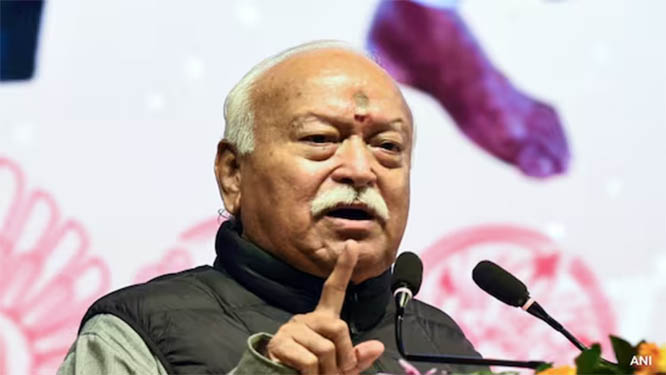
Kolkata: Stressing that India is a "Hindu nation," Rashtriya Swayamsevak Sangh (RSS) Chief Mohan Bhagwat on Sunday said that no constitutional approval is needed as it is the "truth".

Addressing an event marking 100 years of the RSS, Bhagwat said that India is, and will remain, a Hindu nation until Indian culture is appreciated in the country.

"The Sun rises in the east; we don't know since when this has been happening. So, do we need constitutional approval for that, too? Hindustan is a Hindu nation. Whoever considers India their motherland appreciates Indian culture, as long as there is even one person alive on the land of Hindustan who believes in and cherishes the glory of Indian ancestors, India is a Hindu nation. This is the ideology of the Sangh," he said at the '100 Vyakhyan Mala' program of RSS in Kolkata.

"If Parliament ever decides to amend the Constitution and add that word, whether they do it or not, it's fine. We don't care about that word because we are Hindus, and our nation is a Hindu nation. That is the truth. The caste system based on birth is not the hallmark of Hindutva," he added.

RSS has always argued that India is a "Hindu Nation," given the culture and majority's affiliations to Hinduism. However, 'secular' was not originally part of the Preamble of the Constitution, but it was added along with the word 'socialist' by the Constitution (42nd Amendment) Act, 1976, during the Emergency imposed by then Prime Minister Indira Gandhi.

Bhagwat also urged people to visit the organisation's offices and 'shakhas' to understand its work, so that what he dubbed as the “false perception” of the organisation as anti-Muslim can be dispelled!

Bhagwat said that people have understood that the organisation advocates for the protection of Hindus, and are "staunch nationalists," but not anti-muslim.

"If there is a perception that we are anti-Muslim, then, as I said, the RSS work is transparent. You can come anytime and see for yourself, and if you see anything like that happening, then you keep your views, and if you don't see it, then you change your views. There is a lot to understand (about RSS), but if you don't want to understand, then no one can change your mind," Bhagwat said.

He said, but anyone unwilling to learn cannot be helped.

"After seeing, people have said that you are staunch nationalists. You organise Hindus, and you advocate for the protection of Hindus. But you are not anti-Muslim. Many people have accepted this, and those who want to know more should come and see the RSS for themselves," he said.

Comments

Add new comment

  • Coastaldigest.com reserves the right to delete or block any comments.
  • Coastaldigset.com is not responsible for its readers’ comments.
  • Comments that are abusive, incendiary or irrelevant are strictly prohibited.
  • Please use a genuine email ID and provide your name to avoid reject.
News Network
December 16,2025

jordan.jpg

Prime Minister Narendra Modi on Monday held talks with Jordan’s King Abdullah II in Amman, during which the two leaders discussed ways to further strengthen bilateral relations, with the Prime Minister outlining an eight-point vision covering key areas of cooperation.

Describing the meeting as “productive”, PM Modi said he shared a roadmap focused on trade and economy, fertilisers and agriculture, information technology, healthcare, infrastructure, critical and strategic minerals, civil nuclear cooperation, and people-to-people ties.

In a post on social media platform X, the Prime Minister praised King Abdullah II’s personal commitment to advancing India–Jordan relations, particularly as both countries mark the 75th anniversary of the establishment of diplomatic ties this year.

“Held productive discussions with His Majesty King Abdullah II in Amman. His personal commitment towards vibrant India-Jordan relations is noteworthy. This year, we are celebrating the 75th anniversary of our bilateral diplomatic relations,” PM Modi said.

The meeting took place at the Al Husseiniya Palace, where the two leaders also exchanged views on regional and global issues of mutual interest. According to the Ministry of External Affairs (MEA), both sides agreed to further deepen cooperation in areas including trade and investment, defence and security, counter-terrorism and de-radicalisation, fertilisers and agriculture, infrastructure, renewable energy, tourism, and heritage.

The MEA said both leaders reaffirmed their united stand against terrorism.

PM Modi arrived in Amman earlier on Monday and was received by Jordanian Prime Minister Jafar Hassan, who accorded him a formal welcome. Following the talks, King Abdullah II hosted a banquet dinner in honour of the Prime Minister, reflecting the warmth of bilateral ties.

Jordan is the first leg of PM Modi’s three-nation tour. From Amman, the Prime Minister will travel to Ethiopia at the invitation of Prime Minister Abiy Ahmed Ali, marking his first official visit to the African nation. The tour will conclude with a visit to Oman.

Comments

Add new comment

  • Coastaldigest.com reserves the right to delete or block any comments.
  • Coastaldigset.com is not responsible for its readers’ comments.
  • Comments that are abusive, incendiary or irrelevant are strictly prohibited.
  • Please use a genuine email ID and provide your name to avoid reject.
News Network
December 22,2025

The Bharatiya Janata Party (BJP) received ₹6,654.93 crore in donations during the 2024-25 financial year — a Lok Sabha election year — registering a 68 per cent increase over the previous fiscal.

In its annual contribution report submitted to the Election Commission on December 8, two days ahead of the deadline, the BJP disclosed all donations exceeding ₹20,000. The report, now available on the Commission’s website, covers contributions received between April 1, 2024 and March 30, 2025 — a period marked by the general election and Assembly polls in Arunachal Pradesh, Sikkim, Andhra Pradesh, Odisha, Jammu and Kashmir, Haryana, Jharkhand, Maharashtra and Delhi.

The BJP, the world’s largest political party by membership, had reported donations of ₹3,967 crore in 2023-24. The latest figures represent the party’s highest donation receipts in the last five years.

Electoral trusts accounted for around 40 per cent of the BJP’s total donations. The Prudent Electoral Trust contributed ₹2,180 crore, followed by the Progressive Electoral Trust with ₹757 crore and the New Democratic Electoral Trust with ₹150 crore. Contributions from other electoral trusts together amounted to ₹3,112.5 crore. The remaining funds came from corporate donors and individuals. Electoral trusts are entities set up by companies to channel donations to political parties.

Among major corporate contributors, Serum Institute of India donated ₹100 crore, Rungta Sons Private Limited ₹95 crore, Vedanta ₹67 crore, and Macrotech Developers (formerly Lodha Developers) ₹65 crore. Three Bajaj Group companies together contributed ₹65 crore, while Derive Investments donated ₹50 crore.

Other notable donors included Malabar Gold (₹10 crore), Kalyan Jewellers (₹15.1 crore), Hero Group (₹23.65 crore), Dilip Buildcon Group (₹29 crore), ITC Limited (₹35 crore), Wave Industries (₹5.25 crore) and Zerodha’s investment firm, promoted by Nikhil Kamath, which contributed ₹1.5 crore.

Several BJP leaders also made individual donations. Assam Chief Minister Himanta Biswa Sarma donated ₹3 lakh, Assam minister Pijush Hazarika ₹2.75 lakh, Union Education Minister Dharmendra Pradhan ₹1 lakh, Odisha Chief Minister Mohan Charan Majhi ₹5 lakh, Indore Mayor Pushyamitra Bhargava ₹1 lakh, and Akash Vijayvargiya, son of senior BJP leader Kailash Vijayvargiya, also donated ₹1 lakh, among others.

In contrast, most opposition parties reported a sharp decline in donations. The Congress received ₹522.13 crore in 2024-25, a fall of about 43 per cent from ₹1,129 crore in the previous year. The Trinamool Congress saw donations drop to ₹184.08 crore from ₹618.8 crore, while the Bharat Rashtra Samithi reported just ₹15.09 crore, down from ₹580 crore.

The Aam Aadmi Party, however, recorded an increase, collecting ₹39.2 crore compared to ₹22.1 crore last year. The Telugu Desam Party received ₹85.2 crore in donations, down from ₹274 crore, but also earned ₹102 crore through fees and subscriptions. The Biju Janata Dal reported ₹60 crore in donations, compared to ₹246 crore in the previous fiscal.

The 2024-25 financial year is also the first without electoral bonds, after the Supreme Court struck down the scheme as unconstitutional in February 2024. Since its introduction in 2018, the electoral bond scheme had enabled political parties to receive over ₹16,000 crore in anonymous donations, with the BJP receiving the largest share. 

Comments

Add new comment

  • Coastaldigest.com reserves the right to delete or block any comments.
  • Coastaldigset.com is not responsible for its readers’ comments.
  • Comments that are abusive, incendiary or irrelevant are strictly prohibited.
  • Please use a genuine email ID and provide your name to avoid reject.
