



20.1 million babies! India to have highest births amid corona crisis: UNICEF

News Network
May 7, 2020

May 7: India is projected to record the highest number of births in the 9 months since COVID-19 was declared a pandemic in March, with more than 20 million babies expected to be born in the country between March and December, according to top UN body.

The United Nations Children's Fund (UNICEF) warned that pregnant mothers and babies born during the pandemic across the world were threatened by strained health systems and disruptions in services.

An estimated 116 million babies will be born under the shadow of COVID-19 pandemic, UNICEF said on Wednesday, ahead of Mother's Day, observed on May 10.

These babies are projected to be born up to 40 weeks after COVID-19 was recognised as a pandemic on March 11.

The highest numbers of births in the 9 months since the pandemic was declared are expected to occur in India, where 20.1 million babies are projected to be born between March 11 and December 16. Other countries with the expected highest numbers of births during this period are China (13.5 million), Nigeria (6.4 million), Pakistan (5 million) and Indonesia (4 million), it said.

"Most of these countries had high neonatal mortality rates even before the pandemic and may see these levels increase with COVID-19 conditions," UNICEF said.

It is estimated that there will be 24.1 million births in India for the January-December 2020 period.

UNICEF warned that COVID-19 containment measures can disrupt life-saving health services such as childbirth care, putting millions of pregnant mothers and their babies at great risk.

Even wealthier countries are affected by this crisis. In the US, the sixth-highest country in terms of the expected number of births, over 3.3 million babies are projected to be born between March 11 and December 16.

"New mothers and newborns will be greeted by harsh realities," UNICEF said, adding they include global containment measures such as lockdowns and curfews; health centres overwhelmed with response efforts; supply and equipment shortages; and a lack of sufficient skilled birth attendants as health workers, including midwives, are redeployed to treat COVID-19 patients.

"Millions of mothers all over the world embarked on a journey of parenthood in the world as it was. They now must prepare to bring a life into the world as it has become – a world where expecting mothers are afraid to go to health centres for fear of getting infected, or missing out on emergency care due to strained health services and lockdowns," UNICEF Executive Director Henrietta Fore said.

"It is hard to imagine how much the coronavirus pandemic has recast motherhood" Fore said.

UNICEF said its analysis was based on data from World Population Prospects 2019 of the UN Population Division.

An average full-term pregnancy typically lasts a complete 9 months, or 39 to 40 weeks. For the purposes of this estimate, the number of births for a 40-week period in 2020 was calculated.

The 40-week period of March 11 to December 16 is used in this estimate based upon the WHO's March 11 assessment that COVID-19 can be characterised as a pandemic.

UNICEF warned that although evidence suggests that pregnant mothers are not more affected by COVID-19 than others, countries need to ensure they still have access to antenatal, delivery and postnatal services.

Similarly, sick newborns need emergency services as they are at high risk of death. New families require support to start breastfeeding, and to get medicines, vaccines and nutrition to keep their babies healthy, it said.

"This is a particularly poignant Mother's Day, as many families have been forced apart during the coronavirus pandemic, but it is also a time for unity, a time to bring everyone together in solidarity. We can help save lives by making sure that every pregnant mother receives the support she needs to give birth safely in the months to come," Fore said.

Issuing an urgent appeal to governments and health care providers to save lives in the coming months, UNICEF said efforts must be made to help pregnant women receive antenatal checkups, skilled delivery care, postnatal care services, and care related to COVID-19 as needed.

Ensure health workers are provided with the necessary personal protective equipment and get priority testing and vaccination once a COVID-19 vaccine becomes available so that can deliver high quality care to all pregnant women and newborn babies during the pandemic, it said.

While it is not yet known whether the virus is transmitted from a mother to her baby during pregnancy and delivery, UNICEF advised all pregnant women to follow precautions to protect themselves from exposure to the virus.

Closely monitor themselves for symptoms of COVID-19 and seek advice from the nearest designated facility if they have concerns or experience symptoms. Pregnant women should also take the same precautions to avoid COVID -19 infection as other people: practice physical distancing, avoid physical gatherings and use online health services, it said.

UNICEF said even before COVID-19 pandemic, an estimated 2.8 million pregnant women and newborns died every year, or 1 every 11 seconds, mostly of preventable causes.

The agency called for immediate investment in health workers with the right training, who are equipped with the right medicines to ensure every mother and newborn is cared for by a safe pair of hands to prevent and treat complications during pregnancy, delivery and birth.

Comments

Add new comment

  • Coastaldigest.com reserves the right to delete or block any comments.
  • Coastaldigset.com is not responsible for its readers’ comments.
  • Comments that are abusive, incendiary or irrelevant are strictly prohibited.
  • Please use a genuine email ID and provide your name to avoid reject.
News Network
December 6,2025

indigoticket.jpg

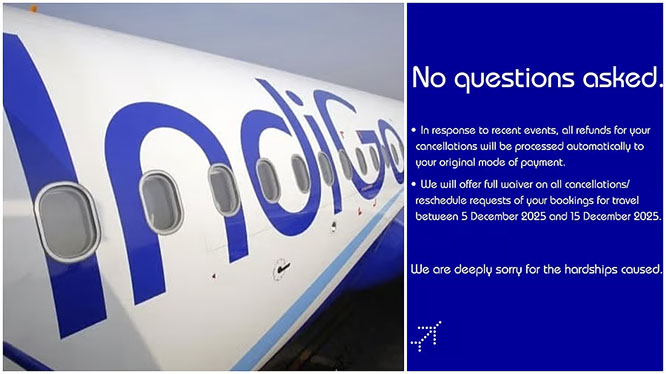
With IndiGo flight disruptions impacting thousands of passengers, the airline on Saturday said that it will offer full waiver on all cancellations/reschedule requests for travel bookings between December 5, 2025 and December 15, 2025.

Earlier in the day, the civil aviation ministry had directed the airline to complete the ticket refund process for the cancelled flights by Sunday evening, as well as ensure baggage separated from the travellers are delivered in the next two days.

In a post on X, titled 'No questions asked', IndiGo wrote, "In response to recent events, all refunds for your cancellations will be processed automatically to your original mode of payment."

"We are deeply sorry for the hardships caused," it further added.

Several passengers, however, complained of not getting full refund as promised by the airline.

Netizens have shared screenchots of getting charged for airline cancellation fee and convenience fee.

"Please tell me why u have did this airline cancellation charges when u say full amount will be refunded (sic)," a user wrote sharing a screenshot of the refund page.

"Well, but you have still debited the convenience charges," wrote another.

Passengers have also raised concerns about the "cancel" option being disabled on the IndiGo app. "First enable the 'Cancel' button on your App & offer full refund on tickets cancelled by customers between the said dates," wrote a user.

A day after the country's largest airline, IndiGo, cancelled more than 1,000 flights and caused disruptions for the fifth day on Saturday, the ministry said that any delay or non-compliance in refund processing will invite immediate regulatory action.

The refund process for all cancelled or disrupted flights must be completed by 8 pm on Sunday, the ministry said in a statement.

"Airlines have also been instructed not to levy any rescheduling charges for passengers whose travel plans were affected by cancellations," it said.

On Saturday, more than 400 flights were cancelled at various airports.

IndiGo has also been instructed to set up dedicated passenger support and refund facilitation cells.

Comments

Add new comment

  • Coastaldigest.com reserves the right to delete or block any comments.
  • Coastaldigset.com is not responsible for its readers’ comments.
  • Comments that are abusive, incendiary or irrelevant are strictly prohibited.
  • Please use a genuine email ID and provide your name to avoid reject.
coastaldigest.com news network
December 20,2025

Mangaluru, Dec 20: City Police Commissioner Sudheer Kumar Reddy has issued a high-alert warning to vehicle owners regarding a surge in cyber fraud targeting those looking to pay traffic violation fines. Fraudsters are reportedly exploiting recent government discount schemes on traffic penalties to deceive citizens.

The Scam: How Fraudsters Strike

Criminals are using SMS, WhatsApp, and social media to circulate suspicious links and APK files (Android application packages). They claim these apps allow users to pay e-challans at a discount.

•    Device Hacking: Downloading these unauthorized apps gives hackers full access to the victim's smartphone.

•    Financial Theft: Once the phone is compromised, fraudsters intercept OTPs and personal data to drain bank accounts.

•    Phishing Sites: Fake websites mimicking official portals are also being used to harvest banking credentials.

Already, two residents within Mangaluru city limits have reported significant financial losses after falling victim to these fraudulent apps.

Comments

Add new comment

  • Coastaldigest.com reserves the right to delete or block any comments.
  • Coastaldigset.com is not responsible for its readers’ comments.
  • Comments that are abusive, incendiary or irrelevant are strictly prohibited.
  • Please use a genuine email ID and provide your name to avoid reject.
News Network
December 13,2025

New Delhi: School-going children are picking up drug and smoking habits and engaging in consumption of alcohol, with the average age of introduction to such harmful substances found to be around 13 years, suggesting a need for earlier interventions as early as primary school, a multi-city survey by AIIMS-Delhi said.

The findings also showed substance use increased in higher grades, with grade XI/XII students two times more likely to report use of substances when compared with grade VIII students. This emphasised the importance of continued prevention and intervention through middle and high school.

The study led by Dr Anju Dhawan of AIIMS's National Drug Dependence Treatment Centre, published in the National Medical Journal of India this month, looks at adolescent substance use across diverse regions.

The survey included 5,920 students from classes 8, 9, 11 and 12 in urban government, private and rural schools across 10 cities -- Bengaluru, Chandigarh, Delhi, Dibrugarh, Hyderabad, Imphal, Jammu, Lucknow, Mumbai, and Ranchi. The data were collected between May 2018 and June 2019.

The average age of initiation for any substance was 12.9 (2.8) years. It was lowest for inhalants (11.3 years) followed by heroin (12.3 years) and opioid pharmaceuticals (without prescription; 12.5 years).

Overall, 15.1 per cent of participants reported lifetime use, 10.3 per cent reported past year use, and 7.2 per cent reported use in the past month of any substance, the study found.

The most common substances used in the past year, after tobacco (4 per cent) and alcohol (3.8 per cent), were opioids (2.8 per cent), followed by cannabis (2 per cent) and inhalants (1.9 per cent). Use of non-prescribed pharmaceutical opioids was most common among opioid users (90.2 per cent).

On being asked, 'Do you think this substance is easily available for a person of your age' separately for each substance category, nearly half the students (46.3 per cent) endorsed that tobacco products and more than one-third of the students (36.5 per cent) agreed that a person of their age can easily procure alcohol products.

Similarly, for Bhang (21.9 per cent), ganja/charas (16.1 per cent), inhalants (15.2 per cent), sedatives (13.7 per cent), opium and heroin (10 per cent each), the students endorsed that these can be easily procured.

About 95 per cent of the children, irrespective of their grade, agreed with the statement that 'drug use is harmful'.

The rates of substance use (any) among boys were significantly higher than those of girls for substance use (ever), use in the past year and use in the past 30 days. Compared to grade VIII students, grade IX students were more likely, and grade XI/XII students were twice as likely to have used any substance (ever).

The likelihood of past-year use of any substance was also higher for grade IX students and for grade XI/XII students as compared to grade VIII students.

About 40 per cent of students mentioned that they had a family member who used tobacco or alcohol each. The use of cannabis (any product) and opioid (any product) by a family member was reported by 8.2 per cent and 3.9 per cent of students, respectively, while the use of other substances, such as inhalants/sedatives by family was 2-3 per cent, the study found.

A relatively smaller percentage of students reported use of tobacco or alcohol among peers as compared to among family members, while a higher percentage reported inhalants, sedatives, cannabis or opioid use among peers.

Children using substances (past year) compared to non-users reported significantly higher any substance use by their family members and peers.

There were 25.7 per cent students who replied 'yes' to the question 'conflicts/fights often occur in your family'. Most students also replied affirmatively to 'family members are aware of how their time is being spent' and 'damily members are aware of with whom they spend their time'.

Comments

Add new comment

  • Coastaldigest.com reserves the right to delete or block any comments.
  • Coastaldigset.com is not responsible for its readers’ comments.
  • Comments that are abusive, incendiary or irrelevant are strictly prohibited.
  • Please use a genuine email ID and provide your name to avoid reject.