26/11 terror attacks: Is Mumbai top cop trying to hide something?

[email protected] (Indian Express)
July 17, 2014

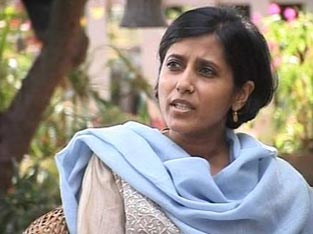
kamte-wife vinita

Mumbai, Jul 17: Coming down heavily on Mumbai Police Commissioner Rakesh Maria, the state Chief Information Commissioner has raised doubts about whether he was trying to hide some information on the 26/11 Mumbai terror attacks by withholding and providing misleading information about the call logs of wireless conversations between the police control room and slain IPS officer Ashok Kamte's van on the day he died.
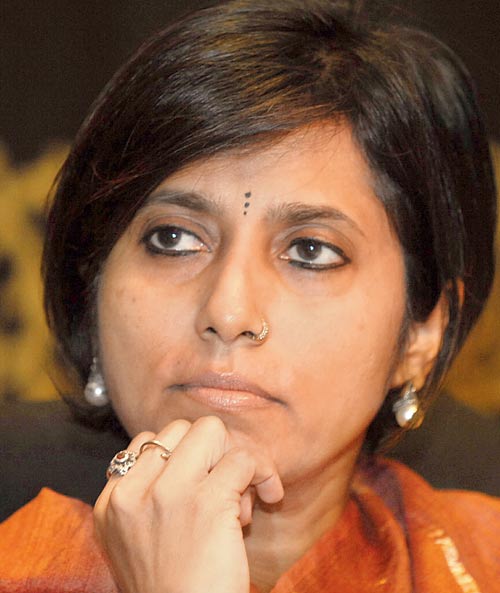
kamte

In a recent order, state's Chief Information Commissioner Ratnakar Gaikwad has also asked the state government to institute a commission of inquiry into the entire incident, to look into why misleading information was provided in an incident of such prominence as the 26/11 terror attacks.

Vinita Kamte, the wife of Ashok Kamte, had filed an RTI application in 2009 seeking log records of the south Mumbai police channel. The information was allegedly denied. Kamte then appealed and subsequently information was provided, but there were serious discrepancies in the information given to her on November 2009 and February 2010.

“Prima facie, misleading information has been given in this case. There has been a malafide denial of information, information has been destroyed and obstacles have been created in presenting the information. The Commission agrees with all these issues brought forth by the complainant,” Gaikwad said in his judgment dated July 9.

The Commission, as per Section 11 (8) of the RTI Act, has now ordered the state government to institute a judicial inquiry. “As per a letter dated April 2009, Rakesh Maria, the then joint police commissioner (Crime), had denied information (to Vinita Kamte) under Section 8 (1) (G) of the RTI Act 2005. It is very irresponsible and gives reason for suspicion on whether he was trying to hide something. In view of the nature of the incident and its seriousness, if an impartial inquiry is not done, the public or Vinita Kamte will never get to know the truth,” Gaikwad said.

In her letter to the Commission, Kamte had alleged that her late husband had requested for help from Maria, who was heading the police control room at the time. However, Maria allegedly did not send help. Kamte also alleged that to cover this up, Maria had instructed the public information officer to not provide her information.
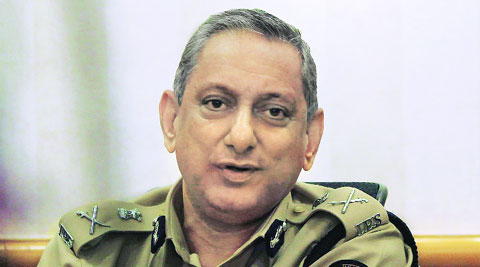
maria

Mumbai Police Commissioner Rakesh Maria

Later, Kamte also claimed she was given two completely different call log records from the south control room. The state had, meanwhile, submitted a different call record in the charge-sheet it filed in the case.

At the Commission, Kamte's lawyers pointed out that there was a difference of over six minutes in these different logs. They also alleged manipulations in the call records and the hard disk of the main voice logger was not retained. The Commission had subsequently asked additional chief secretary (home) Amitabh Rajan to conduct an inquiry.

Following the probe, Rajan sent a report stating that the discrepancies existed only in the call logs given to Kamte, but not in the “original contents” of the call records. Kamte had subsequently questioned Rajan's report, to which the SIC had asked him to clarify. In its scathing three-page order, the Commission has criticised both Maria and Rajan, saying they also refrained from attending the hearings, which showed how serious they were about the entire incident.

The Commission has also trashed the report submitted by Rajan. “He did not conduct the inquiry but relied on the findings of officers who were themselves under the scanner to submit the report to the Commission. This is a very serious matter and he is guilty of contempt of the Commission's order. Such behaviour does not befit such a senior bureaucrat,” Gaikwad said in his order.

Maria and Rajan were not available for comment.

Comments

Add new comment

  • Coastaldigest.com reserves the right to delete or block any comments.
  • Coastaldigset.com is not responsible for its readers’ comments.
  • Comments that are abusive, incendiary or irrelevant are strictly prohibited.
  • Please use a genuine email ID and provide your name to avoid reject.
coastaldigest.com news network
January 19,2026

badriya.jpg

Mangaluru: The Phase I project of Badria Vision 2028 was formally launched at a ceremony held at the Badria Campus on January 17, marking an important step in the institution’s long-term development roadmap.

The programme was attended by P.B. Abdul Hameed, Secretary of the MEA, and P.C. Hasir, Correspondent of the MEA, who presided over the event and underscored the institution’s commitment to growth and academic excellence.

Office-bearers of the Badria Alumni Association were present in large numbers, including A.K. Sajid (President), Shamsuddin and S.M. Farooq (Vice-Presidents), Shaheed (General Secretary), and Khaleel (Treasurer), reflecting strong alumni engagement in the initiative.

The gathering was blessed by Sayyid Shamsuddeen Basith Thangal Kukkaje, Qateeb of Zeenat Yatheem Bakshi, who led a special dua seeking divine guidance and success for the project.

The ceremony also witnessed the participation of prominent alumnus and local corporate professional Abdul Latheef, along with alumni members Naushad, Kalandar, Safwan, members of the core committee, and several other former students.

A key moment of the event was the formal handover of a cheque to Ameen Woodland Architect, signalling the immediate commencement of construction work under Phase I of the project.

Organisers said the launch of Phase I reflects a shared vision, institutional unity, and collective resolve to realise the objectives of Badria Vision 2028.

Comments

Add new comment

  • Coastaldigest.com reserves the right to delete or block any comments.
  • Coastaldigset.com is not responsible for its readers’ comments.
  • Comments that are abusive, incendiary or irrelevant are strictly prohibited.
  • Please use a genuine email ID and provide your name to avoid reject.
News Network
January 16,2026

tourism.jpg

Following a record-breaking response to experimental joyrides during the Karavali Utsava, the Dakshina Kannada district administration has signaled a major shift toward high-end travel. Officials are now laying the groundwork to transform Mangaluru into a permanent heli-tourism hub, connecting the state’s most sacred pilgrim centers and untouched coastal gems via the skies.

The move comes as the Karnataka government readies a specialized tourism policy for the coast, aimed at drawing global investors. With Mangaluru already serving as a critical nexus for education, healthcare, and maritime trade, the introduction of a scheduled helicopter service is seen as the "missing link" in the region’s economic evolution.

By the Numbers: A Flying Success

The data from the recent 10-day trial (beginning December 26) paints a clear picture of high demand:

•    Total Passengers: 1,032
•    Ride Duration: 7 minutes
•    Ticket Price: ₹3,500 per person
•    Origin of Tourists: Significant turnout from Kerala, Udupi, and Karwar.

Bridging the Gap for Global Travelers

Deputy Commissioner Darshan HV emphasized that the vision extends far beyond festival joyrides. Currently, international tourists arriving via luxury cruises at the New Mangalore Port (peak season December–April) often find themselves "landlocked" by time.

"Foreign visitors staying for just 24 to 48 hours currently struggle to visit inland attractions like Chikkamagaluru or Kodagu due to road travel times," a senior official noted. "A permanent heli-link would make these Western Ghats destinations accessible in under 30 minutes."

Beyond Tourism: Medical and Logistics

The administration is also looking at the humanitarian and logistical benefits. As a medical powerhouse, Mangaluru’s private hospitals could utilize the proposed permanent helipads for:

1.    Cardiac Emergencies: Rapid transfer of critical patients.
2.    Organ Transplants: Vital "green corridors" through the air to save lives.
3.    Regional Connectivity: Linking remote areas like Puttur, Sullia, and Beltangady to the main city.

While the Karavali Utsava has traditionally focused on beach-side festivities, the DC confirmed that the district is now evaluating formal proposals from private operators. The goal is to establish a network of permanent helipads that will eventually offer regular sorties to Kudremukh National Park and the scenic heights of the Western Ghats.

Comments

Add new comment

  • Coastaldigest.com reserves the right to delete or block any comments.
  • Coastaldigset.com is not responsible for its readers’ comments.
  • Comments that are abusive, incendiary or irrelevant are strictly prohibited.
  • Please use a genuine email ID and provide your name to avoid reject.
News Network
January 23,2026

Karnataka Governor Thaawarchand Gehlot read only three lines from the 122-paragraph address prepared by the Congress-led state government while addressing the joint session of the Legislature on Thursday, effectively bypassing large sections critical of the BJP-led Union government.

The omitted portions of the customary Governor’s address outlined what the state government described as a “suppressive situation in economic and policy matters” under India’s federal framework. The speech also sharply criticised the Centre’s move to replace the Mahatma Gandhi National Rural Employment Guarantee Act (MGNREGA) with the Viksit Bharat–Guarantee for Rozgar and Ajeevika Mission (Gramin) Act, commonly referred to as the VB-GRAM (G) Act.

Governor Gehlot had earlier conveyed his objection to several paragraphs that were explicitly critical of the Union government. On Thursday, he confined himself to the opening lines — “I extend a warm welcome to all of you to the joint session of the State legislature. I am extremely pleased to address this august House” — before jumping directly to the concluding sentence of the final paragraph.

He ended the address by reading the last line of paragraph 122: “Overall, my government is firmly committed to doubling the pace of the State’s economic, social and physical development. Jai Hind — Jai Karnataka.”

According to the prepared speech, the Karnataka government demanded the scrapping of the VB-GRAM (G) Act, describing it as “contractor-centric” and detrimental to rural livelihoods, and called for the full restoration of MGNREGA. The state government argued that the new law undermines decentralisation, weakens labour protections, and centralises decision-making in violation of constitutional norms.

Key points from the unread sections of the speech:

•    Karnataka facing a “suppressive” economic and policy environment within the federal system

•    Repeal of MGNREGA described as a blow to rural livelihoods

•    VB-GRAM (G) Act accused of protecting corporate and contractor interests

•    New law alleged to weaken decentralised governance

•    Decision-making said to be imposed by the Centre without consulting states

•    Rights of Adivasis, women, backward classes and agrarian communities curtailed

•    Labourers allegedly placed under contractor control

•    States facing mounting fiscal stress due to central policies

•    VB-GRAM (G) Act accused of enabling large-scale corruption

Comments

Add new comment

  • Coastaldigest.com reserves the right to delete or block any comments.
  • Coastaldigset.com is not responsible for its readers’ comments.
  • Comments that are abusive, incendiary or irrelevant are strictly prohibited.
  • Please use a genuine email ID and provide your name to avoid reject.