



85,000 kids dead of starvation or disease in Yemen

Agencies
November 21, 2018

Dubai, Nov 21: As many as 85,000 infants under the age of five may have died from starvation or disease since 2015 in war-ravaged Yemen, humanitarian organisation Save the Children said on Wednesday.

It said the estimate was based on data compiled by the United Nations, which has warned that up to 14 million people are at risk of famine in Yemen, where Saudi-backed forces are battling Iran-aligned Huthi rebels.

"For every child killed by bombs and bullets, dozens are starving to death and it's entirely preventable," said Tamer Kirolos, Save the Children's country director in Yemen.

"Children who die in this way suffer immensely as their vital organ functions slow down and eventually stop," he said.

"Their immune systems are so weak they are more prone to infections with some too frail to even cry. Parents are having to witness their children wasting away, unable to do anything about it."

Hodeida port, the entry point for some 80 percent of food imports and aid into Yemen, has been under blockade by the Saudi-led coalition backing the government since last year.

Save the Children said that it had been forced to bring supplies for the north of the country through the southern port of Aden, significantly slowing aid deliveries.

It also reported a "dramatic increase" in air strikes on the battleground city of Hodeida.

"In the past few weeks there have been hundreds of air strikes in and around Hodeida, endangering the lives of an estimated 150,000 children still trapped in the city. Save the Children is calling for an immediate end to the fighting so no more lives are lost," Kirolos said.

The plea comes as UN envoy Martin Griffiths prepares to hold talks with the rebels in the capital Sanaa during a visit aimed at laying the groundwork for peace talks in Sweden.

Under heavy Western pressure, the government and its Saudi-led military backers have largely suspended a five-month-old offensive on the Red Sea port city as UN envoy Martin Griffiths makes the biggest peace push in two years.

But a devastating all-out assault on the city's lifeline docks still threatens as coalition commanders scent a potentially game-changing victory in their three-and-a-half year war on the rebels.

UN agencies say up to 14 million Yemenis are at risk of starvation if the port of Hodeida is closed by fighting or damage.

The city is virtually the sole gateway to the capital and rebel-held territory in the densely populated highlands, and some 80 percent of commercial food imports and virtually all UN-supervised humanitarian aid pass through its docks.

Griffiths was due to fly into Sanaa for talks with rebel political leaders later on Wednesday as he attempts to revive a peace process that collapsed in acrimony in Switzerland in September when the rebels failed to show up.

The rebels have said repeatedly that they need stronger security guarantees from the international community that they will be given safe passage through the crippling air and sea blockade the coalition has enforced since March 2015.

The international community is demanding in return that the rebels halt all offensive operations, particularly missile attacks on neighbouring Saudi Arabia, and commit to joining talks on handing over of the port of Hodeida to UN control.

"Griffiths faces the sternest test of his young tenure," said Brussels-based think tank International Crisis Group.

"If his mediation efforts succeed in preventing a destructive battle for Hodeida, he could build momentum toward reviving a peace process that has been stalled for the past two years.

"But if he fails, peace in Yemen will look increasingly remote and the prospects for its embattled population increasingly dire."

Both sides have in the past week expressed support for the envoy and his mission to convene new peace talks in Sweden, but fierce clashes flared again in Hodeida late Tuesday.

Just hours before Griffiths' planned arrival in Sanaa, residents in the east of Hodeida told AFP by telephone they could hear fighting, and reported shrapnel falling in residential neighbourhoods.

On Monday, Britain presented to the UN Security Council a draft resolution urging an immediate truce in Hodeida and setting a two-week deadline for the warring sides to remove all barriers to humanitarian aid.

The proposed resolution would significantly ratchet up pressure on the Saudi-led coalition and the rebels to seek a negotiated settlement.

It also calls for a large injection of foreign cash to support Yemen's collapsing currency and for salaries of civil servants, teachers, and health workers to be paid within a month.

Multiple past attempts to hold negotiations have failed.

Griffiths said Monday he hoped the rivals would meet in Sweden "within the next few weeks". No date has been set. 

The rebels overran Sanaa in late 2014, when they also took control of Hodeida and its port.

A year later, the coalition intervened as President Abedrabbo Mansour Hadi fled into Saudi exile.

Both parties in the conflict stand accused of acts that could amount to war crimes.

Although Western governments have condemned civilian deaths in Yemen, they remain political and military backers of Saudi Arabia, which is a regional ally and spends billions of dollars on arms from the United States, Britain, and France.

They have come under increased domestic political pressure to halt, or at least attach conditions to, their arms deliveries since the murder of dissident Saudi journalist Jamal Khashoggi in the kingdom's consulate in Istanbul last month by top agents Riyadh insists were acting without orders.

The World Health Organization says nearly 10,000 people -- mostly civilians -- have been killed in Yemen since the Saudi-led intervention began, but human rights groups believe the toll may be five times higher.

The World Food Programme says up to 14 million Yemenis are at risk of starvation.

Save the Children said on Wednesday that some 85,000 infants under the age of five may have died of severe malnutrition or related diseases between March 2015 and this October based on UN agency figures.

Comments

Add new comment

  • Coastaldigest.com reserves the right to delete or block any comments.
  • Coastaldigset.com is not responsible for its readers’ comments.
  • Comments that are abusive, incendiary or irrelevant are strictly prohibited.
  • Please use a genuine email ID and provide your name to avoid reject.
News Network
February 3,2026

Bengaluru: Following reports of fresh Nipah virus (NiV) cases in West Bengal and heightened vigilance across parts of Southeast Asia, the Karnataka Health Department has placed the state on high alert and activated emergency preparedness protocols.

Health officials said enhanced surveillance measures have been initiated after two healthcare workers in Barasat, West Bengal, tested positive for the virus earlier this month. While no cases have been reported in Karnataka so far, authorities said the state’s past exposure to Nipah outbreaks and high inter-state mobility warranted preventive action.

Officials have directed district health teams to intensify monitoring, particularly at hospitals and points of entry, and to ensure early detection and isolation of suspected cases.

High Mortality Virus with Multiple Transmission Routes

Nipah virus is a zoonotic disease that can spread from animals to humans and has a reported fatality rate ranging between 60 and 75 per cent. Fruit bats, also known as flying foxes, are the natural reservoirs of the virus and can transmit it by contaminating food sources with saliva or urine.

Known modes of transmission include:

•    Contaminated food: Consumption of fruits partially eaten by bats or raw date-palm sap
•    Animal contact: Exposure to infected pigs or other animals
•    Human-to-human transmission: Close contact with body fluids of infected persons, particularly in healthcare settings

Symptoms and Disease Progression

The incubation period typically ranges from 4 to 14 days, though delayed onset has also been reported. Early symptoms often resemble common viral infections, making prompt clinical suspicion critical.

•    Initial symptoms: Fever, headache, body aches, fatigue, sore throat
•    Progressive symptoms: Drowsiness, disorientation, altered mental state
•    Severe stage: Seizures, neck stiffness and acute encephalitis, which can rapidly progress to coma

Public Health Advisory

The Health Department has issued precautionary guidelines urging the public to adopt risk-avoidance practices to prevent any local spillover.

Do’s
•    Wash fruits thoroughly before consumption
•    Drink boiled and cooled water
•    Use protective equipment while handling livestock
•    Maintain strict hand hygiene

Don’ts
•    Avoid fruits found on the ground or showing bite marks
•    Do not consume beverages made from raw tree sap, including toddy
•    Avoid areas with dense bat populations
•    Do not handle sick or dead animals

Preparedness Measures

Officials confirmed that isolation wards are being readied in major government hospitals and that medical staff are being sensitised to identify early warning signs.

“There is no cause for panic, but there is a need for heightened vigilance,” a senior health official said, adding that there is currently no approved vaccine or specific antiviral treatment for Nipah, and care remains largely supportive.

Comments

Add new comment

  • Coastaldigest.com reserves the right to delete or block any comments.
  • Coastaldigset.com is not responsible for its readers’ comments.
  • Comments that are abusive, incendiary or irrelevant are strictly prohibited.
  • Please use a genuine email ID and provide your name to avoid reject.
News Network
February 1,2026

Bengaluru: The Karnataka High Court has refused to quash an investigation against a WhatsApp group administrator accused of allowing the circulation of obscene and offensive images depicting Hindutva politicians and idols in 2021.

Justice M Nagaprasanna observed that, prima facie, the ingredients of the offence under Section 295A of the Indian Penal Code were made out. “The offence under Section 295A of the IPC is met to every word of its ingredient, albeit prima facie,” the judge said.

The petitioner, Sirajuddin, a resident of Belthangady taluk in Dakshina Kannada district, had challenged the FIR registered against him at the CEN (Cyber, Economics and Narcotics) police station, Mangaluru, for offences under Section 295A of the IPC and Section 67 of the Information Technology Act. Section 295A relates to punishment for deliberate and malicious acts intended to outrage the religious feelings of any class of citizens.

According to the complaint filed by K Jayaraj Salian, also a resident of Belthangady taluk, he received a WhatsApp group link from an unknown source and was added to the group after accessing it. The group reportedly had six administrators and around 250 participants, where obscene and offensive images depicting Hindu deities and certain political figures were allegedly circulated repeatedly.

Sirajuddin was arrested in connection with the case and later released on bail on February 16, 2021. He argued before the court that he was being selectively targeted, while other administrators—including the creator of the group—were neither arrested nor investigated. He also contended that the Magistrate could not have taken cognisance of the offence under Section 295A without prior sanction under Section 196(1) of the CrPC.

Rejecting the argument, Justice Nagaprasanna held that prior sanction is required only at the stage of taking cognisance, and not at the stage of registration of the crime or during investigation.

The judge noted that the State had produced the entire investigation material before the court. “A perusal of the material reveals depictions of Hindu deities in an extraordinarily obscene, demeaning and profane manner. The content is such that its reproduction in a judicial order would itself be inappropriate,” the court said, adding that the material, on its face, had the tendency to outrage religious feelings and disturb communal harmony.

Observing that the case was still at the investigation stage, the court said it could not interdict the probe at this juncture. However, it expressed concern that the investigating officer appeared to have not proceeded uniformly against all administrators. The court clarified that if the investigation revealed the active involvement of any member in permitting the circulation of such content, they must also be proceeded against.

“At this investigative stage, any further observation by this Court would be unnecessary,” the order concluded.

Comments

Add new comment

  • Coastaldigest.com reserves the right to delete or block any comments.
  • Coastaldigset.com is not responsible for its readers’ comments.
  • Comments that are abusive, incendiary or irrelevant are strictly prohibited.
  • Please use a genuine email ID and provide your name to avoid reject.
News Network
January 28,2026

ajit.jpg

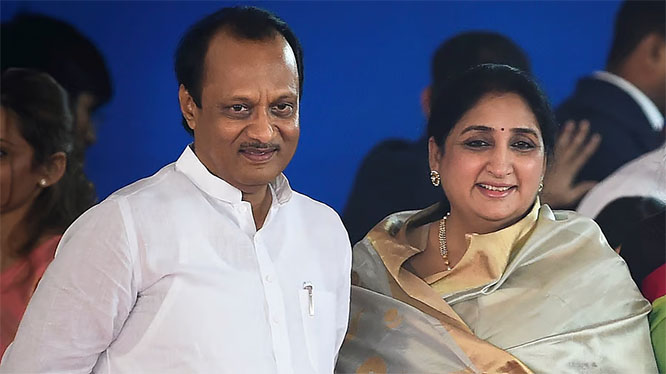
Mumbai: The sudden death of Maharashtra Deputy Chief Minister Ajit Pawar in a plane crash in his hometown of Baramati has plunged the state into political uncertainty, raising a pressing question for both the Nationalist Congress Party (NCP) and its rival faction, the Nationalist Congress Party (Sharadchandra Pawar): what next?

For the two factions that emerged after the dramatic split of June–July 2023, the moment marks their gravest challenge yet. Many believe the answer now rests with party founder Sharad Pawar.

Sharad Pawar, who founded the NCP in 1999 after parting ways with the Congress over Sonia Gandhi’s foreign origin, has already indicated his intention to step away from electoral politics once his Rajya Sabha term ends in April 2026.

Speaking at a public event in Baramati ahead of his 85th birthday on December 12, 2025, Pawar said he would not contest any further elections. “I have contested 14 elections. The younger generation needs to be given an opportunity,” he said, adding that he would decide later whether to seek another Rajya Sabha term.

Often described as the Bhishma Pitamah of Indian politics, Pawar also spoke of his gradual withdrawal from active leadership. “For the first 30 years, I handled everything. For the next 25–30 years, Ajit Dada handled responsibilities. Now, arrangements must be made for new leadership,” he said.

Ajit Pawar’s death has dramatically altered that transition, especially as he was working towards reunifying the two NCP factions.

“After the developments of June–July 2023 and the 2024 Lok Sabha and Vidhan Sabha elections, there were deep changes within the family and the party. In the last six months, serious efforts were made to reunite. Even workers from both sides wanted unity. This is a massive blow,” a Pawar family insider told DH over phone from Baramati.

Electoral outcomes over the past year reflected the split. In the 2024 Lok Sabha elections, NCP (SP) recorded the best strike rate in Maharashtra, winning eight of the 10 seats it contested. The NCP, by contrast, won just one seat out of four.

However, the trend reversed in the subsequent Vidhan Sabha elections, where the NCP emerged stronger, securing 41 of the 288 seats, while NCP (SP) managed only 10.

Within NCP (SP), Sharad Pawar’s daughter Supriya Sule serves as Working President, followed by leaders such as Rohit Pawar, state president Shashikant Shinde and former state chief Jayant Patil.

In the NCP, Praful Patel is the Working President and Raigad MP Sunil Tatkare heads the state unit. Ajit Pawar’s wife, Sunetra Pawar, is a Rajya Sabha MP, while their sons Parth and Jay are not actively involved in day-to-day politics. Parth Pawar briefly entered electoral politics in 2019 but lost the Lok Sabha election from Maval. Jay Pawar’s political debut was under consideration.

With Ajit Pawar gone, speculation has intensified that a member of the family may be asked to assume a larger role. For now, Sunetra Pawar is expected to play a key coordinating role in party affairs, alongside Patel and Tatkare.

The NCP continues to have several heavyweight leaders, including Chhagan Bhujbal, Hasan Mushrif, Dattatreya Bharne, Manikrao Kokate and Dhananjay Munde.

Ajit Pawar had already begun steps towards reconciliation between the two factions. While they contested the Pune and Pimpri-Chinchwad municipal elections separately, they later decided to fight the zilla parishad elections together under the ‘clock’ symbol—seen as the first formal step towards reunification.

Nagpur meet and party roadmap

Both NCP factions claim adherence to the ideology of ‘Shiv–Shahu–Phule–Ambedkar’. At the Rashtravadi Chintan Shivir held in Nagpur on September 19, 2025, the NCP reaffirmed its commitment to sarva dharma sambhav and discussed strengthening ties with the BJP “for the welfare and development of Maharashtra”.

In recent days, reports had suggested Ajit Pawar might return to the Maha Vikas Aghadi following the party’s poor performance in Pune municipal elections, but these claims were denied.

Big question for Maha Yuti

Ajit Pawar’s death also presents an immediate challenge for the Devendra Fadnavis-led Maha Yuti government. Pawar held crucial portfolios, including Finance, Planning and Excise. With the Budget Session approaching, appointing a new Finance Minister has become urgent.

Beyond numbers and portfolios, Maha Yuti has lost a swift decision-maker known for his administrative grip and political finesse—leaving a vacuum that will not be easy to fill.

Comments

Add new comment

  • Coastaldigest.com reserves the right to delete or block any comments.
  • Coastaldigset.com is not responsible for its readers’ comments.
  • Comments that are abusive, incendiary or irrelevant are strictly prohibited.
  • Please use a genuine email ID and provide your name to avoid reject.