



Arun Jaitley announces slew of measures to promote digital payments

December 9, 2016

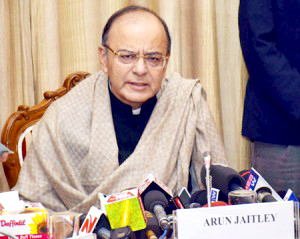
New Delhi, Dec 9: A month after Rs 500 and Rs 1000 notes were demonetised, Union Finance Minister Arun Jaitley on Thursday announced a slew of measures to promote the use of digital payments.
Arun
The Finance Ministry announced a total of eleven measures, which it described in detail in a statement released today.

Petrol, diesel purchases

At a press conference held here, Arun Jaitley announced a 0.75 per cent discount on purchases of petrol and diesel (at Central Government Petroleum PSUs) using credit or debit cards, e-wallets and mobile wallets.

Jaitley explained that the government is targeting at least 70 per cent of daily sales to be through cards or e-wallets or mobile wallets, to reduce cash exchange at petrol pumps by nearly Rs 2 lakh crore annually.

On whether such discounts will be provided by the private sector, he said, "it is PSUs which have taken this decision, the private sector has to decide in the world of competition. They are free to sell costlier petrol and face the consequences of the market."

Incentives for rail passengers

People buying monthly or seasonal tickets in suburban railway networks through digital modes will get a 0.5 per cent discount, Jaitley added.

This measure, he said, will be effective from January 1 next year, and the Mumbai suburban railways will be the first to implement it.

He added that passengers who book railway tickets online will receive free accidental insurance cover worth Rs 10 lakh, and that the Railways will provide a discount of 5% on digital payments for railway catering, accommodation, and retiring rooms.

58 per cent out of the nearly 14 lakh railway tickets purchased everyday are bought online. The discount offered now is expected to add another 20 per cent passengers to digital payment methods, Jaitley explained.

"Hence nearly 11 lakh passengers per day will be covered under the accidental insurance scheme," he said.

Public dealings with (central) government departments and PSUs through digital mode will be free of transaction fees and Merchant Discount Rate (MDR) charges, the Finance Minister added.

State Governments, on their part, are being advised that they - and their organisations - should also consider absorbing transaction fees and MDR charges related to digital payments made to them, a Finance Ministry statement said today.

Meanwhile, Public Sector Banks will ensure that merchants don't need to pay more than Rs. 100 per month as monthly rental for Point of Sale terminals, micro ATMs, and mobile Point(s) of Sales, the ministry said.

In addition, public sector insurance companies will "provide incentive(s), by way of discount or credit, upto 10% of the premium in general insurance policies and 8% in new life policies of Life Insurance Corporation sold through the customer portals, in case payment is made through digital means," it added.

RuPay Kisan cards, Point of Sale machines for villagers; discounts on RFID, Fast Tag payments

Arun Jaitley today announced that 4.32 crore villagers who have Kisan credit cards will be issued 'RuPay Kisan cards' by the National Bank for Agriculture and Rural Development.

In addition, two point-of-sale machines will be provided to every village with a population of upto 10 lakh, and 1 lakh villages will be selected for this scheme.

The machines "are intended to be deployed at primary cooperative societies, milk societies or agricultural input dealers to facilitate agri-related transactions through digital means," the Finance Ministry statement said.

This will benefit farmers of one lakh village covering a total population of nearly 75 crore, it added.

Finally, a 10 per cent discount will be provided on payments made using RFID or Fast Tags for at Toll Plazas on national highways. This measure will be effective till the end of March 2017, PTI reported.

In addition to these measures, it was announced earlier today that credit and debit card transactions worth up to Rs 2,000 will be exempt from service tax.

Against the backdrop of demonetisation, the Centre is aggressively promoting digital mode of payments to make the economy becomes less dependent on cash transactions.

"As of November 8 excessive amount of cash and a very very limited amount of digital transaction. There is a cost of transacting in cash and that cost of transacting in cash has to be borne by the economy, it is also be to borne by the political system," Arun Jaitley said today.

"These are costs which are visible, there are cost(s) which are invisible. Excessive cash can also lead a lot of malpractices and therefore in the long run we are using this also as an opportunity to move towards digitisation," he said.

Comments

Add new comment

  • Coastaldigest.com reserves the right to delete or block any comments.
  • Coastaldigset.com is not responsible for its readers’ comments.
  • Comments that are abusive, incendiary or irrelevant are strictly prohibited.
  • Please use a genuine email ID and provide your name to avoid reject.
News Network
December 5,2025

indigoCEO.jpg

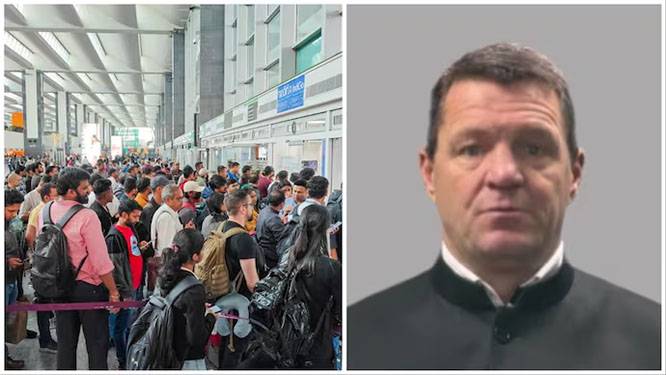
New Delhi, Dec 5: IndiGo CEO Pieter Elbers issued a public apology this evening after more than a thousand flights were cancelled today, making it the "most severely impacted day" in terms of cancellations. The biggest airline of the country cancelled "more than half" of its daily number of flights on Friday, said Elbers. He also said that even though the crisis will persist on Saturday, the airline anticipates fewer than 1,000 flight cancellations.

"Full normalisation is expected between December 10 and 15, though IndiGo cautions that recovery will take time due to the scale of operations," the IndiGo CEO said. 

IndiGo operates around 2,300 domestic and international flights daily.

Pieter Elbers, while apologising for the major inconvenience due to delays and cancellations, said the situation is a result of various causes.

The crisis at IndiGo stems from new regulations that boost pilots' weekly rest requirements by 12 hours to 48 and allow only two night-time landings per week, down from six. IndiGo has attributed the mass cancellations to "misjudgment and planning gaps".

Elbers also listed three lines of action that the airline will adopt to address the issue.

"Firstly, customer communication and addressing your needs, for this, messages have been sent on social media. And just now, a more detailed communication with information, refunds, cancellations and other customer support measures was sent," he said.

The airline has also stepped up its call centre capacity.

"Secondly, due to yesterday's situation, we had customers stranded mostly at the nation's largest airports. Our focus was for all of them to be able to travel today itself, which will be achieved. For this, we also ask customers whose flights are cancelled not to come to the airports as notifications are sent," the CEO said.

"Thirdly, cancellations were made for today to align our crew and planes to be where they need to start tomorrow morning afresh. Earlier measures of the last few days, regrettable, have proven not to be enough, but we have decided today to reboot all our systems and schedules, resulting in the highest numbers of cancellations so far, but imperative for progressive improvements starting from tomorrow," he added.

As airports witnessed chaotic scenes, the Directorate General of Civil Aviation (DGCA) stepped in to grant IndiGo a temporary exemption from stricter night duty rules for pilots. It also allowed substitution of leaves with a weekly rest period. 

Civil Aviation Minister Ram Mohan Naidu has said a high-level inquiry will be ordered and accountability will be fixed.

Comments

Add new comment

  • Coastaldigest.com reserves the right to delete or block any comments.
  • Coastaldigset.com is not responsible for its readers’ comments.
  • Comments that are abusive, incendiary or irrelevant are strictly prohibited.
  • Please use a genuine email ID and provide your name to avoid reject.
News Network
December 13,2025

New Delhi: School-going children are picking up drug and smoking habits and engaging in consumption of alcohol, with the average age of introduction to such harmful substances found to be around 13 years, suggesting a need for earlier interventions as early as primary school, a multi-city survey by AIIMS-Delhi said.

The findings also showed substance use increased in higher grades, with grade XI/XII students two times more likely to report use of substances when compared with grade VIII students. This emphasised the importance of continued prevention and intervention through middle and high school.

The study led by Dr Anju Dhawan of AIIMS's National Drug Dependence Treatment Centre, published in the National Medical Journal of India this month, looks at adolescent substance use across diverse regions.

The survey included 5,920 students from classes 8, 9, 11 and 12 in urban government, private and rural schools across 10 cities -- Bengaluru, Chandigarh, Delhi, Dibrugarh, Hyderabad, Imphal, Jammu, Lucknow, Mumbai, and Ranchi. The data were collected between May 2018 and June 2019.

The average age of initiation for any substance was 12.9 (2.8) years. It was lowest for inhalants (11.3 years) followed by heroin (12.3 years) and opioid pharmaceuticals (without prescription; 12.5 years).

Overall, 15.1 per cent of participants reported lifetime use, 10.3 per cent reported past year use, and 7.2 per cent reported use in the past month of any substance, the study found.

The most common substances used in the past year, after tobacco (4 per cent) and alcohol (3.8 per cent), were opioids (2.8 per cent), followed by cannabis (2 per cent) and inhalants (1.9 per cent). Use of non-prescribed pharmaceutical opioids was most common among opioid users (90.2 per cent).

On being asked, 'Do you think this substance is easily available for a person of your age' separately for each substance category, nearly half the students (46.3 per cent) endorsed that tobacco products and more than one-third of the students (36.5 per cent) agreed that a person of their age can easily procure alcohol products.

Similarly, for Bhang (21.9 per cent), ganja/charas (16.1 per cent), inhalants (15.2 per cent), sedatives (13.7 per cent), opium and heroin (10 per cent each), the students endorsed that these can be easily procured.

About 95 per cent of the children, irrespective of their grade, agreed with the statement that 'drug use is harmful'.

The rates of substance use (any) among boys were significantly higher than those of girls for substance use (ever), use in the past year and use in the past 30 days. Compared to grade VIII students, grade IX students were more likely, and grade XI/XII students were twice as likely to have used any substance (ever).

The likelihood of past-year use of any substance was also higher for grade IX students and for grade XI/XII students as compared to grade VIII students.

About 40 per cent of students mentioned that they had a family member who used tobacco or alcohol each. The use of cannabis (any product) and opioid (any product) by a family member was reported by 8.2 per cent and 3.9 per cent of students, respectively, while the use of other substances, such as inhalants/sedatives by family was 2-3 per cent, the study found.

A relatively smaller percentage of students reported use of tobacco or alcohol among peers as compared to among family members, while a higher percentage reported inhalants, sedatives, cannabis or opioid use among peers.

Children using substances (past year) compared to non-users reported significantly higher any substance use by their family members and peers.

There were 25.7 per cent students who replied 'yes' to the question 'conflicts/fights often occur in your family'. Most students also replied affirmatively to 'family members are aware of how their time is being spent' and 'damily members are aware of with whom they spend their time'.

Comments

Add new comment

  • Coastaldigest.com reserves the right to delete or block any comments.
  • Coastaldigset.com is not responsible for its readers’ comments.
  • Comments that are abusive, incendiary or irrelevant are strictly prohibited.
  • Please use a genuine email ID and provide your name to avoid reject.
News Network
December 6,2025

pilot.jpg

New Delhi: IndiGo, India’s largest airline, faced major operational turbulence this week after failing to prepare for new pilot-fatigue regulations issued by the Directorate General of Civil Aviation (DGCA). The stricter rules—designed to improve flight safety—took effect in phases through 2024, with the latest implementation on November 1. IndiGo has acknowledged that inadequate roster planning led to widespread cancellations and delays.

Below are the key DGCA rules that affected IndiGo’s operations:

1. Longer Mandatory Weekly Rest

Weekly rest for pilots has been increased from 36 hours to 48 hours.

The government says the extended break is essential to curb cumulative fatigue. This rule remains in force despite the current crisis.

2. Cap on Night Landings

Pilots can now perform only two night landings per week—a steep reduction from the earlier limit of six.

Night hours, defined as midnight to early morning, are considered the least alert period for pilots.

Given the disruptions, this rule has been temporarily relaxed for IndiGo until February 10.

3. Reduced Maximum Night Flight Duty

Flight duty that stretches into the night is now capped at 10 hours.

This measure has also been kept on hold for IndiGo until February 10 to stabilize operations.

4. Weekly Rest Cannot Be Replaced With Personal Leave

Airlines can no longer count a pilot’s personal leave as part of the mandatory 48-hour rest.

Pilots say this closes a loophole that previously reduced actual rest time.

Currently, all airlines are exempt from this rule to normalise travel.

5. Mandatory Fatigue Monitoring

Airlines must submit quarterly fatigue reports along with corrective actions to DGCA.

This system aims to create a transparent fatigue-tracking framework across the industry.

The DGCA has stressed that these rules were crafted to strengthen flight safety and align India with global fatigue-management standards. The temporary relaxations are expected to remain until February 2025, giving IndiGo time to stabilise its schedules and restore normal air travel.

Comments

Add new comment

  • Coastaldigest.com reserves the right to delete or block any comments.
  • Coastaldigset.com is not responsible for its readers’ comments.
  • Comments that are abusive, incendiary or irrelevant are strictly prohibited.
  • Please use a genuine email ID and provide your name to avoid reject.
