Google purges 55M policy violating reviews from Maps in 2020

Agencies
February 19, 2021

n-2020.jpg

Washington, Feb 19: Google Maps has blocked or removed 55 million policy-violating reviews and nearly three million fake Business Profiles in 2020.

This is 20 million fewer reviews than it removed in 2019 as it saw a drop in the overall number of reviews due to fewer people being out and about during Covid-19.

"We took down more than 960,000 reviews and more than 300,000 Business Profiles that were reported to us by Google Maps users," Google said in a statement on Thursday.

The company said that it reviewed and removed more than 160 million photos and 3.5 million videos from Maps that either violated its policies or were of low quality.

"Our technologies and teams disabled more than 610,000 user accounts after detecting and investigating suspicious or policy-violating behaviour. We stopped more than 3 million attempts by bad actors to verify Business Profiles on Google that didn't belong to them," the tech giant informed.

Since Google started accepting contributed content in 2010, more than 970 million people have updated Maps in the form of reviews, photos, ratings and factual information like addresses and business hours.

"We also deploy thousands of trained operators and analysts who help with content evaluations that might be difficult for algorithms, such as understanding reviews with local slang," said Dan Pritchett, Principal Software Engineer, Google Maps.

Google said that as more people share their local knowledge on Maps, it will continue to invest in the policies, technologies and resources needed to make sure information is reliable.

Comments

Add new comment

  • Coastaldigest.com reserves the right to delete or block any comments.
  • Coastaldigset.com is not responsible for its readers’ comments.
  • Comments that are abusive, incendiary or irrelevant are strictly prohibited.
  • Please use a genuine email ID and provide your name to avoid reject.
News Network
December 2,2025

DKSsiddu.jpg

Bengaluru: 'Nati koli saaru' (country chicken curry) considered one of Chief Minister Siddaramaiah’s favourites along with steaming hot idlis was on the breakfast menu at Deputy CM D K Shivakumar’s residence on Tuesday, according to official sources.

The spread also included 'nati koli' fry, vada and pongal, among other items, they said.

In an apparent show of unity, Siddaramaiah visited Shivakumar’s residence for breakfast, just days after the two leaders shared a meal amid a simmering power tussle in the state Congress.

Siddaramaiah drove to the Deputy CM’s residence in Sadashivanagar, where he was received by Shivakumar and his brother D K Suresh, who is a former Congress MP.

Suresh and Kunigal MLA H D Ranganath, a relative of Shivakumar, joined them for breakfast, which featured a mix of vegetarian and non-vegetarian dishes.

Speaking to reporters later, Siddaramaiah said Shivakumar had invited him during his visit to the CM’s residence for breakfast on Saturday.

Asked about the difference between the two meals, the chief minister said, "At his (Shivakumar’s) house it was non-veg, while at my house it was veg. He is a vegetarian, I am a non-vegetarian. I had not prepared non-veg. I told DK to get chicken from the village as you won’t get the original in Bengaluru."

Shivakumar said he had initially invited Siddaramaiah to his residence, but the CM had suggested visiting his place first and reciprocating later. "It was a vegetarian breakfast at the CM’s house on Saturday," he noted.

"Today, I invited him (the CM) to my house. He enjoyed the breakfast, which had his Mysuru taste," Shivakumar added. At this point, Siddaramaiah remarked that Shivakumar’s wife is also from Mysuru.

Saturday’s breakfast at Siddaramaiah’s official residence, held as part of efforts by the Congress high command to ease tensions in the leadership dispute between the two, reportedly included idlis and sambar, according to official sources.

Comments

Add new comment

  • Coastaldigest.com reserves the right to delete or block any comments.
  • Coastaldigset.com is not responsible for its readers’ comments.
  • Comments that are abusive, incendiary or irrelevant are strictly prohibited.
  • Please use a genuine email ID and provide your name to avoid reject.
Agencies
November 22,2025

indiapak.jpg

New York/Washington: US President Donald Trump has again claimed to have solved the conflict between India and Pakistan, repeating his assertion during a meeting with New York City Mayor-elect Zohran Mamdani in the Oval Office.

Mamdani flew to Washington DC for his first meeting with Trump in the White House on Friday. Trump said he “enjoyed” the meeting, which he described as “great.”

During remarks in the Oval Office, with Mamdani standing next to him, Trump repeated his claim that he solved the May conflict between India and Pakistan.

"I did eight peace deals of countries, including India and Pakistan,” he said.

On Wednesday, Trump had said he threatened to put 350 per cent tariffs on India and Pakistan if they did not end their conflict, repeating his claim that he solved the fighting between the nuclear-armed neighbours and that Prime Minister Narendra Modi had called him to say “we're not going to go to war.”

Since May 10, when Trump announced on social media that India and Pakistan had agreed to a “full and immediate” ceasefire after a “long night” of talks mediated by Washington, he has repeated his claim over 60 times that he “helped settle” the tensions between India and Pakistan.

India has consistently denied any third-party intervention. India launched Operation Sindoor on May 7, targeting terror infrastructure in Pakistan and Pakistan-occupied Kashmir in retaliation for the April 22 Pahalgam attack that killed 26 civilians. India and Pakistan reached an understanding on May 10 to end the conflict after four days of intense cross-border drone and missile strikes.

Mamdani emerged victorious in the closely-watched battle for New York City Mayor, becoming the first South Asian and Muslim to be elected to sit at the helm of the largest city in the US.

He had been the front-runner in the NYC Mayoral election for months and defeated Republican nominee Curtis Sliwa and political heavyweight former New York State Governor Andrew Cuomo, who ran as an independent candidate and was officially endorsed by Trump just hours before the elections.

Indian-descent Mamdani is the son of renowned filmmaker Mira Nair and Columbia University professor Mahmood Mamdani. He was born and raised in Kampala, Uganda and moved to New York City with his family when he was 7. Mamdani became a naturalised US citizen only recently, in 2018.

Comments

Add new comment

  • Coastaldigest.com reserves the right to delete or block any comments.
  • Coastaldigset.com is not responsible for its readers’ comments.
  • Comments that are abusive, incendiary or irrelevant are strictly prohibited.
  • Please use a genuine email ID and provide your name to avoid reject.
Business Desk
November 21,2025

warehouse.jpg

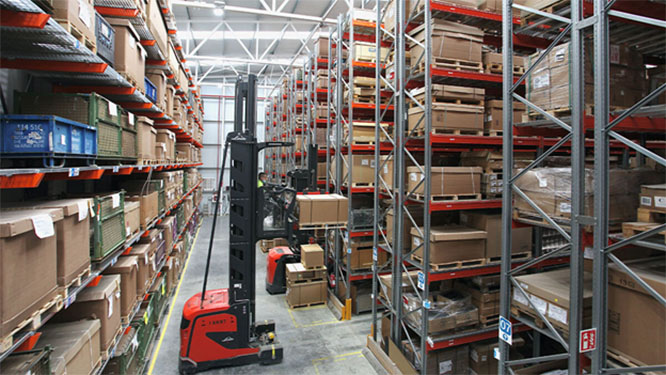
Warehouses handle a wide range of goods every day. Each product type needs the right handling and the right system. This is why racking and storage decisions shape warehouse design and performance. The nature of the load determines how goods are received, checked, moved, and stored. It also influences order picking and dispatch. When the team understands the load type, they can plan efficient operations. Better planning helps reduce waste and improve safety. Modern systems utilise automation and engineered layouts to facilitate faster and more efficient movement of goods.

What is a Unit Load?

A unit load is a group of products placed on a stable support. The support can be a pallet, box or container. The aim is to reduce handling time. It allows goods to move as a single group. This keeps storage simple and protects the products.

Types of Load by Recording Method:

General Load

These goods need individual packaging. Some units can be moved one at a time. Others are grouped on pallets or in containers. Their quantity is recorded as units.

Bulk Load

Bulk loads do not use small packaging. They move directly inside tanks, silos or special containers. Liquids and gases fall into this group. They are measured by mass and volume.

Types of Load by Volume:

Small Loads

These goods are light and easy to hold. Items like food packs or small cartons belong here.

Medium Loads

These weigh up to 10 kg. They are still easy to handle by hand. Both small and medium loads fit well in picking systems. Long-span shelving and carton flow racks are suitable for these loads. These systems offer easy access and steady movement.

Large or Pallet Loads

These goods need pallets for support. Forklifts or stackers handle them. They are suitable for selective pallet racks, double-deep racks, shuttle racks, and other high-density storage systems. The choice depends on access needs and available warehouse space.

Bulky Loads

These goods are large and hard to stack. Appliances and steel beams fall into this group. Cantilever racking is ideal for such items.

Special Size Loads

These loads are extremely large and heavy. They need special transport and support vehicles.

Types of Load by Weight:

●    Light loads under 5 kg
●    Medium loads between 5 and 25 kg
●    Heavy loads between 25 kg and one tonne
●    Very heavy loads above one tonne

Each weight category needs a suitable handling plan. Safety becomes more important as weight increases.

Types of Load by Useful Life:

Perishable Loads

These products have expiry dates. They need fast movement. Stock rotation is important. Cold storage and controlled environments protect these goods.

Non-Perishable Loads

These items do not depend on expiry dates. They allow flexible storage and handling.

Types of Load by Resistance:

Resistant Loads

These goods can support weight on top. They allow stacking.

Light Loads

These can be stacked with limits. They need clear rules to avoid damage.

Fragile Loads

These loads need gentle handling. They cannot be stacked. They must be stored on shelves that offer individual support.

Types of Load by Dangerous Property:

Dangerous goods need special rules. They include gases, explosives, flammable liquids and corrosive substances. Each class requires a safe storage plan. Racks must allow ventilation, stability and easy access for trained staff.

Types of Load by Batch

Some products move as single units. Others move in packs with many units. Batch size depends on the product type.

Choosing the Right Storage Method

Load type controls the layout and equipment used. A well-designed warehouse creates a smooth workflow. This reduces time and cost.

Storage for Small and Medium Loads

Shelving systems give direct access. Carton flow racks work well for fast-moving goods. They reduce walking time and save effort.

Storage for Pallet Loads

Selective pallet racking offers direct access. It suits operations with many item types. Drive-in and shuttle racks are ideal for bulk storage. They save space and increase density. Very narrow aisle racks maximise height with guided trucks.

Storage for Bulky and Special Loads

Cantilever racking is designed to hold long and heavy items. It keeps aisles clear. Large loads need cranes or special lifting tools.

Storage for Mixed Loads

A flexible system helps when goods vary in size. Many warehouses utilise a mix of pallet racking, shelving and automated zones.

Using Multi-Level Solutions

Large warehouses often use a mezzanine floor to increase space. This converts unused height into new storage areas. It supports light loads, picking zones and packing stations.

Role of Smart Systems and Automation

Automation improves speed and safety. It also reduces damage. Some systems use sensors to monitor movement. Others manage inventory with high accuracy. A crane-based Automated Storage and Retrieval System (ASRS) support smooth pallet handling. It reduces manual work and improves order accuracy. Automated systems protect fragile loads and reduce forklift traffic.

Why Load Identification Matters

Knowing the load type helps avoid damage. It also helps in planning safe movement. With correct information, the team can plan for forklifts, conveyors and racks. This reduces risks and improves output.

Conclusion

Every warehouse handles a unique mix of loads. Each type requires the right plan, the right support, and the right movement method. Reliable racking and storage systems protect goods and increase efficiency. They also help teams manage work safely. When storage aligns with product needs, operations run smoothly. Leading companies like the Godrej Enterprises Group offer solutions for a variety of loads. From crane-based pallet ASRS to cantilever racks, these solutions help businesses stay ready for the future. A smart warehouse grows with the business and creates more usable space through simple, well-planned design.


Comments

Add new comment

  • Coastaldigest.com reserves the right to delete or block any comments.
  • Coastaldigset.com is not responsible for its readers’ comments.
  • Comments that are abusive, incendiary or irrelevant are strictly prohibited.
  • Please use a genuine email ID and provide your name to avoid reject.