Ola voluntarily recalls 1,441 e-scooters after incidents of catching fire

News Network
April 24, 2022

Ola Electric is recalling 1,441 units of its electric two-wheelers in the wake of incidents of vehicles catching fire, according to a company statement.

The company said its investigation into the fire incident on March 26, in Pune, is ongoing and preliminary assessment found that it was an isolated one.

However, it said, "As a pre-emptive measure we will be conducting a detailed diagnostic and health check of the scooters in that specific batch and therefore are issuing a voluntary recall of 1,441 vehicles."

Ola Electric further said, "These scooters will be inspected by our service engineers and will go through a thorough diagnostics across all battery systems, thermal systems as well as the safety systems."

Ola Electric said its battery systems already complies with and is tested for AIS 156, the latest proposed standard for India, in addition to being compliant with the European standard ECE 136.

Recently, there have been widespread incidents of electric two-wheelers catching fire in various parts of the country forcing manufacturers to recall their vehicles.

Okinawa Autotech had recalled over 3,000 units, while PureEV did a similar exercise for around 2,000 units.

The fire incidents had prompted the government to form a panel to examine and had warned companies of penalties if they were found to be negligent. 

Comments

Add new comment

  • Coastaldigest.com reserves the right to delete or block any comments.
  • Coastaldigset.com is not responsible for its readers’ comments.
  • Comments that are abusive, incendiary or irrelevant are strictly prohibited.
  • Please use a genuine email ID and provide your name to avoid reject.
News Network
December 4,2025

Mangaluru: Chaos erupted at Mangaluru International Airport (MIA) after IndiGo flight 6E 5150, bound for Mumbai, was repeatedly delayed and ultimately cancelled, leaving around 100 passengers stranded overnight. The incident highlights the ongoing country-wide operational disruptions affecting the airline, largely due to the implementation of new Flight Duty Time Limitations (FDTL) norms for crew.

The flight was initially scheduled for 9:25 PM on Tuesday but was first postponed to 11:40 PM, then midnight, before being cancelled around 3:00 AM. Passengers expressed frustration over last-minute communication and the lack of clarity, with elderly and ailing travellers particularly affected. “Though the airline arranged food, there was no proper communication, leaving us confused,” said one family member.

An IndiGo executive at MIA cited the FDTL rules, designed to prevent pilot fatigue by limiting crew working hours, as the cause of the cancellation. While alternative arrangements, including hotel stays, were offered, about 100 passengers chose to remain at the airport, creating tension. A replacement flight was arranged but also faced delays due to the same constraints, finally departing for Mumbai around 1:45 PM on Wednesday. Passengers either flew, requested refunds, or postponed their travel.

The Mangaluru delay is part of a broader crisis for IndiGo. The airline has been forced to make “calibrated schedule adjustments”—a euphemism for widespread cancellations and delays—after stricter FDTL norms came into effect on November 1.

While an IndiGo spokesperson acknowledged unavoidable flight disruptions due to technology issues, operational requirements, and the updated crew rostering rules, the DGCA has intervened, summoning senior airline officials to explain the chaos and outline corrective measures.

The ripple effect has been felt across the country, with major hubs like Bengaluru and Mumbai reporting numerous cancellations. The Mangaluru incident underscores the systemic operational strain currently confronting India’s largest carrier, leaving passengers nationwide grappling with uncertainty and delays.

Comments

Add new comment

  • Coastaldigest.com reserves the right to delete or block any comments.
  • Coastaldigset.com is not responsible for its readers’ comments.
  • Comments that are abusive, incendiary or irrelevant are strictly prohibited.
  • Please use a genuine email ID and provide your name to avoid reject.
News Network
November 21,2025

Tejas.jpg

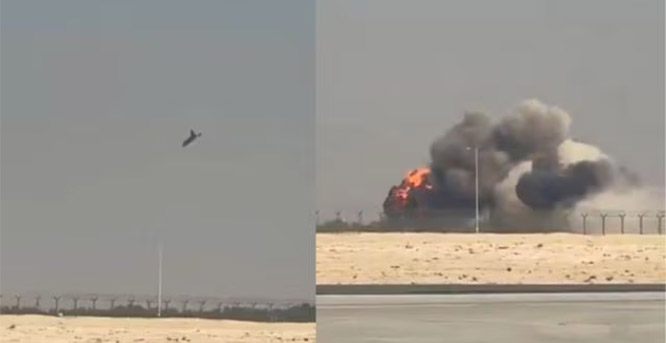
An Indian Air Force (IAF) Tejas fighter jet crashed on Friday, November 21, afternoon during its aerial demonstration at the Dubai Air Show, plunging to the ground at around 2:10 pm local time while performing a manoeuvre before thousands of spectators.

The IAF confirmed the incident, stating that a Tejas aircraft participating in the show had crashed and that further details were being gathered. An Air Force spokesperson said more information would be shared after initial assessments.

The crash sent thick black smoke billowing into the sky near the airport, causing panic among visitors, including families and children who had gathered to watch the display. Authorities have not yet confirmed whether the pilot managed to eject before the aircraft went down. Emergency response teams rushed to the scene, and officials have not released information on casualties or damage so far.

The Tejas is a 4.5-generation, multi-role fighter aircraft developed indigenously by Hindustan Aeronautics Limited (HAL). Designed for versatility, it is capable of offensive air support, close combat, ground attack missions and maritime operations. The aircraft family includes single-seat fighters and twin-seat trainers for both the Air Force and Navy.

HAL describes the latest version, the LCA Mk1A, as the most advanced in the series, featuring an AESA radar, an upgraded electronic warfare suite with radar-warning and self-protection jamming, smart multifunction displays, a digital map generator, a combined interrogator–transponder system and a modern radio altimeter. These enhancements significantly improve the aircraft’s combat capability and survivability.

Further updates from IAF and UAE authorities are awaited.

Comments

Add new comment

  • Coastaldigest.com reserves the right to delete or block any comments.
  • Coastaldigset.com is not responsible for its readers’ comments.
  • Comments that are abusive, incendiary or irrelevant are strictly prohibited.
  • Please use a genuine email ID and provide your name to avoid reject.
Business Desk
November 21,2025

warehouse.jpg

Warehouses handle a wide range of goods every day. Each product type needs the right handling and the right system. This is why racking and storage decisions shape warehouse design and performance. The nature of the load determines how goods are received, checked, moved, and stored. It also influences order picking and dispatch. When the team understands the load type, they can plan efficient operations. Better planning helps reduce waste and improve safety. Modern systems utilise automation and engineered layouts to facilitate faster and more efficient movement of goods.

What is a Unit Load?

A unit load is a group of products placed on a stable support. The support can be a pallet, box or container. The aim is to reduce handling time. It allows goods to move as a single group. This keeps storage simple and protects the products.

Types of Load by Recording Method:

General Load

These goods need individual packaging. Some units can be moved one at a time. Others are grouped on pallets or in containers. Their quantity is recorded as units.

Bulk Load

Bulk loads do not use small packaging. They move directly inside tanks, silos or special containers. Liquids and gases fall into this group. They are measured by mass and volume.

Types of Load by Volume:

Small Loads

These goods are light and easy to hold. Items like food packs or small cartons belong here.

Medium Loads

These weigh up to 10 kg. They are still easy to handle by hand. Both small and medium loads fit well in picking systems. Long-span shelving and carton flow racks are suitable for these loads. These systems offer easy access and steady movement.

Large or Pallet Loads

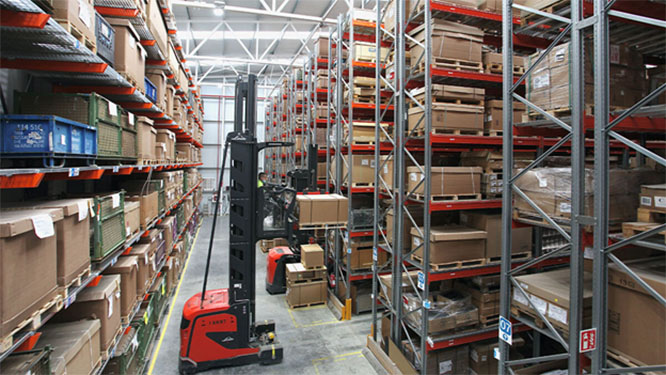
These goods need pallets for support. Forklifts or stackers handle them. They are suitable for selective pallet racks, double-deep racks, shuttle racks, and other high-density storage systems. The choice depends on access needs and available warehouse space.

Bulky Loads

These goods are large and hard to stack. Appliances and steel beams fall into this group. Cantilever racking is ideal for such items.

Special Size Loads

These loads are extremely large and heavy. They need special transport and support vehicles.

Types of Load by Weight:

●    Light loads under 5 kg
●    Medium loads between 5 and 25 kg
●    Heavy loads between 25 kg and one tonne
●    Very heavy loads above one tonne

Each weight category needs a suitable handling plan. Safety becomes more important as weight increases.

Types of Load by Useful Life:

Perishable Loads

These products have expiry dates. They need fast movement. Stock rotation is important. Cold storage and controlled environments protect these goods.

Non-Perishable Loads

These items do not depend on expiry dates. They allow flexible storage and handling.

Types of Load by Resistance:

Resistant Loads

These goods can support weight on top. They allow stacking.

Light Loads

These can be stacked with limits. They need clear rules to avoid damage.

Fragile Loads

These loads need gentle handling. They cannot be stacked. They must be stored on shelves that offer individual support.

Types of Load by Dangerous Property:

Dangerous goods need special rules. They include gases, explosives, flammable liquids and corrosive substances. Each class requires a safe storage plan. Racks must allow ventilation, stability and easy access for trained staff.

Types of Load by Batch

Some products move as single units. Others move in packs with many units. Batch size depends on the product type.

Choosing the Right Storage Method

Load type controls the layout and equipment used. A well-designed warehouse creates a smooth workflow. This reduces time and cost.

Storage for Small and Medium Loads

Shelving systems give direct access. Carton flow racks work well for fast-moving goods. They reduce walking time and save effort.

Storage for Pallet Loads

Selective pallet racking offers direct access. It suits operations with many item types. Drive-in and shuttle racks are ideal for bulk storage. They save space and increase density. Very narrow aisle racks maximise height with guided trucks.

Storage for Bulky and Special Loads

Cantilever racking is designed to hold long and heavy items. It keeps aisles clear. Large loads need cranes or special lifting tools.

Storage for Mixed Loads

A flexible system helps when goods vary in size. Many warehouses utilise a mix of pallet racking, shelving and automated zones.

Using Multi-Level Solutions

Large warehouses often use a mezzanine floor to increase space. This converts unused height into new storage areas. It supports light loads, picking zones and packing stations.

Role of Smart Systems and Automation

Automation improves speed and safety. It also reduces damage. Some systems use sensors to monitor movement. Others manage inventory with high accuracy. A crane-based Automated Storage and Retrieval System (ASRS) support smooth pallet handling. It reduces manual work and improves order accuracy. Automated systems protect fragile loads and reduce forklift traffic.

Why Load Identification Matters

Knowing the load type helps avoid damage. It also helps in planning safe movement. With correct information, the team can plan for forklifts, conveyors and racks. This reduces risks and improves output.

Conclusion

Every warehouse handles a unique mix of loads. Each type requires the right plan, the right support, and the right movement method. Reliable racking and storage systems protect goods and increase efficiency. They also help teams manage work safely. When storage aligns with product needs, operations run smoothly. Leading companies like the Godrej Enterprises Group offer solutions for a variety of loads. From crane-based pallet ASRS to cantilever racks, these solutions help businesses stay ready for the future. A smart warehouse grows with the business and creates more usable space through simple, well-planned design.


Comments

Add new comment

  • Coastaldigest.com reserves the right to delete or block any comments.
  • Coastaldigset.com is not responsible for its readers’ comments.
  • Comments that are abusive, incendiary or irrelevant are strictly prohibited.
  • Please use a genuine email ID and provide your name to avoid reject.