Beef and meat bans cast shadow over Eid al-Adha

September 19, 2015

New Delhi, Sep 19: With hundreds of families across the country preparing Eid-al-Adha in the last week of September, the ban on sale of meat, including beef, has come as a huge setback for the traders who were expecting a good business during the festive season.

Bakrid

Akbar Qureshi, a meat trader in the Mankhurd area of Mumbai, is a worried man since the ban on beef came into force in Maharashtra in March this year under the Maharashtra Animal Preservation (Amendment) Act, 1995. Since then, he has been able to sell very little buffalo meat and is in danger of running out of customers.

"People don't eat buffalo meat that much. I would earlier sell some 100 kilograms of beef daily, but now I hardly sell 40 kilograms of buffalo meat," he said.

Akbar is just one among hundreds of traders, dealers and suppliers whose business has been severely affected by the beef ban in the state.

While Maharashtra and Haryana had banned beef earlier, many other states including Gujarat and Chhattisgarh and cities like Mumbai and its suburbs have recently introduced temporary bans on sale and possession of meat for varying number of days in respect of 'Paryushan,' a Jain fasting season.

The ban on beef comes even as India has emerged as the world's top exporter of beef since last year. As per data released by the U.S. Department of Agriculture in April this year, India has doubled its beef export from 1.26 million tonnes in 2011-12 to 2.40 million tonnes in 2014-15.

Beef ban means no exports either. Anwar Khan owns Al-Saba exports, a meat exporting company in Mumbai. He is facing huge losses.

"My monthly turnover was around Rs. 2.5 crore. But now I have lost everything and had to fire over 100 employees," said Khan. "We are running short of buffaloes here, due to which it is impossible to do business," he added.

Jammu and Kashmir became the latest addition to this list when the state High Court directed the authorities on September 10 to strictly enforce a 150-year-old erstwhile Dogra-rule-era provision of ban on sale and distribution of beef in the state.

Shabir Ahmad, along with his family, has domesticated a bullock to sacrifice this Eid. He is worried about being able to do that due to the ban. "I would graze the bullock for hours after my day work and would give fodder to keep him in good health," Shabir said.

Beef is particularly useful since it is cheap and hence bull or bullocks are preferred by many rural families over sheep or goat for the animal sacrifice during the Eid-al-Adha. Moreover, in religious convention, while a goat or sheep qualifies a single person for the sacrificial obligations, a bovine animal qualifies seven people.

"I can't afford a separate sheep or goat individually for every family member," Ahmad added.

Given the religious implications of the ban, the decision has invited harsh criticism from not only the ordinary Kashmiris but also religious bodies. Jamaat-e-Islami, one of the largest such bodies in the Valley, has termed the decision as totally 'unacceptable'.

G.M. Bhat, Ameer of the Jamaat, said, "It is absolutely not possible to convince the Muslim community to go against their own religion; so we oppose it."

To protest against the ban, the Valley also observed a two-day strike on the call given by the Hurriyat led by Syed Ali Shah Geelani. He termed the court's decision as interference in religious affairs.

Geelani said, "If India boasts of being a secular country, then everyone has a right to practice one's religion. However, this controversial decision has taken away the freedom of the Muslims only."

Meanwhile, meat suppliers in the region are now worried about losing their business as the festival season approaches.

Manzoor Ahmad, Anantnag-based supplier, had sold thousands of animals on Eid last year. This year he is looking at a gloomy business scenario.

"Last year, I supplied many animals before the Eid-al-Adha. If this ban remains, dealers and suppliers will have to face huge business losses," said Ahmad.

Cow is a revered animal for many in the Hindu community, and therefore its slaughter is considered unacceptable by them. Prohibition of cow slaughter is mentioned as one of the Directive Principles of State Policy under Article 48 of the Indian Constitution. The issue, though, has remained largely dormant till recently.

However, recent moves by the BJP-ruled states like Maharashtra and Haryana to cover all bovine animals in the anti-slaughter law and steps by several others to impose temporary meat bans are seen as powerful indicators of the growing influence of the right-wing Hindu organisations since the Narendra Modi government assumed power last year.

Comments

Add new comment

  • Coastaldigest.com reserves the right to delete or block any comments.
  • Coastaldigset.com is not responsible for its readers’ comments.
  • Comments that are abusive, incendiary or irrelevant are strictly prohibited.
  • Please use a genuine email ID and provide your name to avoid reject.
News Network
December 15,2025

Mangaluru, Dec 15: Air India Express has announced that it will resume direct flight services between Mangaluru and Muscat from March 2026, restoring an important international air link for passengers from the coastal region.

Airport authorities said the service will operate twice a week—on Sundays and Tuesdays—from March 1. The initial flights are scheduled on March 3, 8 and 10, followed by March 15 and 17, with the same operating pattern to continue thereafter. The flight duration is approximately three hours and 25 minutes.

The Mangaluru–Muscat route was earlier operated under the 2025 summer schedule, with services beginning on July 14. At that time, Air India Express had operated four flights a week before suspending the service.

Officials said the summer schedule will come into effect from March 29, after which changes in flight timings and departure schedules from Mangaluru are expected. Passengers have been advised to check the latest schedules while planning their travel.

The resumption of direct flights to Muscat is expected to significantly benefit expatriates, business travellers and others, further strengthening Mangaluru’s air connectivity with the Gulf region.

Comments

Add new comment

  • Coastaldigest.com reserves the right to delete or block any comments.
  • Coastaldigset.com is not responsible for its readers’ comments.
  • Comments that are abusive, incendiary or irrelevant are strictly prohibited.
  • Please use a genuine email ID and provide your name to avoid reject.
News Network
December 16,2025

SMR1.jpg

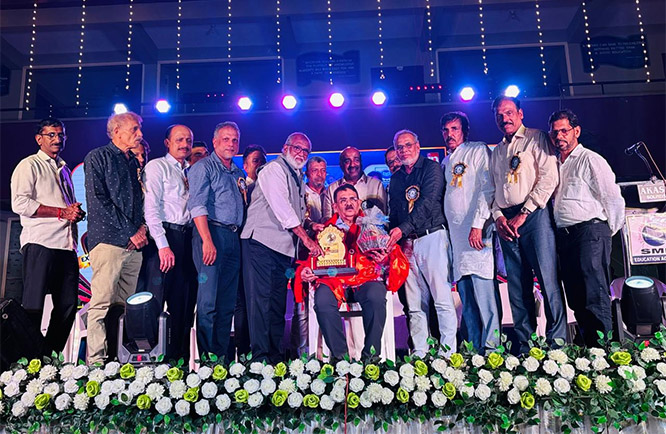
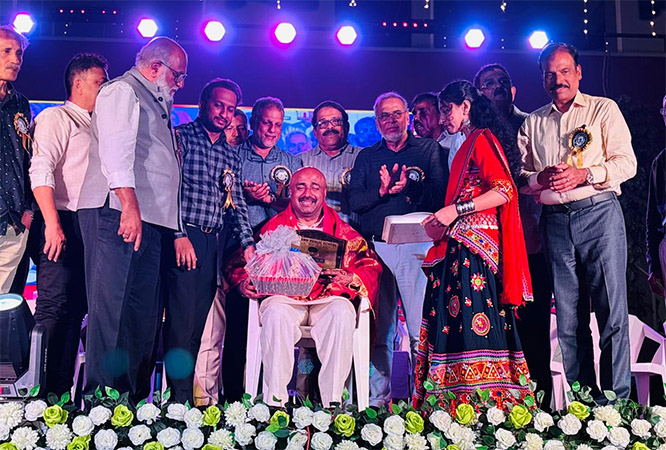
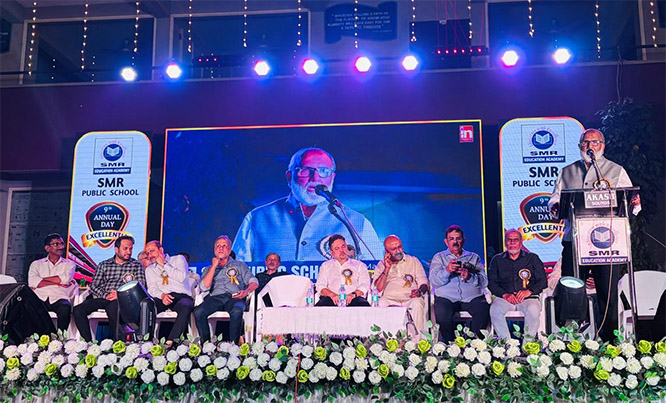
Melkar (Bantwal): The 9th Annual Day celebration of SMR Public School, titled “EXCELLENTIA”, was held on December 15 with great enthusiasm and dignity, marking a significant milestone in the institution’s journey towards academic excellence and holistic development.

The programme was inaugurated by Dr. U. T. Iftikar Ali. The chief guests were Dr. Akhtar Hussain, Mr. P. Moosabba Beary, Mr. Zakaria Jokattre, and Dr. T. M. Abdul Rahuf—whose inspiring addresses motivated the students and appreciated the school’s contributions to education.

Mr. Abdul Nasir, Mr. Ibrahim Gadiyar, Mr. Razak Golthamajal, Mr. Sali Koya, Mr. Arshad Hussain, Mr. Ismail Balanoor, Mr. Feroz Bawa, Mr. Sahul Hameed, Mr. Abubakkar, Mr. Hameed K. Mani, Mr. Abdul Majeed (Principal, Melkar Women’s College), and Mr. Abdul Lathief (Former Principal, Melkar Women’s College) were the guests of honour.

The Annual Report was presented by the Headmistress, Ms. Fathimathul Zaheera, highlighting the school’s achievements and progress during the academic year. The Presidential Address was delivered by the Chairman of SMR Public School, Dr. Haji S. M. Rasheed, who emphasised the vital role of education in shaping students’ futures and stressed the importance of discipline, dedication, and consistent effort in achieving 100 per cent academic results.

Secretary of SMR Public School, Mr. Rifath Ahmed, and PTA President, Mr. Sandeep Kumar, were also present on the occasion.

The Annual Day celebration showcased the collective efforts of students and teachers and reaffirmed the school’s commitment to quality education and all-round development. The programme concluded with a vote of thanks, expressing gratitude to all dignitaries, parents, and well-wishers for their support. The 9th Annual Day—EXCELLENTIA—was a memorable and successful event, leaving a lasting impression on everyone present. 

SMR3.jpg

SMR2.jpg

Comments

Add new comment

  • Coastaldigest.com reserves the right to delete or block any comments.
  • Coastaldigset.com is not responsible for its readers’ comments.
  • Comments that are abusive, incendiary or irrelevant are strictly prohibited.
  • Please use a genuine email ID and provide your name to avoid reject.
News Network
December 19,2025

Mangaluru: In a decisive move to tackle the city’s deteriorating sanitation infrastructure, the Mangaluru City Corporation (MCC) has announced a massive ₹1,200 crore action plan to overhaul its underground drainage (UGD) network.

The initiative, spearheaded by Deputy Commissioner and MCC Administrator Darshan HV, aims to bridge "missing links" in the current system that have left residents grappling with overflowing sewage and environmental hazards.

The Breaking Point

The announcement follows a high-intensity phone-in session on Thursday, where the DC was flooded with grievances from frustrated citizens. Residents, including Savithri from Yekkur, described a harrowing reality: raw sewage from apartments leaking into stormwater drains, creating a "permanent stink" and turning residential zones into mosquito breeding grounds.

"We are facing immense difficulties due to the stench and the health risks. Local officials have remained silent until now," one resident reported during the session.

The Strategy: A Six-Year Vision

DC Darshan HV confirmed that the proposed plan is not a temporary patch but a comprehensive six-year roadmap designed to accommodate Mangaluru’s projected population growth. Key highlights of the plan include:

•    Infrastructure Expansion: Laying additional pipelines to connect older neighborhoods to the main grid.

•    STP Crackdown: Stricter enforcement of Sewage Treatment Plant (STP) regulations. While new apartments are required to have functional STPs, many older buildings lack them entirely, and several newer units are reportedly non-functional.

•    Budgetary Push: The plan has already been discussed with the district in-charge minister and the Secretary of the Urban Development Department. It is slated for formal presentation in the upcoming state budget.

Comments

Add new comment

  • Coastaldigest.com reserves the right to delete or block any comments.
  • Coastaldigset.com is not responsible for its readers’ comments.
  • Comments that are abusive, incendiary or irrelevant are strictly prohibited.
  • Please use a genuine email ID and provide your name to avoid reject.