Big surnames came, went but India did not prosper: PM

Agencies
December 7, 2018

New Delhi, Dec 7: Hitting out at the Congress, Prime Minister Narendra Modi on Friday said people with "big surnames" ruled the country but India could not prosper despite having the best talent and natural resources.

He also alleged that poverty was not alleviated as it could hit the "vote bank" of the parties in the past.

Addressing the 'Jagran Forum' organised by the Dainik Jagran media group, the prime minister said: "People with big surnames came to power and went but no solution could be found to problems."

He was making an oblique reference to the Nehru-Gandhi family.

Modi said the country had targets but lacked commitment and passion.

"If poverty was alleviated, how would the slogan of 'garabi hatao' be given ... it would hit vote bank politics," the prime minister said.

Comments

Add new comment

  • Coastaldigest.com reserves the right to delete or block any comments.
  • Coastaldigset.com is not responsible for its readers’ comments.
  • Comments that are abusive, incendiary or irrelevant are strictly prohibited.
  • Please use a genuine email ID and provide your name to avoid reject.
News Network
December 13,2025

New Delhi: School-going children are picking up drug and smoking habits and engaging in consumption of alcohol, with the average age of introduction to such harmful substances found to be around 13 years, suggesting a need for earlier interventions as early as primary school, a multi-city survey by AIIMS-Delhi said.

The findings also showed substance use increased in higher grades, with grade XI/XII students two times more likely to report use of substances when compared with grade VIII students. This emphasised the importance of continued prevention and intervention through middle and high school.

The study led by Dr Anju Dhawan of AIIMS's National Drug Dependence Treatment Centre, published in the National Medical Journal of India this month, looks at adolescent substance use across diverse regions.

The survey included 5,920 students from classes 8, 9, 11 and 12 in urban government, private and rural schools across 10 cities -- Bengaluru, Chandigarh, Delhi, Dibrugarh, Hyderabad, Imphal, Jammu, Lucknow, Mumbai, and Ranchi. The data were collected between May 2018 and June 2019.

The average age of initiation for any substance was 12.9 (2.8) years. It was lowest for inhalants (11.3 years) followed by heroin (12.3 years) and opioid pharmaceuticals (without prescription; 12.5 years).

Overall, 15.1 per cent of participants reported lifetime use, 10.3 per cent reported past year use, and 7.2 per cent reported use in the past month of any substance, the study found.

The most common substances used in the past year, after tobacco (4 per cent) and alcohol (3.8 per cent), were opioids (2.8 per cent), followed by cannabis (2 per cent) and inhalants (1.9 per cent). Use of non-prescribed pharmaceutical opioids was most common among opioid users (90.2 per cent).

On being asked, 'Do you think this substance is easily available for a person of your age' separately for each substance category, nearly half the students (46.3 per cent) endorsed that tobacco products and more than one-third of the students (36.5 per cent) agreed that a person of their age can easily procure alcohol products.

Similarly, for Bhang (21.9 per cent), ganja/charas (16.1 per cent), inhalants (15.2 per cent), sedatives (13.7 per cent), opium and heroin (10 per cent each), the students endorsed that these can be easily procured.

About 95 per cent of the children, irrespective of their grade, agreed with the statement that 'drug use is harmful'.

The rates of substance use (any) among boys were significantly higher than those of girls for substance use (ever), use in the past year and use in the past 30 days. Compared to grade VIII students, grade IX students were more likely, and grade XI/XII students were twice as likely to have used any substance (ever).

The likelihood of past-year use of any substance was also higher for grade IX students and for grade XI/XII students as compared to grade VIII students.

About 40 per cent of students mentioned that they had a family member who used tobacco or alcohol each. The use of cannabis (any product) and opioid (any product) by a family member was reported by 8.2 per cent and 3.9 per cent of students, respectively, while the use of other substances, such as inhalants/sedatives by family was 2-3 per cent, the study found.

A relatively smaller percentage of students reported use of tobacco or alcohol among peers as compared to among family members, while a higher percentage reported inhalants, sedatives, cannabis or opioid use among peers.

Children using substances (past year) compared to non-users reported significantly higher any substance use by their family members and peers.

There were 25.7 per cent students who replied 'yes' to the question 'conflicts/fights often occur in your family'. Most students also replied affirmatively to 'family members are aware of how their time is being spent' and 'damily members are aware of with whom they spend their time'.


Comments

Add new comment

  • Coastaldigest.com reserves the right to delete or block any comments.
  • Coastaldigset.com is not responsible for its readers’ comments.
  • Comments that are abusive, incendiary or irrelevant are strictly prohibited.
  • Please use a genuine email ID and provide your name to avoid reject.
News Network
December 19,2025

Mangaluru: In a decisive move to tackle the city’s deteriorating sanitation infrastructure, the Mangaluru City Corporation (MCC) has announced a massive ₹1,200 crore action plan to overhaul its underground drainage (UGD) network.

The initiative, spearheaded by Deputy Commissioner and MCC Administrator Darshan HV, aims to bridge "missing links" in the current system that have left residents grappling with overflowing sewage and environmental hazards.

The Breaking Point

The announcement follows a high-intensity phone-in session on Thursday, where the DC was flooded with grievances from frustrated citizens. Residents, including Savithri from Yekkur, described a harrowing reality: raw sewage from apartments leaking into stormwater drains, creating a "permanent stink" and turning residential zones into mosquito breeding grounds.

"We are facing immense difficulties due to the stench and the health risks. Local officials have remained silent until now," one resident reported during the session.

The Strategy: A Six-Year Vision

DC Darshan HV confirmed that the proposed plan is not a temporary patch but a comprehensive six-year roadmap designed to accommodate Mangaluru’s projected population growth. Key highlights of the plan include:

•    Infrastructure Expansion: Laying additional pipelines to connect older neighborhoods to the main grid.

•    STP Crackdown: Stricter enforcement of Sewage Treatment Plant (STP) regulations. While new apartments are required to have functional STPs, many older buildings lack them entirely, and several newer units are reportedly non-functional.

•    Budgetary Push: The plan has already been discussed with the district in-charge minister and the Secretary of the Urban Development Department. It is slated for formal presentation in the upcoming state budget.

Comments

Add new comment

  • Coastaldigest.com reserves the right to delete or block any comments.
  • Coastaldigset.com is not responsible for its readers’ comments.
  • Comments that are abusive, incendiary or irrelevant are strictly prohibited.
  • Please use a genuine email ID and provide your name to avoid reject.
News Network
December 7,2025

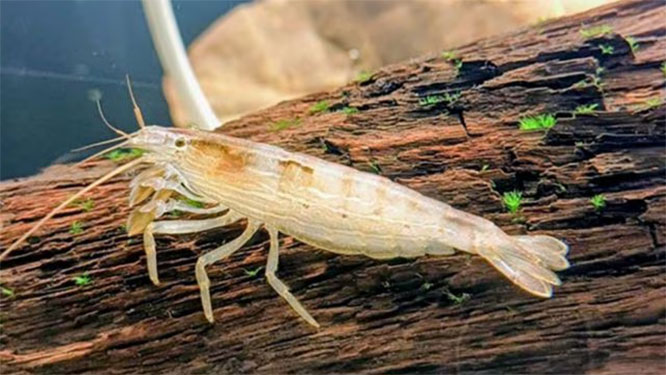
SHRIMP.jpg

Mangaluru, Dec 7: A rare bamboo shrimp has been rediscovered on mainland India more than 70 years after it was last reported, confirming for the first time the presence of Atyopsis spinipes in the country. The find was made by researchers from the Centre for Climate Change Studies at Sathyabama Institute of Science and Technology, Chennai, during surveys in Karnataka and Odisha.

The team — shrimp expert Dr S Prakash, PhD scholar K Kunjulakshmi, and Mangaluru-based researcher Maclean Antony Santos — combined field surveys, ecological assessments and DNA analysis to identify the elusive species. Their findings, published in Zootaxa, resolve decades of taxonomic confusion stemming from a 1951 report that misidentified the species as Atyopsis moluccensis without strong evidence.

The shrimp has now been confirmed at two locations: the Mulki–Pavanje estuary near Mangaluru and the Kuakhai River in Bhubaneswar. Historical specimens from the Andaman Islands, previously labelled as A. moluccensis, were also found to be misidentified and actually belong to A. spinipes.

The rediscovery began after an aquarium hobbyist in Odisha spotted a shrimp in 2022, prompting systematic surveys across Udupi, Karwar and Mangaluru. Four female specimens were collected in Mulki and one in Odisha, all genetically matching.

Researchers warn the species may exist in very small, vulnerable populations as freshwater habitats face increasing pressure from pollution, sand mining and infrastructure development. All verified specimens have been deposited with the Zoological Survey of India for future reference.

Comments

Add new comment

  • Coastaldigest.com reserves the right to delete or block any comments.
  • Coastaldigset.com is not responsible for its readers’ comments.
  • Comments that are abusive, incendiary or irrelevant are strictly prohibited.
  • Please use a genuine email ID and provide your name to avoid reject.