



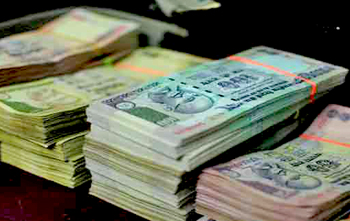
Black money probe: SIT traces Rs 4,479 crore in Swiss banks, Rs 14,958 crore in India

December 13, 2014

Money-funds
New Delhi, Dec 13: In the first major disclosure on black money, 339 Indians have been found to have stashed Rs.4,479 crore in Swiss banks, while domestic unaccounted wealth to the tune of Rs.14,958 crore has been traced, even as the SIT recommended stringent measures to check the menace.

The Supreme Court-constituted SIT has recommended amendments to laws to provide for confiscation of domestic properties of those with illicit assets abroad and making tax evasion of over Rs.50 lakh a 'predicate offence' or a serious crime to facilitate necessary action under the Prevention of Money Laundering Act (PMLA).

The 13 recommendations made by the SIT also include imposing a threshold of Rs.10-15 lakh on holding and transporting cash to check the black money menace.

After probing into a list of 628 Indians, who figured on a list of account holders in HSBC's Geneva branch that India got from the French government, the Special Investigation Team (SIT) has said that prosecution has begun against 79 entities.

Out of these, no balance has been found in case of 289 accounts, according to a report of the SIT submitted to the court, portions of which were released by government on Friday.

"Out of the 628 persons, 201 are either non-residents or non-traceable, leaving 427 persons cases as actionable cases," an official statement said.

While the total amount involved in these cases is about Rs.4,479 crore, the Income Tax Department has finalised assessment for 79 entities involving 339 cases.

"An amount of Rs.2,926 crore has been brought to tax towards the undisclosed balances in the accounts relating to these persons," the statement said, adding that taxes along with interest at applicable rates have been levied.

While suggesting steps like curbs on cash transportation beyond a level and mandatory quoting of PAN for cash and cheque payments over Rs.one lakh, the SIT has flagged off mining, ponzi schemes, iron ore exports, misuse of export- import route as major areas prone to black money transactions.

The issue of black money has been a major political issue in India, including in the last Lok Sabha polls.

Incidentally, today's disclosure comes at a time when Switzerland has indicted Herve Falciani, a former HSBC employee, who had leaked information related to thousands of bank account holders at its Geneva branch. He was charged yesterday by the Swiss authorities for 'industrial espionage, breach of trade and banking secrecy'.

The SIT also pointed out that 'Angadias', persons carry large amounts of cash while acting as 'money couriers' in Gujarat and Maharashtra especially, were playing a key role in transfer of unaccounted money.

The SIT said that the proposed curbs "would control holding of unaccounted money to a large extent".

"This would also control transfer of unaccounted cash from one destination to other, which at present is rampant, may be Angadias or by other means," it said.

The SIT has also suggested setting up of an institutional mechanism to examine mismatch between export/import data with corresponding data of other countries on a quarterly basis to unearth black money.

In case it is found that an individual or entity owns a property abroad in violation of the law, a provision should be made in the FEMA to provide for seizure and confiscation of property of equivalent value within the country.

It also recommended establishment of a central KYC (Know Your Customer) registry to deal with the problem of multiple identities of an individual in financial transactions.

The SIT, which comprises of former Supreme Court judges M B Shah and Arjit Pasayat, as also representatives from various investigative and enforcement agencies, cited the examples of European countries to say that there should be a limit on transportation and holding of cash, as per portions of the report released by the government today.

Also, the shipping bills should include the international market price of goods and machinery sought to be exported.

"This suggestion is under consideration and is likely to be implemented within short time," the SIT said.

Besides, there should be a dynamic interaction between different stakeholders like reporting entities, Financial Intelligence Unit and law enforcement authorities.

In cases where ED has attached a property and there are income tax dues to be collected, the SIT said that the former should be open to recovering dues from the attached property.

SIT said that at least five additional chief judicial magistrates courts should be set up in Mumbai to deal with 5000 pending IT prosecution cases.

Giving update on various cases of black money, the SIT said that Directorate of Revenue Intelligence (DRI) has furnished information in 31 cases of iron ore export, of which 11 parties have admitted to undervaluation and paid Rs.116.73 crore.

In other cases, show cause notices have been issued and action will be taken in accordance with law.

Besides, the Directorate of Enforcement is attaching property worth Rs.400 crore and has arrested a person in a case relating to mining in Odisha.

In Karnataka, three attachment orders have been passed for assets worth a total of Rs.995.97 crore.

In several cases in Goa and Jharkhand, preliminary scrutiny and investigation is in progress in connection with illegal mining.

The report also pointed out that the ED is facing difficulties in taking coercive action in ponzi chit-fund cases due to a stay order by Kolkata High Court.

In one case in Jharkhand, provisional attachment orders for properties worth Rs.452.43 crore were passed while Rs.884.13 crore worth of assets have been attached in another mining case in Karnataka.

In a similar case in Andhra Pradesh, Rs.1093.10 crore worth assets have been attached.

Comments

Add new comment

  • Coastaldigest.com reserves the right to delete or block any comments.
  • Coastaldigset.com is not responsible for its readers’ comments.
  • Comments that are abusive, incendiary or irrelevant are strictly prohibited.
  • Please use a genuine email ID and provide your name to avoid reject.
News Network
December 16,2025

bengal.jpg

The deletion of over 58 lakh names from West Bengal’s draft electoral rolls following a Special Intensive Revision (SIR) has sparked widespread concern and is likely to deepen political tensions in the poll-bound state.

According to the Election Commission, the revision exercise has identified 24 lakh voters as deceased, 19 lakh as relocated, 12 lakh as missing, and 1.3 lakh as duplicate entries. The draft list, published after the completion of the first phase of SIR, aims to remove errors and duplication from the electoral rolls.

However, the scale of deletions has raised fears that a large number of eligible voters may have been wrongly excluded. The Election Commission has said that individuals whose names are missing can file objections and seek corrections. The final voter list is scheduled to be published in February next year, after which the Assembly election announcement is expected. Notably, the last Special Intensive Revision in Bengal was conducted in 2002.

The development has intensified the political row over the SIR process. Chief Minister Mamata Banerjee and her Trinamool Congress have strongly opposed the exercise, accusing the Centre and the Election Commission of attempting to disenfranchise lakhs of voters ahead of the elections.

Addressing a rally in Krishnanagar earlier this month, Banerjee urged people to protest if their names were removed from the voter list, alleging intimidation during elections and warning of serious consequences if voting rights were taken away.

The BJP, meanwhile, has defended the revision and accused the Trinamool Congress of politicising the issue to protect what it claims is an illegal voter base. Leader of the Opposition Suvendu Adhikari alleged that the ruling party fears losing power due to the removal of deceased, fake, and illegal voters.

The controversy comes amid earlier allegations by the Trinamool Congress that excessive work pressure during the SIR led to the deaths by suicide of some Booth Level Officers (BLOs), for which the party blamed the Election Commission. With the draft list now out, another round of political confrontation appears imminent.

As objections begin to be filed, the focus will be on whether the correction mechanism is accessible, transparent, and timely—critical factors in ensuring that no eligible voter is denied their democratic right ahead of a crucial election.

Comments

Add new comment

  • Coastaldigest.com reserves the right to delete or block any comments.
  • Coastaldigset.com is not responsible for its readers’ comments.
  • Comments that are abusive, incendiary or irrelevant are strictly prohibited.
  • Please use a genuine email ID and provide your name to avoid reject.
News Network
December 6,2025

pilot.jpg

New Delhi: IndiGo, India’s largest airline, faced major operational turbulence this week after failing to prepare for new pilot-fatigue regulations issued by the Directorate General of Civil Aviation (DGCA). The stricter rules—designed to improve flight safety—took effect in phases through 2024, with the latest implementation on November 1. IndiGo has acknowledged that inadequate roster planning led to widespread cancellations and delays.

Below are the key DGCA rules that affected IndiGo’s operations:

1. Longer Mandatory Weekly Rest

Weekly rest for pilots has been increased from 36 hours to 48 hours.

The government says the extended break is essential to curb cumulative fatigue. This rule remains in force despite the current crisis.

2. Cap on Night Landings

Pilots can now perform only two night landings per week—a steep reduction from the earlier limit of six.

Night hours, defined as midnight to early morning, are considered the least alert period for pilots.

Given the disruptions, this rule has been temporarily relaxed for IndiGo until February 10.

3. Reduced Maximum Night Flight Duty

Flight duty that stretches into the night is now capped at 10 hours.

This measure has also been kept on hold for IndiGo until February 10 to stabilize operations.

4. Weekly Rest Cannot Be Replaced With Personal Leave

Airlines can no longer count a pilot’s personal leave as part of the mandatory 48-hour rest.

Pilots say this closes a loophole that previously reduced actual rest time.

Currently, all airlines are exempt from this rule to normalise travel.

5. Mandatory Fatigue Monitoring

Airlines must submit quarterly fatigue reports along with corrective actions to DGCA.

This system aims to create a transparent fatigue-tracking framework across the industry.

The DGCA has stressed that these rules were crafted to strengthen flight safety and align India with global fatigue-management standards. The temporary relaxations are expected to remain until February 2025, giving IndiGo time to stabilise its schedules and restore normal air travel.

Comments

Add new comment

  • Coastaldigest.com reserves the right to delete or block any comments.
  • Coastaldigset.com is not responsible for its readers’ comments.
  • Comments that are abusive, incendiary or irrelevant are strictly prohibited.
  • Please use a genuine email ID and provide your name to avoid reject.
News Network
December 13,2025

New Delhi: School-going children are picking up drug and smoking habits and engaging in consumption of alcohol, with the average age of introduction to such harmful substances found to be around 13 years, suggesting a need for earlier interventions as early as primary school, a multi-city survey by AIIMS-Delhi said.

The findings also showed substance use increased in higher grades, with grade XI/XII students two times more likely to report use of substances when compared with grade VIII students. This emphasised the importance of continued prevention and intervention through middle and high school.

The study led by Dr Anju Dhawan of AIIMS's National Drug Dependence Treatment Centre, published in the National Medical Journal of India this month, looks at adolescent substance use across diverse regions.

The survey included 5,920 students from classes 8, 9, 11 and 12 in urban government, private and rural schools across 10 cities -- Bengaluru, Chandigarh, Delhi, Dibrugarh, Hyderabad, Imphal, Jammu, Lucknow, Mumbai, and Ranchi. The data were collected between May 2018 and June 2019.

The average age of initiation for any substance was 12.9 (2.8) years. It was lowest for inhalants (11.3 years) followed by heroin (12.3 years) and opioid pharmaceuticals (without prescription; 12.5 years).

Overall, 15.1 per cent of participants reported lifetime use, 10.3 per cent reported past year use, and 7.2 per cent reported use in the past month of any substance, the study found.

The most common substances used in the past year, after tobacco (4 per cent) and alcohol (3.8 per cent), were opioids (2.8 per cent), followed by cannabis (2 per cent) and inhalants (1.9 per cent). Use of non-prescribed pharmaceutical opioids was most common among opioid users (90.2 per cent).

On being asked, 'Do you think this substance is easily available for a person of your age' separately for each substance category, nearly half the students (46.3 per cent) endorsed that tobacco products and more than one-third of the students (36.5 per cent) agreed that a person of their age can easily procure alcohol products.

Similarly, for Bhang (21.9 per cent), ganja/charas (16.1 per cent), inhalants (15.2 per cent), sedatives (13.7 per cent), opium and heroin (10 per cent each), the students endorsed that these can be easily procured.

About 95 per cent of the children, irrespective of their grade, agreed with the statement that 'drug use is harmful'.

The rates of substance use (any) among boys were significantly higher than those of girls for substance use (ever), use in the past year and use in the past 30 days. Compared to grade VIII students, grade IX students were more likely, and grade XI/XII students were twice as likely to have used any substance (ever).

The likelihood of past-year use of any substance was also higher for grade IX students and for grade XI/XII students as compared to grade VIII students.

About 40 per cent of students mentioned that they had a family member who used tobacco or alcohol each. The use of cannabis (any product) and opioid (any product) by a family member was reported by 8.2 per cent and 3.9 per cent of students, respectively, while the use of other substances, such as inhalants/sedatives by family was 2-3 per cent, the study found.

A relatively smaller percentage of students reported use of tobacco or alcohol among peers as compared to among family members, while a higher percentage reported inhalants, sedatives, cannabis or opioid use among peers.

Children using substances (past year) compared to non-users reported significantly higher any substance use by their family members and peers.

There were 25.7 per cent students who replied 'yes' to the question 'conflicts/fights often occur in your family'. Most students also replied affirmatively to 'family members are aware of how their time is being spent' and 'damily members are aware of with whom they spend their time'.

Comments

Add new comment

  • Coastaldigest.com reserves the right to delete or block any comments.
  • Coastaldigset.com is not responsible for its readers’ comments.
  • Comments that are abusive, incendiary or irrelevant are strictly prohibited.
  • Please use a genuine email ID and provide your name to avoid reject.

