



New Delhi, Oct 28: Rejecting the Centre's stand, the Supreme Court today ordered Centre to disclose all the names of blackmoney holders abroad to it by tomorrow in a sealed envelope and slammed it for reluctance on the issue.
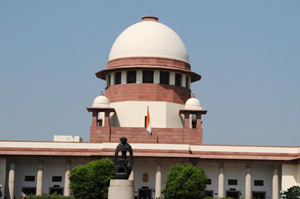
The apex court had some strong words for the new government for seeking modification of its earlier order on disclosure of all names saying this was accepted by the then UPA government.
"Why are you trying to protect people having bank accounts in foreign countries. Why are you providing a protective umbrella for all these people.
"The order was passed in open court in the presence of Solicitor General and the new regime can't ask modification of order. We cannot touch our order and we won't change even a word of it," a visibly annoyed Chief Justice H L Dattu, who was heading the bench, said.
Attorney General Mukul Rohatgi's fervent plea that it can disclose names only after conducting probes on illegality of bank accounts was outright rejected by the Bench which asked the government not to do anything but provide all information to it and the court would direct investigation to be done by SIT or any other agencies including CBI.
At the end of a 30-minute hearing, Attorney General said the government has received 500 names of account holders from different countries like Germany.
The CJI asked the Centre not to indulge in any kind of probe by itself and said that investigation would never complete in his lifetime if it is done by the government.
"You do not do anything. Just pass information of account holders to us and we will pass order for further probe," the bench, also comprising justices Ranjana Prakash Desai and Madan B Lokur, said.
"We can't leave the issue of bringing back black money to government. It will never happen during our time," it said adding "Why are you providing protective umbrella to foreign bank account holders?".
The bench brushed aside the contentions of AG that disclosing account holders' names would violate their right to privacy of those who have legitimate accounts and the names can be revealed only after a prima facie case of tax evasion is made out.
"You do not have to take interest in people (having foreign bank accounts). SIT will take care of it," the bench said setting a deadline for tomorrow to place all those names.
The court directed the Centre not to give "one, two, or three names of account holders but the entire list supplied to it by the foreign countries".
The Attorney General tried his best to convince the court that disclosure of names of all account holders could hamper government's efforts to bring back black money as the foreign countries might not give further information on tainted accounts in their territories.
He submitted that the apex court-appointed SIT is not a statutory body which can issue notice to account holders and it can be done only by the IT department. All information has already been given to the SIT, he added.
The bench, however, was not satisfied by his contention.
"We want the names supplied to you by foreign countries. Pass the information to us. You give the information to us. We have taken up the case and are monitoring it. So give us the information and we would pass it to the SIT. The SIT would take the case to its logical conclusion.
"Why are you taking the trouble of a probe? Just give the information to SIT which will conduct the probe," the bench said and observed that it is also "concerned" about the blackmoney stashed by Indians in foreign banks.
Rohatgi also submitted that the government had given an assurance (to foreign entities) that it will maintain confidentiality of the information received on account holders.
If it is disclosed then the Centre would have difficulty in entering into treaties with foreign nations on sharing of data in future on the issue, the AG said.
"Don't give any such assurance. We don't want money of the country to go abroad," the court said, adding, "We have constituted the SIT to bring back the money. So let the government cooperate with the SIT".
The bench said that it will take care when such problems (regarding entering into treaty) arise.
Disclosing eight names including that of Pradip Burman, one of Dabur India promoters, a bullion trader and Goa miners against whom it has started prosecution for allegedly stashing blackmoney, the Centre said in its affidavit yesterday that all the names of account holders cannot be disclosed unless there is a "prima facie" evidence of wrongdoing.
Rajkot-based bullion trader Pankaj Chimanlal Lodhya and Goa-based mining company Timblo Private Limited and its five Directors were among the names that figured in the list which was filed in the Supreme Court by the government.
"The government is committed to disclose names of persons holding illegal money abroad. However, every account held by an Indian in a foreign country may not be illegal and the fundamental right of citizens to privacy under Article 21 of the Constitution cannot be ignored and has been recognised by this court," it said, adding the names and information/ documents cannot be disclosed even even under a proceedings under Article 32(1) of the Constitution.
It had urged the apex court to modify its earlier order directing it to reveal even the names of foreign bank account holders against whom no evidence was found for stashing black money saying the government would have a problem entering into tax agreements with other countries.
"There is absolutely no intention on the part of the government to withhold information, including names of persons who have stashed black money abroad, but only to seek certain clarification that will enable the government to enter into agreements with other countries under which information relating to unaccounted money lying abroad can be obtained," it had said.
"The information received under these tax treaties and agreements will be disclosed after following the due process of law, in all cases where evasion of tax is established. The intention of the present government is clear and unambiguous.
"The government is keen to unearth black money held abroad and for that purpose it will use all diplomatic and legal means and also all investigating agencies to obtain information that can assist in such unearthing," the affidavit had said.



Comments
Add new comment