Boeing wanted to wait 3 years to fix safety alert on 737 Max

Agencies
June 8, 2019

Washington, Jun 8: Boeing planned to wait three years to fix a non-working safety alert on its 737 Max aircraft and sped up the process only after the first of two deadly crashes involving the planes.

The company acknowledged that it originally planned to fix a cockpit warning light in 2020 after two key lawmakers disclosed the company's timetable on Friday.

Peter DeFazio of Oregon and Rick Larsen of Washington wrote to Boeing and the Federal Aviation Administration and asked why the company took more than a year to tell the safety agency and airlines that the alert did not work on Max jets.

The feature, called an angle of attack or AoA alert, warns pilots when sensors measuring the up-or-down pitch of the plane's nose relative to oncoming air might be wrong. The sensors malfunctioned during a Lion Air flight in Indonesia in October and an Ethiopian Airlines flight from Addis Ababa in March, causing anti-stall software to push the planes' noses down.

Pilots were unable to regain control, and both planes crashed. In all, 346 people were killed. It is not clear whether either crash could have been prevented if the cockpit alert had been working.

A Boeing spokesman said that based on a safety review, the company had originally planned to fix the cockpit warning when it began delivering a new, larger model of the Max to airlines in 2020. "We fell short in the implementation of the AoA Disagree alert and are taking steps to address these issues so they do not occur again," said the spokesman, Gordon Johndroe.

All Max jets will have the alert as standard equipment before returning to service, and newly built planes will have it too, Johndroe said. Boeing delivered about 370 of the planes before they were grounded around the world in March.

Both Boeing and the head of the FAA say that the alert is not critical for safety. Boeing says all its planes, including the M ax, give pilots all the flight information — including speed, altitude and engine performance — that they need to fly safely.

The pilots' union at American Airlines expressed unhappiness about the matter, however, and said Boeing's assurance about the cockpit alert was a factor in the union standing behind Boeing after the first Max crash, in October.

Jason Goldberg, an American Airlines pilot and union spokesman, said Boeing told pilots that the alert could pinpoint a faulty sensor even on the ground, before takeoff. "That is one of the things that made us confident initially to make the statement that we were happy to continue to fly the aircraft," he said.

"It turned out later that that wasn't true." Boeing admitted in May that within months of the plane's 2017 debut, engineers realised that the sensor warning light only worked when paired with a separate, optional feature.

Boeing is revising its software, called MCAS, so that it will rely on readings from two sensors instead of one, and will be easier for pilots to overcome if it malfunctions. It is unclear when the FAA will approve the changes and allow the Max to fly again.

Regulators in other countries could take longer. DeFazio and Larsen are leaders of a House committee that is investigating the crashes and the FAA's regulation of Boeing. They said Friday that Boeing decided in November 2017 to defer a software update to fix the sensor alert feature until 2020 but accelerated that timeline after the Lion Air crash.

Larsen questioned why Boeing didn't consider the problem critical to safety. The FAA on Friday repeated a statement it made last month that Boeing briefed the agency's Seattle office about the non-working alert in November, and the matter was forwarded to an FAA review board which considered the matter to be "low risk."

Last month, acting FAA Administrator Daniel Elwell told DeFazio's and Larsen's committee that he wasn't happy Boeing waited 13 months to tell the agency about the problem. "We will make sure that software anomalies are reported more quickly," he said.


Comments

Add new comment

  • Coastaldigest.com reserves the right to delete or block any comments.
  • Coastaldigset.com is not responsible for its readers’ comments.
  • Comments that are abusive, incendiary or irrelevant are strictly prohibited.
  • Please use a genuine email ID and provide your name to avoid reject.
News Network
January 20,2026

iran.jpg

Iranian security and intelligence forces have captured more than 470 individuals in three provinces, identified as key figures behind the recent wave of violent unrest and terrorist activities linked to foreign-backed networks.

The Intelligence Ministry's provincial office in Khorasan Razavi announced on Monday the arrest of 192 armed terrorists, identified as the main agents behind recent riots in the region. 

According to an official statement, the detainees were involved in the killing of several security personnel and civilians, setting fire to mosques, public service facilities, and buses, as well as attacks on military and law enforcement centers.

The seized items from the group include several bulletproof vests, Kalashnikov rifles, hunting weapons, Winchester rifles, and various cold weapons such as daggers, swords, brass knuckles, tactical knives, crossbows, and chains.

Evidence indicates that some of the individuals were tied to hostile movements and terrorist organizations, with links overseas. Others were identified as members of violent criminal gangs, actively taking part in the unrest alongside their associates.

Simultaneously, in the western province of Lorestan, the IRGC announced the arrest of 134 individuals as the main leaders and influential field agents of a US-Israeli terrorist network.

The IRGC statement stated that these individuals formed terrorist cells during the recent unrest, committing "Daesh-like" acts.

They wounded security forces with firearms and cold weapons, and burned and destroyed public and private properties, including mosques, shops, banks, and private and public vehicles.

In the northwestern province of Zanjan, the police reported detaining 150 people identified as principal leaders and agents behind recent riots.

Authorities noted that these individuals were responsible for destroying public and private property and intentionally setting fire to vehicles in the province's squares.

Their crimes include shedding the blood of innocent people, destroying public and private property, attempting to enter military sites, disrupting public order, and spreading terror among citizens.

A variety of cold weapons were reportedly seized from the detainees.

What began late last month as peaceful protests over economic hardship across Iran turned violent after public statements by US and Israeli regime figures encouraged vandalism and disorder.

During the unrest, foreign-backed mercenaries rampaged through cities, killing security forces and civilians and damaging public property.

Comments

Add new comment

  • Coastaldigest.com reserves the right to delete or block any comments.
  • Coastaldigset.com is not responsible for its readers’ comments.
  • Comments that are abusive, incendiary or irrelevant are strictly prohibited.
  • Please use a genuine email ID and provide your name to avoid reject.
News Network
January 23,2026

Mangaluru: The Karnataka Government Polytechnic (KPT), Mangaluru, has achieved autonomous status from the All India Council for Technical Education (AICTE), becoming the first government polytechnic in the country to receive such recognition in its 78-year history. The status was granted by AICTE, New Delhi, and subsequently approved by the Karnataka Board of Technical Education in October last year.

Officials said the autonomy was conferred a few months ago. Until recently, AICTE extended autonomous status only to engineering colleges, excluding diploma institutions. However, with a renewed national focus on skill development, several government polytechnics across India have now been granted autonomy.

KPT, the second-largest polytechnic in Karnataka, was established in 1946 with four branches and has since expanded to offer eight diploma programmes, including computer science and polymer technology. The institution is spread across a 19-acre campus.

Ravindra M Keni, the first dean of the institution, told The Times of India that AICTE had proposed autonomous status for polytechnic institutions that are over 25 years old. “Many colleges applied. In the first round, 100 institutions were shortlisted, which was further narrowed down to 15 in the second round. We have already completed one semester after becoming an autonomous institution,” he said. He added that nearly 500 students are admitted annually across eight three-year diploma courses.

Explaining the factors that helped KPT secure autonomy, Keni said the institution has consistently recorded 100 per cent admissions and placements for its graduates. He also noted its strong performance in sports, with the college emerging champions for 12 consecutive years, along with active student participation in NCC and NSS activities.

Autonomous status allows KPT to design industry-oriented curricula, conduct examinations, prepare question papers, and manage academic documentation independently. The institution can also directly collaborate with industries and receive priority funding from AICTE or the Ministry of Education. While academic autonomy has been granted, financial control will continue to rest with the state government.

“There will be separate committees for examinations, question paper setting, boards of studies, and boards of examiners. The institution will now have the freedom to conduct admissions without government notifications and issue its own marks cards,” Keni said, adding that new academic initiatives would be planned after a year of functioning under the autonomous framework.

Comments

Add new comment

  • Coastaldigest.com reserves the right to delete or block any comments.
  • Coastaldigset.com is not responsible for its readers’ comments.
  • Comments that are abusive, incendiary or irrelevant are strictly prohibited.
  • Please use a genuine email ID and provide your name to avoid reject.
News Network
January 23,2026

oscar.jpg

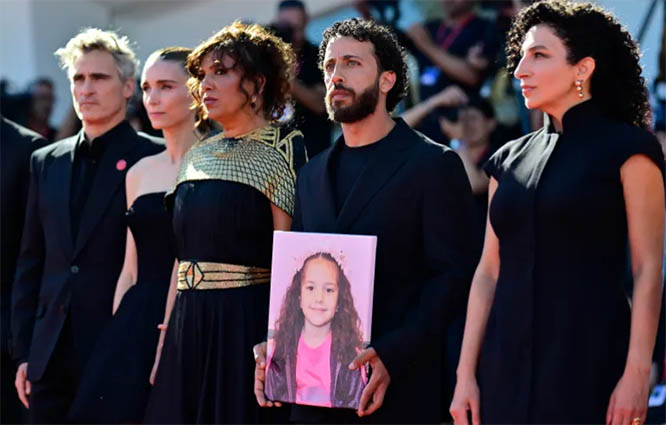
The Voice of Hind Rajab, inspired by the tragic final moments of a young Palestinian girl killed by Israeli fire in Gaza, has been nominated for an Academy Award in the Best International Feature Film category.

Directed by Tunisian filmmaker Kaouther Ben Hania, the film recounts the true story of five-year-old Hind Rajab, who lost her life in January 2024 while fleeing Israeli bombardment with her family.

The film features the real audio of Hind’s desperate call to the Palestinian Red Crescent Society, where she pleaded for help moments before the vehicle she was in was struck by 355 bullets.

The haunting narrative begins with a brief call made from the besieged Tel al-Hawa neighborhood of Gaza, where gunfire and armored vehicles drowned out every sound.

After witnessing the brutal killing of her family, she made a trembling call, her voice reduced to a whisper as she spoke of the massacre and her unbearable loneliness as the sole survivor.

Premiering at the Venice International Film Festival in September 2025, The Voice of Hind Rajab garnered widespread acclaim, receiving a record-setting 23-minute standing ovation and the Silver Lion Grand Jury Prize, the festival’s second-highest honor.

In her acceptance speech, Ben Hania dedicated the film to humanitarian workers and first responders in Gaza, emphasizing that Hind's voice symbolizes countless civilians affected by war.

She aims to give voice to victims often reduced to mere statistics, highlighting the broader suffering of civilians in war zones.

The film’s Oscar nomination underscores its powerful storytelling and ethical approach to depicting real-life tragedy, making it a crucial piece of contemporary cinema.

It serves not only as a narration of individual tragedy but also as an artistic and documentary response to the silence and censorship that often overshadow West Asian struggles and wars.

Using an innovative method she calls docufiction, Ben Hania bridges unvarnished reality and narrative structure, creating a work that is both artistically valuable and socially impactful.

Born in 1977 in Sidi Bouzid—later the epicenter of the Arab revolution—her background profoundly influenced her worldview and artistic approach.

She is a graduate of the Higher School of Audiovisual Arts of Tunis, Pantheon-Sorbonne University, and La Fémis in Paris, where her studies equipped her with the technical and theoretical tools needed to address complex subjects. 

Comments

Add new comment

  • Coastaldigest.com reserves the right to delete or block any comments.
  • Coastaldigset.com is not responsible for its readers’ comments.
  • Comments that are abusive, incendiary or irrelevant are strictly prohibited.
  • Please use a genuine email ID and provide your name to avoid reject.