Boeing wanted to wait 3 years to fix safety alert on 737 Max

Agencies
June 8, 2019

Washington, Jun 8: Boeing planned to wait three years to fix a non-working safety alert on its 737 Max aircraft and sped up the process only after the first of two deadly crashes involving the planes.

The company acknowledged that it originally planned to fix a cockpit warning light in 2020 after two key lawmakers disclosed the company's timetable on Friday.

Peter DeFazio of Oregon and Rick Larsen of Washington wrote to Boeing and the Federal Aviation Administration and asked why the company took more than a year to tell the safety agency and airlines that the alert did not work on Max jets.

The feature, called an angle of attack or AoA alert, warns pilots when sensors measuring the up-or-down pitch of the plane's nose relative to oncoming air might be wrong. The sensors malfunctioned during a Lion Air flight in Indonesia in October and an Ethiopian Airlines flight from Addis Ababa in March, causing anti-stall software to push the planes' noses down.

Pilots were unable to regain control, and both planes crashed. In all, 346 people were killed. It is not clear whether either crash could have been prevented if the cockpit alert had been working.

A Boeing spokesman said that based on a safety review, the company had originally planned to fix the cockpit warning when it began delivering a new, larger model of the Max to airlines in 2020. "We fell short in the implementation of the AoA Disagree alert and are taking steps to address these issues so they do not occur again," said the spokesman, Gordon Johndroe.

All Max jets will have the alert as standard equipment before returning to service, and newly built planes will have it too, Johndroe said. Boeing delivered about 370 of the planes before they were grounded around the world in March.

Both Boeing and the head of the FAA say that the alert is not critical for safety. Boeing says all its planes, including the M ax, give pilots all the flight information — including speed, altitude and engine performance — that they need to fly safely.

The pilots' union at American Airlines expressed unhappiness about the matter, however, and said Boeing's assurance about the cockpit alert was a factor in the union standing behind Boeing after the first Max crash, in October.

Jason Goldberg, an American Airlines pilot and union spokesman, said Boeing told pilots that the alert could pinpoint a faulty sensor even on the ground, before takeoff. "That is one of the things that made us confident initially to make the statement that we were happy to continue to fly the aircraft," he said.

"It turned out later that that wasn't true." Boeing admitted in May that within months of the plane's 2017 debut, engineers realised that the sensor warning light only worked when paired with a separate, optional feature.

Boeing is revising its software, called MCAS, so that it will rely on readings from two sensors instead of one, and will be easier for pilots to overcome if it malfunctions. It is unclear when the FAA will approve the changes and allow the Max to fly again.

Regulators in other countries could take longer. DeFazio and Larsen are leaders of a House committee that is investigating the crashes and the FAA's regulation of Boeing. They said Friday that Boeing decided in November 2017 to defer a software update to fix the sensor alert feature until 2020 but accelerated that timeline after the Lion Air crash.

Larsen questioned why Boeing didn't consider the problem critical to safety. The FAA on Friday repeated a statement it made last month that Boeing briefed the agency's Seattle office about the non-working alert in November, and the matter was forwarded to an FAA review board which considered the matter to be "low risk."

Last month, acting FAA Administrator Daniel Elwell told DeFazio's and Larsen's committee that he wasn't happy Boeing waited 13 months to tell the agency about the problem. "We will make sure that software anomalies are reported more quickly," he said.

Comments

Add new comment

  • Coastaldigest.com reserves the right to delete or block any comments.
  • Coastaldigset.com is not responsible for its readers’ comments.
  • Comments that are abusive, incendiary or irrelevant are strictly prohibited.
  • Please use a genuine email ID and provide your name to avoid reject.
News Network
January 19,2026

trump.jpg

Donald Trump has linked his repeated threats to seize Greenland to his failure to win the Nobel Peace Prize, in a letter to Norwegian Prime Minister Jonas Gahr Støre.

The authenticity of the letter, in which Trump says he no longer feels obligated to “think purely of peace,” was confirmed by Støre to the Norwegian newspaper VG.

“Considering your country decided not to give me the Nobel Peace Prize for having stopped eight wars plus, I no longer feel an obligation to think purely of peace,” Trump wrote, adding he can now “think about what is good and proper for the United States.”

Støre said Trump’s letter was in response to a short message he had sent earlier, on behalf of himself and Finland’s President Alexander Stubb.

Trump has escalated rhetoric toward Greenland, a self-governing Danish territory, insisting the US will take control “one way or the other.” Over the weekend, he tweeted: “Now it is time, and it will be done!!!”

On Saturday, Trump threatened a 10% tariff on imports from Denmark, Norway, Sweden, France, Germany, the UK, the Netherlands, and Finland from 1 February until the US is allowed to purchase the island. EU diplomats met for emergency talks on possible retaliatory tariffs and sanctions.

In his letter, Trump argued Denmark “cannot protect” Greenland from Russia or China, questioning Danish ownership: “There are no written documents; it’s only that a boat landed there hundreds of years ago.” He added that NATO should support the US, claiming the world is “not secure unless we have complete and total control of Greenland.”

Trump’s stance has unsettled the EU and NATO, as he refused to rule out military action to take control of the mineral-rich island.

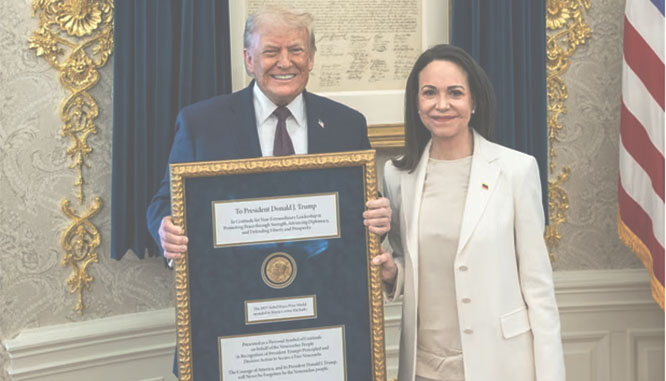
The Nobel Peace Prize is awarded by the independent Norwegian Nobel Committee, not the government. Trump had campaigned for last year’s prize, which went to Venezuelan opposition leader María Corina Machado, who dedicated her award to him.

Støre reiterated that the Nobel Prize decision rests solely with the committee.

Comments

Add new comment

  • Coastaldigest.com reserves the right to delete or block any comments.
  • Coastaldigset.com is not responsible for its readers’ comments.
  • Comments that are abusive, incendiary or irrelevant are strictly prohibited.
  • Please use a genuine email ID and provide your name to avoid reject.
News Network
January 23,2026

oscar.jpg

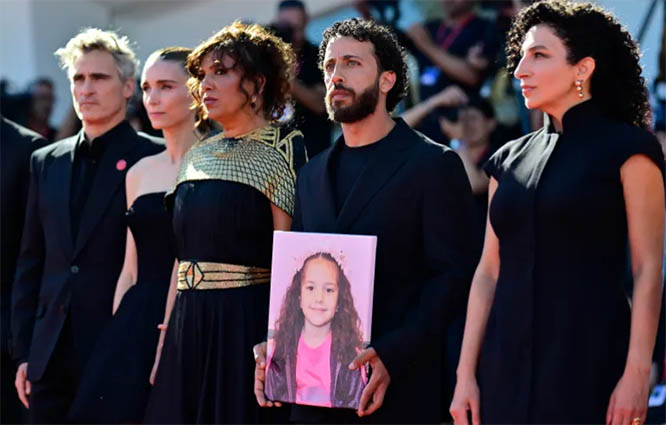
The Voice of Hind Rajab, inspired by the tragic final moments of a young Palestinian girl killed by Israeli fire in Gaza, has been nominated for an Academy Award in the Best International Feature Film category.

Directed by Tunisian filmmaker Kaouther Ben Hania, the film recounts the true story of five-year-old Hind Rajab, who lost her life in January 2024 while fleeing Israeli bombardment with her family.

The film features the real audio of Hind’s desperate call to the Palestinian Red Crescent Society, where she pleaded for help moments before the vehicle she was in was struck by 355 bullets.

The haunting narrative begins with a brief call made from the besieged Tel al-Hawa neighborhood of Gaza, where gunfire and armored vehicles drowned out every sound.

After witnessing the brutal killing of her family, she made a trembling call, her voice reduced to a whisper as she spoke of the massacre and her unbearable loneliness as the sole survivor.

Premiering at the Venice International Film Festival in September 2025, The Voice of Hind Rajab garnered widespread acclaim, receiving a record-setting 23-minute standing ovation and the Silver Lion Grand Jury Prize, the festival’s second-highest honor.

In her acceptance speech, Ben Hania dedicated the film to humanitarian workers and first responders in Gaza, emphasizing that Hind's voice symbolizes countless civilians affected by war.

She aims to give voice to victims often reduced to mere statistics, highlighting the broader suffering of civilians in war zones.

The film’s Oscar nomination underscores its powerful storytelling and ethical approach to depicting real-life tragedy, making it a crucial piece of contemporary cinema.

It serves not only as a narration of individual tragedy but also as an artistic and documentary response to the silence and censorship that often overshadow West Asian struggles and wars.

Using an innovative method she calls docufiction, Ben Hania bridges unvarnished reality and narrative structure, creating a work that is both artistically valuable and socially impactful.

Born in 1977 in Sidi Bouzid—later the epicenter of the Arab revolution—her background profoundly influenced her worldview and artistic approach.

She is a graduate of the Higher School of Audiovisual Arts of Tunis, Pantheon-Sorbonne University, and La Fémis in Paris, where her studies equipped her with the technical and theoretical tools needed to address complex subjects. 

Comments

Add new comment

  • Coastaldigest.com reserves the right to delete or block any comments.
  • Coastaldigset.com is not responsible for its readers’ comments.
  • Comments that are abusive, incendiary or irrelevant are strictly prohibited.
  • Please use a genuine email ID and provide your name to avoid reject.