



Bombay HC refuses to stay IPL match on April 9, raps Maha govt

April 7, 2016

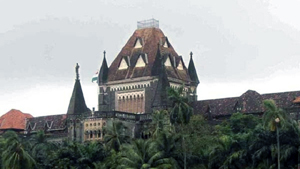
Mumbai, Apr 7: The Bombay High Court today declined to stay the IPL opening match on April 9 here as sought by a public interest litigation challenging use of large quantity of water for maintaining pitches despite the grave water crisis in Maharashtra due to drought.
bombay-hc

The PIL, filed by Loksatta Movement, sought shifting of IPL matches out of Maharashtra and wanted a stay on the matches scheduled in other cities in the state as well in view of the water crisis.

A bench of Justices V M Kanande and M S Karnik, however, said that it was not staying the match on April 9 as it wanted to know from the state government and the municipal body whether the water supplied to the stadiums in tankers was potable or non-potable.

The court was of the opinion that until this query is answered, the issue of granting stay cannot be considered."The petition is filed just before the IPL matches are to begin from April 9...we do not propose to grant a stay at this stage...we want to know the source of water supplied to the cricket grounds for maintaining the pitches", the bench observed in its order.

The Judges also asked the state government and the Municipal Corporation of Greater Mumbai to file separate affidavits by April 12, stating whether the water supplied to stadiums during the IPL matches was potable or non-potable.

The Judges also asked both the authorities to inform whether they had formulated any policy for supply of potable and non-potable water to Mumbai, Thane, Kalyan and other cities in Maharashtra.

The bench also sought to know from the state and the civic body whether any contingency plans had been drawn in case of further scarcity of water due to delayed monsoon this year.

The Judges also asked the authorities to inform in their affidavits whether they had made any inquiries about the source of water supplied to the stadiums through tankers.

The bench also asked the authorities to inform whether they had imposed any restraint on use of water in marriages and receptions during April-May 2016 when the state was facing acute water scarcity.Earlier, rapping Maharashtra government, the bench said "this is a serious issue...the government needs to look at it seriously."

"People who have money can afford to have as much water as they can whereas in other places people are getting water once in three days...this is an anomaly," Justice Kanade said.

Altogether 20 matches will be played in Mumbai, Pune and Nagpur and all these cities are facing water crisis, said the petition.

This prompted Justice Kanade to remark "you (state) are dealing with people at large....animals have died, cattle have died, people are dying and you want to maintain pitches and grounds?"

The bench asked the government to spell out what short-term and long-term measures it has planned to tide over the water crisis.

"It is not the question of IPL alone...what are your (state's) priorities..how will you regulate water supply...we want to know what you propose to do," observed Justice Kanade during the hearing.

Referring to the issue of tanker lobby, he said "I am told that these tankers charge over Rs 900 per tanker....how it is permissible....how can you allow this...after all, the wells and borewells from where they draw water belong to the Corporation."

Rafiq Dada, BCCI Counsel, said that for IPL matches, the pitches have to remain dry a day before the tournament and a day after that. Hence, water is not required for maintaining the pitches every day.

Acting Advocate General Rohit Deo assured that the state had decided at a high-level meeting today that not a single drop of potable water would be used for maintaining pitches in the stadiums during IPL matches. "We are going to ask the BCCI how much water would they need," he said.

In terms of water scarcity, Mumbai was better off compared to other places in drought-hit state, said the Advocate General. He said, from May 1, water would be transported to Latur in Marathwada region.

Justice Kanade remarked "is it not the duty of the state to inquire about water to be used in the stadiums when a drought situation prevails?"

"Tankers cannot be used to supply municipal water. Can you allow municipal corporation to make profits by supplying water?," the Judges said. The bench also sought to know whether the state was considering to draw water from other states to tide over the drought situation in Maharashtra.

The PIL contended that 60 lakh litres of water would be used to maintain the pitches at the stadiums where IPL matches would be held from April 9 and it was the state government's responsibility to impose restraint on the use of water during drought.

Comments

Add new comment

  • Coastaldigest.com reserves the right to delete or block any comments.
  • Coastaldigset.com is not responsible for its readers’ comments.
  • Comments that are abusive, incendiary or irrelevant are strictly prohibited.
  • Please use a genuine email ID and provide your name to avoid reject.
News Network
December 13,2025

New Delhi: School-going children are picking up drug and smoking habits and engaging in consumption of alcohol, with the average age of introduction to such harmful substances found to be around 13 years, suggesting a need for earlier interventions as early as primary school, a multi-city survey by AIIMS-Delhi said.

The findings also showed substance use increased in higher grades, with grade XI/XII students two times more likely to report use of substances when compared with grade VIII students. This emphasised the importance of continued prevention and intervention through middle and high school.

The study led by Dr Anju Dhawan of AIIMS's National Drug Dependence Treatment Centre, published in the National Medical Journal of India this month, looks at adolescent substance use across diverse regions.

The survey included 5,920 students from classes 8, 9, 11 and 12 in urban government, private and rural schools across 10 cities -- Bengaluru, Chandigarh, Delhi, Dibrugarh, Hyderabad, Imphal, Jammu, Lucknow, Mumbai, and Ranchi. The data were collected between May 2018 and June 2019.

The average age of initiation for any substance was 12.9 (2.8) years. It was lowest for inhalants (11.3 years) followed by heroin (12.3 years) and opioid pharmaceuticals (without prescription; 12.5 years).

Overall, 15.1 per cent of participants reported lifetime use, 10.3 per cent reported past year use, and 7.2 per cent reported use in the past month of any substance, the study found.

The most common substances used in the past year, after tobacco (4 per cent) and alcohol (3.8 per cent), were opioids (2.8 per cent), followed by cannabis (2 per cent) and inhalants (1.9 per cent). Use of non-prescribed pharmaceutical opioids was most common among opioid users (90.2 per cent).

On being asked, 'Do you think this substance is easily available for a person of your age' separately for each substance category, nearly half the students (46.3 per cent) endorsed that tobacco products and more than one-third of the students (36.5 per cent) agreed that a person of their age can easily procure alcohol products.

Similarly, for Bhang (21.9 per cent), ganja/charas (16.1 per cent), inhalants (15.2 per cent), sedatives (13.7 per cent), opium and heroin (10 per cent each), the students endorsed that these can be easily procured.

About 95 per cent of the children, irrespective of their grade, agreed with the statement that 'drug use is harmful'.

The rates of substance use (any) among boys were significantly higher than those of girls for substance use (ever), use in the past year and use in the past 30 days. Compared to grade VIII students, grade IX students were more likely, and grade XI/XII students were twice as likely to have used any substance (ever).

The likelihood of past-year use of any substance was also higher for grade IX students and for grade XI/XII students as compared to grade VIII students.

About 40 per cent of students mentioned that they had a family member who used tobacco or alcohol each. The use of cannabis (any product) and opioid (any product) by a family member was reported by 8.2 per cent and 3.9 per cent of students, respectively, while the use of other substances, such as inhalants/sedatives by family was 2-3 per cent, the study found.

A relatively smaller percentage of students reported use of tobacco or alcohol among peers as compared to among family members, while a higher percentage reported inhalants, sedatives, cannabis or opioid use among peers.

Children using substances (past year) compared to non-users reported significantly higher any substance use by their family members and peers.

There were 25.7 per cent students who replied 'yes' to the question 'conflicts/fights often occur in your family'. Most students also replied affirmatively to 'family members are aware of how their time is being spent' and 'damily members are aware of with whom they spend their time'.

Comments

Add new comment

  • Coastaldigest.com reserves the right to delete or block any comments.
  • Coastaldigset.com is not responsible for its readers’ comments.
  • Comments that are abusive, incendiary or irrelevant are strictly prohibited.
  • Please use a genuine email ID and provide your name to avoid reject.