



Cabinet clears GST supplementary legislations

March 20, 2017

New Delhi, Mar 20: The Cabinet today cleared four supporting GST legislations, paving the way for their introduction in Parliament as early as today.

The four supporting legislations -- the Compensation Law, the Central-GST (C-GST), Integrated-GST (I-GST) and Union Territory-GST (UT-GST)-- would be introduced as Money Bill, sources said.

gst

"The GST legislations have been cleared by the Cabinet. These would be introduced in Parliament this week, could be even today," a source said. The GST legislations were the only agenda in today's meeting of the Union Cabinet, chaired by Prime Minister Narendra Modi.

Sources said the four legislations would be taken up for discussion together in Parliament. Once approved by Parliament, the states would start taking their SGST bill for discussion and passage in the respective state assemblies.

The GST Council, in its previous two meetings, had given approval to the four legislations as also the State-GST (S-GST) bill. While the S-GST has to be passed by each of the state legislative assemblies, the four other laws have to be approved by Parliament. Passage of all the legislations would pave the way for introduction of Goods and Services Tax (GST) from July 1.

The government is hoping the C-GST, I-GST, UT-GST and the GST Compensation laws will be approved in the current session of Parliament and the S-GST by each of the state legislatures soon.

While a composite GST will be levied on sale of goods or rendering of services after the new indirect tax regime is rolled out, the revenue would be split between the Centre and the states in almost equal proportion. This is because central taxes like excise and service tax and state levies like VAT will be subsumed in the GST.

While the C-GST will give powers to the Centre to levy GST on goods and services after Union levies like excise and service tax are subsumed, the I-GST is to be levied on inter-state supplies.

The S-GST will allow states to levy the tax after VAT and other state levies are subsumed in the GST. The UT-GST will also go to Parliament for approval. The Council has already finalised a four-tier tax structure of 5, 12, 18 and 28 per cent, but the model GST law has kept the peak rate at 40 per cent (20 per cent to be levied by the Centre and an equal amount by the states) to obviate the need for approaching Parliament for any change in rates in future.

Similarly, the cess to be levied on top of peak rate on selected demerit goods like luxury cars for creation of a corpus that will be used for compensating states for any loss of revenue from GST implementation in the first five years, has been capped at 15 per cent.

Comments

Add new comment

  • Coastaldigest.com reserves the right to delete or block any comments.
  • Coastaldigset.com is not responsible for its readers’ comments.
  • Comments that are abusive, incendiary or irrelevant are strictly prohibited.
  • Please use a genuine email ID and provide your name to avoid reject.
News Network
December 6,2025

indigoticket.jpg

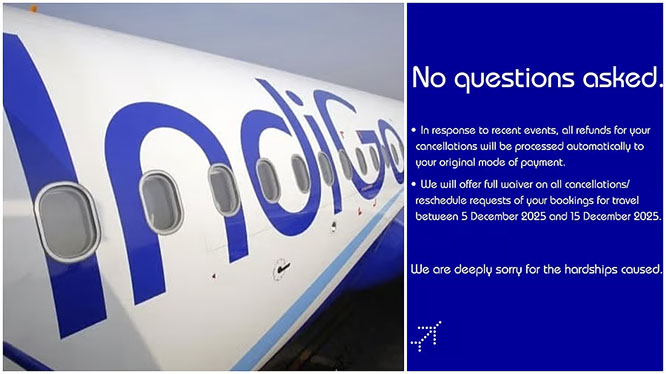
With IndiGo flight disruptions impacting thousands of passengers, the airline on Saturday said that it will offer full waiver on all cancellations/reschedule requests for travel bookings between December 5, 2025 and December 15, 2025.

Earlier in the day, the civil aviation ministry had directed the airline to complete the ticket refund process for the cancelled flights by Sunday evening, as well as ensure baggage separated from the travellers are delivered in the next two days.

In a post on X, titled 'No questions asked', IndiGo wrote, "In response to recent events, all refunds for your cancellations will be processed automatically to your original mode of payment."

"We are deeply sorry for the hardships caused," it further added.

Several passengers, however, complained of not getting full refund as promised by the airline.

Netizens have shared screenchots of getting charged for airline cancellation fee and convenience fee.

"Please tell me why u have did this airline cancellation charges when u say full amount will be refunded (sic)," a user wrote sharing a screenshot of the refund page.

"Well, but you have still debited the convenience charges," wrote another.

Passengers have also raised concerns about the "cancel" option being disabled on the IndiGo app. "First enable the 'Cancel' button on your App & offer full refund on tickets cancelled by customers between the said dates," wrote a user.

A day after the country's largest airline, IndiGo, cancelled more than 1,000 flights and caused disruptions for the fifth day on Saturday, the ministry said that any delay or non-compliance in refund processing will invite immediate regulatory action.

The refund process for all cancelled or disrupted flights must be completed by 8 pm on Sunday, the ministry said in a statement.

"Airlines have also been instructed not to levy any rescheduling charges for passengers whose travel plans were affected by cancellations," it said.

On Saturday, more than 400 flights were cancelled at various airports.

IndiGo has also been instructed to set up dedicated passenger support and refund facilitation cells.

Comments

Add new comment

  • Coastaldigest.com reserves the right to delete or block any comments.
  • Coastaldigset.com is not responsible for its readers’ comments.
  • Comments that are abusive, incendiary or irrelevant are strictly prohibited.
  • Please use a genuine email ID and provide your name to avoid reject.
News Network
December 6,2025

pilot.jpg

New Delhi: IndiGo, India’s largest airline, faced major operational turbulence this week after failing to prepare for new pilot-fatigue regulations issued by the Directorate General of Civil Aviation (DGCA). The stricter rules—designed to improve flight safety—took effect in phases through 2024, with the latest implementation on November 1. IndiGo has acknowledged that inadequate roster planning led to widespread cancellations and delays.

Below are the key DGCA rules that affected IndiGo’s operations:

1. Longer Mandatory Weekly Rest

Weekly rest for pilots has been increased from 36 hours to 48 hours.

The government says the extended break is essential to curb cumulative fatigue. This rule remains in force despite the current crisis.

2. Cap on Night Landings

Pilots can now perform only two night landings per week—a steep reduction from the earlier limit of six.

Night hours, defined as midnight to early morning, are considered the least alert period for pilots.

Given the disruptions, this rule has been temporarily relaxed for IndiGo until February 10.

3. Reduced Maximum Night Flight Duty

Flight duty that stretches into the night is now capped at 10 hours.

This measure has also been kept on hold for IndiGo until February 10 to stabilize operations.

4. Weekly Rest Cannot Be Replaced With Personal Leave

Airlines can no longer count a pilot’s personal leave as part of the mandatory 48-hour rest.

Pilots say this closes a loophole that previously reduced actual rest time.

Currently, all airlines are exempt from this rule to normalise travel.

5. Mandatory Fatigue Monitoring

Airlines must submit quarterly fatigue reports along with corrective actions to DGCA.

This system aims to create a transparent fatigue-tracking framework across the industry.

The DGCA has stressed that these rules were crafted to strengthen flight safety and align India with global fatigue-management standards. The temporary relaxations are expected to remain until February 2025, giving IndiGo time to stabilise its schedules and restore normal air travel.

Comments

Add new comment

  • Coastaldigest.com reserves the right to delete or block any comments.
  • Coastaldigset.com is not responsible for its readers’ comments.
  • Comments that are abusive, incendiary or irrelevant are strictly prohibited.
  • Please use a genuine email ID and provide your name to avoid reject.
