Cabinet reshuffle: All about 9 new ministers in Modi govt

News Network
September 3, 2017

Prime Minister Narendra Modi inducted 9 new ministers into his cabinet. This is expected to be the last cabinet reshuffle before the 2019 Lok Sabha elections.
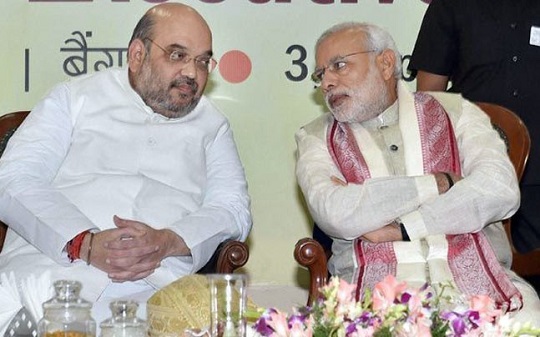
The swearing-in ceremony took place this morning at the Rashtrapati Bhavan where President Ram Nath Kovind administered oath to the new members of the Union Council of Ministers as well as those who were elevated to cabinet rank.

Shiv Pratap Shukla
A law graduate from Gorakhpur University, Shiv Pratap Shukla started off his political journey as a student leader in the 1970s. He is a Rajya Sabha MP from Uttar Pradesh and currently a member of the Parliamentary Standing Committee on Rural Development. Shukla was elected a member of the Uttar Pradesh Legislative Assembly for 4 consecutive times in 1989, 1991, 1993 and 1996 and is known for his work in Rural Development, Education and Prison reform during his tenure.

Ashwini Kumar Choubey
A Lok Sabha MP from Buxar, Bihar, Choubey has been credited to have raised the slogan "Ghar-ghar me ho shouchalaya ka nirman, tabhi hoga ladli bitiya ka kanyadaan". He has helped construct 11,000 toilets for Mahadalit families.  He is member of the Parliamentary Committee on Estimates and Standing Committee on Energy and also of Member of Central Silk Board.

He has been elected for 5 consecutive terms to the Bihar Legislative Assembly and held important portfolios including Health, Urban Development and Public Health Engineering as a Cabinet Minister of Bihar government for 8 years. A BSc (Hons) in Zoology, he started early in politics as the president of the Student`s Union of Patna University and also took active part in the JP movement in the 1970s.

Virendra Kumar
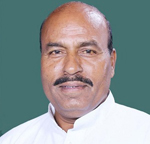
A Lok Sabha MP from Tikamgah, Madhya Pradesh, he has had a distinguished career in public service as a 6 term Lok Sabha MP.

Currently is the chairperson of the Parliamentary Standing Committee on Labour. Armed with an MA in Economics and a PhD in Child Labour, Kumar Kumar had actively participated in the JP movement of the 1970s, and went to jails for 16 months under MISA during the Emergency.

Anantkumar Hegde
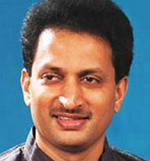
A member of the Parliamentary Standing Committee on External Affairs and Human Resource Development, Hegde is a Lok Sabha MP from Uttara Kannada, Karnataka. He was elected as an MP for the first time at the young age of 28 years and is now 5th term Lok Sabha MP.  During his multiple stints in Parliament, he has been a member of multiple Parliamentary Standing Committees. He is a practitioner of Tae-kwon-do and Korean Martial Art.

Raj Kumar Singh
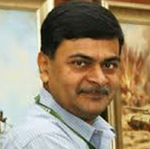
A Lok Sabha MP from Arrah, Bihar, Raj Kumar Singh serves on Parliamentary Standing Committees on Health and Family Welfare, Personnel, Pensions and Public Grievances and Law & Justice.

He is a former top bureaucrat, retiring as the Home Secretary of India. He also had experience of serving in the Bihar Home Department and also been associated with other fields including public works, agriculture and industries.

Hardeep Singh Puri
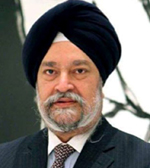
Hardeep Singh Puri is a former diplomat and has represented India at the United Nations as the  ambassador and permanent representative. He has been the Indian ambassadors to several nations, including Brazil and United Kingdom. Before being inducted in to the Indian Foreign Service in 1974, Puri was a student leader in Delhi and was active during the Jayaprakash Narayan movement years.

During his four-decade IFS career, Puri also served as the chairman of the Counter-Terrorism Committee of the UN. He is currently the President and chairman of the Research and Information System for Developing Countries, a Delhi-based think tank.

Gajendra Singh Shekhawat
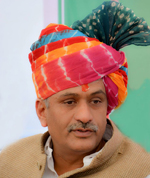
A Lok Sabha MP from Jodhpur, Rajasthan, Gajendra Singh Shekhawat is on the Parliamentary Standing Committee on Finance and is the chairperson of the Fellowship Committee. He is also known to be closely connected to sports, having participated in national and all-India university-level in basketball competitions. Shekhawat is also a member of the All India Council of Sports and the president of the Basketball India Players Association.

Satya Pal Singh
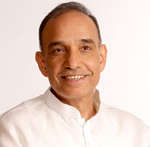
A former Indian Police Services officer, Satya Pal Singh is currently is a Lok Sabha MP from Baghpat, Uttar Pradesh. He serves on Parliamentary Standing Committee on Home Affairs and is also the chairperson of the Joint Committee on Offices of Profit.

He has been involved in anti-Naxal operations in Andhra Pradesh and Madhya Pradesh and was even awarded with Special Service Medal for his tenure in these areas. He has served as the Commissioner of Police in Mumbai and Pune and holds an MBA, MA and a PhD, the latter in Naxalism.

Alphons Kannanthanam
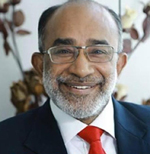
A former bureaucrat and a practising advocate Alphons Kannanthanam was once listed on the TIME Magazine's list of 100 Young Global Leaders. During his stint as an Indian Administrative Services officer,  Kannanthanam was responsible for turning Kottayam in Kerala into India's first 100 per cent literate town, in 1989.

He also served in Delhi, where he became known for launching a drive to rid Delhi Development Authority areas of around 15,000 illegal buildings. The 1979 IAS batch officer retired has some political experience, serving as an independent in the Kerala Assembly from 2006 to 2011. His most recent brush with policy was when he was part of the committee that prepared the final draft of the National Education Policy 2017.


Comments

Add new comment

  • Coastaldigest.com reserves the right to delete or block any comments.
  • Coastaldigset.com is not responsible for its readers’ comments.
  • Comments that are abusive, incendiary or irrelevant are strictly prohibited.
  • Please use a genuine email ID and provide your name to avoid reject.
News Network
December 16,2025

bengal.jpg

The deletion of over 58 lakh names from West Bengal’s draft electoral rolls following a Special Intensive Revision (SIR) has sparked widespread concern and is likely to deepen political tensions in the poll-bound state.

According to the Election Commission, the revision exercise has identified 24 lakh voters as deceased, 19 lakh as relocated, 12 lakh as missing, and 1.3 lakh as duplicate entries. The draft list, published after the completion of the first phase of SIR, aims to remove errors and duplication from the electoral rolls.

However, the scale of deletions has raised fears that a large number of eligible voters may have been wrongly excluded. The Election Commission has said that individuals whose names are missing can file objections and seek corrections. The final voter list is scheduled to be published in February next year, after which the Assembly election announcement is expected. Notably, the last Special Intensive Revision in Bengal was conducted in 2002.

The development has intensified the political row over the SIR process. Chief Minister Mamata Banerjee and her Trinamool Congress have strongly opposed the exercise, accusing the Centre and the Election Commission of attempting to disenfranchise lakhs of voters ahead of the elections.

Addressing a rally in Krishnanagar earlier this month, Banerjee urged people to protest if their names were removed from the voter list, alleging intimidation during elections and warning of serious consequences if voting rights were taken away.

The BJP, meanwhile, has defended the revision and accused the Trinamool Congress of politicising the issue to protect what it claims is an illegal voter base. Leader of the Opposition Suvendu Adhikari alleged that the ruling party fears losing power due to the removal of deceased, fake, and illegal voters.

The controversy comes amid earlier allegations by the Trinamool Congress that excessive work pressure during the SIR led to the deaths by suicide of some Booth Level Officers (BLOs), for which the party blamed the Election Commission. With the draft list now out, another round of political confrontation appears imminent.

As objections begin to be filed, the focus will be on whether the correction mechanism is accessible, transparent, and timely—critical factors in ensuring that no eligible voter is denied their democratic right ahead of a crucial election.

Comments

Add new comment

  • Coastaldigest.com reserves the right to delete or block any comments.
  • Coastaldigset.com is not responsible for its readers’ comments.
  • Comments that are abusive, incendiary or irrelevant are strictly prohibited.
  • Please use a genuine email ID and provide your name to avoid reject.
News Network
December 22,2025

The Bharatiya Janata Party (BJP) received ₹6,654.93 crore in donations during the 2024-25 financial year — a Lok Sabha election year — registering a 68 per cent increase over the previous fiscal.

In its annual contribution report submitted to the Election Commission on December 8, two days ahead of the deadline, the BJP disclosed all donations exceeding ₹20,000. The report, now available on the Commission’s website, covers contributions received between April 1, 2024 and March 30, 2025 — a period marked by the general election and Assembly polls in Arunachal Pradesh, Sikkim, Andhra Pradesh, Odisha, Jammu and Kashmir, Haryana, Jharkhand, Maharashtra and Delhi.

The BJP, the world’s largest political party by membership, had reported donations of ₹3,967 crore in 2023-24. The latest figures represent the party’s highest donation receipts in the last five years.

Electoral trusts accounted for around 40 per cent of the BJP’s total donations. The Prudent Electoral Trust contributed ₹2,180 crore, followed by the Progressive Electoral Trust with ₹757 crore and the New Democratic Electoral Trust with ₹150 crore. Contributions from other electoral trusts together amounted to ₹3,112.5 crore. The remaining funds came from corporate donors and individuals. Electoral trusts are entities set up by companies to channel donations to political parties.

Among major corporate contributors, Serum Institute of India donated ₹100 crore, Rungta Sons Private Limited ₹95 crore, Vedanta ₹67 crore, and Macrotech Developers (formerly Lodha Developers) ₹65 crore. Three Bajaj Group companies together contributed ₹65 crore, while Derive Investments donated ₹50 crore.

Other notable donors included Malabar Gold (₹10 crore), Kalyan Jewellers (₹15.1 crore), Hero Group (₹23.65 crore), Dilip Buildcon Group (₹29 crore), ITC Limited (₹35 crore), Wave Industries (₹5.25 crore) and Zerodha’s investment firm, promoted by Nikhil Kamath, which contributed ₹1.5 crore.

Several BJP leaders also made individual donations. Assam Chief Minister Himanta Biswa Sarma donated ₹3 lakh, Assam minister Pijush Hazarika ₹2.75 lakh, Union Education Minister Dharmendra Pradhan ₹1 lakh, Odisha Chief Minister Mohan Charan Majhi ₹5 lakh, Indore Mayor Pushyamitra Bhargava ₹1 lakh, and Akash Vijayvargiya, son of senior BJP leader Kailash Vijayvargiya, also donated ₹1 lakh, among others.

In contrast, most opposition parties reported a sharp decline in donations. The Congress received ₹522.13 crore in 2024-25, a fall of about 43 per cent from ₹1,129 crore in the previous year. The Trinamool Congress saw donations drop to ₹184.08 crore from ₹618.8 crore, while the Bharat Rashtra Samithi reported just ₹15.09 crore, down from ₹580 crore.

The Aam Aadmi Party, however, recorded an increase, collecting ₹39.2 crore compared to ₹22.1 crore last year. The Telugu Desam Party received ₹85.2 crore in donations, down from ₹274 crore, but also earned ₹102 crore through fees and subscriptions. The Biju Janata Dal reported ₹60 crore in donations, compared to ₹246 crore in the previous fiscal.

The 2024-25 financial year is also the first without electoral bonds, after the Supreme Court struck down the scheme as unconstitutional in February 2024. Since its introduction in 2018, the electoral bond scheme had enabled political parties to receive over ₹16,000 crore in anonymous donations, with the BJP receiving the largest share. 

Comments

Add new comment

  • Coastaldigest.com reserves the right to delete or block any comments.
  • Coastaldigset.com is not responsible for its readers’ comments.
  • Comments that are abusive, incendiary or irrelevant are strictly prohibited.
  • Please use a genuine email ID and provide your name to avoid reject.
News Network
December 22,2025

bhagavat.jpg

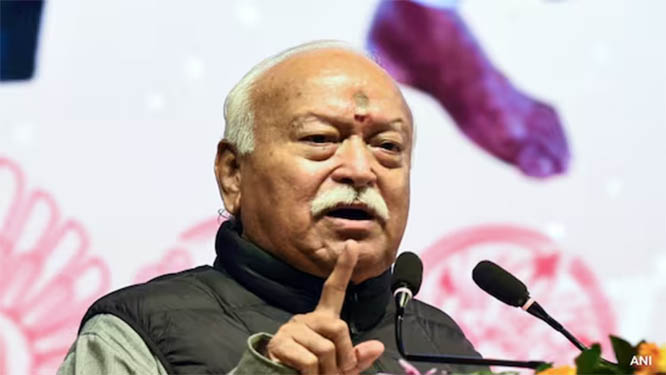
Kolkata: Stressing that India is a "Hindu nation," Rashtriya Swayamsevak Sangh (RSS) Chief Mohan Bhagwat on Sunday said that no constitutional approval is needed as it is the "truth".

Addressing an event marking 100 years of the RSS, Bhagwat said that India is, and will remain, a Hindu nation until Indian culture is appreciated in the country.

"The Sun rises in the east; we don't know since when this has been happening. So, do we need constitutional approval for that, too? Hindustan is a Hindu nation. Whoever considers India their motherland appreciates Indian culture, as long as there is even one person alive on the land of Hindustan who believes in and cherishes the glory of Indian ancestors, India is a Hindu nation. This is the ideology of the Sangh," he said at the '100 Vyakhyan Mala' program of RSS in Kolkata.

"If Parliament ever decides to amend the Constitution and add that word, whether they do it or not, it's fine. We don't care about that word because we are Hindus, and our nation is a Hindu nation. That is the truth. The caste system based on birth is not the hallmark of Hindutva," he added.

RSS has always argued that India is a "Hindu Nation," given the culture and majority's affiliations to Hinduism. However, 'secular' was not originally part of the Preamble of the Constitution, but it was added along with the word 'socialist' by the Constitution (42nd Amendment) Act, 1976, during the Emergency imposed by then Prime Minister Indira Gandhi.

Bhagwat also urged people to visit the organisation's offices and 'shakhas' to understand its work, so that what he dubbed as the “false perception” of the organisation as anti-Muslim can be dispelled!

Bhagwat said that people have understood that the organisation advocates for the protection of Hindus, and are "staunch nationalists," but not anti-muslim.

"If there is a perception that we are anti-Muslim, then, as I said, the RSS work is transparent. You can come anytime and see for yourself, and if you see anything like that happening, then you keep your views, and if you don't see it, then you change your views. There is a lot to understand (about RSS), but if you don't want to understand, then no one can change your mind," Bhagwat said.

He said, but anyone unwilling to learn cannot be helped.

"After seeing, people have said that you are staunch nationalists. You organise Hindus, and you advocate for the protection of Hindus. But you are not anti-Muslim. Many people have accepted this, and those who want to know more should come and see the RSS for themselves," he said.

Comments

Add new comment

  • Coastaldigest.com reserves the right to delete or block any comments.
  • Coastaldigset.com is not responsible for its readers’ comments.
  • Comments that are abusive, incendiary or irrelevant are strictly prohibited.
  • Please use a genuine email ID and provide your name to avoid reject.