



Campaigning for marathon Lok Sabha elections finally ends

May 10, 2014
New Delhi, May 10: Campaigning in the bitterly fought marathon elections for the 16th Lok Sabha spread over five weeks drew to a close today as top leaders sought to muster a final show of strength in the ninth and concluding phase for 41 seats in three states that included Varanasi where Narendra Modi and Arvind Kejriwal are in the fray.

campaign
The campaign marked by attacks and counter-attacks by leaders across the political spectrum and use of derogatory language sometimes through the 9 phases ended at 6 PM for 18 seats in Uttar Pradesh, 17 in West Bengal and six in Bihar. Voting will take place on Monday.

Counting of votes in the world's largest exercise in democracy in which voters have turned up in large numbers will be taken up on May 16 with opinion polls projecting BJP of which Narendra Modi is the Prime Ministerial candidate to be the single largest party.

The ninth phase will witness the mother of all contests in Varanasi involving Modi, the Gujarat Chief Minister, and Kejriwal, the Aam Aadmi Party (AAP) chief. Five-time MLA from UP Ajay Rai is the Congress candidate. Modi is also fighting from Vadodara in his home state of Gujarat.

Polling was by and large peaceful in the previous eight phases barring incidents of Maoist violence in Chattisgarh and Jharkand.

The country registered a record turnout of voters, surpassing the previous record in 1984, as 66.27 per cent voting was reported in 502 Lok Sabha seats where polling has been conducted in eight phases that began on April 7. The 2009 elections recorded a 57.94 per cent turnout.

Modi spearheaded the BJP challenge and criss-crossed the country addressing scores of rallies besides holding innovative 'chai par charcha' meetings and also 3D video campaign.

The Nehru-Gandhi family made a vigorous push for votes with Rahul, his mother and Congress President Sonia Gandhi, and his sister Priyanka Gandhi leading the party challenge.

Sonia and Rahul are contesting from the family pocketborough in Rae Bareli and Amethi in UP where the Congress Vice President is pitted against BJP's actor-turned-politician Smriti Irani and AAP's youth leader Kumar Vishwas.

A total of 606 candidates are in the fray for the ninth phase--328 in UP, 188 in West Bengal and 90 in Bihar.

All the 18 parliamentary constituencies in UP that goes to polls on Monday are in the eastern part of the politically crucial state where 80 seats are at stake. OBCs, Muslims and Dalits form a significant part of electorate there.

This includes Azamgarh from where SP President Mulayam Singh Yadav is among the candidates. The former UP Chief Minister is contesting from eastern UP for the first time besides being in the fray from his traditional Mainpuri seat.

Union Minister and Congress leader RPN Singh and Congress turncoat Jagdambika Pal, who joined BJP recently, mafia-don turned politician Mokhtar Ansari, senior BJP leader Kalraj Mishra, Yogi-turned politician Yogi Adityanath, Bhojpuri movie star Ravi Kishan and former Prime Minister Chandrashekhar's son Neeraj Shekhar are among other candidates in the fray in UP.

In West Bengal, prominent TMC candidates in the race are Sudip Bandyopadhyay, Dinesh Trivedi and Sougata Roy besides celebrities like actors Dipak Adhikari (Dev) and Tapas Paul.

Trinamool Yuva President Abhishek Banerjee, nephew of Chief Minister Mamata Banerjee, is also in the fray.

On the rival side, CPI-M's Subhasini Ali is among the key candidates.

BJP nominee magician P C Sorcar (Junior) and WBPCC President Adhir Chowdhury, besides former West Bengal Finance Minister Asim Dasgupta of the CPI-M and former Union minister Tapan Sikdar of the BJP, pitted against each other in Dum Dum, are the key contestants in the last phase.

In Bihar, filmmaker Prakash Jha and former union minister Raghubansh Prasad Singh are among the 90 contestants.

During the course of the no-holds barred campaign, the Election Commission also came under attack from BJP and Samajwadi Party.

The EC was targeted by BJP over denial of permission for Modi's rally at the venue it wanted in Varanasi while it incurred the wrath of UP's ruling party in connection with the ban on Azam Khan from campaigning following his alleged hate speeches.

Modi's close aide Amit Shah, who is UP's BJP incharge, was also banned by EC from campaigning over an alleged hate speech. The ban was later lifted.

Comments

Add new comment

  • Coastaldigest.com reserves the right to delete or block any comments.
  • Coastaldigset.com is not responsible for its readers’ comments.
  • Comments that are abusive, incendiary or irrelevant are strictly prohibited.
  • Please use a genuine email ID and provide your name to avoid reject.
News Network
December 6,2025

indigoticket.jpg

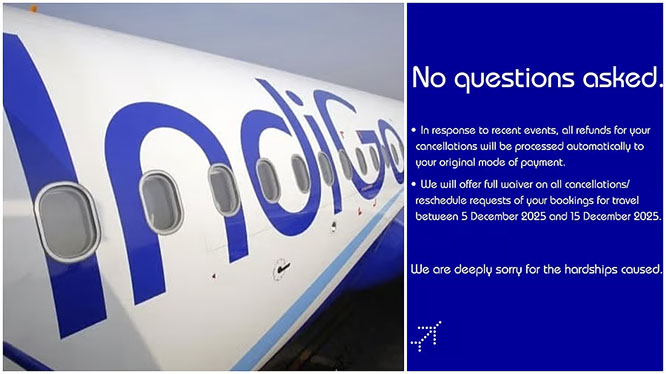
With IndiGo flight disruptions impacting thousands of passengers, the airline on Saturday said that it will offer full waiver on all cancellations/reschedule requests for travel bookings between December 5, 2025 and December 15, 2025.

Earlier in the day, the civil aviation ministry had directed the airline to complete the ticket refund process for the cancelled flights by Sunday evening, as well as ensure baggage separated from the travellers are delivered in the next two days.

In a post on X, titled 'No questions asked', IndiGo wrote, "In response to recent events, all refunds for your cancellations will be processed automatically to your original mode of payment."

"We are deeply sorry for the hardships caused," it further added.

Several passengers, however, complained of not getting full refund as promised by the airline.

Netizens have shared screenchots of getting charged for airline cancellation fee and convenience fee.

"Please tell me why u have did this airline cancellation charges when u say full amount will be refunded (sic)," a user wrote sharing a screenshot of the refund page.

"Well, but you have still debited the convenience charges," wrote another.

Passengers have also raised concerns about the "cancel" option being disabled on the IndiGo app. "First enable the 'Cancel' button on your App & offer full refund on tickets cancelled by customers between the said dates," wrote a user.

A day after the country's largest airline, IndiGo, cancelled more than 1,000 flights and caused disruptions for the fifth day on Saturday, the ministry said that any delay or non-compliance in refund processing will invite immediate regulatory action.

The refund process for all cancelled or disrupted flights must be completed by 8 pm on Sunday, the ministry said in a statement.

"Airlines have also been instructed not to levy any rescheduling charges for passengers whose travel plans were affected by cancellations," it said.

On Saturday, more than 400 flights were cancelled at various airports.

IndiGo has also been instructed to set up dedicated passenger support and refund facilitation cells.

Comments

Add new comment

  • Coastaldigest.com reserves the right to delete or block any comments.
  • Coastaldigset.com is not responsible for its readers’ comments.
  • Comments that are abusive, incendiary or irrelevant are strictly prohibited.
  • Please use a genuine email ID and provide your name to avoid reject.
News Network
December 13,2025

New Delhi: School-going children are picking up drug and smoking habits and engaging in consumption of alcohol, with the average age of introduction to such harmful substances found to be around 13 years, suggesting a need for earlier interventions as early as primary school, a multi-city survey by AIIMS-Delhi said.

The findings also showed substance use increased in higher grades, with grade XI/XII students two times more likely to report use of substances when compared with grade VIII students. This emphasised the importance of continued prevention and intervention through middle and high school.

The study led by Dr Anju Dhawan of AIIMS's National Drug Dependence Treatment Centre, published in the National Medical Journal of India this month, looks at adolescent substance use across diverse regions.

The survey included 5,920 students from classes 8, 9, 11 and 12 in urban government, private and rural schools across 10 cities -- Bengaluru, Chandigarh, Delhi, Dibrugarh, Hyderabad, Imphal, Jammu, Lucknow, Mumbai, and Ranchi. The data were collected between May 2018 and June 2019.

The average age of initiation for any substance was 12.9 (2.8) years. It was lowest for inhalants (11.3 years) followed by heroin (12.3 years) and opioid pharmaceuticals (without prescription; 12.5 years).

Overall, 15.1 per cent of participants reported lifetime use, 10.3 per cent reported past year use, and 7.2 per cent reported use in the past month of any substance, the study found.

The most common substances used in the past year, after tobacco (4 per cent) and alcohol (3.8 per cent), were opioids (2.8 per cent), followed by cannabis (2 per cent) and inhalants (1.9 per cent). Use of non-prescribed pharmaceutical opioids was most common among opioid users (90.2 per cent).

On being asked, 'Do you think this substance is easily available for a person of your age' separately for each substance category, nearly half the students (46.3 per cent) endorsed that tobacco products and more than one-third of the students (36.5 per cent) agreed that a person of their age can easily procure alcohol products.

Similarly, for Bhang (21.9 per cent), ganja/charas (16.1 per cent), inhalants (15.2 per cent), sedatives (13.7 per cent), opium and heroin (10 per cent each), the students endorsed that these can be easily procured.

About 95 per cent of the children, irrespective of their grade, agreed with the statement that 'drug use is harmful'.

The rates of substance use (any) among boys were significantly higher than those of girls for substance use (ever), use in the past year and use in the past 30 days. Compared to grade VIII students, grade IX students were more likely, and grade XI/XII students were twice as likely to have used any substance (ever).

The likelihood of past-year use of any substance was also higher for grade IX students and for grade XI/XII students as compared to grade VIII students.

About 40 per cent of students mentioned that they had a family member who used tobacco or alcohol each. The use of cannabis (any product) and opioid (any product) by a family member was reported by 8.2 per cent and 3.9 per cent of students, respectively, while the use of other substances, such as inhalants/sedatives by family was 2-3 per cent, the study found.

A relatively smaller percentage of students reported use of tobacco or alcohol among peers as compared to among family members, while a higher percentage reported inhalants, sedatives, cannabis or opioid use among peers.

Children using substances (past year) compared to non-users reported significantly higher any substance use by their family members and peers.

There were 25.7 per cent students who replied 'yes' to the question 'conflicts/fights often occur in your family'. Most students also replied affirmatively to 'family members are aware of how their time is being spent' and 'damily members are aware of with whom they spend their time'.

Comments

Add new comment

  • Coastaldigest.com reserves the right to delete or block any comments.
  • Coastaldigset.com is not responsible for its readers’ comments.
  • Comments that are abusive, incendiary or irrelevant are strictly prohibited.
  • Please use a genuine email ID and provide your name to avoid reject.
News Network
December 6,2025

pilot.jpg

New Delhi: IndiGo, India’s largest airline, faced major operational turbulence this week after failing to prepare for new pilot-fatigue regulations issued by the Directorate General of Civil Aviation (DGCA). The stricter rules—designed to improve flight safety—took effect in phases through 2024, with the latest implementation on November 1. IndiGo has acknowledged that inadequate roster planning led to widespread cancellations and delays.

Below are the key DGCA rules that affected IndiGo’s operations:

1. Longer Mandatory Weekly Rest

Weekly rest for pilots has been increased from 36 hours to 48 hours.

The government says the extended break is essential to curb cumulative fatigue. This rule remains in force despite the current crisis.

2. Cap on Night Landings

Pilots can now perform only two night landings per week—a steep reduction from the earlier limit of six.

Night hours, defined as midnight to early morning, are considered the least alert period for pilots.

Given the disruptions, this rule has been temporarily relaxed for IndiGo until February 10.

3. Reduced Maximum Night Flight Duty

Flight duty that stretches into the night is now capped at 10 hours.

This measure has also been kept on hold for IndiGo until February 10 to stabilize operations.

4. Weekly Rest Cannot Be Replaced With Personal Leave

Airlines can no longer count a pilot’s personal leave as part of the mandatory 48-hour rest.

Pilots say this closes a loophole that previously reduced actual rest time.

Currently, all airlines are exempt from this rule to normalise travel.

5. Mandatory Fatigue Monitoring

Airlines must submit quarterly fatigue reports along with corrective actions to DGCA.

This system aims to create a transparent fatigue-tracking framework across the industry.

The DGCA has stressed that these rules were crafted to strengthen flight safety and align India with global fatigue-management standards. The temporary relaxations are expected to remain until February 2025, giving IndiGo time to stabilise its schedules and restore normal air travel.

Comments

Add new comment

  • Coastaldigest.com reserves the right to delete or block any comments.
  • Coastaldigset.com is not responsible for its readers’ comments.
  • Comments that are abusive, incendiary or irrelevant are strictly prohibited.
  • Please use a genuine email ID and provide your name to avoid reject.
