



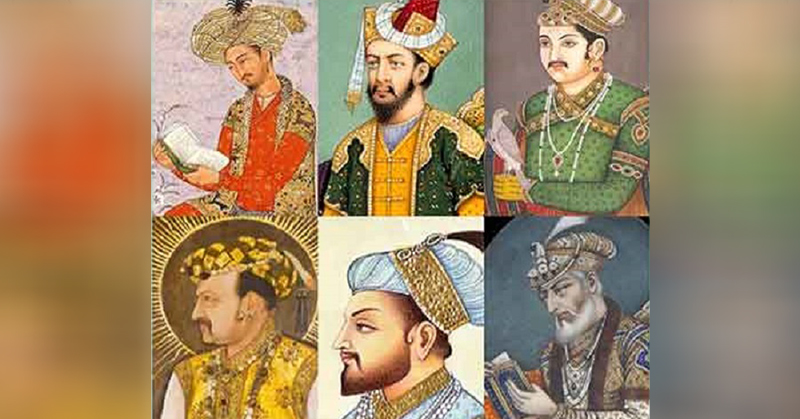
Was Mughal Rule really the period of India’s Slavery?

Ram Puniyani
September 30, 2020

mughal-rule.jpg

When James Mill periodized the Indian History into Hindu Period, Muslim Period and British period, he not only gave the tool to British to pursue their policy of ‘divide and rule’, he also gave the potent weapon to the future pursuers of communal politics to intensify the divisive policies in the future. The Muslim communalists later claimed that India was ruled by Muslims and Hindu communalists claimed that Muslims are foreigners and this has been the land of Hindus from times immemorial.

One was reminded of the deep penetration of this communal view of History when, Yogi Aditaynath, the CM of Uttar Pradesh announced that the upcoming Mughal Museum in Agra to be recast as Chatrapati Shivaji Maharaj Museum. As per him such a historical museum is a reflection of subservient mentality and the symbol of ‘mentality of slavery’. The Mughal Museum’s foundation was laid by Akhilesh Yadav, the earlier Chief Minister of UP. The Museum was to come up near TajMahal in Agra and was to show the cultural aspects and armaments of Mughal kings. The aim was to give a boost to tourism industry in UP.

Same Taj is downgraded now by the Hindu communalists. One P.N.Oak has been trying to propagate that it was Tajomahlaya, Shiv Tample, which was converted into Mausoleum by Shahjahan. The fact as recorded by Tavernier, a French Jeweller his travelogues tell us that Shahjahan built it in memory of his wife Mumtaj Mahal. The same is also inferred from the account books of Shahjahan’s Court, which give a details break of regular expenses for the construction of this tomb. The land was acquired from Raja Jaisingh with due compensation.

As Yogi came to power he omitted Taj from the places of importance in UP. His recent utterances that remembering Mughals is symbol of slave mentality are in tune with the communal ideology which regards Islam as alien religion and Muslims as foreigners. As such we see that Indian History has been looked up in three particular ways. One was the Gandhi-Nehru, Indian nationalist interpretation where India is a place of rich diversity. The Muslim kings who ruled parts of India ruled here and lived here as the part of the land. Most of the Muslim kings respected the diverse religious tradition prevailing here.

Mahatma Gandhi points out, “the Hindus flourished under Moslem sovereigns and Moslems under the Hindu. Each party recognized that mutual fighting was suicidal and that neither party would abandon its religion by force of arms. Both parties, therefore, decided to live in peace. With the English advent quarrels recommenced.”

Similarly Jawaharlal Nehru in his book Discovery of India shows the thick interaction between Hindus and Muslims leading to what he famously termed as ‘Ganga Jamani Tehjeeb’, the beautiful portrayal of this is seen in the serial Shyam Benegals’ ‘Bharat Ek Khoj’.

Does this period, in which some parts of the country were ruled by Muslim Kings, (not only Mughals, there were the ones’ from others dynasties also Ghulam, Khaljis, Gazanavid’s. and in South Bahamanis, Haider and Tipu) are a period of slavery? While some kings like Mahmud Gazanavi, Mohammad Ghori, Ghengis Khan did plunder for wealth, the kings who ruled here became the part of this land. They presided over a system of exploitation, like any other king, in which the producer was the farmer. This was true of any king, anywhere for that matter.

This period in no way can be called a period of slavery of the country. Country’s slavery begins with the British, who ruled here and plundered our wealth and implemented the policy of super exploitation of peasantry. Shashi Tharoor has done a good job (An Era of Darkness) in showing as to how India contributed nearly 23% of global GDP and British brought it down to mere 3% by the time they left. On the plus side of British rule was that while social structure did not change in pre British period, during British rule social changes towards democratic society did start taking place with the introduction of railways, communication, modern education, modern Judiciary etc.   

The communalists, Muslim and Hindus take off from the British in interpreting the History as a fight between Hindus and Muslims, and twisting it in a way where their own selves are shown to be the real owners of the land and also victims of the other community. The British plunder and impositions are hidden under the carpet in their scheme of understanding.

At yet another level Ambedkar sees the Indian History primarily as the clash between the values of equality of Buddhism against the caste and gender hierarchy inherent in Brahmanism.

All Hindus kings were not great and all Muslims kings were not villains. Akbar and Dara Shukoh stand out as upholders of diversity, picking up from other religions, while Shivaji ensured that the taxation on poor peasants is curtailed.

As such the real heroes of Independent India are those who contributed to building of Modern India. The three major streams of this are Gandhi, who united the country in the bond of anti colonial struggle, Ambedkar who endeavoured for social equality and democratic rights, and Bhagat Singh who stood for for the cause of poor while giving fighting against British rule in India. It is these values which should inspire the modern India and not the values of Kings, which are essentially based on social inequality and taxation of peasants. All the positive developments strengthening pluralism and diversity with equality are the principles and values we need to look up to in times to come.

Mughal museum was just a small attempt to uphold the cultural background of our lived past and in no way symbol of subservience or of slave mentality. Unfortunately we are living in times where full attempts are going on to erase the symbols; like this upcoming Museum along with changing the names of cities (Allahabad, Faiazabad, Mughal Sarai), the Muslim contribution to Indian culture.


Comments

Add new comment

  • Coastaldigest.com reserves the right to delete or block any comments.
  • Coastaldigset.com is not responsible for its readers’ comments.
  • Comments that are abusive, incendiary or irrelevant are strictly prohibited.
  • Please use a genuine email ID and provide your name to avoid reject.
News Network
December 3,2025

indigo.jpg

IndiGo, India’s largest airline, is battling one of its worst operational disruptions in recent years, with hundreds of delays and cancellations throwing domestic travel into chaos.

Government data on Tuesday showed its on-time performance plunging to 35%, an unusual dip for a carrier long associated with punctuality.

By Wednesday afternoon, airports in Delhi, Mumbai, Bengaluru and Hyderabad had collectively reported close to 200 cancellations, stranding travellers across the country.

Crew Shortage After New Duty Norms

A major trigger behind the meltdown is a severe crew shortage, especially among pilots, following the rollout of revised Flight Duty Time Limitation (FDTL) norms last month.

The rules mandate longer rest hours and more humane rosters — a shift IndiGo has struggled to incorporate across its vast network.

Sources said several flights were grounded due to lack of cabin crew, while some delays stretched upwards of eight hours.

With IndiGo controlling over 60% of India’s domestic aviation market, the ripple effect has impacted airports nationwide.

IndiGo Issues Apology, Lists “Compounding Factors”

In a statement, IndiGo acknowledged the large-scale disruption:

“We sincerely apologise to customers. A series of unforeseen operational challenges — technology glitches, winter schedule changes, adverse weather, system congestion and updated FDTL norms — created a compounding impact that could not have been anticipated.”

To stabilise operations, the airline has begun calibrated schedule adjustments for the next 48 hours, aiming to restore punctuality. Affected passengers are being offered refunds or alternate travel arrangements, IndiGo said.

What the FDTL Rules Require

The FDTL norms, designed to reduce pilot fatigue, cap duty and flying hours as follows:
•    Maximum 8 hours of flying per day
•    35 hours per week
•    125 hours per month
•    1,000 hours per year

Crew must also receive rest equalling twice the flight duration, with a minimum 10-hour rest period in any 24-hour window.

The DGCA introduced these limits to enhance flight safety.

Hyderabad: 33 Flights Cancelled, Long Queues Reported

Hyderabad’s Rajiv Gandhi International Airport saw heavy early-morning crowds as 33 IndiGo flights (arrivals and departures) were cancelled.

The airport clarified on X that operations were normal, advising passengers to contact IndiGo directly for latest flight status.

Cancellations included flights to and from Visakhapatnam, Goa, Ahmedabad, Delhi, Bengaluru, Chennai, Madurai, Hubli, Bhopal and Bhubaneswar.

Bengaluru: 42 Flights Disrupted

Bengaluru’s Kempegowda International Airport recorded 42 cancellations — 22 arrivals and 20 departures — affecting routes to Delhi, Mumbai, Chennai, Hyderabad, Goa, Kolkata and Lucknow.

Passengers Vent on Social Media

Irate travellers took to X to share their experiences. One passenger stranded in Hyderabad wrote: “I have been here since 3 a.m. and missed an important meeting.”

Another said: “My flight was pushed from 1:55 PM to 2:55 PM and now 4:35 PM. I was informed only three minutes before entering the airport.”

Delhi Airport Hit by Tech Glitch

At Delhi Airport, the disruption deepened due to a slowdown in the Amadeus system — used for reservations, check-ins and departure control.

The technical issue led to longer queues and sluggish processing, adding to delays already worsened by staff shortages.

Comments

Add new comment

  • Coastaldigest.com reserves the right to delete or block any comments.
  • Coastaldigset.com is not responsible for its readers’ comments.
  • Comments that are abusive, incendiary or irrelevant are strictly prohibited.
  • Please use a genuine email ID and provide your name to avoid reject.
News Network
November 26,2025

students.jpg

Bengaluru, Nov 26: Karnataka is taking its first concrete steps towards lifting a three-decade-old ban on student elections in colleges and universities. Deputy Chief Minister D.K. Shivakumar announced Wednesday that the state government will form a small committee to study the reintroduction of campus polls, a practice halted in 1989 following incidents of violence.

Speaking at a 'Constitution Day' event organised by the Karnataka Congress, Mr. Shivakumar underscored the move's aim: nurturing new political leadership from the grassroots.

"Recently, (Leader of the Opposition in Lok Sabha) Rahul Gandhi wrote a letter to me and Chief Minister (Siddaramaiah) asking us to think about restarting student elections," Shivakumar stated. "I'm announcing today that we'll form a small committee and seek a report on this."

Student elections were banned in Karnataka in 1989, largely due to concerns over violence and the infiltration of political party affiliates into campus life. The ban effectively extinguished vibrant student bodies and the pipeline of young leaders they often produced.

Mr. Shivakumar, who also serves as the Karnataka Congress president, said that former student leaders will be consulted to "study the pros and cons" of the re-introduction.

Acknowledging the history of the ban, he added, "There were many criminal activities taking place back then. We’ll see how we can conduct (student) elections by regulating such criminal activities."

The Deputy CM reminisced about his own journey, which began on campus. He recalled his political activism at Sri Jagadguru Renukacharya College leading to his first Assembly ticket in 1985 at the age of 23. "That's how student leadership was at the time. Such leadership has gone today. College elections have stopped," he lamented, adding that for many, college elections were "like a big movement" where leaders were forged.

The move, driven by the Congress high command's push to cultivate young talent, will face scrutiny from academics and university authorities who have, in the past, expressed concern that the return of polls could disrupt the peaceful academic environment and turn campuses into political battlegrounds.

Comments

Add new comment

  • Coastaldigest.com reserves the right to delete or block any comments.
  • Coastaldigset.com is not responsible for its readers’ comments.
  • Comments that are abusive, incendiary or irrelevant are strictly prohibited.
  • Please use a genuine email ID and provide your name to avoid reject.
News Network
November 27,2025

Bengaluru, Nov 27: Karnataka Chief Minister Siddaramaiah’s camp is reportedly on alert as the Congress leadership tussle in the state intensifies, particularly amid speculation over the potential promotion of Deputy Chief Minister D.K. Shivakumar. Siddaramaiah is said to be in a “wait-and-watch” mode after admitting to “confusion” earlier this week and urging the party to “put a full stop” to it.

Sources say his supporters are ready to act if senior leaders — including party chief Mallikarjun Kharge, Sonia Gandhi, and Rahul Gandhi — give any indication of backing Shivakumar. If the party insists on a leadership change, Siddaramaiah’s camp has a list of alternatives, underscoring the deep rift between the two leaders. One possible candidate is Home Minister G. Parameshwara, a Siddaramaiah loyalist and influential Dalit leader.

The strategy was reportedly finalized at a meeting led by PWD Minister Satish Jarkiholi, another Siddaramaiah supporter, who stressed that Delhi leaders need to resolve the issue. Kharge and the Gandhis are expected to meet soon, after which Siddaramaiah and Shivakumar may be summoned to Delhi.

Shivakumar has largely stayed non-confrontational, publicly endorsing Siddaramaiah and downplaying speculation about his own ambitions. However, he has made pointed comments emphasizing the importance of honoring promises, directed at Siddaramaiah.

The feud traces back to the 2023 state election, when Siddaramaiah was chosen as Chief Minister while Shivakumar, who led the party’s campaign, was made Deputy CM and state party chief — a departure from the Congress’ usual “one post per person” rule.

There were also hints of a prior understanding that Siddaramaiah would step down midway through the term. As the halfway mark passed last week, Shivakumar-aligned lawmakers have ramped up pressure on the party for a leadership change, with Shivakumar himself hinting at stepping down as state party chief to pursue the top job.

Comments

Add new comment

  • Coastaldigest.com reserves the right to delete or block any comments.
  • Coastaldigset.com is not responsible for its readers’ comments.
  • Comments that are abusive, incendiary or irrelevant are strictly prohibited.
  • Please use a genuine email ID and provide your name to avoid reject.