



Coming soon: Tamper-proof e-passports to speed up travel

October 13, 2014

Pune, Oct 13: The passport division of the ministry of external affairs has initiated the process for the public roll-out of new-age e-passports. The technology will make the document more secure and also substantially reduce the time required by the holder for immigration.

electronic passports3
While the look and feel of the passport will remain largely as it is now, an electronic chip, containing identidfication data, will be embedded in its back cover. The necessary procurements have been initiated by India Security Press, Nashik, and the actual change-over to the next-generation passport is expected to begin in the first quarter of 2016.

The e-passport would contain all the data currently given on the second page of the paper-only passports, including photograph, personal and biological data (finger-prints), besides the country's digital signature used to validate the genuineness of the document. The chip can be sealed only once with the signature of the Passport Issuing Authority (PIA), thus making these e-passports virtually tamper-proof.
While e-passports are a norm in more than a 100 countries already, India has so far tested their success on only a few diplomatic and official passports since 2008. The e-passports to be issued now are expected to be technologically superior to those launched on an experimental basis, yet are unlikely to cost more than the fees levied currently for the issuance of a normal passport.
Anil Kumar Sobti, director of the passport division, said that e-passports will help people save considerable time spent waiting in queues at immigration counters in India and abroad. "The traveller needs to only swipe the passport at the designated machine and all data stored in the chip will be instantly visible to the officer concerned. These passports will also help in data mining as every traveller's footprint can be tracked down to the last immigration counter. These will also be handy in case of emergencies that require evacuation of Indian nationals from a foreign country".

Muktesh K. Pardeshi, joint secretary in the MEA and chief passport officer said, "The e-passport is a recommended practice of the International Civil Aviation Organization (ICAO). Though it is not mandatory, we have already introduced them at a small scale on a few passports. We have also undertaken feasibility studies of implementing the ICAO guidelines regarding the same on the national scale".

Comments

Add new comment

  • Coastaldigest.com reserves the right to delete or block any comments.
  • Coastaldigset.com is not responsible for its readers’ comments.
  • Comments that are abusive, incendiary or irrelevant are strictly prohibited.
  • Please use a genuine email ID and provide your name to avoid reject.
News Network
December 7,2025

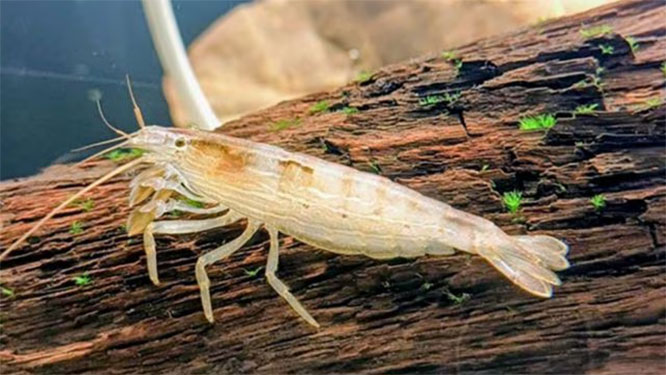
SHRIMP.jpg

Mangaluru, Dec 7: A rare bamboo shrimp has been rediscovered on mainland India more than 70 years after it was last reported, confirming for the first time the presence of Atyopsis spinipes in the country. The find was made by researchers from the Centre for Climate Change Studies at Sathyabama Institute of Science and Technology, Chennai, during surveys in Karnataka and Odisha.

The team — shrimp expert Dr S Prakash, PhD scholar K Kunjulakshmi, and Mangaluru-based researcher Maclean Antony Santos — combined field surveys, ecological assessments and DNA analysis to identify the elusive species. Their findings, published in Zootaxa, resolve decades of taxonomic confusion stemming from a 1951 report that misidentified the species as Atyopsis moluccensis without strong evidence.

The shrimp has now been confirmed at two locations: the Mulki–Pavanje estuary near Mangaluru and the Kuakhai River in Bhubaneswar. Historical specimens from the Andaman Islands, previously labelled as A. moluccensis, were also found to be misidentified and actually belong to A. spinipes.

The rediscovery began after an aquarium hobbyist in Odisha spotted a shrimp in 2022, prompting systematic surveys across Udupi, Karwar and Mangaluru. Four female specimens were collected in Mulki and one in Odisha, all genetically matching.

Researchers warn the species may exist in very small, vulnerable populations as freshwater habitats face increasing pressure from pollution, sand mining and infrastructure development. All verified specimens have been deposited with the Zoological Survey of India for future reference.

Comments

Add new comment

  • Coastaldigest.com reserves the right to delete or block any comments.
  • Coastaldigset.com is not responsible for its readers’ comments.
  • Comments that are abusive, incendiary or irrelevant are strictly prohibited.
  • Please use a genuine email ID and provide your name to avoid reject.