How business partners of Guj CM Anandiben’s daughter landed a good deal

February 5, 2016

New Delhi, Feb 5: Business associates of Anar Jayesh Patel, 45, daughter of Gujarat Chief Minister Anandiben Patel, own a company that's sitting on 400 acres of land near the Gir lion sanctuary in the state —and 250 acres of that land was given to that company at an official rate of Rs 15 per square metre.
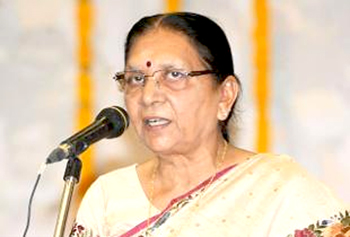
anandiben
Anar Patel describes herself as a social worker and an entrepreneur. Filings with the Registrar of Companies (RoC), accessed by ET, show a number of transactions between her and her business partners that started when the Gujarat government allotted 250 acres of public land in 2010-11 to Wildwoods Resorts and Realties.

Wildwoods' current promoters, Dakshesh Shah and Amol Shripal Sheth, are business partners of Anar Patel. ET sent questions to all involved, the CM, her daughter, Anar's business partners and Gujarat revenue secretary. There was no response from the Gujarat government.

Anar Patel, Shah and Sheth responded to ET and insisted all transactions were above board. ET also spoke to Sanjay Dhanak, the original promoter of Wildwoods. The land is in Gujarat's Amreli district, next to the lion sanctuary at Gir, and therefore an attractive commercial proposition.

Wildwoods also received government nod to purchase a further 172 acres of agricultural land, as well as approval to change land use from agricultural to non-agricultural.


Anandiben Patel was the Gujarat revenue minister at that time. The revenue department is the nodal authority for such land allotments.

Anandiben retains the revenue portfolio as chief minister. Her office did not respond to ET's questions. Her office and that of the state revenue secretary did not respond to the question whether allotting such large land parcels to for-profit private enterprises was common official policy, especially when beneficiaries did not have a track record of setting up largescale facilities.

The original promoter of Wildwoods said plans to build a tourist resort on that land didn't work out. Current promoters insisted there were no proscriptions against building resorts in the area and that all regulatory clearances were obtained. No resort has been built so far.

WILDWOODS 1.0 & WILDWOODS 2.0

Wildwoods is owned by Parshva Texchem and Anil Infraplus Ltd. When the land allotment orders were issued in 2010, Wildwoods was owned by Dubai-based businessman Sanjay Dhanak. Shah and Sheth took control of the company in 2011-12.

Dhanak told ET that Wildwoods had applied for the land and had planned to build a tourist resort. Parshva and Anil Infraplus are co-investors in firms where Anar Patel has a substantial stake. ET's review of documents filed with the Registrar of Companies shows a host of transactions between companies that received the government's land allotment as well as other companies run by Shah and Sheth and companies where Anar Patel has significant equity presence.

Dhanak told ET he could not remember how much was paid for the 422 acres of land. Dakshesh Shah, too, did not elaborate on the issue. He also told ET he was not aware how much Wildwoods had paid for the 422 acres since he bought into the firm in 2011 and was "not aware of previous transactions".

Dhanak, however, told ET that Shah was his partner at the time of allotment and that "he has all the books that detail all the transactions including how much was paid to change land use".


Dhanak told ET that after the allotment he changed his mind about setting up a tourist resort and wanted to cash out. "Jama nahi(My plans did not work out). Shah did not want me to sell my stake in the market and insisted I transfer it to him," he said. Dhanak said he has never been in the business of setting up resorts and only has a jewellery business in Dubai.

In an emailed response to ET, Dakshesh Shah said Wildwoods promoters weren't aware of any official advisory against building resorts in that area. He also said: "The original promoter had acquired all permissions from the respective regulatory bodies relating to land development. After acquisition of stake, no further permissions/relaxations have been given."

Shah also said he was not aware how much Wildwoods had originally paid the government for the land or the amount spent as land conversion charges. A spokesperson for Amol Sheth also did not disclose the amount Wildwoods paid. Neither did he disclose how much current promoters paid to the original promoter of Wildwoods.

MANY TRANSACTIONS

Dakshesh Shah is Anar Patel's business partner with a 50% stake in Patel's company, Anar Project. Besides, Shah's firm Parshva Texchem, which co-owns Wildwoods, is also a substantial shareholder in Anar Patel's Relish Pharmaceuticals. Shah and Anar Patel are also directors in Anar Project, Relish Pharma and 24x7 Fitness.


"Mr Dakshesh R Shah is one of my business partners. Mr Shah and me are joint promoters in Relish Pharma and he has invested in Relish Pharma from Parshva Texchem & Ms Renuka is investor in Relish Pharma," Anar Patel said in an email response to ET.

Shah told ET that Anar Patel is his business partner. He did not elaborate on the details of their dealings. "I am a businessman and I do invest in prospective projects when I find the opportunity," he said. Shah also said Wildwoods has had no financial dealings with any firm associated with Anar Patel. However, RoC filings tell a different story:

1. Anar Project filings show a "payable" of Rs 10 lakh to Wildwoods.

2. Innovative Infraplus, majority owned by Shah, advanced a Rs 2.95-crore loan to Anar Project and Rs 20 lakh to Anar Patel herself.

3. Innovative Infraplus, where Anar Project has a substantial stake, received an "advance" of Rs 8.73 crore from Amol Sheth's Anil Ltd as well as Rs 11.015 crore from Anil Mega Food Park.

4. Innovative also lists Anil Infraplus and Anil Technoplus among its creditors to whom it owes Rs 2.6 crore and Rs 15 crore, respectively.

5. Anar Project had advanced Rs 9 crore to Anil Technoplus. Sheth says the money was an "advance" against "material supplied subsequently".


6. Innovative has also loaned money to 24x7 Fitness and Aahna Solar, firms in which Anar Patel is a substantial investor.

7. Proper Dealcom, in which Shah's firm Parshva has a stake, had loaned Rs 9 crore to Relish Pharma in 2011-12.

8.Parshva Texchem also loaned Rs 2.30 lakh to Gramshree-Women Empowerment, a Section 25 company promoted by Gujarat CM Anandiben Patel and Anar Patel.

9. Innovative has also given a Rs 15-lakh advance to Gramshree, which it lists as a creditor. Amol Sheth did not comment on his business dealings with Anar Patel.

According to filings made with RoC, Sheth and Anar were directors briefly in Aahna Solar. The shareholding pattern of Aahna shows Patel, Shah and Anil Infraplus, which co-owns Wildwoods, are equal partners. In its filings, Aahna Solar states its only business is solar power generation. However, its balance sheets show that its revenues are from a restaurant and food business.


Comments

THINKERS
 - 
Saturday, 6 Feb 2016

Indian land for sale - less than HALF PRICE only....
Eligible candidate :
1. Should be close associates of PM.
2. Cheddi VIP membership only
3. Cheddi lower caste members not eligible.
Good deal to destroy the POOR of the country.... & follow the deceptive ways of life taught by their evil zionist.

TR
 - 
Saturday, 6 Feb 2016

True colors are showing. Mr. PM it is Happned right under your CM period, one by one will come out.

Add new comment

  • Coastaldigest.com reserves the right to delete or block any comments.
  • Coastaldigset.com is not responsible for its readers’ comments.
  • Comments that are abusive, incendiary or irrelevant are strictly prohibited.
  • Please use a genuine email ID and provide your name to avoid reject.
News Network
December 13,2025

New Delhi: School-going children are picking up drug and smoking habits and engaging in consumption of alcohol, with the average age of introduction to such harmful substances found to be around 13 years, suggesting a need for earlier interventions as early as primary school, a multi-city survey by AIIMS-Delhi said.

The findings also showed substance use increased in higher grades, with grade XI/XII students two times more likely to report use of substances when compared with grade VIII students. This emphasised the importance of continued prevention and intervention through middle and high school.

The study led by Dr Anju Dhawan of AIIMS's National Drug Dependence Treatment Centre, published in the National Medical Journal of India this month, looks at adolescent substance use across diverse regions.

The survey included 5,920 students from classes 8, 9, 11 and 12 in urban government, private and rural schools across 10 cities -- Bengaluru, Chandigarh, Delhi, Dibrugarh, Hyderabad, Imphal, Jammu, Lucknow, Mumbai, and Ranchi. The data were collected between May 2018 and June 2019.

The average age of initiation for any substance was 12.9 (2.8) years. It was lowest for inhalants (11.3 years) followed by heroin (12.3 years) and opioid pharmaceuticals (without prescription; 12.5 years).

Overall, 15.1 per cent of participants reported lifetime use, 10.3 per cent reported past year use, and 7.2 per cent reported use in the past month of any substance, the study found.

The most common substances used in the past year, after tobacco (4 per cent) and alcohol (3.8 per cent), were opioids (2.8 per cent), followed by cannabis (2 per cent) and inhalants (1.9 per cent). Use of non-prescribed pharmaceutical opioids was most common among opioid users (90.2 per cent).

On being asked, 'Do you think this substance is easily available for a person of your age' separately for each substance category, nearly half the students (46.3 per cent) endorsed that tobacco products and more than one-third of the students (36.5 per cent) agreed that a person of their age can easily procure alcohol products.

Similarly, for Bhang (21.9 per cent), ganja/charas (16.1 per cent), inhalants (15.2 per cent), sedatives (13.7 per cent), opium and heroin (10 per cent each), the students endorsed that these can be easily procured.

About 95 per cent of the children, irrespective of their grade, agreed with the statement that 'drug use is harmful'.

The rates of substance use (any) among boys were significantly higher than those of girls for substance use (ever), use in the past year and use in the past 30 days. Compared to grade VIII students, grade IX students were more likely, and grade XI/XII students were twice as likely to have used any substance (ever).

The likelihood of past-year use of any substance was also higher for grade IX students and for grade XI/XII students as compared to grade VIII students.

About 40 per cent of students mentioned that they had a family member who used tobacco or alcohol each. The use of cannabis (any product) and opioid (any product) by a family member was reported by 8.2 per cent and 3.9 per cent of students, respectively, while the use of other substances, such as inhalants/sedatives by family was 2-3 per cent, the study found.

A relatively smaller percentage of students reported use of tobacco or alcohol among peers as compared to among family members, while a higher percentage reported inhalants, sedatives, cannabis or opioid use among peers.

Children using substances (past year) compared to non-users reported significantly higher any substance use by their family members and peers.

There were 25.7 per cent students who replied 'yes' to the question 'conflicts/fights often occur in your family'. Most students also replied affirmatively to 'family members are aware of how their time is being spent' and 'damily members are aware of with whom they spend their time'.

Comments

Add new comment

  • Coastaldigest.com reserves the right to delete or block any comments.
  • Coastaldigset.com is not responsible for its readers’ comments.
  • Comments that are abusive, incendiary or irrelevant are strictly prohibited.
  • Please use a genuine email ID and provide your name to avoid reject.
News Network
December 6,2025

pilot.jpg

New Delhi: IndiGo, India’s largest airline, faced major operational turbulence this week after failing to prepare for new pilot-fatigue regulations issued by the Directorate General of Civil Aviation (DGCA). The stricter rules—designed to improve flight safety—took effect in phases through 2024, with the latest implementation on November 1. IndiGo has acknowledged that inadequate roster planning led to widespread cancellations and delays.

Below are the key DGCA rules that affected IndiGo’s operations:

1. Longer Mandatory Weekly Rest

Weekly rest for pilots has been increased from 36 hours to 48 hours.

The government says the extended break is essential to curb cumulative fatigue. This rule remains in force despite the current crisis.

2. Cap on Night Landings

Pilots can now perform only two night landings per week—a steep reduction from the earlier limit of six.

Night hours, defined as midnight to early morning, are considered the least alert period for pilots.

Given the disruptions, this rule has been temporarily relaxed for IndiGo until February 10.

3. Reduced Maximum Night Flight Duty

Flight duty that stretches into the night is now capped at 10 hours.

This measure has also been kept on hold for IndiGo until February 10 to stabilize operations.

4. Weekly Rest Cannot Be Replaced With Personal Leave

Airlines can no longer count a pilot’s personal leave as part of the mandatory 48-hour rest.

Pilots say this closes a loophole that previously reduced actual rest time.

Currently, all airlines are exempt from this rule to normalise travel.

5. Mandatory Fatigue Monitoring

Airlines must submit quarterly fatigue reports along with corrective actions to DGCA.

This system aims to create a transparent fatigue-tracking framework across the industry.

The DGCA has stressed that these rules were crafted to strengthen flight safety and align India with global fatigue-management standards. The temporary relaxations are expected to remain until February 2025, giving IndiGo time to stabilise its schedules and restore normal air travel.

Comments

Add new comment

  • Coastaldigest.com reserves the right to delete or block any comments.
  • Coastaldigset.com is not responsible for its readers’ comments.
  • Comments that are abusive, incendiary or irrelevant are strictly prohibited.
  • Please use a genuine email ID and provide your name to avoid reject.
News Network
December 21,2025

hadith.jpg

Invoking the teachings of Prophet Muhammad—“pay the worker before his sweat dries”—the Madras High Court has directed a municipal corporation to settle long-pending legal dues owed to a former counsel. The court observed that this principle reflects basic fairness and applies equally to labour and service-related disputes.

Justice G. R. Swaminathan made the observation while hearing a petition filed by advocate P. Thirumalai, who claimed that the Madurai City Municipal Corporation failed to pay him legal fees amounting to ₹13.05 lakh. Earlier, the High Court had asked the corporation to consider his representation. However, a later order rejected a major portion of his claim, prompting the present petition.

The court allowed Thirumalai to approach the District Legal Services Authority (DLSA) and submit a list of cases in which he had appeared. It also directed the corporation to settle the verified fee bills within two months, without interest. The court noted that the petitioner had waited nearly 18 years before challenging the non-payment and that the corporation could not be fully blamed, as the fee bills were not submitted properly.

‘A Matter of Embarrassment’

Justice Swaminathan described it as a “matter of embarrassment” that the State has nearly a dozen Additional Advocate Generals. He observed that appointing too many law officers often leads to unnecessary allocation of work and frequent adjournments, as government counsel claim that senior officers are engaged elsewhere.

He expressed hope that such practices would end at least in the Madurai Bench of the High Court and added that Additional Advocate Generals should “turn a new leaf” from 2026 onwards.

‘Scandalously High Amounts’

While stating that the court cannot examine the exact fees paid to senior counsel or law officers, Justice Swaminathan stressed that good governance requires public funds to be used prudently. He expressed concern over the “scandalously high amounts” paid by government and quasi-government bodies to a few favoured law officers.

In contrast, the court noted that Thirumalai’s total claim was “a pittance” considering the large number of cases he had handled.

Background

Thirumalai served as the standing counsel for the Madurai City Municipal Corporation for more than 14 years, from 1992 to 2006. During this period, he represented the corporation in about 818 cases before the Madurai District Courts.

As the former counsel was unable to hire a clerk to obtain certified copies of judgments in all 818 cases, the court directed the District Legal Services Authority to collect the certified copies within two months. The court further ordered the corporation to bear the cost incurred by the DLSA and deduct that amount from the final settlement payable to the petitioner.

Comments

Add new comment

  • Coastaldigest.com reserves the right to delete or block any comments.
  • Coastaldigset.com is not responsible for its readers’ comments.
  • Comments that are abusive, incendiary or irrelevant are strictly prohibited.
  • Please use a genuine email ID and provide your name to avoid reject.