



Food imports rise as Modi struggles to revive rural India

February 2, 2016

New Delhi, Feb 2: Prime Minister Narendra Modi held a late night meeting with food and farm officials last week to address falling agricultural output and rising prices, and traders warn the country will soon be a net buyer of some key COMMODITIES for the first time in years.
india
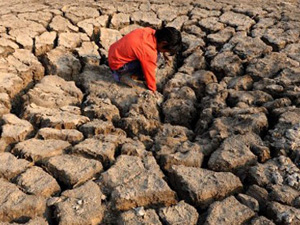
Back-to-back droughts, the lack of long-term INVESTMENT in agriculture and increasing demands from a growing population are undermining the country's bid to be self-sufficient in food.

That is creating opportunities for foreign suppliers in generally weak commodity MARKETS , but is a headache for Modi, who needs the farm sector to pick up in order to spur economic growth and keep his political ambitions on track.

"The top brass is dead serious about the farm sector that is so crucial to our overall economic growth and well-being," said a source who was present at the recent gathering of Modi, his agriculture and food ministers and other officials.

Modi sat through presentations and asked the ministers to ensure steady supplies and stable prices, urging them to find solutions, the source said. Modi did not suggest any immediate interventions of his own.

The long term impact on commodity markets could be significant.

Last month, India made its first purchases of corn in 16 years. It has also been increasing purchases of other products, such as lentils and oilmeals, as production falls short.

Wheat and sugar stocks, while sufficient in warehouses now, are depleting fast, leading some TRADERS to predict the need for imports next year.

"There's a complete collapse of Indian agriculture, and that's because of the callous neglect by the government," said Devinder Sharma, an independent food andTRADE policy analyst.

"Given the state of agriculture, I'm not surprised to see India emerging as an importer of a number of food items. Maize is just the beginning."

Growing distress

Agriculture contributes nearly 13 percent to India's $2 trillion economy and employs about two-thirds of its 1.25 billion people.

Government sources said that boosting irrigation, raising crop yields and encouraging farmers to avail of a new crop insurance scheme unveiled in January will help address growing distress in the countryside caused by poor harvests.

Modi has already loosened controls on some imports.

But one of his biggest dilemmas is that although imports can help cool prices - a key concern for the ruling Bharatiya Janata Party's core middle-class voter base - farmers see them as benefiting foreign producers at the cost of locals.

In a recent interview with television channel ET Now, Finance Minister Arun Jaitley said the government was aware of the impact two bad monsoons have had.

"That now tells me, please spend more on irrigation," he said.

The farm sector needs to grow at about 3 percent to help Jaitley achieve his target of 7 to 7.5 percent economic growth in the 2015/16 fiscal year.

In the first half of this fiscal year, agricultural growth fell to 2 percent from 2.4 percent a year earlier.

Who are the winners?

India's entry into the MARKET as a net importer is good news for suppliers like Brazil, Argentina, the United States and Canada, which are suffering from a global commodity glut.

India's move to import corn, for example, has supported global prices. Corn values rose 2.6 percent after India said on Jan. 13 that it would launch a second tender for 200,000 tonnes, its second since announcing plans to buy half a million tonnes.

Traders say India may need to import another 1.5-2.0 million tonnes.

The next big import item on the list could be oilmeals, an animal feed, which India used to export in large quantities until last year.

"Very soon we'll be left with no choice but to import oilmeals, largely because our oilseed production has failed to keep pace with our demand for both vegetable oils and oilmeals," said B.V. Mehta, head of TRADE body Solvent Extractors' Association.@Body.


Comments

Hollis
 - 
Sunday, 14 Feb 2016

h my goodness! an amazing article dude. Thank you Nonetheless I am experiencing issue with ur rss.
Don’t know why Not Able To subscribe to it. Is there anyone
getting identical rss issue? Anyone who knows please answer.Thanks

Check out my web page - Shadow
Fight 2 Hack Free Download: http://Genhacks24.com/shadow-fight-2-hack/

Add new comment

  • Coastaldigest.com reserves the right to delete or block any comments.
  • Coastaldigset.com is not responsible for its readers’ comments.
  • Comments that are abusive, incendiary or irrelevant are strictly prohibited.
  • Please use a genuine email ID and provide your name to avoid reject.
News Network
December 16,2025

bengal.jpg

The deletion of over 58 lakh names from West Bengal’s draft electoral rolls following a Special Intensive Revision (SIR) has sparked widespread concern and is likely to deepen political tensions in the poll-bound state.

According to the Election Commission, the revision exercise has identified 24 lakh voters as deceased, 19 lakh as relocated, 12 lakh as missing, and 1.3 lakh as duplicate entries. The draft list, published after the completion of the first phase of SIR, aims to remove errors and duplication from the electoral rolls.

However, the scale of deletions has raised fears that a large number of eligible voters may have been wrongly excluded. The Election Commission has said that individuals whose names are missing can file objections and seek corrections. The final voter list is scheduled to be published in February next year, after which the Assembly election announcement is expected. Notably, the last Special Intensive Revision in Bengal was conducted in 2002.

The development has intensified the political row over the SIR process. Chief Minister Mamata Banerjee and her Trinamool Congress have strongly opposed the exercise, accusing the Centre and the Election Commission of attempting to disenfranchise lakhs of voters ahead of the elections.

Addressing a rally in Krishnanagar earlier this month, Banerjee urged people to protest if their names were removed from the voter list, alleging intimidation during elections and warning of serious consequences if voting rights were taken away.

The BJP, meanwhile, has defended the revision and accused the Trinamool Congress of politicising the issue to protect what it claims is an illegal voter base. Leader of the Opposition Suvendu Adhikari alleged that the ruling party fears losing power due to the removal of deceased, fake, and illegal voters.

The controversy comes amid earlier allegations by the Trinamool Congress that excessive work pressure during the SIR led to the deaths by suicide of some Booth Level Officers (BLOs), for which the party blamed the Election Commission. With the draft list now out, another round of political confrontation appears imminent.

As objections begin to be filed, the focus will be on whether the correction mechanism is accessible, transparent, and timely—critical factors in ensuring that no eligible voter is denied their democratic right ahead of a crucial election.

Comments

Add new comment

  • Coastaldigest.com reserves the right to delete or block any comments.
  • Coastaldigset.com is not responsible for its readers’ comments.
  • Comments that are abusive, incendiary or irrelevant are strictly prohibited.
  • Please use a genuine email ID and provide your name to avoid reject.
News Network
December 13,2025

New Delhi: School-going children are picking up drug and smoking habits and engaging in consumption of alcohol, with the average age of introduction to such harmful substances found to be around 13 years, suggesting a need for earlier interventions as early as primary school, a multi-city survey by AIIMS-Delhi said.

The findings also showed substance use increased in higher grades, with grade XI/XII students two times more likely to report use of substances when compared with grade VIII students. This emphasised the importance of continued prevention and intervention through middle and high school.

The study led by Dr Anju Dhawan of AIIMS's National Drug Dependence Treatment Centre, published in the National Medical Journal of India this month, looks at adolescent substance use across diverse regions.

The survey included 5,920 students from classes 8, 9, 11 and 12 in urban government, private and rural schools across 10 cities -- Bengaluru, Chandigarh, Delhi, Dibrugarh, Hyderabad, Imphal, Jammu, Lucknow, Mumbai, and Ranchi. The data were collected between May 2018 and June 2019.

The average age of initiation for any substance was 12.9 (2.8) years. It was lowest for inhalants (11.3 years) followed by heroin (12.3 years) and opioid pharmaceuticals (without prescription; 12.5 years).

Overall, 15.1 per cent of participants reported lifetime use, 10.3 per cent reported past year use, and 7.2 per cent reported use in the past month of any substance, the study found.

The most common substances used in the past year, after tobacco (4 per cent) and alcohol (3.8 per cent), were opioids (2.8 per cent), followed by cannabis (2 per cent) and inhalants (1.9 per cent). Use of non-prescribed pharmaceutical opioids was most common among opioid users (90.2 per cent).

On being asked, 'Do you think this substance is easily available for a person of your age' separately for each substance category, nearly half the students (46.3 per cent) endorsed that tobacco products and more than one-third of the students (36.5 per cent) agreed that a person of their age can easily procure alcohol products.

Similarly, for Bhang (21.9 per cent), ganja/charas (16.1 per cent), inhalants (15.2 per cent), sedatives (13.7 per cent), opium and heroin (10 per cent each), the students endorsed that these can be easily procured.

About 95 per cent of the children, irrespective of their grade, agreed with the statement that 'drug use is harmful'.

The rates of substance use (any) among boys were significantly higher than those of girls for substance use (ever), use in the past year and use in the past 30 days. Compared to grade VIII students, grade IX students were more likely, and grade XI/XII students were twice as likely to have used any substance (ever).

The likelihood of past-year use of any substance was also higher for grade IX students and for grade XI/XII students as compared to grade VIII students.

About 40 per cent of students mentioned that they had a family member who used tobacco or alcohol each. The use of cannabis (any product) and opioid (any product) by a family member was reported by 8.2 per cent and 3.9 per cent of students, respectively, while the use of other substances, such as inhalants/sedatives by family was 2-3 per cent, the study found.

A relatively smaller percentage of students reported use of tobacco or alcohol among peers as compared to among family members, while a higher percentage reported inhalants, sedatives, cannabis or opioid use among peers.

Children using substances (past year) compared to non-users reported significantly higher any substance use by their family members and peers.

There were 25.7 per cent students who replied 'yes' to the question 'conflicts/fights often occur in your family'. Most students also replied affirmatively to 'family members are aware of how their time is being spent' and 'damily members are aware of with whom they spend their time'.

Comments

Add new comment

  • Coastaldigest.com reserves the right to delete or block any comments.
  • Coastaldigset.com is not responsible for its readers’ comments.
  • Comments that are abusive, incendiary or irrelevant are strictly prohibited.
  • Please use a genuine email ID and provide your name to avoid reject.