



Smriti Irani's ‘degree’ row: Court asks EC, DU to produce records

March 16, 2016

New Delhi, Mar 16: The Election Commission and Delhi University (DU) were today directed by a court here to bring the documents related to records of educational qualification of Union HRD Minister Smriti Irani against whom a complaint was filed for allegedly giving false information in affidavits to the poll panel.
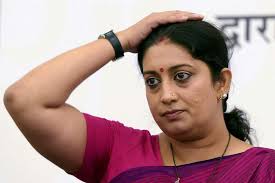
smritiirani
Metropolitan Magistrate Harvinder Singh noted that in pursuance to court's earlier order, the representatives of the commission and the university have not brought the complete documents today and some additional papers were required in the case.

The court has now fixed the matter for May 3 for further proceedings and asked the officials to bring complete documents on that day.

The court had on November 20 last year allowed the plea of the complainant seeking a direction to the officials of EC and DU to bring records of Irani's educational qualification after he said he was unable to place them before the court.

It, however, had declined the submission of complainant Ahmer Khan, a freelance writer, seeking direction to the CBSE to bring Irani's class 10th and 12th records.

The complainant had claimed in court that Irani had deliberately given discrepant information about her educational qualification in affidavits filed before the poll panel and not given any clarification despite concerns being raised on the issue.

Khan had alleged that Irani had knowingly furnished misleading information about her educational qualification in affidavits filed before EC and that a candidate deliberately giving incorrect details can be punished under the provisions of IPC and under section 125A of Representation of the People Act (RPA).

Section 125A of RPA deals with penalty for filing false affidavit and entails a jail term of upto six months or fine or both.

The court on June 24 last year had taken cognizance of the complaint which accused Irani of furnishing false information about her academic qualifications in the affidavits filed before the EC in 2004, 2011 and 2014.

The complainant had earlier claimed in court that in her affidavit for April 2004 Lok Sabha polls, Irani had said she completed her BA in 1996 from DU (School of Correspondence), whereas in another affidavit of July 11, 2011 to contest Rajya Sabha election from Gujarat, she had said her highest educational qualification was B.Com Part I from the School of Correspondence, DU.

The complaint also alleged that in the affidavit filed for nomination of April 16, 2014 Lok Sabha polls from Amethi constituency in Uttar Pradesh, Irani said she had completed Bachelor of Commerce Part-I from School of Open Learning, DU.

Comments

UMMAR
 - 
Thursday, 17 Mar 2016

FAKE DEGREE CERTIFICATE

FAKE PROMISE

FAKE VIDEO CREATOR

FAKE GOVERNMENT THEY CAN GIVE ONLY PROMISE CAN NOT FULFILL THAT ...

EVEN IRANI NOW HAVE CERTIFICATE OHHH EDUCATION MINISTER ...

Rikaz
 - 
Wednesday, 16 Mar 2016

When an education minister forged document then what about normal person....she must have been the best example for every citizens of our country....Jai India...need to check feku's degree certificate too...???

Add new comment

  • Coastaldigest.com reserves the right to delete or block any comments.
  • Coastaldigset.com is not responsible for its readers’ comments.
  • Comments that are abusive, incendiary or irrelevant are strictly prohibited.
  • Please use a genuine email ID and provide your name to avoid reject.
News Network
December 13,2025

New Delhi: School-going children are picking up drug and smoking habits and engaging in consumption of alcohol, with the average age of introduction to such harmful substances found to be around 13 years, suggesting a need for earlier interventions as early as primary school, a multi-city survey by AIIMS-Delhi said.

The findings also showed substance use increased in higher grades, with grade XI/XII students two times more likely to report use of substances when compared with grade VIII students. This emphasised the importance of continued prevention and intervention through middle and high school.

The study led by Dr Anju Dhawan of AIIMS's National Drug Dependence Treatment Centre, published in the National Medical Journal of India this month, looks at adolescent substance use across diverse regions.

The survey included 5,920 students from classes 8, 9, 11 and 12 in urban government, private and rural schools across 10 cities -- Bengaluru, Chandigarh, Delhi, Dibrugarh, Hyderabad, Imphal, Jammu, Lucknow, Mumbai, and Ranchi. The data were collected between May 2018 and June 2019.

The average age of initiation for any substance was 12.9 (2.8) years. It was lowest for inhalants (11.3 years) followed by heroin (12.3 years) and opioid pharmaceuticals (without prescription; 12.5 years).

Overall, 15.1 per cent of participants reported lifetime use, 10.3 per cent reported past year use, and 7.2 per cent reported use in the past month of any substance, the study found.

The most common substances used in the past year, after tobacco (4 per cent) and alcohol (3.8 per cent), were opioids (2.8 per cent), followed by cannabis (2 per cent) and inhalants (1.9 per cent). Use of non-prescribed pharmaceutical opioids was most common among opioid users (90.2 per cent).

On being asked, 'Do you think this substance is easily available for a person of your age' separately for each substance category, nearly half the students (46.3 per cent) endorsed that tobacco products and more than one-third of the students (36.5 per cent) agreed that a person of their age can easily procure alcohol products.

Similarly, for Bhang (21.9 per cent), ganja/charas (16.1 per cent), inhalants (15.2 per cent), sedatives (13.7 per cent), opium and heroin (10 per cent each), the students endorsed that these can be easily procured.

About 95 per cent of the children, irrespective of their grade, agreed with the statement that 'drug use is harmful'.

The rates of substance use (any) among boys were significantly higher than those of girls for substance use (ever), use in the past year and use in the past 30 days. Compared to grade VIII students, grade IX students were more likely, and grade XI/XII students were twice as likely to have used any substance (ever).

The likelihood of past-year use of any substance was also higher for grade IX students and for grade XI/XII students as compared to grade VIII students.

About 40 per cent of students mentioned that they had a family member who used tobacco or alcohol each. The use of cannabis (any product) and opioid (any product) by a family member was reported by 8.2 per cent and 3.9 per cent of students, respectively, while the use of other substances, such as inhalants/sedatives by family was 2-3 per cent, the study found.

A relatively smaller percentage of students reported use of tobacco or alcohol among peers as compared to among family members, while a higher percentage reported inhalants, sedatives, cannabis or opioid use among peers.

Children using substances (past year) compared to non-users reported significantly higher any substance use by their family members and peers.

There were 25.7 per cent students who replied 'yes' to the question 'conflicts/fights often occur in your family'. Most students also replied affirmatively to 'family members are aware of how their time is being spent' and 'damily members are aware of with whom they spend their time'.

Comments

Add new comment

  • Coastaldigest.com reserves the right to delete or block any comments.
  • Coastaldigset.com is not responsible for its readers’ comments.
  • Comments that are abusive, incendiary or irrelevant are strictly prohibited.
  • Please use a genuine email ID and provide your name to avoid reject.