



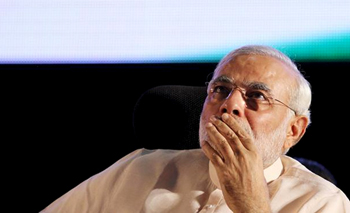
Mumbai/ New Delhi, Mar 23: Sharp rises in education and healthcare costs in the last two years have hit the nation’s burgeoning middle class hard, denting Prime Minister Narendra Modi’s popularity among the relatively well-off ahead of a series of state elections.
Price increases for services deemed a luxury for most Indians could also complicate the central bank’s plans to cut borrowing costs, with decades of low investment in schools and hospitals meaning they will remain expensive for some time.
“The government also cut fuel subsidies and tried to impose taxes on our pension savings. This is not acceptable.”
Banerjee is thinking twice about voting for Modi’s ruling Bharatiya Janata Party (BJP) at elections scheduled for 2019.
That view is far from universal, but is already on the radar of a government that swept to power in 2014 with promises of economic reforms and pro-business policies that appealed to aspirational Indians living in big towns and cities.
Modi has already seen support among the huge agriculture sector ebb following several crop failures, so appeasing the middle class, which accounts for about a quarter of the 1.3 billion population, looks increasingly important.
“Rising prices of commodities and services which have a higher weight in the consumption basket of middle class households is an issue that cannot be ignored,” said a senior finance ministry official.
“This is a supply side issue and can’t be addressed in the short term,” he added.
To ease some pressure on middle income earners, the government plans to hike salaries of its nearly 10 million employees by 24 per cent this year.
GOVERNMENT BACKS DOWN
Education costs have risen 13 per cent, housing 10 per cent, healthcare 14 per cent and electricity 8 per cent since Modi took charge in May 2014, time series data on CPI inflation collected by the Ministry of Statistics showed.
That puts a disproportionate strain on middle class incomes, with education costs accounting for 7 per cent of urban households’ monthly spend compared with 3.5 per cent of rural households, data showed.
Food and beverage prices, meanwhile, which account for more than a half of the CPI basket, fell 10.5 per cent since Modi’s election victory, although there, too, items like milk and eggs favoured by middle income Indians have actually risen.
Owners of motorcycles and cars are further upset that the government took away some windfall gains from falling oil prices in the form of taxes, and people across the country are cutting back on discretionary spending as expenses outstrip earnings.
Underlining the government’s sensitivity to a “squeeze” on the middle class, earlier this month it agreed to roll back plans to tax pension fund withdrawals following a backlash from salaried workers.
While national elections are three years away, the BJP’s popularity faces earlier tests, with ballots in states including West Bengal and Assam months away, and the key battleground of Uttar Pradesh due next year.
RATE CUT
A disgruntled middle class also poses problems for Reserve Bank of India (RBI) Governor Raghuram Rajan, who has pledged to bring down consumer price inflation to 5 per cent by March, 2017 and 4 per cent in the medium term.
Headline retail inflation eased to 5.18 per cent in February from 5.69 per cent in January, but core inflation, which strips out food and fuel, rose to 4.9 per cent from 4.75 per cent, mostly due to increases in education, housing and personal care.
The RBI is widely expected to cut its policy interest rate by 25 basis points on April 5, after lowering it by 125 basis points last year thanks in part to easing inflation and the government’s fiscal consolidation roadmap.
“The spare capacity in the economy is not getting reflected in the core inflation number, which means the challenge for monetary policy to control the demand side pressure is much more,” said one senior policymaker, hinting at the difficulty of deep rate cuts beyond April.
That could be a bad news for middle income Indians who are looking to the central bank to bring down their borrowing costs, particularly after deposit rates fell.
The government slashed the federal pension fund rate and deposit rates offered to millions of small savers to align with market rates, triggering protest from opposition parties.
Despite the complaints, many are willing to give Modi more time to address their concerns.
“Our expectations of him were very high, and he needs more time to solve these age-old problems,” said Kundan Mukherjee, a 51-year-old from Jharkhand, who works for a pharmaceutical company.


Comments
JOKE OF THE MONTH ACCCHE DIN WHA WHA HA HA HA
Add new comment