



New Delhi, Mar 15: It will now be difficult for promoters and builders to delay projects, with Parliament today giving nod to a bill which gives relief to home-buyers and proposes imprisonment of up to three years besides monetary penalties for any violation of rules.
The Real Estate (Regulation and Development) Bill, 2013, approved by Lok Sabha today, five days after its passage by Rajya Sabha, is designed to protect consumer interest, ensure efficiency in all property-related transactions, improve accountability of developers, boost transparency and attract more investments to the sector, the government said.
It provides for setting up of a Real Estate Regulatory Authorities (RERAs) which will ensure timely execution of projects.
The RERAs will regulate transactions related to both residential and commercial projects and ensure their timely completion and handover.
The proposed law makes it mandatory for all residential and commercial projects to register with the Regulator and will apply to new and ongoing projects.
Appellate Tribunals will now be required to adjudicate cases in 60 days as against the earlier provision of 90 days and Regulatory Authorities will have to dispose of complaints in 60 days. In the earlier bill, no time frame was indicated.
The Bill provides for imprisonment of up to three years in case of promoters and up to one year in case of real estate agents and buyers for any violation of orders of Appellate Tribunals or monetary penalties or both.
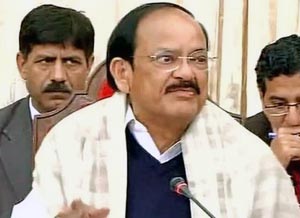
Replying to debate on the bill, Urban Development Minister M Venkaiah Naidu said the Bill envisages that "What you are committing, what you are promising, please fulfill. What you are promising through advertisements, please fulfill that. That is the purpose of this Bill."
Naidu also sought cooperation from the states for faster clearances to projects to make this Bill, which will override all state legislations, a success.
"We are trying to make the beautiful advertisements given by developers in front page of newspapers dutyful. Our ultimate intension is to ensure consumer satisfaction. Once the Bill is notified, you will get more investments in the real estate sector, early clearances and property prices will come down," he said.
Government is also trying to bring in a National Urban Rental Housing Policy, he said, adding that the policy would take into account the requirements of tenancy hassles in modern days.
"There will be a boom in the real estate sector because of the Bill. Private people, foreign investors, will come and invest. People will buy more properties," the minister said.
Naidu said there has been numerous delays in project execution which the law seeks to address. "Real Estate Bill is a regulation and not a strangulation".
The law provides for builders mandatorly setting aside 70 per cent of money collected from buyers during the pre-sale of homes, for sole use for construction of the project.
Naidu said the bill also provides for buyers and developers paying the same interest rate for any delays in payment or delivery of project respectively.
He said as per the Bill, open parking is part of common area because people sell flats separately and car parking separately. Project can be developed in phases but provisions of the law will apply to each phase.
The Bill was first introduced in the Rajya Sabha in 2013.
"It was originally a Congress party baby. It was a baby which was left out and now we are adopting it," Naidu said.
At this, Congress leader Mallikarjun Kharge remarked that the NDA government should not met out "step motherly" attitude to the Bill.
Naidu said the mandatory registration for projects has been brought down to 500 sq m area, or those comprising eight flats, from 4,000 sq mt proposed in the previous version of UPA government.
It provides for a clear definition of carpet area and a system that would require the consent of two-thirds of the buyers in case there are changes in project plans.
Naidu said Parliament is not interfering in the process of buying or selling of a property and instead is ensuring customer satisfaction.
"If the builders have any problem, I can meet them any time. Whatever difficulties they face, we are willing to discuss," he said.

Comments
Excellent blog here! Also your web site loads up very fast!
What host are you using? Can I get your affiliate link to your host?
I wish my website loaded up as fast as yours lol
Check out my website ... piano keyboard midi
(Katherina: http://www.pylhedu.cn/comment/html//index.php?page=1&id=62408)
Its not my first time to pay a quick visit this
site, i am visiting this web site dailly and get good data from here
daily.
my web page best digital pianos for beginners: http://pyswfcxx.com/comment/html//index.php?page=1&id=155248
I loved as much as you will receive carried out right here.
The sketch is tasteful, your authored subject matter
stylish. nonetheless, you command get got an impatience over
that you wish be delivering the following. unwell unquestionably
come further formerly again as exactly the same nearly very often inside case you shield
this hike.
my blog :: digital grand piano reviews: http://www.lucianoamato.it/itemlist/user/22897
Your means of describing all in this post is in fact good,
all can without difficulty be aware of it, Thanks a
lot.
Look at my web-site :: best kawai digital piano: http://www.swckxx.com/comment/html//index.php?page=1&id=74480
I got this website from my pal who told me on the topic of this website and
now this time I am browsing this website and reading very informative posts at this time.
Have a look at my web page - best digital piano under
2000: http://www.wzhzxc.com/comment/html/index.php?page=1&id=32730
I read this article completely on the topic of the comparison of hottest and earlier technologies, it's amazing
article.
my web site :: cheap electric piano: http://www.lucianoamato.it/itemlist/user/11382
This excellent website certainly has all the information and facts I wanted concerning this subject and didn't know who to ask.
Also visit my web page - anti aging supplements for skin (Tammy: http://www.Ierbil.com/?option=com_k2&view=itemlist&task=user&id=108502)
Add new comment