



Siddu govt to develop minority colonies, modernise madrasas

[email protected] (CD Network)
May 23, 2016

Bengaluru, May 23: Municipal Administration and Minorities Affairs Minister Qamarul Islam said that Siddaramaiah-led Congress government in Karnataka has, over the past three years, allocated Rs. 2,528 crore for minority welfare, as opposed to Rs. 1,145 crore set aside by the previous BJP government during its five-year tenure.

muslims
Releasing a booklet on the achievements of his department in the past three years, in Kalaburgi recently, the Minister said the government has laid more emphasis on education of minorities.

He also said the government has decided to introduce three more schemes for minority welfare — for comprehensive development of minority colonies, for modernisation of madrasas, and for a time-bound capability-building programme for minority students studying in Urdu medium.

He said that Karnataka is the only State in the country to establish exclusive residential schools for minorities. The State has 16 Morarji Desai residential schools and six Navodaya Residential Schools for the minorities.

He said the State's efforts to establish exclusive residential schools for the minorities have received appreciation from the Union government as well.

The Minister said in the first phase, the government had filled up 1,000 posts of teachers, wardens and cooks in these schools, adding that recruitment for another 1,540 posts was under way.

The Minister said there are proposals to establish a few more residential schools.

He also said the State has been a “trendsetter” in extending financial assistance to minority students to pursue higher education abroad, and in the last two years, 50 students have been provided scholarships and financial assistance of up to Rs. 20 lakh.
He said Karnataka also has the highest number of minority hostels — a total of 256. Of these, 132 were established in the past three years, he said.

He said while 45 minority hostels were functioning in their own building, measures have been initiated to identify land and take up construction of their own building for the remaining hostels.

Comments

welwisher
 - 
Monday, 23 May 2016

No benefit is received from the Karnataka Government for the minority. All bull shit... Simply eating money from the central government.

SK
 - 
Monday, 23 May 2016

While giving the bullshit figures, CAN he give the beneficiary places, so that the truth can be checked....All barking dogs......

Add new comment

  • Coastaldigest.com reserves the right to delete or block any comments.
  • Coastaldigset.com is not responsible for its readers’ comments.
  • Comments that are abusive, incendiary or irrelevant are strictly prohibited.
  • Please use a genuine email ID and provide your name to avoid reject.
News Network
December 7,2025

SHRIMP.jpg

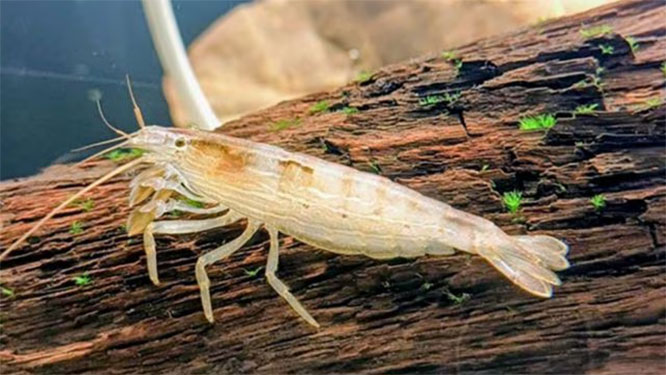
Mangaluru, Dec 7: A rare bamboo shrimp has been rediscovered on mainland India more than 70 years after it was last reported, confirming for the first time the presence of Atyopsis spinipes in the country. The find was made by researchers from the Centre for Climate Change Studies at Sathyabama Institute of Science and Technology, Chennai, during surveys in Karnataka and Odisha.

The team — shrimp expert Dr S Prakash, PhD scholar K Kunjulakshmi, and Mangaluru-based researcher Maclean Antony Santos — combined field surveys, ecological assessments and DNA analysis to identify the elusive species. Their findings, published in Zootaxa, resolve decades of taxonomic confusion stemming from a 1951 report that misidentified the species as Atyopsis moluccensis without strong evidence.

The shrimp has now been confirmed at two locations: the Mulki–Pavanje estuary near Mangaluru and the Kuakhai River in Bhubaneswar. Historical specimens from the Andaman Islands, previously labelled as A. moluccensis, were also found to be misidentified and actually belong to A. spinipes.

The rediscovery began after an aquarium hobbyist in Odisha spotted a shrimp in 2022, prompting systematic surveys across Udupi, Karwar and Mangaluru. Four female specimens were collected in Mulki and one in Odisha, all genetically matching.

Researchers warn the species may exist in very small, vulnerable populations as freshwater habitats face increasing pressure from pollution, sand mining and infrastructure development. All verified specimens have been deposited with the Zoological Survey of India for future reference.

Comments

Add new comment

  • Coastaldigest.com reserves the right to delete or block any comments.
  • Coastaldigset.com is not responsible for its readers’ comments.
  • Comments that are abusive, incendiary or irrelevant are strictly prohibited.
  • Please use a genuine email ID and provide your name to avoid reject.