



Terrorists kill over 60 in attack on Pakistan police academy

October 25, 2016

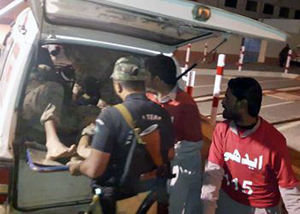
Karachi, Oct 25: The overnight attack on a police training academy in Pakistan's restive Quetta city has left over 60 cadets besides three militants dead, with 118 injured, making it one of the deadliest strikes in the country this year.
karachi

The attack on the Police Training College on Saryab Road in the Balochistan province capital began at around 11:10 PM last night, triggering an operation by Pakistani security forces who rescued hundreds of cadets from the academy.

"More than 60 police cadets were killed in the attack while about 115 were injured," a security source said.

Sarfaraz Bugti, home minister of Balochistan province tweeted that 118 people were injured.

Bugti had earlier told reporters that the attack had been carried out by three terrorists, cycling back on an earlier estimate by Inter-Services Public Relations (ISPR) of "five to six terrorists".

Bugti said there were around 700 police cadets and recruits in the college hostel when the attack took place.

While two of the militants had blown themselves up after being cornered, one was killed in an exchange of fire with security forces. All three were wearing suicide vests, Frontier Corps IG, Major General Sher Afghan said.

The three terrorists were believed to be from the Al-Alimi faction of the Lashkar-e-Jhangvi militant group affiliated with the Pakistani Taliban, he added.

He told reporters that the militants were communicating with handlers in Afghanistan and taking instructions from them.

Security forces had "cleared the college in four hours", he said. Police, meanhwile, said the compound had been cleared but search operations were still on. Local media footage showed some security vehicles leaving the college.

Bugti said the injured people, mostly police cadets and security personnel, had been shifted to the Civil hospital, Bolan Medical College hospital and Military hospital in Quetta. "The condition of some is critical," he said.

Militants have conducted several attacks against security forces and national installations in Balochistan, which has been plagued by insurgency and growing sectarian killings for more than a decade.

The attack came a day after separatist gunmen for the Baloch Liberation Army on a motorcycle shot dead two coast guards and a civilian in coastal town of Jiwani near the Gwadar port in the same province.

In August, a suicide bombing at the Civil hospital in Quetta killed 73 people, most of them lawyers. A splinter group of the Tehreek-e-Taliban Pakistan as well as the IS claimed responsibility for carrying out the attack.

Comments

Naren kotian
 - 
Tuesday, 25 Oct 2016

Superb ...love to see pakis bleeding ....I wish it could reach 600....death to Pakistan. . .death to jihadis ....

Add new comment

  • Coastaldigest.com reserves the right to delete or block any comments.
  • Coastaldigset.com is not responsible for its readers’ comments.
  • Comments that are abusive, incendiary or irrelevant are strictly prohibited.
  • Please use a genuine email ID and provide your name to avoid reject.
News Network
December 16,2025

jordan.jpg

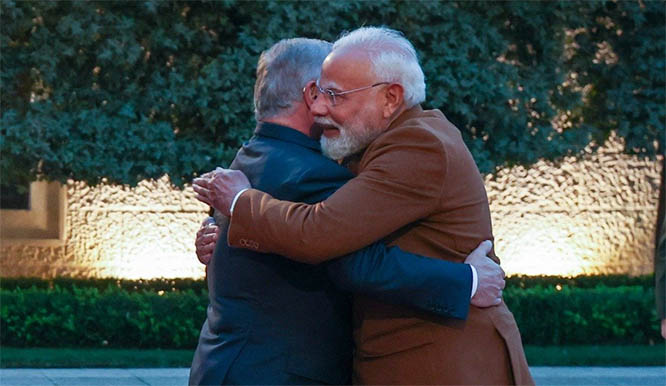
Prime Minister Narendra Modi on Monday held talks with Jordan’s King Abdullah II in Amman, during which the two leaders discussed ways to further strengthen bilateral relations, with the Prime Minister outlining an eight-point vision covering key areas of cooperation.

Describing the meeting as “productive”, PM Modi said he shared a roadmap focused on trade and economy, fertilisers and agriculture, information technology, healthcare, infrastructure, critical and strategic minerals, civil nuclear cooperation, and people-to-people ties.

In a post on social media platform X, the Prime Minister praised King Abdullah II’s personal commitment to advancing India–Jordan relations, particularly as both countries mark the 75th anniversary of the establishment of diplomatic ties this year.

“Held productive discussions with His Majesty King Abdullah II in Amman. His personal commitment towards vibrant India-Jordan relations is noteworthy. This year, we are celebrating the 75th anniversary of our bilateral diplomatic relations,” PM Modi said.

The meeting took place at the Al Husseiniya Palace, where the two leaders also exchanged views on regional and global issues of mutual interest. According to the Ministry of External Affairs (MEA), both sides agreed to further deepen cooperation in areas including trade and investment, defence and security, counter-terrorism and de-radicalisation, fertilisers and agriculture, infrastructure, renewable energy, tourism, and heritage.

The MEA said both leaders reaffirmed their united stand against terrorism.

PM Modi arrived in Amman earlier on Monday and was received by Jordanian Prime Minister Jafar Hassan, who accorded him a formal welcome. Following the talks, King Abdullah II hosted a banquet dinner in honour of the Prime Minister, reflecting the warmth of bilateral ties.

Jordan is the first leg of PM Modi’s three-nation tour. From Amman, the Prime Minister will travel to Ethiopia at the invitation of Prime Minister Abiy Ahmed Ali, marking his first official visit to the African nation. The tour will conclude with a visit to Oman.

Comments

Add new comment

  • Coastaldigest.com reserves the right to delete or block any comments.
  • Coastaldigset.com is not responsible for its readers’ comments.
  • Comments that are abusive, incendiary or irrelevant are strictly prohibited.
  • Please use a genuine email ID and provide your name to avoid reject.
News Network
December 6,2025

pilot.jpg

New Delhi: IndiGo, India’s largest airline, faced major operational turbulence this week after failing to prepare for new pilot-fatigue regulations issued by the Directorate General of Civil Aviation (DGCA). The stricter rules—designed to improve flight safety—took effect in phases through 2024, with the latest implementation on November 1. IndiGo has acknowledged that inadequate roster planning led to widespread cancellations and delays.

Below are the key DGCA rules that affected IndiGo’s operations:

1. Longer Mandatory Weekly Rest

Weekly rest for pilots has been increased from 36 hours to 48 hours.

The government says the extended break is essential to curb cumulative fatigue. This rule remains in force despite the current crisis.

2. Cap on Night Landings

Pilots can now perform only two night landings per week—a steep reduction from the earlier limit of six.

Night hours, defined as midnight to early morning, are considered the least alert period for pilots.

Given the disruptions, this rule has been temporarily relaxed for IndiGo until February 10.

3. Reduced Maximum Night Flight Duty

Flight duty that stretches into the night is now capped at 10 hours.

This measure has also been kept on hold for IndiGo until February 10 to stabilize operations.

4. Weekly Rest Cannot Be Replaced With Personal Leave

Airlines can no longer count a pilot’s personal leave as part of the mandatory 48-hour rest.

Pilots say this closes a loophole that previously reduced actual rest time.

Currently, all airlines are exempt from this rule to normalise travel.

5. Mandatory Fatigue Monitoring

Airlines must submit quarterly fatigue reports along with corrective actions to DGCA.

This system aims to create a transparent fatigue-tracking framework across the industry.

The DGCA has stressed that these rules were crafted to strengthen flight safety and align India with global fatigue-management standards. The temporary relaxations are expected to remain until February 2025, giving IndiGo time to stabilise its schedules and restore normal air travel.

Comments

Add new comment

  • Coastaldigest.com reserves the right to delete or block any comments.
  • Coastaldigset.com is not responsible for its readers’ comments.
  • Comments that are abusive, incendiary or irrelevant are strictly prohibited.
  • Please use a genuine email ID and provide your name to avoid reject.
