



Banks start using indelible ink to check repeat money exchange

November 16, 2016

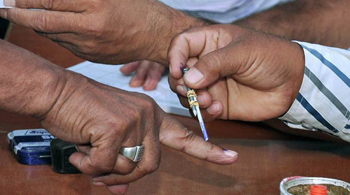
New Delhi, Nov 16: To stop repeat money exchangers thronging banks with invalid currency notes, banks have started applying indelible ink mark on the right hand index finger of customers in the select metro cities.
indelibleink
SBI and few other banks in Delhi have started using indelible ink. As per the government statement, 11 branches of SBI are using the method to weed out customers queuing up again and again to exchange invalid currency notes.

As per the Standard Operating Procedure (SOP) for exchanging notes, concerned bank branches and post offices would put indelible ink mark on the right index finger of the customer so as to identify that he/she has exchanged the old currency notes once.

The move comes amid reports of long queues and chaotic scenes at banks and ATMs across the country for past several days after Prime Minister Narendra Modi last week announced the withdrawal of old Rs 500/1000 notes in the biggest crackdown on black money, corruption and counterfeit currency.

The notes withdrawn accounted for 86 per cent of the cash circulating in the Asia's third-largest economy. The indelible ink is supplied to the bank/post offices by Indian Banks' Association (IBA) in coordination with the banks and consultation with RBI.

This procedure is being introduced to begin with in the metro cities and expanded to other areas later, the RBI said in a statement. Identified bank branches are provided with black indelible ink bottles of 5 ml each and the cap of the bottle includes a small brush for applying the ink.

According to SOP released by the RBI, indelible ink can be applied by the cashier or any other official designated by the bank before the notes are given to the customer so that while the exchange of notes is taking place, a few seconds elapse which will allow the ink to dry up and prevent removal of ink.

Indelible ink on the index finger of the left hand or any other finger of the left hand cannot be used.

Comments

Abu Kotian
 - 
Wednesday, 16 Nov 2016

Yes need to observe some banghis are wearing burka's, easly can catch parivar people may be miss use of burka.

Abdul
 - 
Wednesday, 16 Nov 2016

People in big line for withdraw 15lack. haaaa haaa

naren kotian
 - 
Wednesday, 16 Nov 2016

very good move :) ... and also ban burqa inside bank . as we heard lot of misuse .

Add new comment

  • Coastaldigest.com reserves the right to delete or block any comments.
  • Coastaldigset.com is not responsible for its readers’ comments.
  • Comments that are abusive, incendiary or irrelevant are strictly prohibited.
  • Please use a genuine email ID and provide your name to avoid reject.
News Network
December 7,2025

SHRIMP.jpg

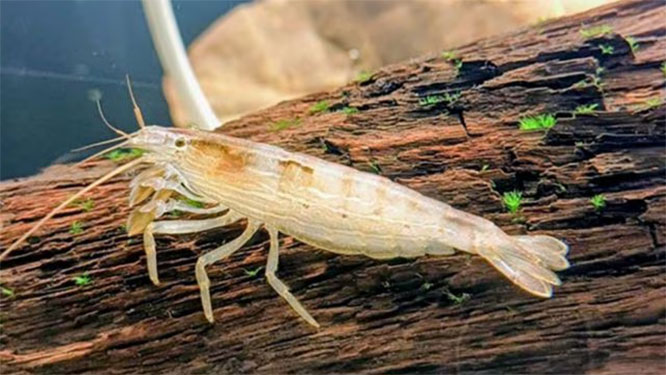
Mangaluru, Dec 7: A rare bamboo shrimp has been rediscovered on mainland India more than 70 years after it was last reported, confirming for the first time the presence of Atyopsis spinipes in the country. The find was made by researchers from the Centre for Climate Change Studies at Sathyabama Institute of Science and Technology, Chennai, during surveys in Karnataka and Odisha.

The team — shrimp expert Dr S Prakash, PhD scholar K Kunjulakshmi, and Mangaluru-based researcher Maclean Antony Santos — combined field surveys, ecological assessments and DNA analysis to identify the elusive species. Their findings, published in Zootaxa, resolve decades of taxonomic confusion stemming from a 1951 report that misidentified the species as Atyopsis moluccensis without strong evidence.

The shrimp has now been confirmed at two locations: the Mulki–Pavanje estuary near Mangaluru and the Kuakhai River in Bhubaneswar. Historical specimens from the Andaman Islands, previously labelled as A. moluccensis, were also found to be misidentified and actually belong to A. spinipes.

The rediscovery began after an aquarium hobbyist in Odisha spotted a shrimp in 2022, prompting systematic surveys across Udupi, Karwar and Mangaluru. Four female specimens were collected in Mulki and one in Odisha, all genetically matching.

Researchers warn the species may exist in very small, vulnerable populations as freshwater habitats face increasing pressure from pollution, sand mining and infrastructure development. All verified specimens have been deposited with the Zoological Survey of India for future reference.

Comments

Add new comment

  • Coastaldigest.com reserves the right to delete or block any comments.
  • Coastaldigset.com is not responsible for its readers’ comments.
  • Comments that are abusive, incendiary or irrelevant are strictly prohibited.
  • Please use a genuine email ID and provide your name to avoid reject.