



RBI committed to easing honest citizens' pain at the earliest: Patel

November 27, 2016

Mumbai, Nov 27: Breaking his silence over the demonetisation issue, RBI Governor Urjit Patel today said the central bank is monitoring the situation on a daily basis and taking all necessary actions to "ease the genuine pain of citizens" with a clear intent to normalise the things as early as possible.
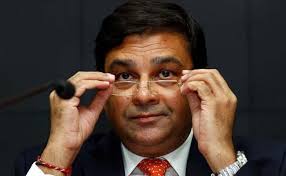
1patel
Patel also said the RBI has announced an incremental CRR (Cash Reserve Ratio) of 100 per cent "because of the large increase in deposits of banks on account of the return of Rs 1,000 and Rs 500 notes" and the decision would be reviewed immediately once the government issues adequate quantum of MSS (Market Stablisation Scheme) bonds which they have promised to do.

In an exclusive interview to PTI, Patel said the situation arising out of the decision to withdraw Rs 500/1,000 notes is being monitored on a daily basis and the printing presses have started to rebalance the production of new notes towards Rs 100 and Rs 500 bills.

He also urged the people to start using cash substitutes like debit cards and digital wallets, saying it will make transactions cheaper and easier and in the long term, it will help India "leapfrog into a less cash-use economy at par with more developed nations."

"We are also urging banks to make a big push with PoS (Point of Sale) machines with traders so that debit card use becomes more prevalent," he said.

Giving details of the steps being taken by RBI, he said, "Both RBI and government have been getting the printing presses to work at capacity to get the new notes available to meet demand.

"The RBI is interacting with the banks every day. They are telling us that the situation is gradually easing. The queues in branches and ATMs are shorter and the markets are starting to function, and there are no reported shortages of daily items of consumption.

"Also, about 40-50,000 people were deployed to refit the ATMs. Currency is available and banks are working in a mission mode to lift currency and take them to their branches and ATMs. The staff members of all banks have worked very hard, and we all owe them our gratitude," Patel said.

"Having said that, it is important to regularly review the situation, and taking the required decisions to ease the genuine pain of citizens who are honest and who have been hurt. There are no precedents on this subject at this scale and we have to be reactive to the situation.

"People have asked why the new currency introduced was different in size and thickness from the old. This is because the new currency has been designed to make it hard to counterfeit. When you are going to make a change of this magnitude, you need to get the best standards in place," Patel said.

This is the first-ever interview as RBI Governor by Patel, who is known to keep a low profile.

Asked why it was necessary to have undertaken demonetisation, the Governor said the Prime Minister in his address to the nation explained why the withdrawal of legal tender status of Rs 1,000 and Rs 500 notes was required.

"In his speech, he explained the reasons why this was important. He had given a commitment to the people of India that he would clamp down on black money to bring in much needed transparency and accountability and eradicate counterfeiting.

"A number of steps were taken around this, first by pushing Jan Dhan accounts, an income tax amnesty scheme and the push to get GST passed. This is part of the measures to get people to pay tax and hence expand the tax base.

"People were holding high denomination notes to keep tax unaccounted for money. Some sectors like real estate were using cash to avoid tax. It also strikes at counterfeit currency and pushes businesses and people to go cashless which greatly increases convenience. Towards the last, banks have waived debit card charges," he said.

On why there have been long queues and a reduction in trade and business, Patel said, "This is a once in a lifetime event. It is very rare to remove 86 per cent of the currency in circulation in one go. The logistics of such an operation are mammoth.

"And yet for withdrawal of legal tender status to be effective, complete secrecy was required. So it is difficult to get all banks ready and fully prepared in 24 hours for a big step like this. Obviously this has caused some dislocation. That is why we request support from all Indians for the larger cause of fighting tax evasion and the black economy."

To a question on when he expects the situation to settle, the economist-turned-central banker said, "The bankers are saying the situation is getting better and in the metros things are stabilising but the remote locations are still feeling some pain.

"Liquidity in the banking system has increased and so credit should be becoming more easily available. The intent is to normalise as soon as possible."

On the announcement about incremental CRR yesterday, Patel said, "This was done because of the large increase in deposits of banks on account of the return of Rs 1,000 and Rs 500 notes.

"This has led to large excess liquidity in the system. To absorb this liquidity the incremental CRR has had to be used on a purely temporary basis. While the RBI has a significant stock of government securities available, we felt that if the increase in deposits continues we may fall short, hence the decision. Once the government issues adequate quantum of MSS bonds, which they have promised to, we will immediately review the incremental CRR."


Comments

Mohammed musthafa
 - 
Monday, 28 Nov 2016

Even before you joined as the governor, ua signature was done before hand.....HOW?

Abdul
 - 
Sunday, 27 Nov 2016

We miss Raguramrajan!...
We can tolerate pain for our country...what about life of poor people? who will take death of poor people?

Add new comment

  • Coastaldigest.com reserves the right to delete or block any comments.
  • Coastaldigset.com is not responsible for its readers’ comments.
  • Comments that are abusive, incendiary or irrelevant are strictly prohibited.
  • Please use a genuine email ID and provide your name to avoid reject.
News Network
December 16,2025

bengal.jpg

The deletion of over 58 lakh names from West Bengal’s draft electoral rolls following a Special Intensive Revision (SIR) has sparked widespread concern and is likely to deepen political tensions in the poll-bound state.

According to the Election Commission, the revision exercise has identified 24 lakh voters as deceased, 19 lakh as relocated, 12 lakh as missing, and 1.3 lakh as duplicate entries. The draft list, published after the completion of the first phase of SIR, aims to remove errors and duplication from the electoral rolls.

However, the scale of deletions has raised fears that a large number of eligible voters may have been wrongly excluded. The Election Commission has said that individuals whose names are missing can file objections and seek corrections. The final voter list is scheduled to be published in February next year, after which the Assembly election announcement is expected. Notably, the last Special Intensive Revision in Bengal was conducted in 2002.

The development has intensified the political row over the SIR process. Chief Minister Mamata Banerjee and her Trinamool Congress have strongly opposed the exercise, accusing the Centre and the Election Commission of attempting to disenfranchise lakhs of voters ahead of the elections.

Addressing a rally in Krishnanagar earlier this month, Banerjee urged people to protest if their names were removed from the voter list, alleging intimidation during elections and warning of serious consequences if voting rights were taken away.

The BJP, meanwhile, has defended the revision and accused the Trinamool Congress of politicising the issue to protect what it claims is an illegal voter base. Leader of the Opposition Suvendu Adhikari alleged that the ruling party fears losing power due to the removal of deceased, fake, and illegal voters.

The controversy comes amid earlier allegations by the Trinamool Congress that excessive work pressure during the SIR led to the deaths by suicide of some Booth Level Officers (BLOs), for which the party blamed the Election Commission. With the draft list now out, another round of political confrontation appears imminent.

As objections begin to be filed, the focus will be on whether the correction mechanism is accessible, transparent, and timely—critical factors in ensuring that no eligible voter is denied their democratic right ahead of a crucial election.

Comments

Add new comment

  • Coastaldigest.com reserves the right to delete or block any comments.
  • Coastaldigset.com is not responsible for its readers’ comments.
  • Comments that are abusive, incendiary or irrelevant are strictly prohibited.
  • Please use a genuine email ID and provide your name to avoid reject.
News Network
December 6,2025

pilot.jpg

New Delhi: IndiGo, India’s largest airline, faced major operational turbulence this week after failing to prepare for new pilot-fatigue regulations issued by the Directorate General of Civil Aviation (DGCA). The stricter rules—designed to improve flight safety—took effect in phases through 2024, with the latest implementation on November 1. IndiGo has acknowledged that inadequate roster planning led to widespread cancellations and delays.

Below are the key DGCA rules that affected IndiGo’s operations:

1. Longer Mandatory Weekly Rest

Weekly rest for pilots has been increased from 36 hours to 48 hours.

The government says the extended break is essential to curb cumulative fatigue. This rule remains in force despite the current crisis.

2. Cap on Night Landings

Pilots can now perform only two night landings per week—a steep reduction from the earlier limit of six.

Night hours, defined as midnight to early morning, are considered the least alert period for pilots.

Given the disruptions, this rule has been temporarily relaxed for IndiGo until February 10.

3. Reduced Maximum Night Flight Duty

Flight duty that stretches into the night is now capped at 10 hours.

This measure has also been kept on hold for IndiGo until February 10 to stabilize operations.

4. Weekly Rest Cannot Be Replaced With Personal Leave

Airlines can no longer count a pilot’s personal leave as part of the mandatory 48-hour rest.

Pilots say this closes a loophole that previously reduced actual rest time.

Currently, all airlines are exempt from this rule to normalise travel.

5. Mandatory Fatigue Monitoring

Airlines must submit quarterly fatigue reports along with corrective actions to DGCA.

This system aims to create a transparent fatigue-tracking framework across the industry.

The DGCA has stressed that these rules were crafted to strengthen flight safety and align India with global fatigue-management standards. The temporary relaxations are expected to remain until February 2025, giving IndiGo time to stabilise its schedules and restore normal air travel.

Comments

Add new comment

  • Coastaldigest.com reserves the right to delete or block any comments.
  • Coastaldigset.com is not responsible for its readers’ comments.
  • Comments that are abusive, incendiary or irrelevant are strictly prohibited.
  • Please use a genuine email ID and provide your name to avoid reject.
