Media completing ignoring issues of rural India, says Sainath

coastaldigest.com news network
August 21, 2017

Udupi, Aug 21: Veteran journalist P Sainath has expressed frustration over Indian media’s reluctance to cover rural issues.

The Magsaysay award winner was delivering a special lecture on the topic — “The story of rural India in digital age”— here on Sunday. The lecture was organised as part of the endowment lecture series “Talluru Nudimale – 2017” by the Tallur Family Trust.

Mr. Sainath said that the front page of average national dailies dedicated space of just 0.67% to stories of rural India. This was an average of five years. This meant that 69% of the population was marginalised in the media. This also meant that there was an ill-informed society.

Rural India is incredibly complex having 833 million people speaking over 718 different languages, he said and added that six of those languages were being spoken by 50 million people and three languages were spoken by over 80 million people, while one language was spoken by 500 million people. Inequalities in India had grown faster in the last 20 years than in any other country in the world. Some of the finest skills in the country were dying.

The Skills Development Project was taking the weavers of Kanjeevaram, one of the greatest traditions in Indian history, and was making them autorickshaw drivers. The Tamil weavers had given up. Now, it was Padmashalis from Telangana who are doing the work of weaving. A giant de-skilling was taking place in rural India.

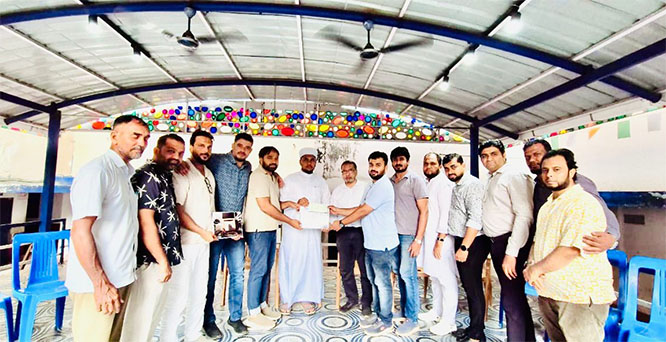
Millions of children were entering schools, where they could not own textbooks. But the newspapers, magazines and television channels were silent on it. Even the education sector was getting commercialised and privatised. The high-rung IIMs were charging Rs. 22 lakh as fees. The low-rung IIMs were charging Rs. 10 lakh and above. Though there were only a few freedom fighters living now, the media had not bothered to take their opinion on the freedom movement during the 70th Independence Day. Instead, one of the newspapers had taken the views of CEOs of big companies and Bollywood celebrities on it, he said. Mr. Sainath released “Nunnanabetta”, a collection of articles written by Rajaram Tallur.

G.N. Mohan and Nagesh Hegde, journalists, M.S. Sriram, writer and economist, Narayana A., Professor, Azim Premji University, gave their responses to Mr. Sainath’s lecture.

 

Comments

Vinod Acharya
 - 
Monday, 21 Aug 2017

The solo warrier... well said sir. Real face of media..

AR Shetty
 - 
Monday, 21 Aug 2017

I'm a big fan of you sir. 

Hari
 - 
Monday, 21 Aug 2017

Sir, Including you only few people doing true journalism

Danish
 - 
Monday, 21 Aug 2017

Smooth running of media, needed capital. so media cant neglect corperators and MNCs. without them media wont get capital and advts..

Kumar
 - 
Monday, 21 Aug 2017

I remember sir, you told once in a workshop regarding media neglected farmer issues and went for fashion show coverage

Ganesh
 - 
Monday, 21 Aug 2017

Sir, Media and media people (except you) needed more publicity, so they will do unwanted controversy issues. 

Add new comment

  • Coastaldigest.com reserves the right to delete or block any comments.
  • Coastaldigset.com is not responsible for its readers’ comments.
  • Comments that are abusive, incendiary or irrelevant are strictly prohibited.
  • Please use a genuine email ID and provide your name to avoid reject.
News Network
November 26,2025

students.jpg

Bengaluru, Nov 26: Karnataka is taking its first concrete steps towards lifting a three-decade-old ban on student elections in colleges and universities. Deputy Chief Minister D.K. Shivakumar announced Wednesday that the state government will form a small committee to study the reintroduction of campus polls, a practice halted in 1989 following incidents of violence.

Speaking at a 'Constitution Day' event organised by the Karnataka Congress, Mr. Shivakumar underscored the move's aim: nurturing new political leadership from the grassroots.

"Recently, (Leader of the Opposition in Lok Sabha) Rahul Gandhi wrote a letter to me and Chief Minister (Siddaramaiah) asking us to think about restarting student elections," Shivakumar stated. "I'm announcing today that we'll form a small committee and seek a report on this."

Student elections were banned in Karnataka in 1989, largely due to concerns over violence and the infiltration of political party affiliates into campus life. The ban effectively extinguished vibrant student bodies and the pipeline of young leaders they often produced.

Mr. Shivakumar, who also serves as the Karnataka Congress president, said that former student leaders will be consulted to "study the pros and cons" of the re-introduction.

Acknowledging the history of the ban, he added, "There were many criminal activities taking place back then. We’ll see how we can conduct (student) elections by regulating such criminal activities."

The Deputy CM reminisced about his own journey, which began on campus. He recalled his political activism at Sri Jagadguru Renukacharya College leading to his first Assembly ticket in 1985 at the age of 23. "That's how student leadership was at the time. Such leadership has gone today. College elections have stopped," he lamented, adding that for many, college elections were "like a big movement" where leaders were forged.

The move, driven by the Congress high command's push to cultivate young talent, will face scrutiny from academics and university authorities who have, in the past, expressed concern that the return of polls could disrupt the peaceful academic environment and turn campuses into political battlegrounds.

Comments

Add new comment

  • Coastaldigest.com reserves the right to delete or block any comments.
  • Coastaldigset.com is not responsible for its readers’ comments.
  • Comments that are abusive, incendiary or irrelevant are strictly prohibited.
  • Please use a genuine email ID and provide your name to avoid reject.
News Network
December 4,2025

Mangaluru: Chaos erupted at Mangaluru International Airport (MIA) after IndiGo flight 6E 5150, bound for Mumbai, was repeatedly delayed and ultimately cancelled, leaving around 100 passengers stranded overnight. The incident highlights the ongoing country-wide operational disruptions affecting the airline, largely due to the implementation of new Flight Duty Time Limitations (FDTL) norms for crew.

The flight was initially scheduled for 9:25 PM on Tuesday but was first postponed to 11:40 PM, then midnight, before being cancelled around 3:00 AM. Passengers expressed frustration over last-minute communication and the lack of clarity, with elderly and ailing travellers particularly affected. “Though the airline arranged food, there was no proper communication, leaving us confused,” said one family member.

An IndiGo executive at MIA cited the FDTL rules, designed to prevent pilot fatigue by limiting crew working hours, as the cause of the cancellation. While alternative arrangements, including hotel stays, were offered, about 100 passengers chose to remain at the airport, creating tension. A replacement flight was arranged but also faced delays due to the same constraints, finally departing for Mumbai around 1:45 PM on Wednesday. Passengers either flew, requested refunds, or postponed their travel.

The Mangaluru delay is part of a broader crisis for IndiGo. The airline has been forced to make “calibrated schedule adjustments”—a euphemism for widespread cancellations and delays—after stricter FDTL norms came into effect on November 1.

While an IndiGo spokesperson acknowledged unavoidable flight disruptions due to technology issues, operational requirements, and the updated crew rostering rules, the DGCA has intervened, summoning senior airline officials to explain the chaos and outline corrective measures.

The ripple effect has been felt across the country, with major hubs like Bengaluru and Mumbai reporting numerous cancellations. The Mangaluru incident underscores the systemic operational strain currently confronting India’s largest carrier, leaving passengers nationwide grappling with uncertainty and delays.

Comments

Add new comment

  • Coastaldigest.com reserves the right to delete or block any comments.
  • Coastaldigset.com is not responsible for its readers’ comments.
  • Comments that are abusive, incendiary or irrelevant are strictly prohibited.
  • Please use a genuine email ID and provide your name to avoid reject.
News Network
November 28,2025

ministerPM.jpg

Mangaluru, Nov 28: Karnataka Health Minister and Dakshina Kannada district in-charge minister Dinesh Gundu Rao on Friday handed over Chief Minister Siddaramaiah’s letter to Prime Minister Narendra Modi, highlighting the severe distress faced by farmers due to crashing crop prices.

PM Modi arrived at the Mangaluru International Airport en route to Udupi, where Gundu Rao welcomed him and submitted the letter. The chief minister’s message stressed that farmers are suffering heavy losses because maize and green gram are being bought far below the Minimum Support Price (MSP). The state urged the Centre to immediately begin procurement at MSP.

According to the letter, Karnataka has a bumper harvest this year—over 54.74 lakh metric tons of maize and 1.98 lakh metric tons of green gram—yet farmers are unable to secure fair prices. Against the MSP of ₹2,400/MT for maize and ₹8,768/MT for green gram, market rates have plunged to ₹1,600–₹1,800 and ₹5,400 respectively.

The chief minister has requested the Centre to:

• Direct NAFED, FCI and NCCF to start MSP procurement immediately.
• Ensure ethanol units purchase maize directly from farmers or FPOs.
• Increase Karnataka’s ethanol allocation, citing high production capacity.
• Stop maize imports, which have depressed domestic prices.
• Relax quality norms for green gram, allowing up to 10% discoloration due to rains.

The letter stresses that MSP is crucial for farmer dignity and income stability and calls for swift central intervention to prevent a deepening crisis.

Comments

Add new comment

  • Coastaldigest.com reserves the right to delete or block any comments.
  • Coastaldigset.com is not responsible for its readers’ comments.
  • Comments that are abusive, incendiary or irrelevant are strictly prohibited.
  • Please use a genuine email ID and provide your name to avoid reject.