BWF hosts seminar on ‘Global Economy and Repercussions on NRIs’

Media Release
March 3, 2018

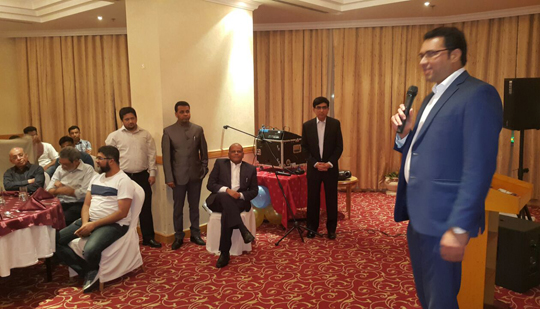
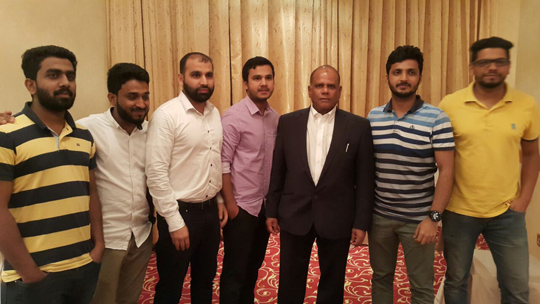
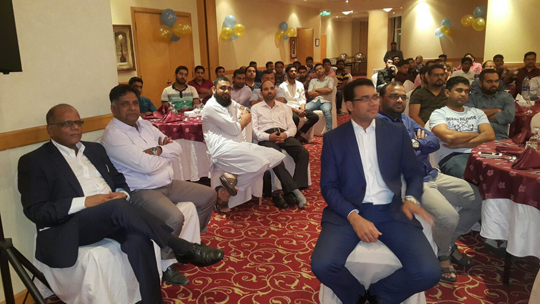
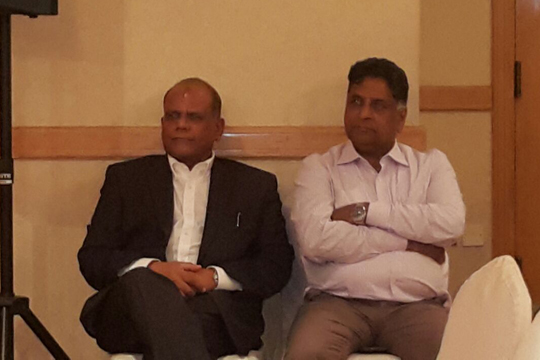
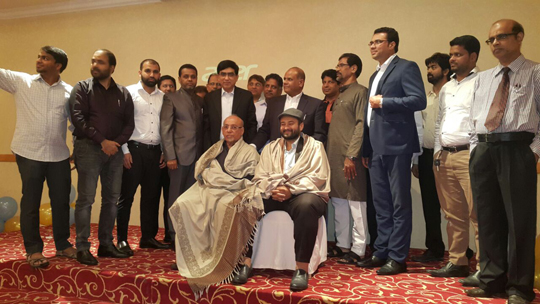
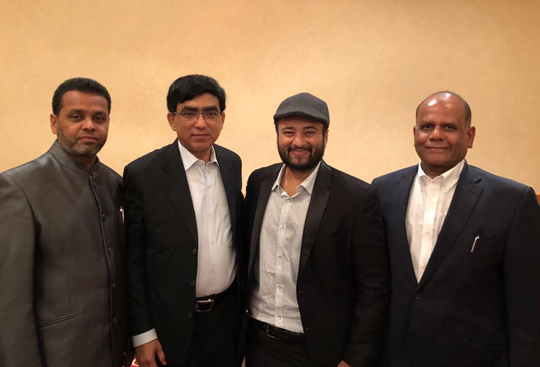
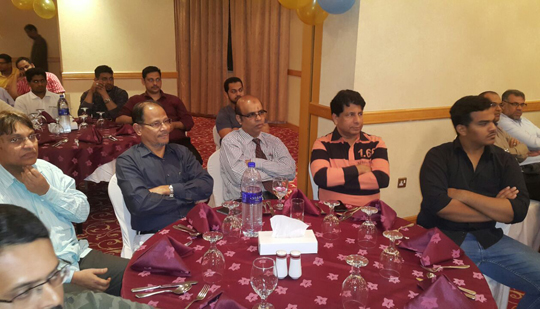
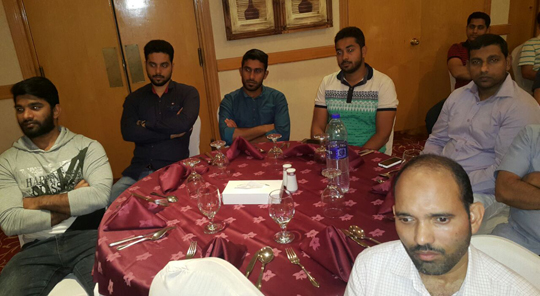
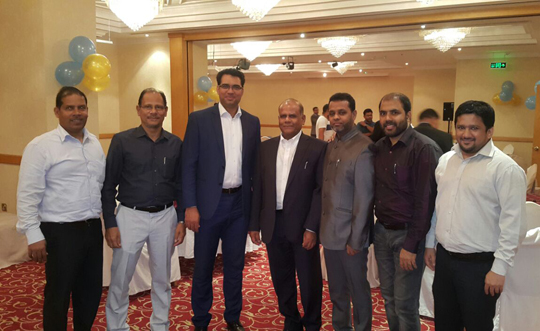
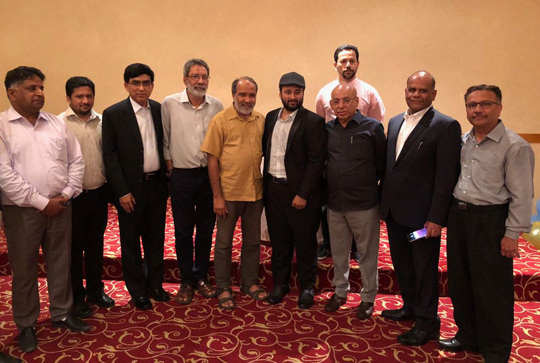
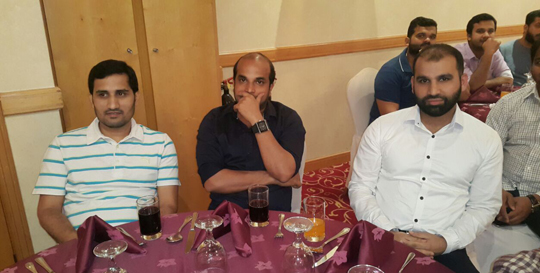
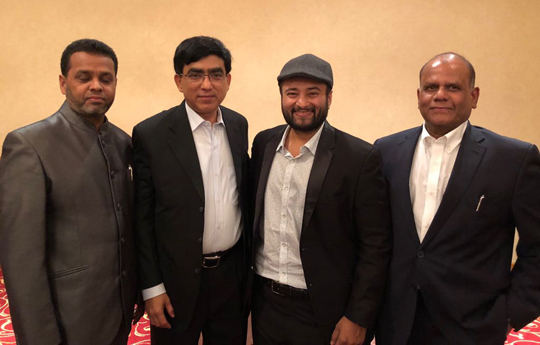
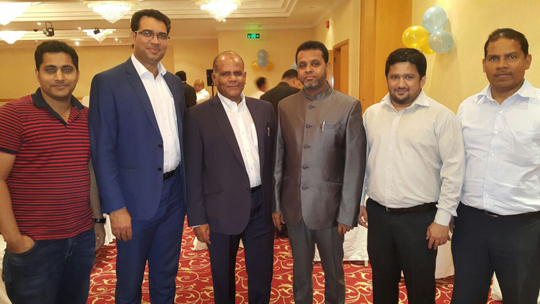
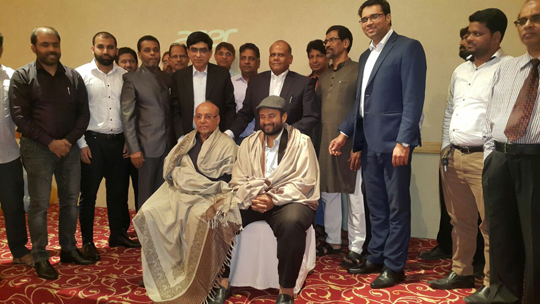
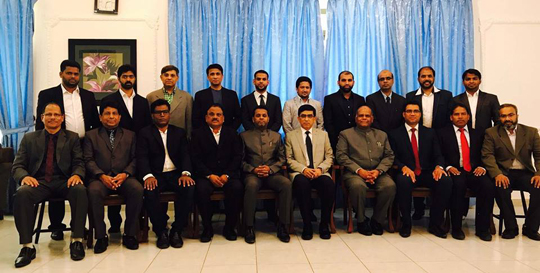
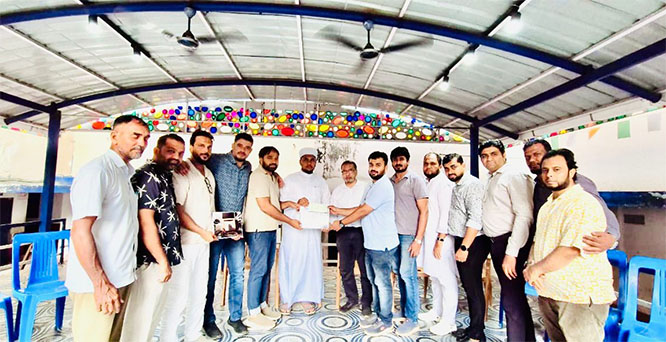
Abu Dhabi: The Bearys Welfare Forum-Abu Dhabi, recently organized a seminar on Global Economy and Repercussions on NRIs focusing mainly on Gulf Kannadigas at Grand Continental Hotel, here. Several prominent NRI personalities from various fields attended the seminar.

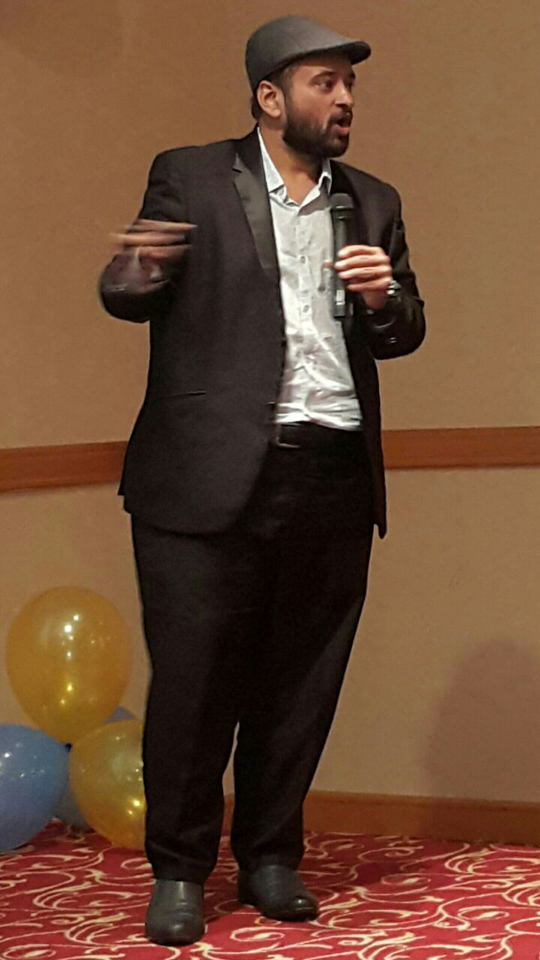
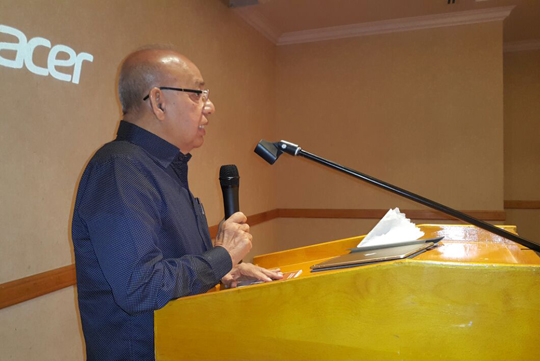
Saif Sultan of Hope Foundation was the resource person. Advocate Saaduddin Salih, Altaf Kateeb and Rafeq Ahmed of Sahibaan, Mohammed Hakeem of KCF, Abdul Salam Deralkatte, ICC, were guests of honor.

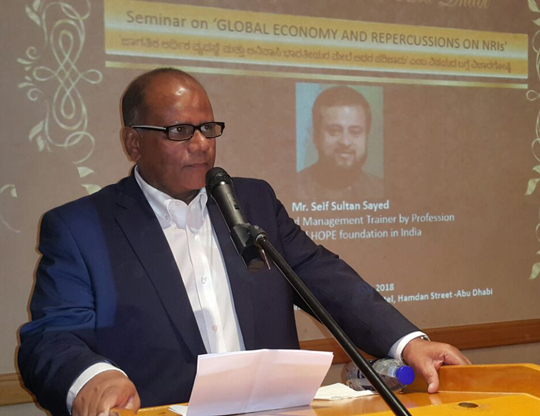
Abdulla Madumoole, General Secretary, BWF, delivered the introductory speech. Comparing the repercussions of the Great Depression of 1930 with that of the repercussions on the world economy after the Great Recession of 2008, he some rulers like Hitler had manipulated the hardship of people into their own advantage by exploiting the nationalistic emotions in the 30s and a similar atmosphere prevails world over now and people are vulnerable again to an emotional nationalistic blackmail.

Governments in UAE and world over spent on infrastructure projects to overcome the financial crisis exactly how America did in 30s. Though the economy of UAE has stabilized, unfortunately NRIs have been losing jobs. To discuss various issues relating to NRIs and make the people aware of investment opportunities and financial facilities available to them back in India, BWF organized this seminar “Global Economy and Repercussions on NRIs”.

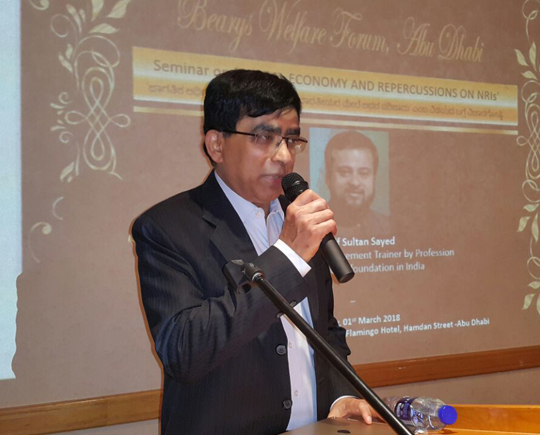
Mohammed Ali Uchil, President, BWF, in his welcome address put a few words on ‘major challenges for NRIs to get adjusted in Indian conditions’. NRIs who have worked in high position in foreign countries may face problem in adjusting in India, he said adding that the big concern for NRIs is their kids who may find sudden change in their lifestyle for which they are not prepared. 

“The kids of NIRs face problems in adjusting in Indian schools. They may face problem in interaction with their pear group who may like to converse in the local language while they prefer talking in English. NRI kids have to struggle adjusting with Indian lifestyle. There are vast difference in values and habits of NRI kids and Indian children. It is observed that NRIs who are thinking of returning back must fully understand the living conditions of India before they take such a step. There are various issues that they have to be tackled while living in India and they must be aware of them.  The main hurdles may include cultural, logistical and economic etc. Rebuilding healthy relationship with their relatives, friends and others will also be a challenge. They have to follow all customs and traditions and participate in cultural and religious festivals. NRIs placed at high position in companies abroad are accustomed to a certain lifestyle. Their lifestyle in foreign countries is completely different and they may find living conditions in India a big problem. They may have to face problems like hygiene, and other such life style related issues,” he said.

He thanked BWF-executive committee members for their hard work, dedication and effort to organize the function and bring in to its complete success and spirit. “It’s an incredible achievement for BWF, which managed to accomplish so many tasks to its utmost goal set, and God willing all of its project will be a complete success.”

Saif Sultan  is a certified NLP practitioner. He has, in his 15 years training carrier, worked at Sharjah Islamic bank as a trainer in Islamic banking. Has has trained more than 1,100 managers of MNCs in Management skills in India, UAE, Malaysia, Qatar, Philippines & USA.

He has trained school Management, teachers and students on various topics in India, Malaysia, UAE & Qatar. Also the founder of HOPE foundation in India.

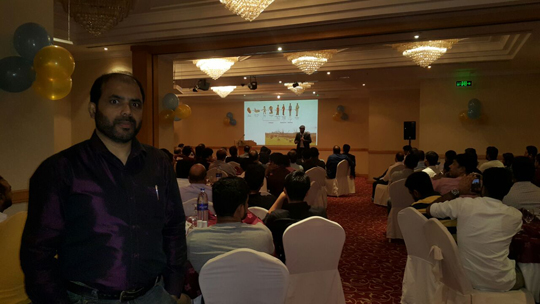
He  delivered an uninterrupted talk for 2 hours touching all points of the topic "Global Economy And Repercussions on NRIs". He enlightened the audience with his highly motivational and educative talk, which applauded by the all the audience. A question and answer session on the topic got tremendous response.

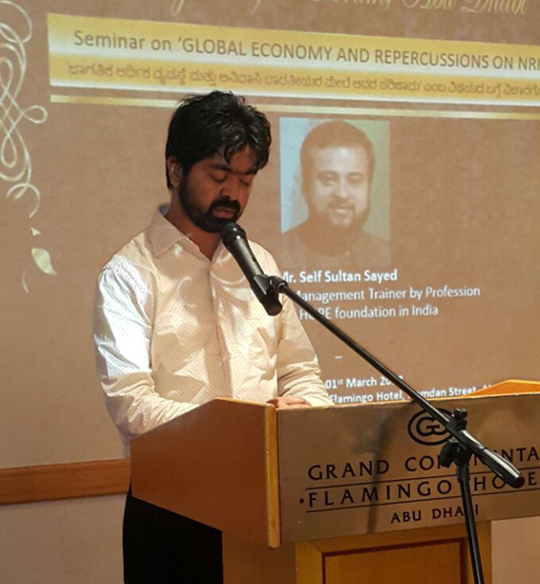
Rafeeq Krishnapur, Vice President along with Jaleel Gurpur and Imran Ahmed compered the program. BWF felicitated Saif Sultan and Advocate Saaduddin Salih. Abdul Ravoof, Vice President, BWF proposed the vote of thanks. Programme started with recitation of Quranic verses by Abdul Rasheed V.K.

The programme was coordinated by Hamza Abdul Khader , Mohamed Kallapu and Nawaj Uchil. Mohd Siddik Kaup, Treasurer, Abdul Majeed A.G. and Hameed Gurupur, Secretary. Mujeeb Uchil, Nazeer Ubar ,Siddik Uchil, Basheer Bajpe, Haneef Ullal,  Mohideen Handel, Majeed Athoor, Irfan Ahmed, Rasheed Bijai, Rasheed V.K, Altaf takreer, Basheer Uchil, Imran along with other BWF youth volunteers  were instrumental in the success of the programme. 
Comments

Salam Bava
 - 
Sunday, 4 Mar 2018

super programe.Saif bhai,Saaduddin Saab spoke length and wedth of community development.I am overwhelmed by Civil service coaching-Ace acadamy.


Thanks to Ali uchil & BWF team for conducting this seminar.Let this kind of seminar to continue instaed of

non purpose programes

khaleel Ibrahim
 - 
Sunday, 4 Mar 2018

Kudos to BWF-for arranging this beautiful program.Thank you Saif Bhai for the enlightening talk, indeed it was very educative. You are an asset to our society.

Nagarika
 - 
Sunday, 4 Mar 2018

An inspiring msg delivered by Mr. Saif Sultan. He is not just socialist but well versed trainer. In the begening of programe Mr. Saif has said that there are three intention to attend this prograte from all you audiance 1. Jsut like that, 2. To make happier of BWF committee & 3. Everyone is going so let me go. But in fact I am one of the above intention but after attending it really made my day. Wonderful programe and very useful and touching informaiton i received. thank you Saif and BWF and wish to have more such events from both.  

Jawed Sheikh
 - 
Sunday, 4 Mar 2018

Nice program,keep this spirit-BWF,Well organized

Altaf Ahmed
 - 
Sunday, 4 Mar 2018

Masha Allah,very informative seminar.Saif Sultan in his best-thanks to BWF for arranging a thought provoking  talk show.Uchil Saab and Abdulla given us very useful tips.worth attending


Saleem
 - 
Sunday, 4 Mar 2018

Masha Allah good gathering.

Add new comment

  • Coastaldigest.com reserves the right to delete or block any comments.
  • Coastaldigset.com is not responsible for its readers’ comments.
  • Comments that are abusive, incendiary or irrelevant are strictly prohibited.
  • Please use a genuine email ID and provide your name to avoid reject.
News Network
February 1,2026

Golf.jpg

The coastal city of Mangaluru is gearing up for a major sporting milestone with the launch of a Golf Excellence Academy at the Pilikula Golf Club (PGC), scheduled to open on May 31. The initiative aims to position Mangaluru firmly on India’s national golfing map.

Speaking to reporters on Saturday during PGC’s first-ever floodlit Pro-Am tournament, club captain Manoj Kumar Shetty said the project is being funded by UAE-based philanthropist Michael D’Souza and is currently in the design phase. Experts from leading golf academies across the country are expected to visit Mangaluru to help shape the training programme and infrastructure.

The academy will train 20 young golfers at a time, with a long-term vision of producing national-level players from the region. Until now, PGC relied on an in-house coach, but the recent renovation of the course and the introduction of floodlights have opened new possibilities for expanding the sport.

Shetty said discussions are underway with two reputed coaching academies, whose heads are expected to visit PGC shortly. “A dormitory for trainers is already under construction. We are inviting academies to assess the facilities and suggest changes so we can build a truly world-class Golf Excellence Academy,” he said.

Professional golfer Aryan Roopa Anand noted that the floodlit course would be a game-changer for young players. “Students can now practise after school hours, even up to 8 or 9 pm, without compromising on academics,” he said.

Comments

Add new comment

  • Coastaldigest.com reserves the right to delete or block any comments.
  • Coastaldigset.com is not responsible for its readers’ comments.
  • Comments that are abusive, incendiary or irrelevant are strictly prohibited.
  • Please use a genuine email ID and provide your name to avoid reject.
coastaldigest.com news network
January 19,2026

badriya.jpg

Mangaluru: The Phase I project of Badria Vision 2028 was formally launched at a ceremony held at the Badria Campus on January 17, marking an important step in the institution’s long-term development roadmap.

The programme was attended by P.B. Abdul Hameed, Secretary of the MEA, and P.C. Hasir, Correspondent of the MEA, who presided over the event and underscored the institution’s commitment to growth and academic excellence.

Office-bearers of the Badria Alumni Association were present in large numbers, including A.K. Sajid (President), Shamsuddin and S.M. Farooq (Vice-Presidents), Shaheed (General Secretary), and Khaleel (Treasurer), reflecting strong alumni engagement in the initiative.

The gathering was blessed by Sayyid Shamsuddeen Basith Thangal Kukkaje, Qateeb of Zeenat Yatheem Bakshi, who led a special dua seeking divine guidance and success for the project.

The ceremony also witnessed the participation of prominent alumnus and local corporate professional Abdul Latheef, along with alumni members Naushad, Kalandar, Safwan, members of the core committee, and several other former students.

A key moment of the event was the formal handover of a cheque to Ameen Woodland Architect, signalling the immediate commencement of construction work under Phase I of the project.

Organisers said the launch of Phase I reflects a shared vision, institutional unity, and collective resolve to realise the objectives of Badria Vision 2028.

Comments

Add new comment

  • Coastaldigest.com reserves the right to delete or block any comments.
  • Coastaldigset.com is not responsible for its readers’ comments.
  • Comments that are abusive, incendiary or irrelevant are strictly prohibited.
  • Please use a genuine email ID and provide your name to avoid reject.
News Network
January 23,2026

Mangaluru: The Karnataka Government Polytechnic (KPT), Mangaluru, has achieved autonomous status from the All India Council for Technical Education (AICTE), becoming the first government polytechnic in the country to receive such recognition in its 78-year history. The status was granted by AICTE, New Delhi, and subsequently approved by the Karnataka Board of Technical Education in October last year.

Officials said the autonomy was conferred a few months ago. Until recently, AICTE extended autonomous status only to engineering colleges, excluding diploma institutions. However, with a renewed national focus on skill development, several government polytechnics across India have now been granted autonomy.

KPT, the second-largest polytechnic in Karnataka, was established in 1946 with four branches and has since expanded to offer eight diploma programmes, including computer science and polymer technology. The institution is spread across a 19-acre campus.

Ravindra M Keni, the first dean of the institution, told The Times of India that AICTE had proposed autonomous status for polytechnic institutions that are over 25 years old. “Many colleges applied. In the first round, 100 institutions were shortlisted, which was further narrowed down to 15 in the second round. We have already completed one semester after becoming an autonomous institution,” he said. He added that nearly 500 students are admitted annually across eight three-year diploma courses.

Explaining the factors that helped KPT secure autonomy, Keni said the institution has consistently recorded 100 per cent admissions and placements for its graduates. He also noted its strong performance in sports, with the college emerging champions for 12 consecutive years, along with active student participation in NCC and NSS activities.

Autonomous status allows KPT to design industry-oriented curricula, conduct examinations, prepare question papers, and manage academic documentation independently. The institution can also directly collaborate with industries and receive priority funding from AICTE or the Ministry of Education. While academic autonomy has been granted, financial control will continue to rest with the state government.

“There will be separate committees for examinations, question paper setting, boards of studies, and boards of examiners. The institution will now have the freedom to conduct admissions without government notifications and issue its own marks cards,” Keni said, adding that new academic initiatives would be planned after a year of functioning under the autonomous framework.

Comments

Add new comment

  • Coastaldigest.com reserves the right to delete or block any comments.
  • Coastaldigset.com is not responsible for its readers’ comments.
  • Comments that are abusive, incendiary or irrelevant are strictly prohibited.
  • Please use a genuine email ID and provide your name to avoid reject.